
Complete Guide to Xeriscaping in Arizona
Learn xeriscaping Arizona basics: native plants, water savings, costs, and ROC contractor tips. Complete guide for desert landscaping success.
Arizona homeowners waste over 70% of their household water on landscaping that fights the desert climate every single day. Meanwhile, xeriscaping Arizona properties use 60-80% less water while creating stunning outdoor spaces that actually thrive in the Sonoran Desert heat.
Xeriscaping means designing landscapes that work with Arizona's natural desert environment instead of against it. This approach uses native plants, efficient irrigation, and smart design principles to create beautiful yards that need minimal water and maintenance. For Arizona homeowners dealing with rising water costs, HOA restrictions, and extreme summer temperatures, xeriscaping offers a practical solution that saves money and time.
Key Takeaways
- Xeriscaping reduces water usage by 60-80% compared to traditional Arizona lawns
- Native plants like palo verde, agave, and desert marigold thrive without constant irrigation
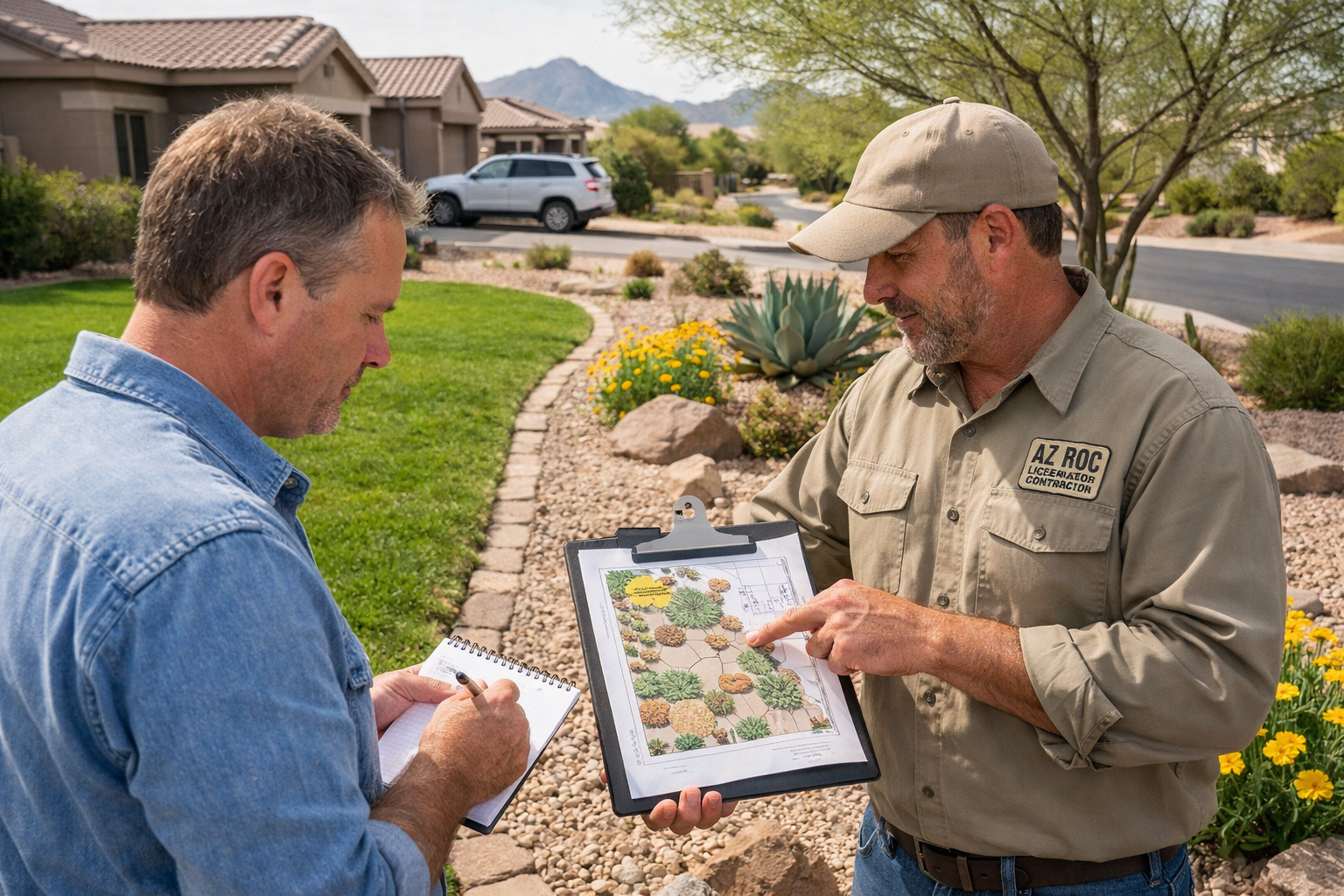
- ROC-licensed contractors must handle major xeriscaping installations in Arizona
- Initial conversion costs range from $3-8 per square foot but pay back through water savings
- Most Arizona HOAs now encourage or require drought-tolerant landscaping
Table of Contents
- Understanding Xeriscaping in Arizona's Desert Climate
- Arizona Water Regulations and Xeriscaping Requirements
- Best Native Plants for Arizona Xeriscaping
- Cost Analysis: Xeriscaping vs Traditional Landscaping
- Step-by-Step Xeriscaping Conversion Guide
- Working with Licensed Arizona Landscaping Contractors
- FAQ
Understanding Xeriscaping in Arizona's Desert Climate
Arizona receives less than 12 inches of rainfall annually in most areas. Phoenix landscaping services gets about 8 inches, Tucson sees 11 inches, and even Flagstaff only receives 23 inches per year. Traditional grass lawns need 30-50 inches of water annually to stay green. The math simply does not work.
Xeriscaping Arizona properties means working with these climate realities instead of fighting them. The Sonoran Desert already provides a blueprint for beautiful, water-efficient landscaping through its native plant communities.
Desert Climate Challenges
Arizona's extreme climate creates specific challenges that xeriscaping addresses:
Summer Heat: Temperatures regularly exceed 110°F in Phoenix and Tucson from May through September. Traditional lawns require constant watering to survive this heat.
Monsoon Season: July through September brings intense rainfall that can damage non-native plants not adapted to desert flooding patterns.
Soil Conditions: Caliche hardpan and alkaline soils make it difficult for non-native plants to establish deep root systems.
Water Restrictions: Many Arizona cities implement seasonal watering restrictions that limit when and how often residents can irrigate.
Benefits of Xeriscaping in Arizona
Homeowners who convert to xeriscaping see immediate and long-term benefits:
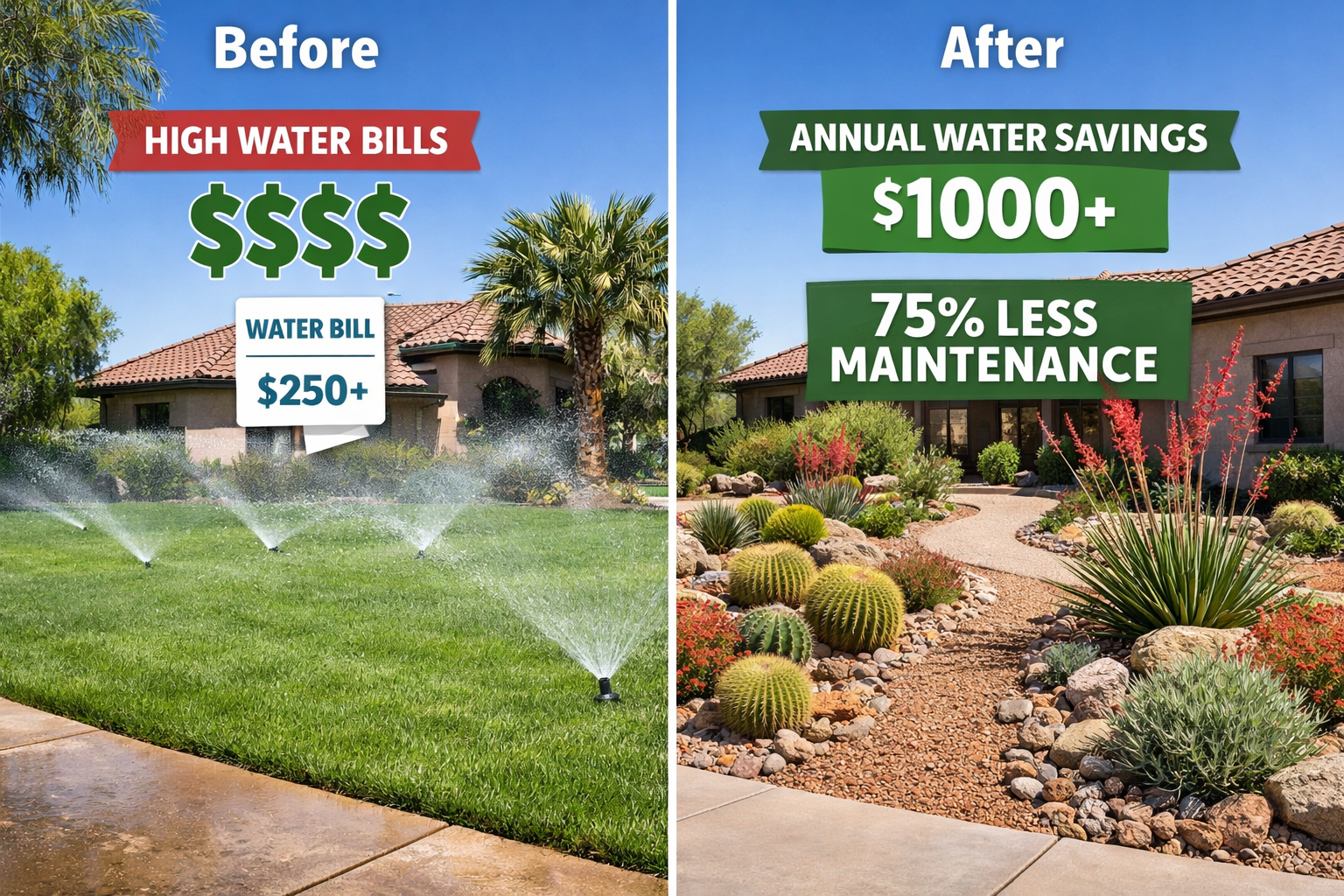
- Water Savings: Reduce outdoor water use by 60-80%
- Lower Utility Bills: Save $200-800 annually on water costs
- Reduced Maintenance: No weekly mowing, less pruning, minimal fertilizing
- Increased Property Value: Desert landscaping adds 15-20% to home values in Arizona markets
- Environmental Benefits: Supports local wildlife and reduces urban heat island effects
Arizona Water Regulations and Xeriscaping Requirements
The Arizona landscaping directory Department of Water Resources (ADWR) regulates water usage across the state through Active Management Areas (AMAs). These regulations directly impact landscaping choices for homeowners.
Active Management Areas
Five AMAs cover Arizona's major population centers:
- Phoenix AMA
- Tucson AMA
- Prescott AMA
- Pinal AMA
- Santa Cruz AMA
Each AMA has specific water conservation requirements that encourage or mandate water-efficient landscaping for new construction and major renovations.
Municipal Water Restrictions
Phoenix: Prohibits watering between 10 AM and 6 PM during summer months. New developments must use 50% drought-tolerant plants.
Tucson: Requires water harvesting systems for new construction. Offers rebates up to $2,000 for xeriscaping conversions.
Scottsdale: Mandates desert landscaping for commercial properties. Residential properties receive incentives for grass removal.
Mesa: Provides free xeriscaping design consultations and plant vouchers for qualifying homeowners.
HOA Xeriscaping Rules
Most Arizona HOAs have updated their landscaping requirements to encourage water conservation:
Allowed Everywhere: Native Arizona plants, decorative gravel, decomposed granite pathways, drip irrigation systems.
Common Restrictions: Artificial turf quality standards, rock color limitations, plant height restrictions in front yards.
Required Approvals: Many HOAs require architectural review for major landscaping changes, even when converting to xeriscaping.
Best Native Plants for Arizona Xeriscaping
Successful xeriscaping Arizona properties depends on choosing plants adapted to desert conditions. Native species have evolved to thrive with minimal water while providing year-round interest.
Trees for Arizona Xeriscaping
Palo Verde (Arizona's state tree): Provides filtered shade, yellow spring blooms, grows 15-25 feet tall. Needs water only during establishment.
Mesquite: Deep taproot system, edible pods, excellent shade tree. Extremely drought tolerant once established.
Desert Willow: Purple or pink tubular flowers, graceful form, attracts hummingbirds. Blooms spring through fall.
Shrubs and Accent Plants
Agave: Sculptural rosettes, dramatic flower spikes, varieties from 1-8 feet wide. Plant once and enjoy for decades.
Red Yucca: Coral-red flower spikes, grass-like foliage, blooms repeatedly. Not actually a yucca but performs similarly.
Brittlebush: Yellow daisy flowers, silver-gray foliage, natural pest resistance. Blooms fall through spring.
Desert Marigold: Bright yellow flowers nearly year-round, low water needs, self-seeding annual that returns each year.
Ground Covers and Fillers
Desert Lupine: Purple flower spikes, fixes nitrogen in soil, attracts beneficial insects.
Ghost Plant: Pale blue-gray succulent, forms spreading colonies, minimal water requirements.
Trailing Lantana: Yellow or white flowers, spreads 3-6 feet, blooms in cooler months.
Cost Analysis: Xeriscaping vs Traditional Landscaping
Understanding the true costs of xeriscaping Arizona properties requires looking at both upfront installation and ongoing maintenance expenses.
Initial Installation Costs
Xeriscaping Installation: $3-8 per square foot depending on plant selection and hardscape features
- Basic desert plants and gravel: $3-4 per square foot
- Premium natives with decorative rock: $5-6 per square foot
- Custom design with water features: $7-8 per square foot
Traditional Lawn Installation: $2-4 per square foot for sod plus irrigation system
- Bermuda grass sod: $0.50-0.80 per square foot
- Irrigation system: $1.50-3.00 per square foot
- Soil preparation: $0.50-1.00 per square foot
Annual Maintenance Costs
Xeriscaping Maintenance: $200-500 per year for average residential yard
- Occasional pruning: $100-200
- Drip system maintenance: $50-100
- Mulch or gravel refresh: $50-200
Traditional Lawn Maintenance: $800-2,000 per year
- Water costs: $400-800
- Mowing service: $200-600
- Fertilizer and treatments: $100-300
- Equipment and repairs: $100-300
Long-Term Financial Benefits
A typical Arizona homeowner saves $600-1,500 annually after converting to xeriscaping. The initial investment pays back within 2-4 years through reduced water bills and maintenance costs.
Water Bill Savings: Phoenix homeowners report 40-70% reductions in summer water bills after removing grass lawns.
Property Value Impact: Real estate agents report xeriscaped properties sell faster and for 10-15% more than comparable homes with high-maintenance landscaping.
Step-by-Step Xeriscaping Conversion Guide
Converting existing Arizona landscaping to xeriscaping requires careful planning and proper execution. Follow these steps for successful results.
Phase 1: Planning and Design
Assess Your Current Landscape: Document existing plants, irrigation systems, and hardscape features. Note which areas receive full sun vs shade throughout the day.
Check HOA Requirements: Review architectural guidelines and submit required applications before beginning work.
Create a Water Zone Map: Group areas by water needs - high, moderate, and low water zones should be separated for efficient irrigation.
Select Appropriate Plants: Choose native species suited to your specific microclimate and soil conditions.
Phase 2: Removal and Preparation
Remove Existing Lawn: Cut grass short, then use a sod cutter or herbicide treatment. Remove all grass roots to prevent regrowth.
Improve Soil Drainage: Break up caliche layers and add decomposed granite or coarse sand if needed. Most desert plants need excellent drainage.
Install Hardscape Features: Add pathways, retaining walls, or decorative rock areas before planting.
Phase 3: Plant Installation
Install Larger Plants First: Place trees and large shrubs according to your design plan. Plant in fall or early spring for best establishment.
Add Irrigation System: Install drip irrigation with separate zones for different water requirements. Avoid overhead sprinklers in desert climates.
Plant Smaller Species: Fill in with accent plants and ground covers. Maintain proper spacing for mature plant sizes.
Phase 4: Finishing Touches
Apply Mulch: Use decomposed granite, wood chips, or decorative gravel to retain moisture and suppress weeds.
Install Plant Labels: Temporary labels help you remember plant names and care requirements during establishment.
Create Maintenance Schedule: Plan watering, pruning, and seasonal care tasks for the first year.
Working with Licensed Arizona Landscaping Contractors
Major xeriscaping Arizona projects often require professional installation to ensure proper plant selection, irrigation design, and long-term success.
ROC Licensing Requirements
Arizona requires landscaping contractors to hold valid ROC (Registrar of Contractors) licenses for projects over $1,000. Always verify licensing before hiring.
Required License Types:
- K-10 Landscape Contracting
- K-35 Irrigation Systems (for complex drip systems)
- A-10 Commercial Landscape (for large properties)
Questions to Ask Potential Contractors
Experience with Desert Landscaping: How many xeriscaping projects have you completed in Arizona? Can you provide local references?
Plant Knowledge: Which native plants do you recommend for my specific site conditions and maintenance preferences?
Water Management: How will you design irrigation zones for different plant water requirements?
Warranty Terms: What guarantee do you provide on plant survival and installation workmanship?
Timeline and Permits: When can you start, how long will installation take, and will you handle required permits?
Red Flags to Avoid
- Contractors who push non-native plants or traditional lawn installation
- Estimates significantly below or above the typical $3-8 per square foot range
- Pressure to sign contracts immediately without time to review
- No physical business address or valid ROC license number
- Recommendations for plants unsuited to Arizona's climate
Your yard deserves someone who knows what they're doing. Licensed contractors understand Arizona's unique climate challenges and can design xeriscaping that thrives long-term.
Seasonal Maintenance for Arizona Xeriscaping
Proper maintenance ensures xeriscaped properties continue looking beautiful while using minimal water and effort.
Spring Maintenance (March-May)
- Prune frost-damaged plant material
- Refresh mulch or decorative gravel
- Check and repair drip irrigation systems
- Plant new additions before summer heat
Summer Care (June-August)
- Deep water established plants weekly during extreme heat
- Monitor new plantings for heat stress
- Avoid pruning during hottest months
- Harvest rainwater during monsoon season
Fall Tasks (September-November)
- Plant new desert species for winter establishment
- Divide and transplant overgrown perennials
- Clean up monsoon storm damage
- Prepare tender plants for winter protection
Winter Maintenance (December-February)
- Protect frost-sensitive plants during cold snaps
- Reduce watering frequency for dormant plants
- Plan new plantings and design changes
- Schedule major pruning for late winter
FAQ
How much water does xeriscaping save compared to grass lawns in Arizona?
Xeriscaping typically reduces outdoor water usage by 60-80% compared to traditional grass lawns. A typical Phoenix home with 2,000 square feet of grass uses 100,000-150,000 gallons annually for irrigation, while the same area xeriscaped uses 20,000-40,000 gallons.
Will xeriscaping increase my Arizona home's resale value?
Yes, properly designed xeriscaping adds 10-20% to home values in Arizona markets. Desert landscaping is now preferred by most buyers who understand the long-term water and maintenance savings.
Do I need a permit to convert my lawn to xeriscaping in Arizona?
Most residential xeriscaping conversions do not require city permits, but check with your local building department and HOA architectural committee. Major grading, retaining walls, or electrical work may need permits.
What are the best times to plant xeriscaping in Arizona?
Fall (October-November) and early spring (March-April) are ideal for planting. This gives plants time to establish before extreme summer heat. Avoid planting during summer months when stress levels are highest.
How long does it take for xeriscaped plants to become fully established?
Most desert plants need 1-2 years to develop deep root systems and become drought tolerant. During establishment, provide regular watering but gradually reduce frequency as plants adapt.
Can I install xeriscaping myself or do I need a contractor?
Simple conversions with basic plants and gravel can be DIY projects. Complex designs with irrigation systems, large plants, or hardscape features benefit from professional installation by ROC-licensed contractors.
Conclusion
Xeriscaping Arizona landscaping directory properties offers homeowners a practical solution to rising water costs, extreme climate conditions, and time-consuming landscape maintenance. By choosing native plants adapted to desert conditions, homeowners can create beautiful outdoor spaces that thrive with minimal inputs.
The key to successful xeriscaping lies in proper plant selection, efficient irrigation design, and understanding Arizona's unique climate patterns. While initial conversion costs range from $3-8 per square foot, the investment pays back quickly through reduced water bills and maintenance requirements.
Find the right landscaper for your yard by verifying ROC licensing, checking local references, and choosing contractors experienced with Arizona's desert landscaping requirements. Licensed, insured, and reviewed professionals can ensure your xeriscaping project succeeds long-term.
Start your xeriscaping conversion during fall or spring planting seasons for best results. With proper planning and execution, your Arizona landscape can become a water-wise showcase that enhances your property value while supporting the desert environment.
Liked this guide? Follow us on Google Search
Related Directory Pages
- Browse Arizona Landscaping Pros
- Phoenix Landscaping Services
- Browse Xeriscaping Services in Arizona
- Also Read: California Xeriscaping: How to Save Water and Money
- Also Read: Nevada Xeriscaping: Complete Guide to Desert Landscaping
- Also Read: New Mexico Xeriscaping: Water-Wise Yards That Thrive
- Also Read: Utah Localscapes: Water-Wise Yard Design That Works
- Search Arizona Landscapers
Find a Landscaper Near You
Browse AZ landscaping professionals on LandscapeProsDirectory.
Search Landscapers