
The Complete Guide to California Landscaping in 2026
Complete California landscaping guide covering climate zones, licensing requirements, water restrictions, fire safety, native plants, and rebate programs for 20
California homeowners spend over $8 billion annually on landscaping, yet 60% admit they don't understand their local water restrictions or fire safety requirements. With new regulations rolling out across the state and climate challenges intensifying, knowing the rules before you plant could save you thousands in fines and replanting costs.
California landscaping isn't just about making your yard look good anymore. It's about compliance, conservation, and creating defensible space that protects your home. From Los Angeles to Sacramento, homeowners need to navigate complex regulations while dealing with drought, fire risk, and diverse climate zones that can change dramatically within a single county.
Key Takeaways
- California has four distinct climate zones requiring different landscaping approaches and plant selections
- All landscaping contractors must hold a valid C-27 license and maintain proper insurance coverage
- MWELO compliance is mandatory for new landscapes over 500 square feet in most California cities
- CalFire requires 100 feet of defensible space around structures in high-risk areas
- Turf replacement rebate programs can offset up to 75% of drought-resistant landscaping costs
Table of Contents
- Understanding California's Climate Zones
- Licensing and Legal Requirements
- Water Restrictions and MWELO Compliance
- Fire Safety and Defensible Space Requirements
- Native Plants by Region
- Rebate Programs and Incentives
- Smart Irrigation and Water Management
- Hardscaping and Stormwater Compliance
- Seasonal Timing Guide
- Finding Licensed Landscaping Pros
- FAQ
- Conclusion
Understanding California's Climate Zones for Landscaping Success
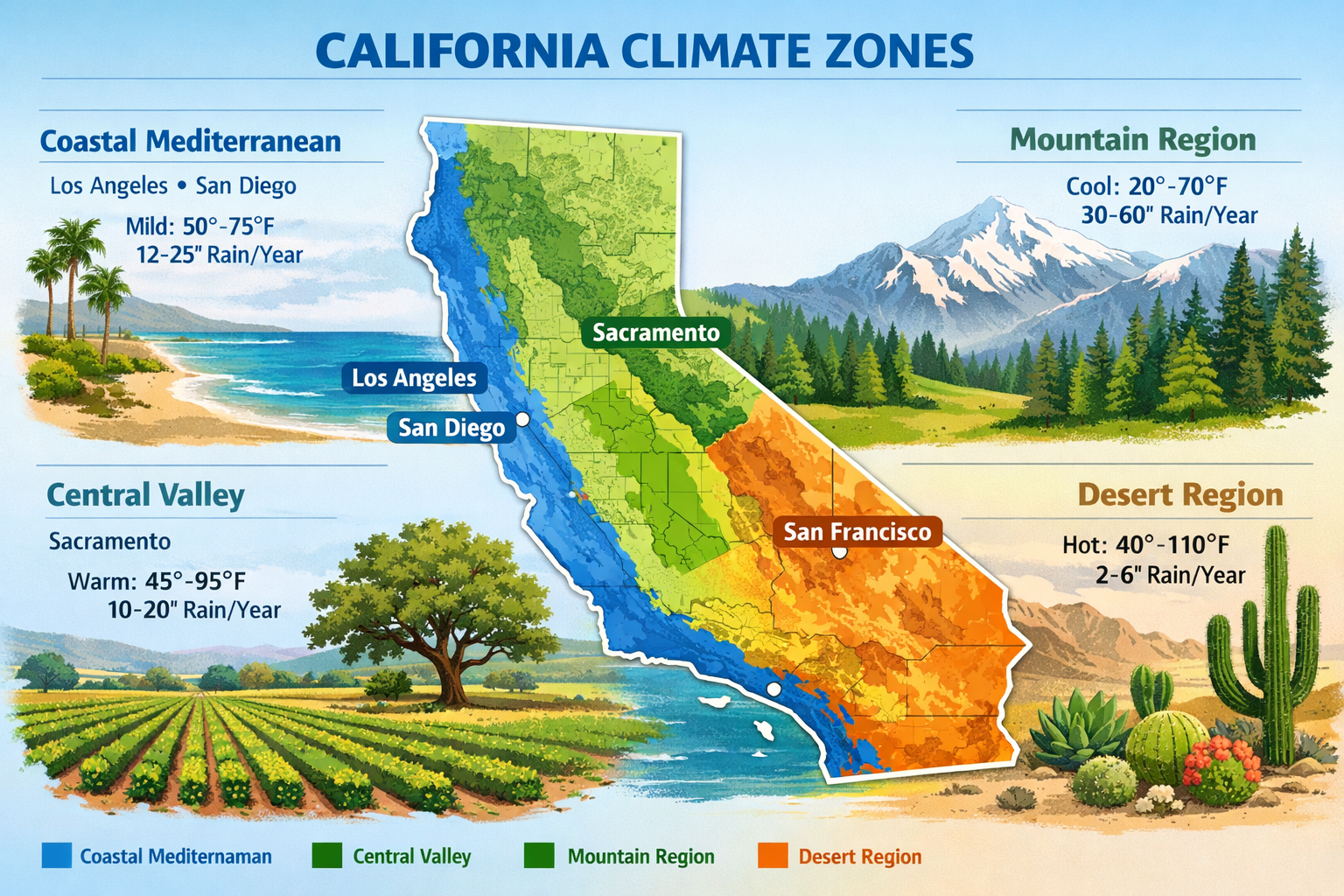
California landscaping directory landscaping starts with understanding your specific climate zone. The state's diverse geography creates four distinct regions, each with unique challenges and opportunities.
Mediterranean Coastal Zone
The coastal strip from San Diego to San Francisco enjoys mild, wet winters and dry summers. Average temperatures range from 45-75°F with 10-25 inches of annual rainfall.
Best plants: Lavender, rosemary, olive trees, California poppies, and ornamental grasses thrive here. Salt tolerance matters near the ocean.
Challenges: Coastal Commission regulations restrict certain modifications. Sandy soil requires soil amendments. Salt spray damages non-native plants.
Central Valley Zone
Sacramento, Fresno, and surrounding agricultural areas experience hot, dry summers and mild winters. Temperatures swing from 35-105°F with 8-20 inches of rainfall.
Best plants: Valley oaks, California buckeye, ceanothus, and drought-tolerant perennials work well. Avoid plants that can't handle extreme heat.
Challenges: Clay soil common. Intense summer heat stresses non-adapted plants. Air quality restrictions limit certain equipment use.
Inland Desert Zone
Riverside, Palm Springs, and inland Southern California face extreme heat and minimal rainfall. Summer temperatures exceed 110°F regularly with under 5 inches of annual precipitation.
Best plants: Desert willow, palo verde, brittlebush, and various cacti and succulents. Focus on extreme drought tolerance.
Challenges: Caliche soil layers prevent drainage. Flash flood potential requires proper grading. Extreme temperatures limit planting windows.
Mountain Zone
Areas above 3,000 feet including parts of Los Angeles, San Bernardino, and Northern California mountains deal with snow, freezing temperatures, and higher rainfall.
Best plants: Native pines, manzanita, mountain lilac, and cold-hardy perennials. Consider snow load on structures.
Challenges: Short growing seasons. Freeze-thaw cycles damage hardscaping. Limited access during winter months.
California Landscaping License Requirements and Legal Compliance
C-27 Landscaping Contractor License
Any landscaping project over $500 in labor and materials requires a licensed contractor. The C-27 license covers:
- Landscape design and installation
- Irrigation system installation
- Hardscape construction
- Tree and shrub installation
- Lawn installation and maintenance
Verification tip: Check license status at cslb.ca.gov. Active licenses show current insurance and bond information.
Insurance Requirements
Licensed landscaping contractors must carry:
- General liability insurance ($1 million minimum)
- Workers' compensation coverage
- Contractor's bond ($25,000 for most projects)
What to ask: Request current certificates of insurance before work begins. Your yard deserves someone who knows what they're doing and carries proper coverage.
Permit Requirements
Most cities require permits for:
- Irrigation system installation or major modifications
- Retaining walls over 4 feet
- Electrical work for landscape lighting
- Tree removal in protected areas
Local variations: San Francisco requires permits for front yard changes. Los Angeles has specific requirements for hillside properties. Check with your city's building department.
Water Restrictions and MWELO Compliance in California Landscaping
Model Water Efficient Landscape Ordinance (MWELO)
MWELO applies to new landscapes over 500 square feet and requires:
- Maximum water allowance calculations
- Soil preparation requirements
- Irrigation efficiency standards
- Plant selection criteria
Compliance costs: MWELO compliance adds $2,000-5,000 to typical residential projects but reduces long-term water costs by 30-50%.
Regional Water Restrictions
Los Angeles: Stage 2 restrictions limit watering to 2 days per week. Turf watering prohibited 9 AM - 4 PM.
San Diego: Irrigation limited to 3 days per week maximum. Decorative fountains must use recycled water.
San Francisco: Odd/even address watering schedules. Hand watering allowed anytime.
Sacramento: Summer watering restrictions typically run May through September.
Smart Controller Requirements
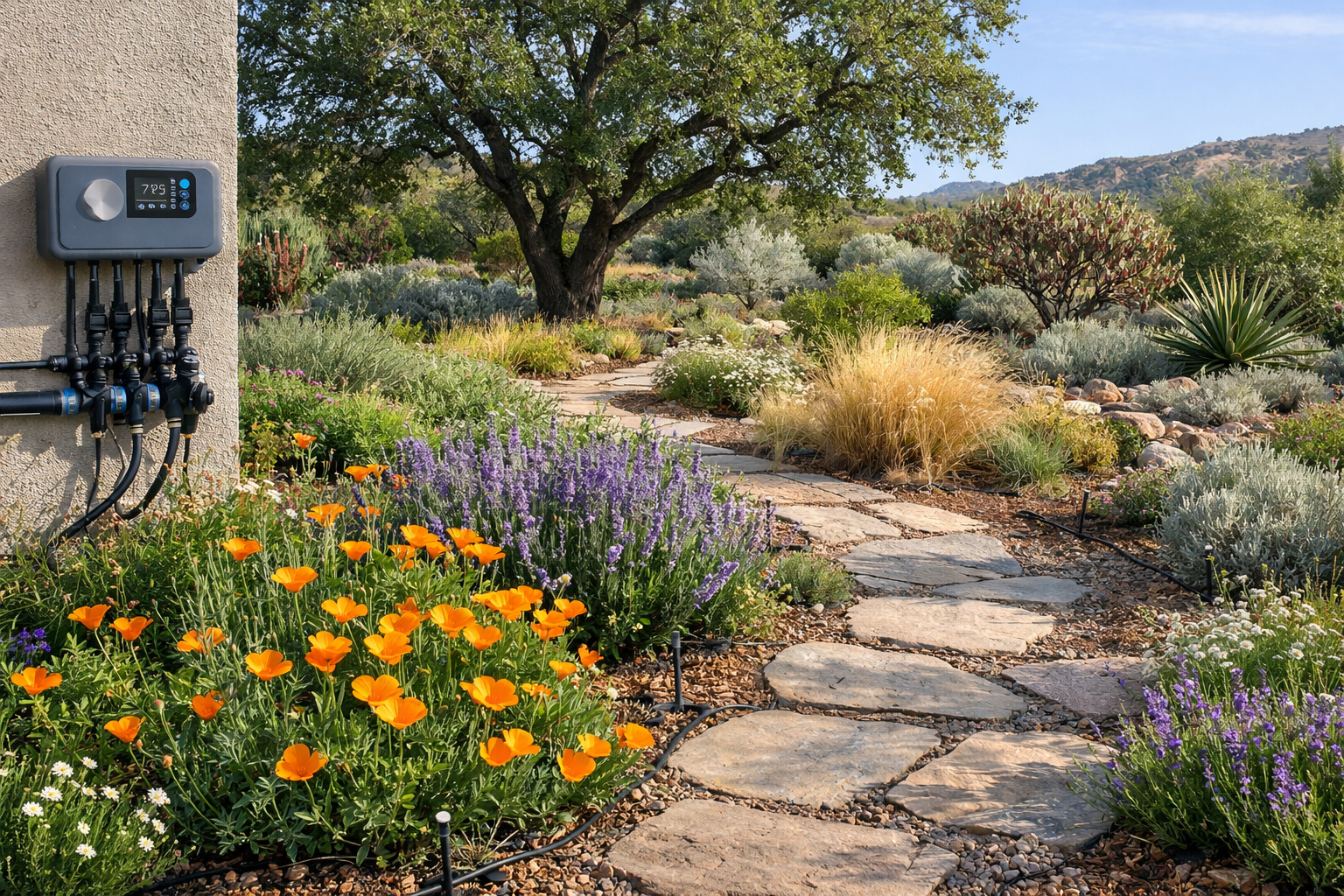
Many cities now require smart irrigation controllers for new installations. These devices:
- Adjust watering based on weather data
- Reduce water use by 15-30%
- Qualify for utility rebates
- Provide usage monitoring
Cost range: Smart controllers cost $200-800 installed but pay for themselves within 2-3 years through water savings.
Fire Safety and Defensible Space Requirements
CalFire 100-Foot Rule
Properties in State Responsibility Areas must maintain defensible space:
Zone 1 (0-30 feet from structure):
- Remove dead vegetation monthly
- Trim tree branches 10 feet from chimneys
- Keep plants well-watered and spaced
- Use fire-resistant plants only
Zone 2 (30-100 feet from structure):
- Create fuel breaks with driveways or paths
- Remove ladder fuels (vegetation that carries fire upward)
- Maintain 6-foot spacing between tree crowns
Fire-Resistant California Landscaping Plants
Excellent fire resistance:
- Rockrose (Cistus species)
- California fuchsia
- Lavender
- Sage varieties
- Ice plant
Good fire resistance:
- Ceanothus (California lilac)
- Manzanita
- Toyon
- California oak trees
Avoid near structures:
- Eucalyptus trees
- Pine trees
- Juniper shrubs
- Pampas grass
Enforcement and Penalties
CalFire inspections occur annually in high-risk areas. Violations result in:
- 30-day compliance notices
- $100-500 daily fines for non-compliance
- Mandatory abatement at owner's expense
- Potential liability for fire damage
Native Plants by California Region
Southern California Natives
Los Angeles and San Diego areas:
- California poppy (state flower)
- Ceanothus varieties
- Manzanita species
- California sagebrush
- Toyon (Hollywood berry)
Planting season: October through March for best establishment.
Central California Natives
Sacramento and Central Valley:
- Valley oak trees
- California buckeye
- Blue elderberry
- Creeping wild rye grass
- California fescue
Planting season: November through February avoids summer stress.
Northern California Natives
San Francisco Bay Area:
- Coast live oak
- California huckleberry
- Coffeeberry
- Pacific coast iris
- California wild grape
Planting season: October through April takes advantage of winter rains.
Desert Region Natives
Riverside and Inland Empire:
- Desert willow
- Palo verde trees
- Brittlebush
- Desert marigold
- Fairy duster
Planting season: March through May and September through November.
Rebate Programs and Financial Incentives
Turf Replacement Rebates
Los Angeles Department of Water and Power:
- $3.75 per square foot for grass removal
- $500 maximum rebate for single-family homes
- Must use approved drought-tolerant plants
San Diego County Water Authority:
- $2.50 per square foot
- $2,500 maximum per property
- Pre-approval required
East Bay Municipal Utility District:
- $1.50 per square foot
- Covers up to 1,500 square feet
- Must maintain for 3 years minimum
Smart Irrigation Rebates
Most California water agencies offer $100-300 rebates for:
- Weather-based smart controllers
- Drip irrigation conversions
- High-efficiency sprinkler nozzles
- Rain sensors and soil moisture sensors
Rainwater Harvesting Incentives
Eligible systems:
- Rain barrels ($75-150 rebates)
- Cisterns ($0.50-2.00 per gallon capacity)
- Permeable paving ($3-5 per square foot)
Smart Irrigation and Water Management
Controller Technology
Weather-based controllers adjust watering schedules using local weather data. Top brands include:
- Rain Bird ESP-TM2 ($300-400)
- Hunter Hydrawise ($250-350)
- Rachio 3 ($200-300)
Soil moisture sensors prevent overwatering by monitoring actual soil conditions. Installation costs $150-300 per zone.
Drip Irrigation Benefits
Drip systems deliver water directly to plant roots, reducing waste by 30-50%. Installation costs: $3-8 per square foot depending on plant density and terrain.
Best applications:
- Shrub and perennial beds
- Vegetable gardens
- Container plantings
- Slopes and irregular areas
Greywater Systems
California allows simple greywater systems without permits for:
- Single washing machine discharge
- Bathroom sink drainage
- Shower water collection
Professional installation: $2,000-5,000 for whole-house systems. Saves 30-50% on outdoor water use.
Hardscaping and Stormwater Compliance
Permeable Surfaces
California's stormwater regulations increasingly require permeable hardscaping for:
- Driveways and walkways
- Patio areas
- Pool decking
Options and costs:
- Permeable concrete: $8-15 per square foot
- Permeable pavers: $10-20 per square foot
- Decomposed granite: $3-6 per square foot
- Gravel with stabilizers: $4-8 per square foot
Bioswales and Rain Gardens
These features capture and filter stormwater runoff. Design requirements:
- 6-inch minimum depth
- Native plant materials
- Overflow drainage to safe areas
- 20-foot minimum distance from foundations
Installation costs: $15-30 per square foot including excavation, soil amendments, and plants.
Retaining Wall Regulations
Walls over 4 feet require engineering and permits in most California cities. Material options:
- Segmental block: $25-40 per square foot
- Natural stone: $35-60 per square foot
- Poured concrete: $30-50 per square foot
Seasonal Timing Guide for California Landscaping
Fall Planting (September-November)
Best time for:
- Native plant installation
- Tree planting
- Lawn seeding
- Bulb planting
Why it works: Cooler temperatures and winter rains help establish root systems before summer stress.
Winter Maintenance (December-February)
Essential tasks:
- Pruning deciduous trees
- Rose pruning (late January)
- Irrigation system maintenance
- Soil preparation for spring planting
Avoid: Pruning frost-sensitive plants until March.
Spring Activities (March-May)
Optimal timing:
- Annual flower planting
- Vegetable garden installation
- Fertilizer application
- Irrigation system startup
Regional variations: Higher elevations may delay spring activities until April or May.
Summer Care (June-August)
Focus areas:
- Deep, infrequent watering
- Mulch replenishment
- Pest and disease monitoring
- Heat stress prevention
Avoid: Major planting or transplanting during peak heat periods.
Finding Licensed California Landscaping Pros
Verification Steps
License check: Visit cslb.ca.gov and enter the contractor's license number. Verify:
- Current license status
- Insurance coverage
- Bond information
- Complaint history
Local knowledge matters: Find landscaping pros in your area who understand local regulations, climate challenges, and plant performance.
Questions to Ask Before Hiring
Licensing and insurance:
- "Can you provide your current C-27 license number?"
- "Do you carry general liability and workers' compensation insurance?"
- "Will you pull necessary permits?"
Project specifics:
- "How will you ensure MWELO compliance?"
- "What's your experience with defensible space requirements?"
- "Do you offer maintenance services?"
Cost and timeline:
- "Can you provide a detailed written estimate?"
- "What's included in your warranty?"
- "When can you start and finish?"
Red Flags to Avoid
Skip contractors who:
- Can't provide license numbers immediately
- Request full payment upfront
- Lack local references
- Don't mention permit requirements
- Offer prices significantly below others
Real reviews from real homeowners help identify quality contractors. Licensed, insured, and reviewed professionals protect your investment.
FAQ
Q: Do I need a permit for basic landscaping in California?
A: Most basic planting doesn't require permits, but irrigation installation, retaining walls over 4 feet, and tree removal often do. Check with your city's building department for specific requirements.
Q: How much do California landscaping projects typically cost?
A: Basic drought-tolerant landscaping runs $8-15 per square foot. Full yard renovations with hardscaping cost $15-35 per square foot. Native plant gardens average $10-20 per square foot installed.
Q: What's the best time to start a landscaping project in California?
A: Fall (September-November) is ideal for most regions. Plants establish better with winter rains, and contractors have more availability. Avoid summer starts in desert regions.
Q: Are turf replacement rebates worth the paperwork?
A: Yes, rebates can cover 50-75% of drought-tolerant landscaping costs. Most programs require pre-approval and specific plant lists, but the savings justify the effort.
Q: How do I know if my property needs defensible space compliance?
A: Properties in State Responsibility Areas (wildland-urban interface zones) must comply with CalFire defensible space requirements. Check the CalFire website or contact your local fire department.
Q: Can I install my own irrigation system in California?
A: Simple drip systems and hand watering don't require licenses, but permanent sprinkler systems need licensed installation and often permits. DIY installation may void equipment warranties and violate local codes.
Conclusion
California landscaping directory landscaping in 2026 requires balancing beauty, compliance, and conservation. Understanding your climate zone, water restrictions, and fire safety requirements protects your investment and keeps you compliant with evolving regulations.
Start by identifying your specific climate zone and local requirements. Research rebate programs before beginning work - they can significantly reduce project costs. Always hire licensed, insured contractors who understand California's complex regulatory environment.
Your yard deserves someone who knows what they're doing. From basic lawn care to full backyard transformations, the right landscaping professional makes the difference between a project that thrives and one that struggles.
Find licensed landscaping pros in your area through verified directories. Check references, confirm insurance, and get detailed written estimates. Know who you're letting into your yard by doing proper research upfront.
The investment in quality California landscaping pays dividends through increased property value, reduced water bills, and compliance with safety regulations. Take time to plan properly, hire qualified professionals, and create outdoor spaces that work with California's unique climate and requirements.
Liked this guide? Follow us on Google Search
Related Directory Pages
- Browse California Landscaping Pros
- Los Angeles Landscaping Services
- Browse Landscaping Services in California
- Also Read: Best Desert Landscaping Ideas for Phoenix Homes
- Also Read: Flagstaff Landscaping: Mountain vs Desert Style
- Also Read: Monsoon Season Landscaping Prep for Arizona Yards
- Also Read: Tucson Landscaping: Native Plants & Desert Design
- Search California Landscapers
Find a Landscaper Near You
Browse CA landscaping professionals on LandscapeProsDirectory.
Search Landscapers