
Pool Landscaping in California: Design Ideas That Work
Discover drought-tolerant pool landscaping ideas for California. Expert tips on plant selection, safety codes, and design strategies that work statewide.
California homeowners spend over $2.8 billion annually on pool landscaping, yet 60% struggle with plant choices that survive both drought conditions and chlorine exposure. Your yard deserves someone who knows what they're doing when it comes to navigating California's unique climate challenges and strict water regulations.
Pool landscaping California projects require more than just aesthetic appeal. From Los Angeles to San Diego, homeowners face water restrictions, salt air exposure, and year-round growing seasons that demand specific plant selections and design strategies.
Key Takeaways
- Drought-tolerant plants like agave and ornamental grasses thrive around California pools while reducing water usage by up to 50%
- Saltwater pools require specific plant selections that tolerate higher salinity levels in soil and air
- California building codes mandate specific pool fencing heights and gate requirements for child safety
- Permeable decking materials help manage runoff while meeting state environmental regulations
- Strategic plant placement prevents leaf debris in pools, reducing maintenance costs by 30-40%
Table of Contents
- Drought-Compatible Pool Landscaping California Solutions
- Plant Selection for Saltwater Pool Environments
- Privacy and Safety Features That Meet California Codes
- Hardscaping and Lighting for Year-Round Use
- Regional Considerations Across California
- FAQ
- Conclusion
Drought-Compatible Pool Landscaping California Solutions
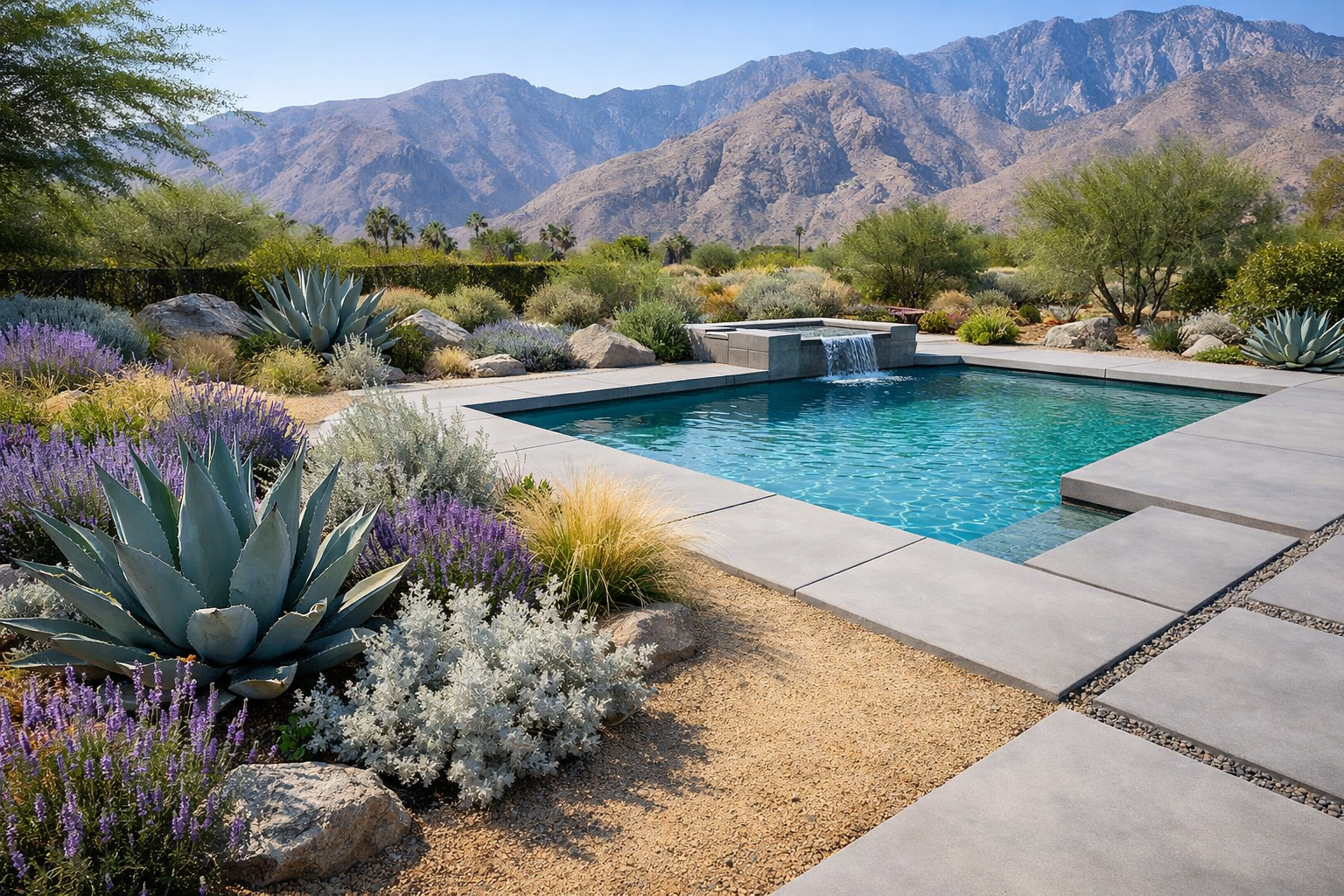
Water restrictions across California landscaping directory make drought-tolerant landscaping essential for pool areas. Native and adapted plants not only survive with minimal irrigation but also create stunning visual impact around pools.
Top Drought-Tolerant Pool Plants:
- Agave varieties: Blue agave and century plants provide architectural structure
- Ornamental grasses: Mexican feather grass and fountain grass add movement
- Succulents: Barrel cactus and prickly pear create desert modern appeal
- Mediterranean herbs: Lavender and rosemary offer fragrance and color
These plants typically require 70% less water than traditional landscaping while thriving in California's Mediterranean climate. Find the right landscaper for your yard who understands local water regulations and plant hardiness zones.
Mulching and Soil Preparation
Decomposed granite and gravel mulches reflect heat away from pool areas while retaining soil moisture. Licensed professionals know to install proper drainage systems that prevent water from pooling around plant roots during occasional heavy rains.
Irrigation Considerations
Drip irrigation systems work best for pool landscaping California projects. Smart controllers adjust watering schedules based on weather conditions and soil moisture levels. Many cities offer rebates for water-efficient irrigation installations.
Plant Selection for Saltwater Pool Environments
Saltwater pools create unique growing conditions that affect plant selection. Salt spray and higher soil salinity levels require plants that tolerate these conditions without showing leaf burn or growth stunting.
Salt-Tolerant Plant Options:
- Coastal natives: California sagebrush and coyote brush naturally handle salt exposure
- Adapted perennials: New Zealand flax and society garlic thrive near saltwater
- Ornamental trees: Palo verde and desert willow provide shade without dropping excessive debris
- Ground covers: Ice plant and sea thrift create colorful, low-maintenance carpets
Soil Management Around Saltwater Pools
Salt buildup in soil requires regular monitoring and occasional soil amendments. Gypsum applications help break down salt accumulation while improving drainage. Landscaping pros in your area understand local soil conditions and appropriate amendment schedules.
Plant Placement Strategy
Position salt-sensitive plants at least 10 feet from pool edges where splash and spray occur most frequently. Use salt-tolerant species as a buffer zone between the pool and more delicate plantings.
Privacy and Safety Features That Meet California Codes
California requires specific safety measures for residential pools, including fencing, gates, and alarms. Privacy screening must work within these legal requirements while creating an attractive outdoor space.
Pool Fencing Requirements
California Health and Safety Code mandates:
- Minimum 5-foot fence height around pool perimeter
- Self-closing, self-latching gates that open outward
- No gaps larger than 4 inches in fencing materials
- Latch placement at least 54 inches above ground
Privacy Screening Options
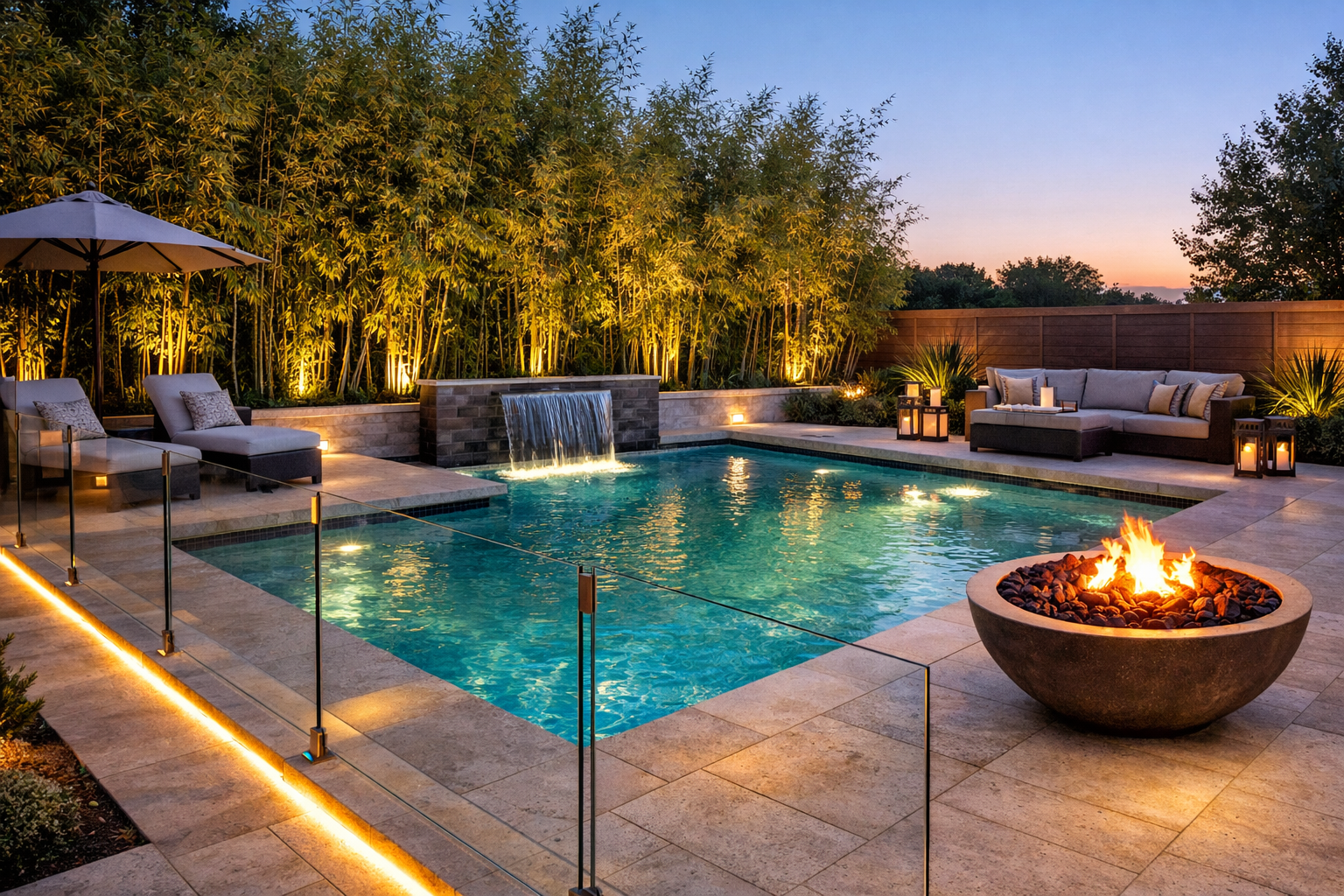
Bamboo species like golden bamboo create fast-growing privacy screens but require root barriers to prevent spreading. Oleander hedges provide year-round screening but need regular pruning. Italian cypress trees offer narrow, upright screening for smaller spaces.
Shade Structure Integration
Pergolas and shade sails reduce sun exposure while creating defined outdoor rooms. Retractable awnings offer flexible shade options for California's variable weather. Licensed contractors ensure proper wind load calculations and structural anchoring.
Fire Feature Safety
Fire bowls and outdoor fireplaces must maintain specific clearances from pools and structures. California fire codes require:
- Minimum 10-foot clearance from property lines
- Non-combustible surfaces extending 18 inches around fire features
- Proper gas line installation by licensed professionals
Hardscaping and Lighting for Year-Round Use
California's mild climate allows year-round pool use, making quality hardscaping and lighting essential for both function and safety.
Permeable Decking Materials
Permeable pavers and porous concrete help manage runoff while meeting California's stormwater regulations. These materials allow water infiltration while providing stable walking surfaces around pools.
Popular California Pool Decking:
- Travertine: Natural stone that stays cool underfoot
- Concrete pavers: Slip-resistant surfaces in multiple colors
- Decomposed granite: Budget-friendly option with natural appearance
- Flagstone: Irregular patterns create organic, California-casual appeal
LED Lighting Systems
Energy-efficient LED systems provide safety lighting while highlighting landscape features. Path lighting along walkways prevents accidents during evening pool use. Underwater LED systems create dramatic nighttime ambiance.
Lighting Placement Guidelines:
- Install lights every 8-10 feet along pathways
- Use uplighting to highlight specimen trees and architectural plants
- Add step lights on any elevation changes near pool areas
- Include timer controls for automatic operation
Regional Considerations Across California
Different regions of California present unique challenges for pool landscaping projects.
Los Angeles Area
Smog and air quality affect plant selection in LA County. Choose plants that tolerate air pollution, such as oleander and bottlebrush. Microclimates vary significantly between coastal and inland areas, requiring site-specific plant choices.
San Diego Region
Coastal influence creates more moderate temperatures but increases salt exposure. Native plants like California lilac and manzanita perform well in San Diego's Mediterranean climate. Water restrictions remain strict despite coastal location.
Palm Springs and Desert Areas
Extreme heat and low humidity require desert-adapted plants exclusively. Palo verde trees and desert marigold provide color without excessive water needs. Hardscaping becomes more important than plant material in these regions.
Central Valley Considerations
Hot, dry summers and occasional frost require plants that handle temperature extremes. Pomegranate trees and Texas sage tolerate both heat and cold while providing visual interest around pools.
FAQ
What plants should I avoid near my California pool?
Avoid plants that drop excessive leaves, flowers, or fruit into pools. Skip eucalyptus, fruit trees, and deciduous plants near pool edges. Also avoid plants with thorns or spines in high-traffic areas around pools.
How much does pool landscaping cost in California?
Basic pool landscaping runs $15-25 per square foot, while high-end designs cost $40-75 per square foot. Drought-tolerant plant installation typically costs 20-30% less than traditional landscaping due to simpler irrigation needs.
Do I need permits for pool landscaping in California?
Most landscaping doesn't require permits, but hardscaping, electrical work, and structural elements like pergolas often do. Pool fencing and safety features must meet specific code requirements regardless of permit needs.
How do I find licensed pool landscaping contractors?
Verify contractor licenses through the California Contractors State License Board website. Look for contractors with C-27 (landscaping) licenses and current insurance. Real reviews from real homeowners help identify quality contractors.
What's the best time to install pool landscaping in California?
Fall through early spring offers the best planting window for most California regions. Plants establish root systems during cooler months before facing summer heat stress. Avoid planting during peak summer heat or winter frost periods.
How do water restrictions affect pool landscaping choices?
Many California cities limit landscape irrigation to specific days and times. Choose drought-tolerant plants that survive on minimal supplemental water once established. Drip irrigation systems often receive exemptions from certain watering restrictions.
Conclusion
Successful pool landscaping California landscaping directory projects balance water efficiency, safety requirements, and aesthetic appeal. Drought-tolerant plants, proper hardscaping, and code-compliant safety features create outdoor spaces that work with California's unique climate and regulations.
Know who you're letting into your yard by choosing licensed, insured contractors who understand local building codes and plant requirements. From basic lawn care to full backyard transformations, the right professional makes the difference between a project that thrives and one that struggles.
Start by identifying your specific regional challenges, whether that's salt exposure in coastal areas or extreme heat in desert regions. Then select plants and materials that match your local conditions while meeting safety requirements. We verify so you don't have to - find licensed pool landscaping professionals who deliver results that last.
Liked this guide? Follow us on Google Search
Related Directory Pages
- Browse California Landscaping Pros
- San Diego Landscaping Services
- Browse Pool Landscaping Services in California
- Also Read: Pool Landscaping Ideas for Scottsdale Backyards
- Also Read: Las Vegas Pool Landscaping: Resort-Style Backyard Design
- Also Read: Pool Landscaping in New Mexico: Desert Oasis Design Guide
- Also Read: Utah Pool Landscaping: Privacy, Wind & Mountain Views
- Search California Landscapers
Find a Landscaper Near You
Browse CA landscaping professionals on LandscapeProsDirectory.
Search Landscapers