
Artificial Turf in Nevada: Pros, Costs, and Installation
Nevada artificial turf costs $4-12/sq ft installed. Get SNWA rebates up to $3/sq ft, cooling tech options, and find licensed contractors for your project.
Nevada homeowners replace over 50,000 square feet of natural grass with artificial turf every month. The reason is simple: water bills that can hit $300 monthly just for lawn irrigation in Las Vegas summer heat.
Artificial turf Nevada installations have surged as the Southern Nevada Water Authority offers rebates up to $3 per square foot for grass removal. But not all artificial turf performs the same in Nevada's extreme climate. Some cheaper options can reach surface temperatures of 180°F in summer, while newer cooling technologies keep surfaces closer to 140°F.
Your yard deserves someone who knows what they're doing when it comes to artificial turf installation. The difference between a quality install and a poor one shows up fast in Nevada's harsh conditions.
Key Takeaways
- Artificial turf costs $4-12 per square foot installed, with quality directly impacting heat retention and lifespan
- SNWA-approved turf qualifies for rebates up to $3 per square foot in Southern Nevada
- Proper drainage and base preparation are critical for Nevada's monsoon seasons and temperature swings
- Modern cooling turf technologies reduce surface temperatures by 40°F compared to older products
- Professional installation typically includes 15-20 year warranties when done correctly
Table of Contents
- Artificial Turf Nevada Costs Breakdown
- Nevada Climate Considerations
- Installation Process and Requirements
- Maintenance and Longevity
- Choosing the Right Contractor
- FAQ
- Conclusion
Artificial Turf Nevada Costs Breakdown
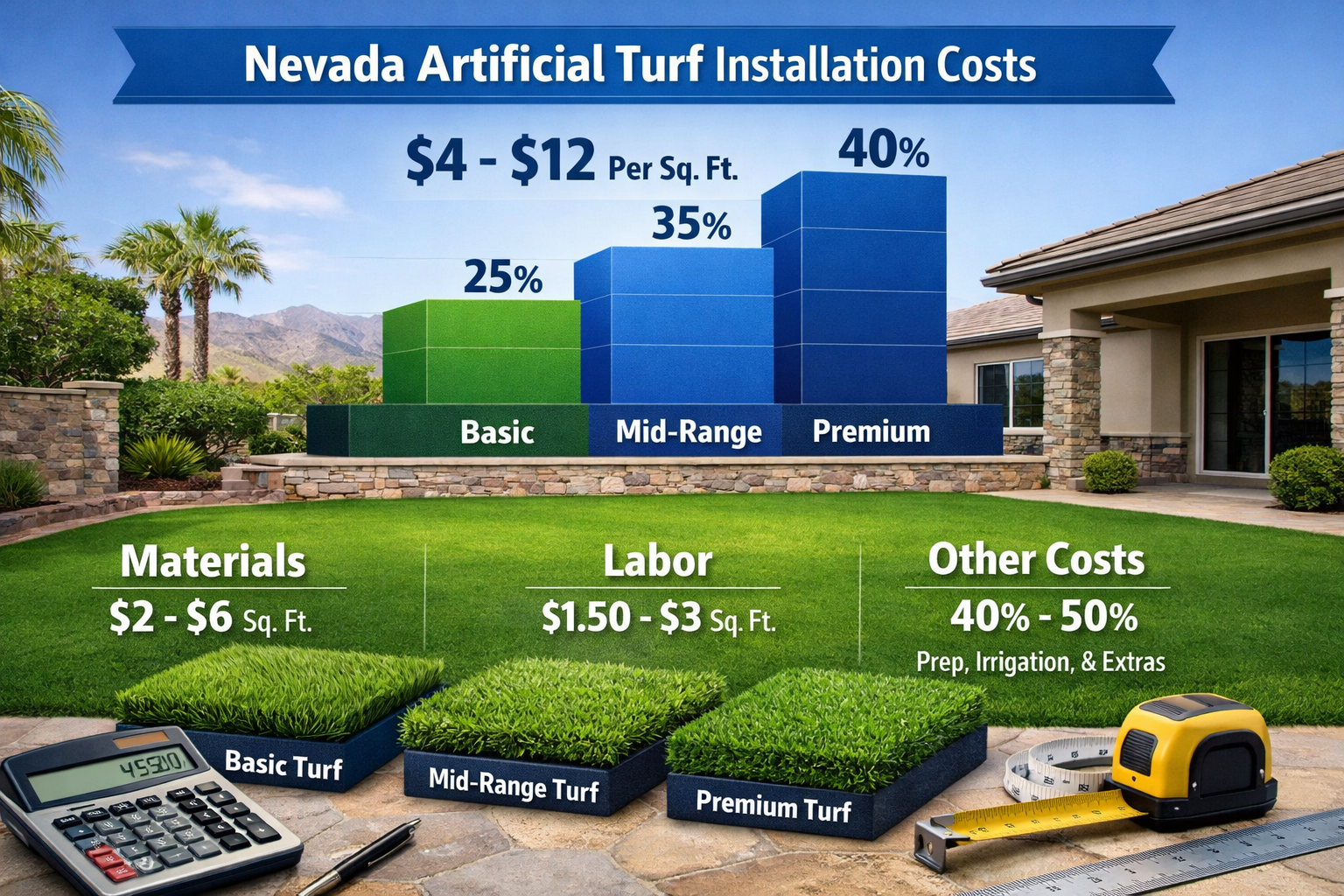
Artificial turf Nevada landscaping directory pricing varies significantly based on quality, with three main tiers affecting your total investment.
Basic Turf: $4-6 per square foot
Basic artificial turf uses shorter pile height and simpler backing systems. These products work for low-traffic areas but can reach extreme temperatures in Nevada sun. Expect 8-12 year lifespan with proper maintenance.
Mid-Grade Turf: $6-9 per square foot
Mid-grade options include better UV protection and slightly improved cooling technology. The backing systems handle temperature expansion better than basic products. Most Nevada homeowners choose this range for balanced cost and performance.
Premium Turf: $9-12 per square foot
Premium artificial turf features advanced cooling technology, superior drainage, and enhanced UV protection. These products maintain lower surface temperatures and typically last 15-20 years in Nevada conditions.
Additional Cost Factors
Base preparation adds $1-3 per square foot depending on existing soil conditions. Nevada's caliche soil often requires extra excavation and proper base materials.
Drainage systems cost $2-4 per square foot but are essential for areas receiving monsoon runoff. Without proper drainage, artificial turf can develop odor and backing problems.
Infill material ranges from $0.50-2 per square foot. Silica sand costs less but retains more heat. Organic infills like cork or coconut fiber provide better cooling but cost more.
SNWA Rebate Programs
The Southern Nevada Water Authority offers rebates for artificial turf Nevada installations that meet specific requirements:
- Turf must be SNWA-approved for rebate eligibility
- Rebates up to $3 per square foot for residential properties
- Maximum 5,000 square feet per property
- Installation must include proper irrigation system removal
Las Vegas and Henderson residents can combine SNWA rebates with some HOA incentive programs for additional savings.
Nevada Climate Considerations
Nevada's desert climate creates unique challenges for artificial turf installations. Understanding these factors helps you choose appropriate products and installation methods.
Temperature Management
Surface temperatures are the biggest concern for artificial turf Nevada installations. Standard turf can reach 180°F in direct summer sun, making yards unusable during peak hours.
Newer cooling technologies reduce surface temperatures through:
- Reflective yarn coatings that deflect heat
- Improved backing materials that allow airflow
- Specialized infill that doesn't retain heat
- Lighter colored fibers that absorb less solar energy
Las Vegas vs Reno Climate Differences
Las Vegas artificial turf faces more extreme conditions with summer temperatures exceeding 115°F for weeks. The urban heat island effect amplifies surface temperatures, making cooling technology essential.
Reno installations deal with greater temperature swings and occasional snow loads. The elevation change affects UV exposure, requiring different yarn specifications for optimal longevity.
Monsoon Season Preparation
Nevada's monsoon season brings intense rainfall that can overwhelm poorly designed drainage systems. Artificial turf installations need:
- Proper base grading with 2% minimum slope
- Perforated backing that drains at least 30 inches per hour
- French drain systems for low-lying areas
- Adequate base materials that won't shift during heavy rain
Wind and Dust Considerations
Nevada winds carry fine dust that can clog artificial turf fibers and affect drainage. Regular maintenance becomes more important than in humid climates.
Quality installations include:
- Proper edge restraints to prevent wind lifting
- Infill materials that resist wind displacement
- Seaming techniques that handle thermal expansion
Installation Process and Requirements
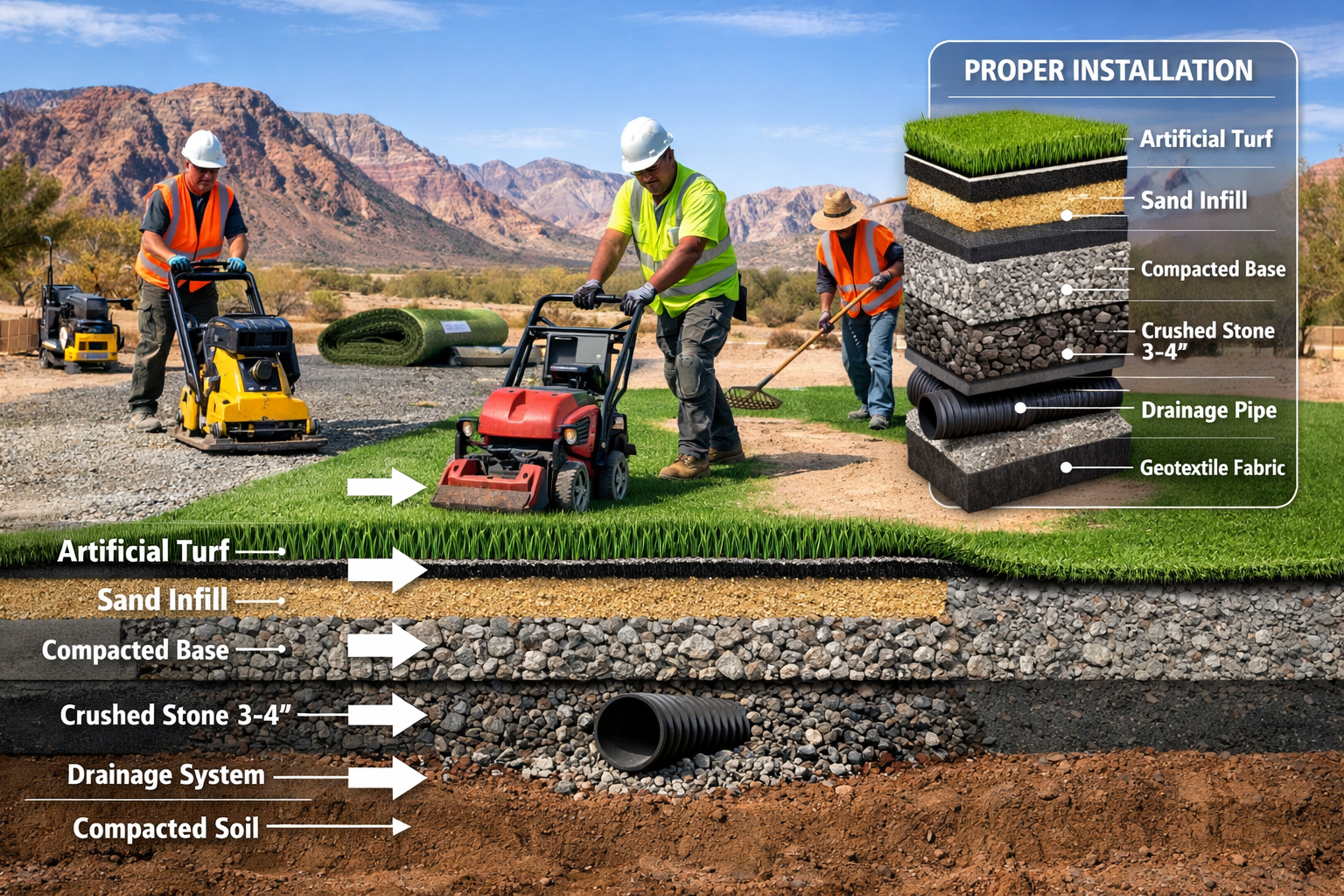
Professional artificial turf Nevada installation follows specific steps critical for long-term performance in desert conditions.
Site Preparation
Excavation depth typically ranges 3-4 inches for residential installations. Nevada's caliche soil often requires mechanical excavation and proper disposal of unsuitable materials.
Base materials must provide drainage and stability:
- Class II road base or decomposed granite
- Proper compaction to 95% density
- Laser grading for consistent drainage slopes
Drainage System Installation
Nevada installations require robust drainage due to monsoon intensity and soil conditions. Professional contractors install:
- Perimeter drainage where needed
- French drains for problem areas
- Proper connection to existing drainage systems
- Drainage rock layers where soil percolation is poor
Turf Installation Steps
Quality installation includes precise measuring, cutting, and seaming. Artificial turf comes in 12-15 foot wide rolls that require professional seaming for larger areas.
Seaming techniques must handle Nevada's temperature swings without separation or buckling. Professional contractors use:
- Seaming tape rated for high temperatures
- Proper adhesives that remain flexible
- Expansion allowances at edges and seams
Infill Application
Infill serves multiple purposes in artificial turf systems:
- Provides ballast against wind
- Supports turf fibers for realistic appearance
- Affects surface temperature and drainage
- Impacts long-term performance
Infill Options for Nevada
Silica sand remains the most common infill but retains heat in Nevada sun. Alternative options include:
- Crumb rubber: Good cushioning but can increase temperatures
- Organic infills: Cork, coconut fiber provide cooling but cost more
- Hybrid systems: Combine materials for balanced performance
- Cooling infills: Specialized products designed for hot climates
Edge Restraint and Finishing
Proper edge restraint prevents turf movement and maintains clean borders. Options include:
- Concrete mow strips for permanent borders
- Steel or aluminum edging for curved areas
- Proper staking every 6-12 inches
- Integration with existing hardscape
Maintenance and Longevity
Artificial turf Nevada installations require specific maintenance to achieve 15-20 year lifespans in desert conditions.
Regular Cleaning Requirements
Nevada dust and debris require more frequent cleaning than humid climates:
- Weekly hosing to remove dust and debris
- Monthly brushing against grain direction
- Quarterly deep cleaning for high-use areas
- Annual professional inspection and maintenance
Pet-Friendly Maintenance
Pet waste requires immediate attention to prevent odor and bacterial growth:
- Remove solid waste immediately
- Rinse affected areas with water
- Apply enzyme cleaners monthly for odor control
- Consider antimicrobial infill for heavy pet use
Temperature Management
During summer months, simple techniques reduce surface temperatures:
- Morning or evening watering cools surfaces 20-30°F
- Shade structures over high-use areas
- Light-colored furniture to reduce heat absorption
- Strategic landscaping for afternoon shade
Seasonal Maintenance Tasks
Spring preparation includes:
- Deep cleaning after winter dust accumulation
- Infill redistribution and top-off as needed
- Seam inspection after temperature cycling
- Drainage system check before monsoon season
Fall maintenance focuses on:
- Leaf and debris removal
- Final deep cleaning before winter
- Edge restraint inspection and repair
- Documentation for warranty purposes
Common Issues and Solutions
Matting occurs in high-traffic areas and requires regular brushing with stiff bristles. Severe matting may need professional restoration.
Infill displacement from wind or heavy use needs periodic redistribution. Keep extra infill material for touch-ups.
Seam separation can occur from thermal expansion. Professional repair prevents water infiltration and further damage.
Choosing the Right Contractor
Licensed insured and reviewed contractors make the difference between successful artificial turf Nevada installations and costly problems.
Licensing and Insurance Requirements
Nevada contractors need proper licensing for artificial turf installation:
- Nevada State Contractors License (C-10 Landscaping)
- Current liability insurance minimum $300,000
- Workers compensation coverage
- Local business licenses where required
Experience with Nevada Conditions
Local pros local knowledge matters for artificial turf installations. Look for contractors who understand:
- SNWA rebate program requirements
- Local soil conditions and drainage needs
- HOA approval processes and restrictions
- Seasonal installation considerations
What to Ask Before You Hire a Landscaper
Key questions help identify qualified artificial turf contractors:
- How many Nevada installations have you completed?
- What drainage systems do you recommend for my area?
- Which turf products perform best in Las Vegas heat?
- What warranty do you provide on installation?
- Can you handle SNWA rebate paperwork?
Red Flags to Avoid
Avoid contractors who:
- Quote significantly below market rates
- Cannot provide local references
- Lack proper licensing or insurance
- Push specific products without explaining options
- Request full payment before starting work
Getting Accurate Estimates
Quality contractors provide detailed estimates including:
- Site preparation requirements and costs
- Turf product specifications and pricing
- Drainage system recommendations
- Installation timeline and process
- Warranty terms and maintenance requirements
Cost guides that actually tell you what things cost help you evaluate proposals. Extremely low bids often indicate corners will be cut on base preparation or materials.
FAQ
How long does artificial turf last in Nevada?
Quality artificial turf lasts 15-20 years in Nevada with proper installation and maintenance. Cheaper products may only last 8-12 years due to UV degradation and heat stress.
Does artificial turf get too hot for pets and children?
Modern cooling turf reaches 140°F in peak summer heat, compared to 180°F for older products. Morning watering can reduce temperatures 20-30°F for comfortable use.
What rebates are available for artificial turf Nevada installations?
SNWA offers up to $3 per square foot for approved artificial turf installations, with a maximum 5,000 square feet per property. Some HOAs provide additional incentives.
How much water does artificial turf save in Nevada?
Typical Nevada lawns use 60-80 gallons per square foot annually. Artificial turf eliminates irrigation needs, saving 3,000-4,000 gallons monthly for average yards.
Can I install artificial turf myself?
DIY installation is possible but challenging. Proper base preparation, drainage, and seaming require specialized tools and experience. Poor installation voids manufacturer warranties.
What happens to artificial turf in monsoon season?
Quality installations with proper drainage handle monsoon rains without problems. Poor drainage can cause backing separation, infill washout, and odor issues.
Conclusion
Artificial turf Nevada landscaping directory installations offer significant water savings and long-term value when done correctly. The key factors for success include choosing appropriate turf for Nevada's climate, ensuring proper drainage and base preparation, and working with experienced local contractors.
Quality installations cost $6-9 per square foot but provide 15-20 years of performance with minimal maintenance. SNWA rebates help offset initial costs while delivering immediate water bill savings.
Find the right landscaper for your yard by verifying licenses, checking local references, and getting detailed estimates that include all necessary components. We verify so you don't have to - look for contractors who understand Nevada's unique challenges and SNWA requirements.
From basic lawn care to full backyard transformations, artificial turf provides a practical solution for Nevada homeowners ready to eliminate lawn irrigation costs and maintenance requirements.
Liked this guide? Follow us on Google Search
Related Directory Pages
- Browse Nevada Landscaping Pros
- Las Vegas Landscaping Services
- Browse Sod Installation Services in Nevada
- Also Read: Artificial Grass Installation Cost in Arizona (2026)
- Also Read: California Turf Replacement Rebates: Cash for Grass Guide
- Also Read: Utah Sod Installation: Best Grasses & Timing for Success
- Search Nevada Landscapers
Find a Landscaper Near You
Browse NV landscaping professionals on LandscapeProsDirectory.
Search Landscapers