
Nevada Xeriscaping: Complete Guide to Desert Landscaping
Complete Nevada xeriscaping guide covering plant selection, SNWA rebates, contractor licensing, and costs for Las Vegas, Reno desert landscaping projects.
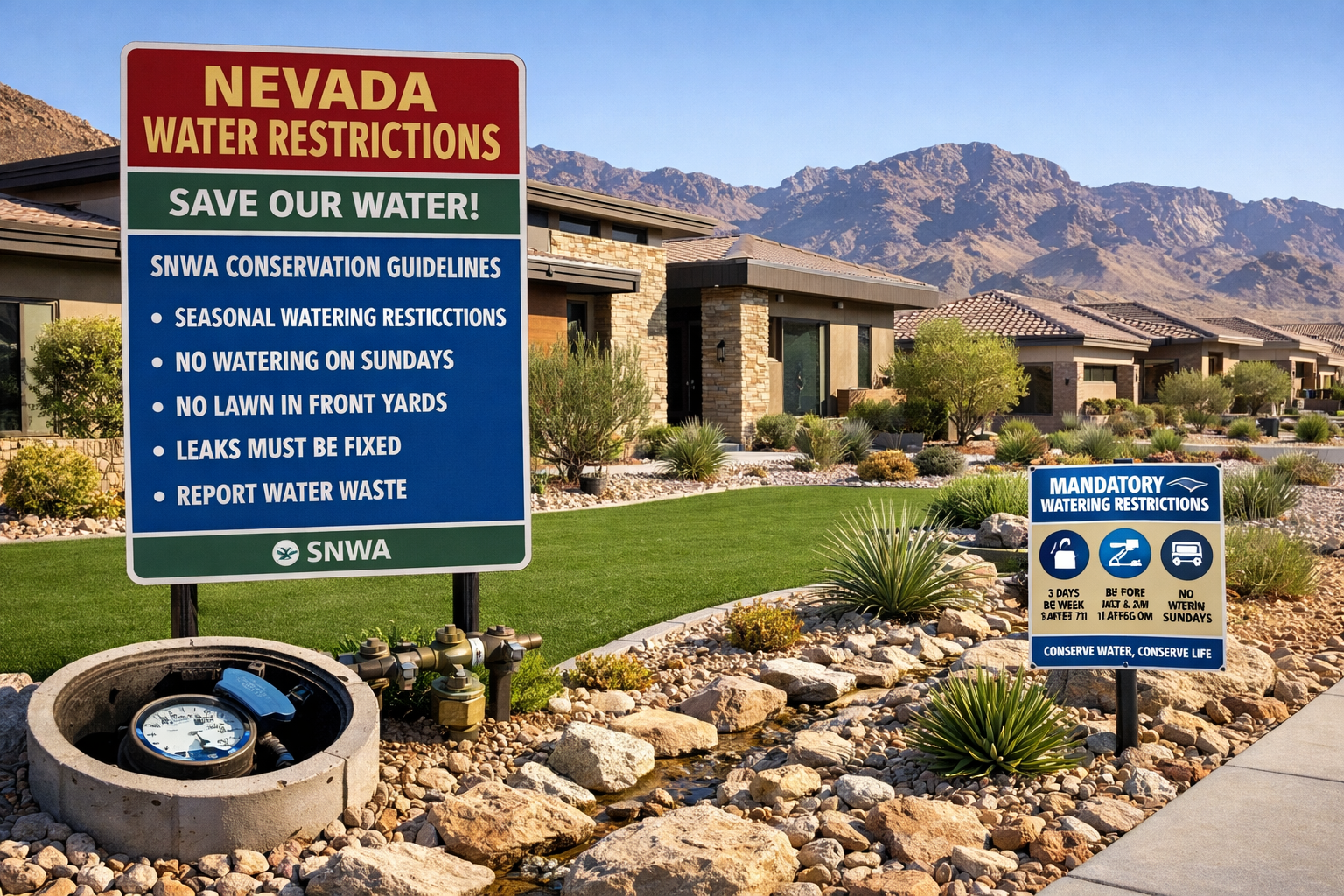
Nevada homeowners face a harsh reality in 2026: the Southern Nevada Water Authority's new grass removal mandates take effect in 2027, and Colorado River water allocations continue shrinking. Your yard deserves someone who knows what they're doing when it comes to desert landscaping that actually works.
Nevada xeriscaping isn't just about throwing some rocks and cacti in your yard. It's a strategic approach to desert landscaping that can cut your water bills by 60% while creating beautiful outdoor spaces that thrive in the Mojave Desert climate.
Key Takeaways
- Nevada xeriscaping can reduce residential water usage by 50-70% compared to traditional grass lawns
- Las Vegas and Reno have different climate zones requiring distinct plant selections and irrigation strategies
- SNWA rebates up to $3 per square foot for grass removal make xeriscaping financially attractive in 2026
- Proper contractor licensing varies between Clark County and Washoe County jurisdictions
- Artificial turf installations must meet new heat rating requirements to avoid surface temperatures above 140°F
Table of Contents
- Understanding Nevada's Water Crisis and Regulations
- Nevada Xeriscaping Plant Selection by Region
- Cost Analysis and Rebate Programs
- Contractor Licensing and What to Ask Before You Hire
- Design Elements: From Decomposed Granite to Rock Mulch
- Irrigation Systems for Nevada's Desert Climate
- HOA Rules in Master-Planned Communities
- Frequently Asked Questions
Understanding Nevada's Water Crisis and Regulations
Nevada's water situation gets more serious each year. The Colorado River water shortage has pushed the Southern Nevada Water Authority to implement strict conservation measures. Starting in 2027, new grass removal mandates will affect thousands of homeowners across Las Vegas landscaping services, Henderson, and Summerlin.
The current water restrictions already limit when you can water existing grass. But the real cost comes from your monthly bill. Traditional grass lawns in Nevada use 55-75 gallons per square foot annually. Nevada xeriscaping drops that number to 15-25 gallons per square foot.
SNWA Rebate Programs in 2026
The Water Smart Landscapes rebate program offers up to $3 per square foot for grass removal. Here's what qualifies:
- Functional turf removal: Front yards, side yards, and decorative grass areas
- Replacement requirements: Must install water-efficient landscaping or hardscaping
- Size minimums: Projects must remove at least 100 square feet of grass
- Inspection process: SNWA verifies completion before issuing rebate payments
Real reviews from real homeowners show these rebates can cover 40-60% of total xeriscaping project costs in Las Vegas and Henderson.
Climate Differences: Las Vegas vs Northern Nevada
Nevada isn't one climate zone. Las Vegas sits in the Mojave Desert at 2,000 feet elevation. Reno and Sparks are high desert at 4,500 feet elevation. This difference matters for plant selection and irrigation timing.
Las Vegas Climate Zone 9a:
- Summer highs: 105-115°F regularly
- Winter lows: Rarely below 25°F
- Rainfall: 4 inches annually
- Growing season: March through November
Reno Climate Zone 6b-7a:
- Summer highs: 85-95°F typically
- Winter lows: Can drop to 5°F
- Rainfall: 7 inches annually
- Growing season: May through September
Licensed landscaping pros in your area understand these differences. Know who you're letting into your yard by verifying they have experience with your specific climate zone.
Nevada Xeriscaping Plant Selection by Region
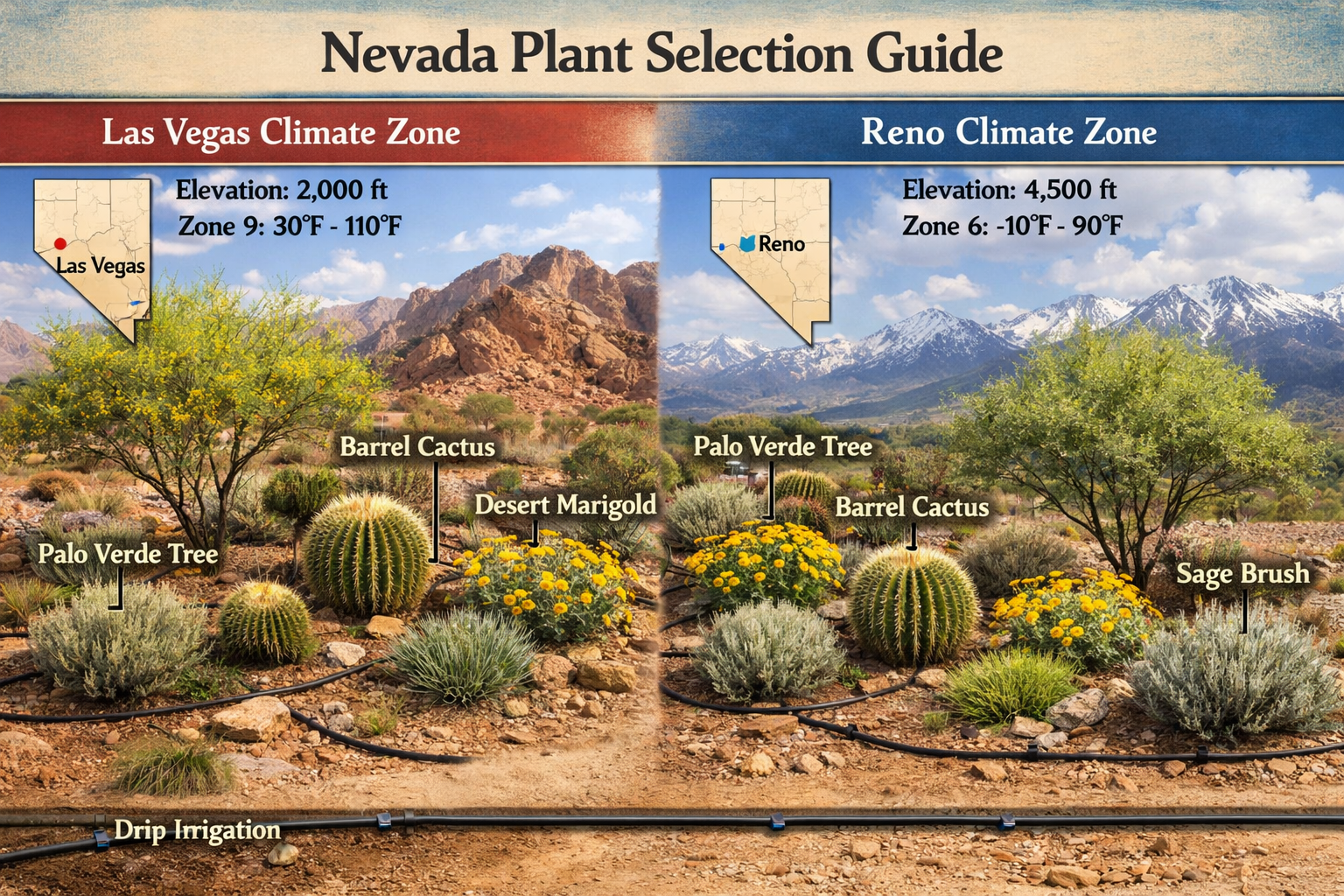
Choosing the right plants makes or breaks your Nevada xeriscaping project. Plants that thrive in Las Vegas heat might freeze in Reno landscaping services winters. We verify so you don't have to waste money on plants that won't survive.
Las Vegas and Southern Nevada Plant Palette
Trees for Structure:
- Palo Verde: Nevada's state tree, provides filtered shade, yellow spring blooms
- Desert Willow: Fast-growing, orchid-like flowers, handles extreme heat
- Texas Red Oak: Deciduous shade tree, red fall color, moderate water needs
- Mesquite: Extremely drought-tolerant, edible pods, thorny but hardy
Shrubs for Foundation Planting:
- Brittlebush: Yellow daisy flowers, silver-gray foliage, blooms fall through spring
- Desert Marigold: Year-round yellow flowers, compact growth, attracts butterflies
- Chuparosa: Red tubular flowers, hummingbird magnet, blooms most of the year
- Fairy Duster: Pink powder-puff flowers, fine-textured foliage, cold-sensitive
Accent Plants:
- Barrel Cactus: Slow-growing, yellow flowers, architectural form
- Agave: Multiple species available, dramatic spikes, long-lived
- Red Yucca: Coral flower spikes, grass-like foliage, not actually a yucca
- Ghost Plant: Succulent groundcover, purple-gray rosettes, spreads naturally
Reno and Northern Nevada Selections
Northern Nevada's colder winters and higher elevation require different plant choices. Local pros with local knowledge understand which plants survive Reno's freeze-thaw cycles.
Cold-Hardy Trees:
- Pinyon Pine: Native Nevada conifer, edible nuts, extremely drought-tolerant
- Utah Juniper: Evergreen structure, blue berries, handles wind and cold
- Gambel Oak: Scrub oak native to higher elevations, fall color
- Russian Olive: Silver foliage, fragrant flowers, very hardy but can spread
Shrubs for Northern Exposure:
- Big Sagebrush: Nevada's state plant, silver-gray, aromatic foliage
- Antelope Bitterbrush: Yellow flowers, important wildlife plant, very hardy
- Rabbitbrush: Bright yellow fall blooms, fine-textured foliage
- Fernbush: White flowers, fern-like leaves, native to mountain areas
Perennials and Grasses:
- Indian Ricegrass: Native bunchgrass, seed heads provide winter interest
- Desert Beardtongue: Purple flower spikes, attracts hummingbirds
- Blanket Flower: Orange and red daisy flowers, blooms spring through fall
- Nevada Bluegrass: Native cool-season grass, goes dormant in summer heat
Cost Analysis and Rebate Programs
Nevada landscaping directory xeriscaping costs vary significantly based on design complexity and plant choices. Cost guides that actually tell you what things cost help you budget realistic projects.
Typical Project Costs in 2026
Basic Xeriscaping (per square foot):
- DIY installation: $3-6 per square foot
- Professional installation: $8-15 per square foot
- High-end design: $15-25 per square foot
What's Included in Professional Installation:
- Grass removal and soil preparation
- Irrigation system installation or modification
- Plant installation with proper spacing
- Mulch or decorative rock application
- 1-year plant establishment warranty
Additional Costs to Consider:
- Permits: $50-200 depending on jurisdiction
- Soil amendments: $1-3 per square foot for caliche bar or hardpan
- Drainage improvements: $500-2000 for problem areas
- Lighting: $100-300 per fixture for landscape lighting
SNWA Rebate Calculations
Here's how the math works for a typical 1,000 square foot front yard conversion:
Project Costs:
- Professional installation: $12,000
- Permits and extras: $800
- Total project cost: $12,800
SNWA Rebate:
- 1,000 sq ft × $3 per sq ft = $3,000 rebate
- Net cost after rebate: $9,800
Annual Water Savings:
- Old grass water cost: $800 annually
- New xeriscaping water cost: $200 annually
- Annual savings: $600
The payback period runs about 16 years, but you get immediate benefits from reduced maintenance and increased property values in desert communities.
Contractor Licensing and What to Ask Before You Hire
Nevada has different licensing requirements depending on your location. Landscaping pros in your area must carry proper licenses and insurance. From basic lawn care to full backyard transformations, make sure you're working with legitimate contractors.
Clark County Licensing Requirements
Clark County requires landscaping contractors to hold:
- Nevada State Contractors License: C-10 classification for landscaping
- Business license: Through Clark County or municipal jurisdiction
- Workers compensation insurance: If they have employees
- General liability insurance: Minimum $300,000 coverage
Licensed, insured, and reviewed contractors protect you from liability if workers get injured on your property.
Washoe County and Northern Nevada
Washoe County follows similar requirements but processes applications through different departments:
- Nevada State Contractors Board: Same C-10 license requirement
- Washoe County business license: For unincorporated areas
- City licenses: Separate requirements for Reno and Sparks
Questions to Ask Before You Hire a Landscaper
The directory built for homeowners, not advertisers, means asking tough questions upfront:
Licensing and Insurance:
- "Can you provide your current Nevada contractors license number?"
- "Do you carry workers compensation and liability insurance?"
- "Can I see certificates of insurance before work starts?"
Experience and References:
- "How many xeriscaping projects have you completed in Nevada?"
- "Can you provide references from projects in my area?"
- "Do you understand SNWA rebate program requirements?"
Project Specifics:
- "What's included in your per-square-foot pricing?"
- "How long is your plant establishment warranty?"
- "What happens if plants die during the first year?"
Timeline and Process:
- "When can you start and how long will it take?"
- "Do you handle permit applications and SNWA rebate paperwork?"
- "What's your payment schedule?"
No fluff, just useful advice: get everything in writing before any work begins.
Design Elements: From Decomposed Granite to Rock Mulch
Nevada xeriscaping success depends on choosing the right hardscape materials. Different materials work better in different situations and climates.
Decomposed Granite Options
Decomposed granite (DG) creates natural-looking pathways and open areas between plants. In Nevada's climate, stabilized DG works better than loose material.
Stabilized DG Benefits:
- Stays in place during monsoon rains
- Doesn't blow around in desert winds
- Creates firm walking surface
- Available in multiple colors
Installation Requirements:
- 3-4 inch base depth for foot traffic areas
- Proper edge restraints to prevent spreading
- Compaction in 2-inch lifts
- Light watering during installation for binding
Rock Mulch Selection
Rock mulch conserves soil moisture and reduces maintenance. Choose colors and sizes that complement your home's architecture.
Popular Nevada Rock Types:
- Crushed granite: Gray to tan colors, angular pieces, good drainage
- River rock: Rounded stones, multiple sizes, more expensive but attractive
- Lava rock: Lightweight, red to black colors, porous texture
- Flagstone chips: Flat pieces, earth tones, works well around plants
Sizing Guidelines:
- Small areas: 3/8 inch to 3/4 inch chips
- Large areas: 1 to 3 inch rock
- Around small plants: Smaller rock won't overwhelm plantings
- Pathway areas: Larger rock provides better walking surface
Artificial Turf Considerations
Artificial turf popularity continues growing in Nevada, but new heat rating requirements matter for safety and comfort.
Heat Rating Requirements:
- Surface temperatures above 140°F can cause burns
- Light-colored turf reflects more heat than dark green
- Infill materials affect heat retention
- Shade structures reduce peak temperatures
Quality Factors:
- Blade height: 1.5 to 2 inches works well for residential use
- Density: Higher stitch count looks more realistic
- Drainage: Perforated backing prevents water pooling
- UV protection: Prevents fading in intense Nevada sun
Find the right landscaper for your yard who understands artificial turf installation requirements and local heat conditions.
Irrigation Systems for Nevada's Desert Climate
Efficient irrigation makes the difference between thriving plants and expensive failures. Nevada's low humidity and intense sun require specific watering strategies.
Drip Irrigation Basics
Drip irrigation delivers water directly to plant roots with minimal evaporation loss. Properly designed systems use 30-50% less water than spray irrigation.
System Components:
- Pressure regulator: Maintains consistent 25-30 PSI pressure
- Filter: Prevents clogging from sediment in water lines
- Backflow preventer: Required by most Nevada jurisdictions
- Timer/controller: Programmable for multiple zones and seasons
Emitter Selection:
- Trees: 2-4 GPH emitters, multiple per tree based on size
- Shrubs: 1-2 GPH emitters, typically one per plant
- Groundcover: Drip line or micro-spray for coverage areas
- Annual flowers: Quarter-inch tubing with built-in emitters
Watering Schedules by Season
Nevada's extreme seasonal temperature swings require different watering approaches throughout the year.
Spring (March-May):
- Increase frequency as temperatures rise
- Deep watering 2-3 times per week
- Morning watering reduces fungal problems
- Adjust for new plant establishment needs
Summer (June-September):
- Daily watering may be needed for new plantings
- Early morning watering (4-6 AM) reduces evaporation
- Deeper, less frequent watering for established plants
- Monitor soil moisture 4-6 inches deep
Fall (October-November):
- Gradually reduce watering frequency
- Continue deep watering to prepare plants for winter
- Adjust timers as daylight hours decrease
- Final fertilizer applications before dormancy
Winter (December-February):
- Minimal watering for dormant plants
- Watch for freeze damage to irrigation lines
- Hand watering may be needed during warm spells
- Prepare system for spring startup
HOA Rules in Master-Planned Communities
Many Nevada neighborhoods have homeowners associations with specific landscape requirements. Master-planned communities like Summerlin, Anthem, and Green Valley have detailed design guidelines.
Common HOA Landscape Requirements
Plant Coverage Requirements:
- Minimum percentage of living plants vs. hardscape
- Approved plant lists for front yard installations
- Mature size requirements to ensure proper coverage
- Seasonal color requirements for visible areas
Design Standards:
- Setback requirements from property lines and sidewalks
- Height restrictions for plants near sight lines
- Color coordination with neighboring properties
- Maintenance standards for plant health and appearance
Installation Process:
- Pre-approval required: Submit plans before starting work
- Professional installation: Many HOAs require licensed contractors
- Inspection process: HOA approval before project completion
- Compliance timeline: Deadlines for completing approved projects
Working with HOA Approval Process
Documentation Requirements:
- Scaled site plan showing existing and proposed landscaping
- Plant list with botanical and common names
- Material specifications for hardscape elements
- Irrigation plan showing coverage areas
Timeline Considerations:
- HOA review process: 2-4 weeks typically
- Revision requests: Additional 1-2 weeks for changes
- Installation scheduling: Coordinate with contractor availability
- Final inspection: Schedule before project completion
What to ask before you hire a landscaper: "Have you worked in my HOA before and do you understand the approval process?"
Frequently Asked Questions
How much water does Nevada xeriscaping actually save?
Nevada xeriscaping typically reduces residential landscape water use by 50-70% compared to traditional grass lawns. A 1,000 square foot grass area uses about 60,000 gallons annually, while the same area in xeriscaping uses 15,000-25,000 gallons.
What's the difference between xeriscaping costs in Las Vegas vs. Reno?
Las Vegas xeriscaping projects typically cost 10-15% more due to higher labor costs and material transportation. However, Las Vegas homeowners qualify for SNWA rebates up to $3 per square foot, while Northern Nevada has limited rebate programs.
Do I need a permit for xeriscaping in Nevada?
Most Nevada jurisdictions require permits for projects involving irrigation system changes or significant grading. Simple plant replacement usually doesn't need permits, but check with your local building department before starting work.
How long does it take for xeriscaping plants to establish in Nevada's climate?
Most Nevada xeriscaping plants need 1-2 full growing seasons to establish deep root systems. Trees may take 3-5 years to become fully drought-tolerant. Proper irrigation during establishment is critical for long-term success.
Can artificial turf handle Nevada's extreme heat?
Quality artificial turf can handle Nevada heat, but surface temperatures can exceed 140°F on summer days. Choose light-colored products with heat-reducing infill, and consider shade structures for areas where people walk barefoot.
What happens if my xeriscaping plants die after installation?
Reputable Nevada landscaping contractors provide 1-year plant establishment warranties. Plants that die from installation problems or defects get replaced at no cost. However, warranties typically don't cover damage from improper watering or extreme weather events.
Conclusion
Nevada landscaping directory xeriscaping offers a practical solution to rising water costs and mandatory conservation requirements. The key to success lies in choosing region-appropriate plants, working with licensed contractors who understand local conditions, and designing systems that work with Nevada's extreme climate.
Your yard deserves someone who knows what they're doing. Find the right landscaper for your yard by verifying licenses, checking references, and asking specific questions about Nevada xeriscaping experience. The SNWA rebate programs make 2026 an ideal time to convert water-hungry grass to beautiful, sustainable desert landscaping.
Start by calculating your potential water savings and rebate amounts. Then get quotes from at least three licensed contractors who specialize in Nevada xeriscaping. With proper planning and professional installation, your new desert landscape will thrive for decades while cutting your water bills significantly.
Liked this guide? Follow us on Google Search
Related Directory Pages
- Browse Nevada Landscaping Pros
- Las Vegas Landscaping Services
- Browse Xeriscaping Services in Nevada
- Also Read: Complete Guide to Xeriscaping in Arizona
- Also Read: California Xeriscaping: How to Save Water and Money
- Also Read: New Mexico Xeriscaping: Water-Wise Yards That Thrive
- Also Read: Utah Localscapes: Water-Wise Yard Design That Works
- Search Nevada Landscapers
Find a Landscaper Near You
Browse NV landscaping professionals on LandscapeProsDirectory.
Search Landscapers