
Santa Fe Landscaping: Adobe & Desert Garden Design
Expert guide to Santa Fe landscaping with native plants, adobe-compatible hardscapes, and design review requirements. Find qualified local pros for your project
Santa Fe homeowners face a unique challenge: creating landscapes that honor centuries-old Pueblo architectural traditions while surviving 7,000-foot elevation extremes. Your yard deserves someone who knows what they're doing when it comes to balancing historic design requirements with high-altitude gardening realities.
Santa Fe landscaping requires more than just drought-tolerant plants. The city's strict design guidelines, freeze-thaw cycles, and thin mountain air demand specialized knowledge that separates experienced local pros from general contractors.
Key Takeaways
- Native plants like piñon, juniper, and chamisa thrive at Santa Fe's 7,000-foot elevation
- Adobe-style landscapes require earth-tone palettes and traditional materials like flagstone and vigas
- Historic district and HOA design reviews add complexity to landscaping projects
- Freeze-thaw cycles demand specific hardscape installation techniques
- Dark sky ordinances restrict landscape lighting choices
Table of Contents
- Understanding Santa Fe's Unique Landscape Requirements
- Native Plants for High-Altitude Santa Fe Landscaping
- Adobe-Compatible Hardscape Materials and Design
- Navigating Design Review and Regulations
- FAQ
- Conclusion
Understanding Santa Fe's Unique Landscape Requirements
Santa Fe landscaping services sits at 7,199 feet above sea level. This altitude creates growing conditions unlike anywhere else in the Southwest. The thin air means intense UV exposure. Nights drop 30-40 degrees below daytime highs. Winter brings hard freezes that can crack poorly installed hardscapes.
Climate Challenges for Santa Fe Landscaping:
- Temperature swings: Daily variations of 30-50 degrees
- Freeze-thaw cycles: 100+ freeze events per winter
- Low humidity: Often below 20% during summer months
- Intense sun: UV levels 25% higher than sea level
- Limited growing season: Last frost in mid-May, first frost in early October
The city receives only 14 inches of annual precipitation. Most rain comes during July and August monsoons. This means your landscape must survive nine months with minimal water.
Soil Conditions:
Santa Fe's clay-heavy soil drains poorly. It expands when wet and contracts when dry. This movement damages foundations, walkways, and plant roots. Smart Santa Fe landscaping works with these soil conditions instead of fighting them.
Local pros know to amend clay soil with decomposed granite and organic matter. They understand proper drainage grades to direct water away from adobe structures. Find the right landscaper for your yard who understands these local soil challenges.
Pueblo Revival Design Principles:
Santa Fe's landscape traditions come from centuries of Pueblo architecture. These designs emphasize:
- Organic curves instead of straight lines
- Enclosed courtyards for wind protection
- Natural materials that age gracefully
- Earth-tone colors that blend with surroundings
- Functional beauty where every element serves a purpose
Modern Santa Fe landscaping honors these principles while adding contemporary comfort and efficiency.
Native Plants for High-Altitude Santa Fe Landscaping
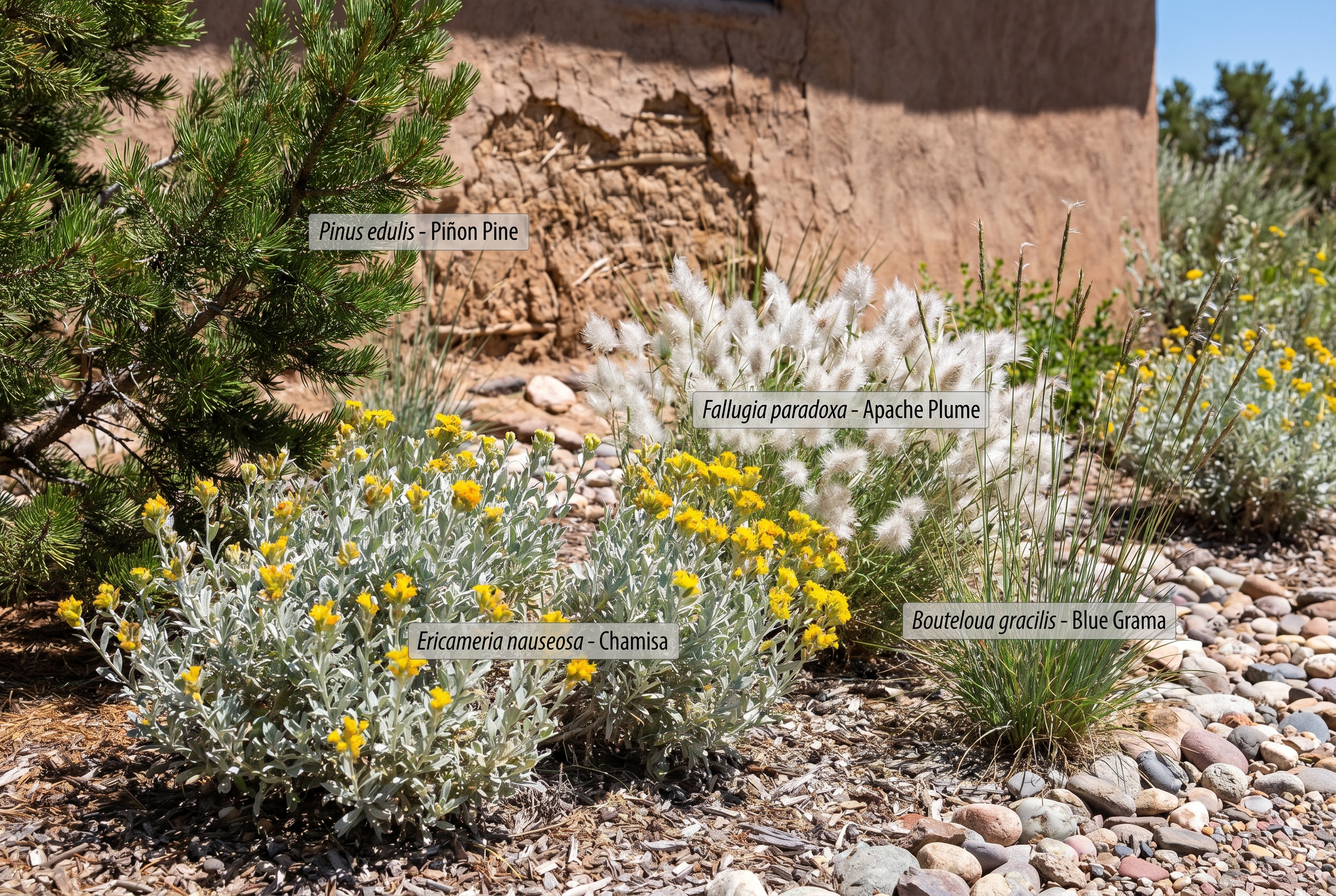
Native plants evolved to handle Santa Fe's extreme conditions. They need less water, survive temperature swings, and resist pests better than imported species. Licensed, insured, and reviewed landscapers stock these proven performers.
Trees for Santa Fe Landscapes:
Piñon Pine (Pinus edulis) grows slowly but lives for centuries. These drought-tolerant evergreens provide year-round structure. They produce edible pine nuts every few years. Mature trees reach 15-20 feet tall with equal spread.
One-Seed Juniper (Juniperus monosperma) handles poor soil and extreme drought. The silvery-blue berries attract birds. These trees work well as windbreaks or privacy screens.
New Mexico Locust (Robinia neomexicana) blooms with fragrant pink flowers in late spring. It fixes nitrogen in the soil, helping other plants grow. The thorny branches deter unwanted visitors.
Shrubs That Thrive:
Chamisa (Ericameria nauseosa) explodes with yellow flowers each fall. This native shrub grows 3-6 feet tall and equally wide. It needs no supplemental water once established.
Apache Plume (Fallugia paradoxa) produces white flowers followed by feathery seed heads. The silvery plumes catch light beautifully. This shrub tolerates alkaline soil and extreme drought.
Four O'Clock (Mirabilis multiflora) spreads into large mounds covered with magenta flowers. Blooms open in late afternoon, hence the name. It goes dormant in winter and returns each spring.
Grasses and Groundcovers:
Blue Grama Grass (Bouteloua gracilis) forms the backbone of high-desert lawns. This native grass stays green with minimal water. The seed heads look like tiny flags waving in the breeze.
Buffalo Grass (Poaceae dactyloides) creates dense, low-maintenance turf. It goes dormant and turns golden in winter. This grass handles foot traffic better than most alternatives.
Penstemon species offer flowers in purple, pink, red, and white. These perennials attract hummingbirds and butterflies. Different varieties bloom from spring through fall.
Water-Wise Planting Tips:
Group plants by water needs. Place thirsty species near downspouts or irrigation lines. Position drought-tolerant plants in areas that rely on natural rainfall.
Create microclimates using rocks, walls, and existing plants. North-facing areas stay cooler and moister. South-facing slopes get maximum sun and heat.
Mulch with decomposed granite or small river rock. Organic mulches like wood chips can blow away in Santa Fe's strong winds.
Adobe-Compatible Hardscape Materials and Design
Traditional Santa Fe hardscapes use materials that complement adobe architecture. These natural materials weather gracefully and maintain their beauty for decades when properly installed.
Flagstone Patios and Walkways:
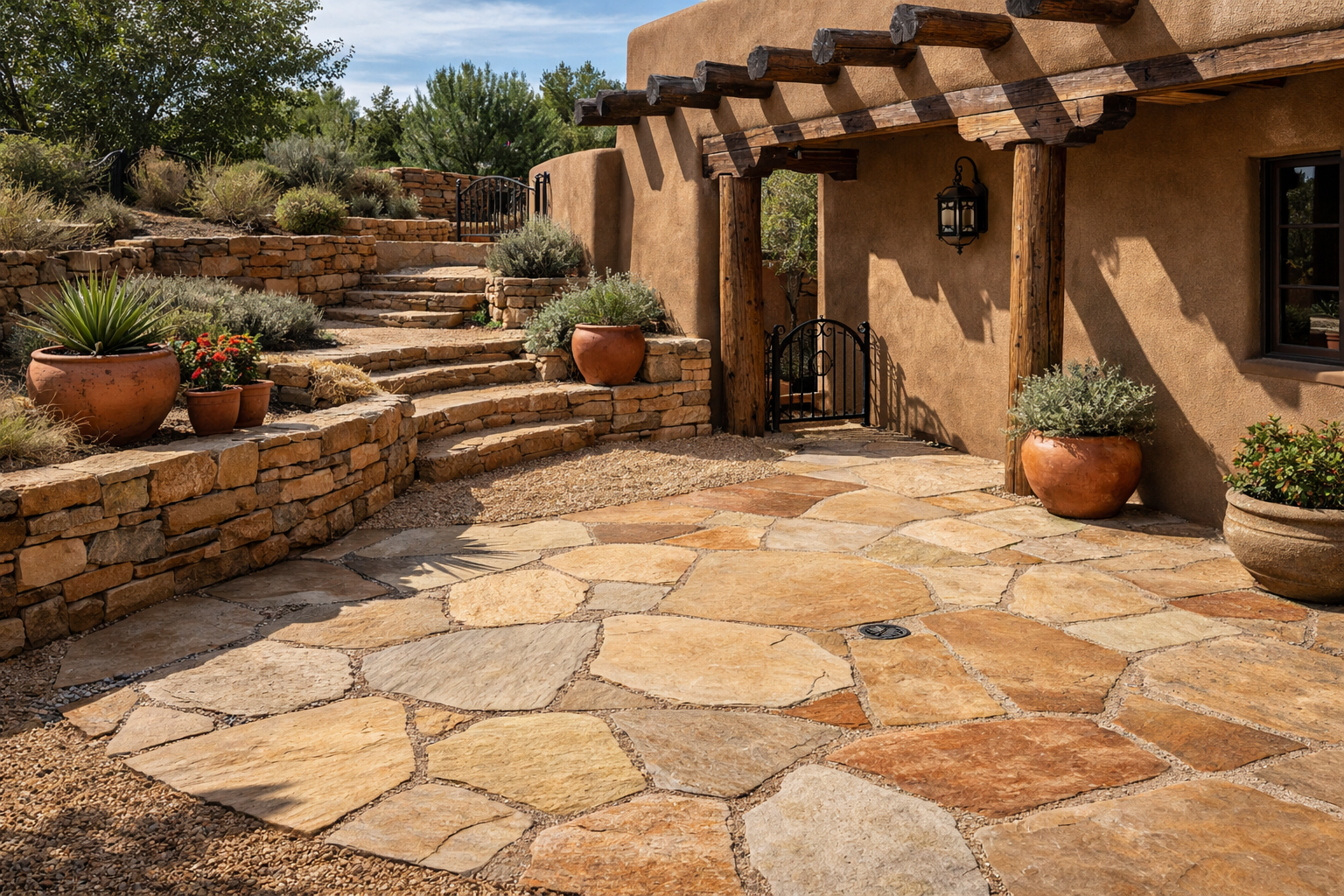
Flagstone remains the gold standard for Santa Fe landscaping. This sedimentary rock comes in earth tones that match adobe walls. Popular varieties include:
- Colorado Red: Warm rust and salmon tones
- Arizona Flagstone: Buff and tan colors
- Oklahoma Flagstone: Blue-gray with rust accents
Proper flagstone installation requires a 4-inch gravel base for drainage. Joints should be 1-2 inches wide to allow for thermal expansion. Sand-set flagstone costs $12-18 per square foot installed. Mortar-set applications run $18-25 per square foot.
Stucco and Adobe Walls:
Stucco walls define outdoor rooms and provide wind protection. Traditional stucco uses local clay, sand, and chopped straw. Modern versions add cement for durability.
Popular Santa Fe stucco colors:
- Warm beige (matching adobe)
- Soft salmon pink
- Sage green
- Dusty blue
Walls need proper footings below the frost line (18 inches in Santa Fe). Include weep holes for drainage. Expect to pay $15-25 per square foot for stucco walls.
Vigas and Latillas:
Vigas are the rounded wooden beams that extend through adobe walls. In landscapes, they create pergolas, gates, and decorative elements. Traditional vigas use local pine or fir logs.
Latillas are the smaller branches placed between vigas. They provide partial shade and authentic Southwest character. Both elements need regular maintenance to prevent insect damage.
Decomposed Granite Surfaces:
Decomposed granite (DG) creates natural-looking pathways and patios. This material compacts well and allows water infiltration. DG costs $3-6 per square foot installed.
Choose stabilized DG for high-traffic areas. The polymer binder prevents erosion while maintaining permeability. Unstabilized DG works well for informal paths and plant bed borders.
Terra Cotta and Ceramic Elements:
Terra cotta planters, fountains, and decorative tiles add authentic Southwest flavor. These clay products complement adobe architecture perfectly.
Maintenance considerations:
- Seal terra cotta annually to prevent freeze damage
- Choose frost-resistant ceramics rated for Zone 5b
- Drain water features completely before winter
Metal Accents:
Wrought iron and weathering steel (Corten) provide durable accents. These metals develop attractive patinas over time. Use them for:
- Garden gates and fencing
- Plant supports and trellises
- Fire pit surrounds
- Sculptural elements
Navigating Design Review and Regulations
Santa Fe takes architectural preservation seriously. Multiple layers of regulation can affect your landscaping project. Know who you're letting into your yard by choosing contractors familiar with local requirements.
Historic District Guidelines:
Properties in Santa Fe's historic districts must follow strict design standards. The Historic Design Review Board reviews all exterior changes visible from public areas.
Common requirements include:
- Earth-tone color palettes only
- Traditional materials (no concrete block or vinyl)
- Low-profile fencing (usually 4 feet maximum)
- Appropriate plant selections
- Compatible lighting fixtures
Submit applications 4-6 weeks before starting work. Include detailed plans, material samples, and plant lists. Approval typically takes 2-4 weeks.
Homeowners Association Rules:
Many Santa Fe neighborhoods have HOAs with landscape requirements. These often exceed city requirements for design consistency.
Typical HOA landscape rules:
- Pre-approved plant lists
- Irrigation system requirements
- Maintenance standards
- Fence height and material restrictions
- Holiday decoration guidelines
Review your HOA covenants before planning major changes. Some associations require landscape plans from licensed professionals.
Dark Sky Compliance:
Santa Fe's Dark Sky Ordinance protects the area's famous stargazing conditions. Landscape lighting must be:
- Fully shielded (no upward light)
- Warm color temperature (3000K or lower)
- Motion-activated when possible
- Turned off by 11 PM (residential areas)
Choose fixtures specifically rated as "Dark Sky Friendly." LED technology makes compliance easier while reducing energy costs.
Water Restrictions:
Santa Fe's Water Conservation Ordinance limits landscape water use. Key provisions include:
- No watering between 10 AM and 6 PM (April-October)
- Maximum 2 days per week irrigation
- Drought-tolerant plants required for new construction
- Turf area limitations for commercial properties
Violations carry fines starting at $50. Repeat offenders face water service restrictions.
Permitting Requirements:
Most landscape projects don't require city permits. However, you need permits for:
- Retaining walls over 4 feet tall
- Electrical work (including low-voltage lighting)
- Plumbing connections
- Structures like pergolas or gazebos
Licensed contractors handle permitting as part of their service. This protects you from code violations and insurance issues.
FAQ
What plants work best for Santa Fe's high altitude?
Native species like piñon pine, chamisa, Apache plume, and blue grama grass thrive at 7,000 feet. These plants evolved to handle temperature extremes, intense UV, and low humidity. They need minimal water once established and resist local pests naturally.
How much does Santa Fe landscaping cost?
Basic xeriscaping runs $8-15 per square foot. Flagstone patios cost $12-25 per square foot depending on installation method. Complete landscape renovations average $15,000-40,000 for typical residential properties. Get quotes from multiple licensed pros for accurate pricing.
Do I need design approval for landscape changes?
Historic district properties require Historic Design Review Board approval for visible changes. Many HOAs also require pre-approval. Check your property's designation and HOA rules before starting work. Most contractors familiar with Santa Fe handle these applications.
What hardscape materials survive freeze-thaw cycles?
Natural flagstone, properly installed concrete, and quality pavers handle Santa Fe's climate well. Avoid cheap concrete products and ensure proper drainage. All hardscapes need 4+ inch gravel bases and joints for thermal expansion.
How do I find qualified Santa Fe landscapers?
Look for contractors with local experience, proper licensing, and insurance. Real reviews from real homeowners help identify quality pros. Ask about their experience with historic districts, native plants, and high-altitude conditions. We verify so you don't have to.
What are Santa Fe's water restrictions?
No watering between 10 AM and 6 PM during growing season. Maximum 2 days per week irrigation allowed. New landscapes must emphasize drought-tolerant plants. Violations carry fines and potential service restrictions.
Conclusion
New Mexico landscaping directory landscaping succeeds when it honors local traditions while embracing practical solutions for high-altitude gardening. The combination of Pueblo design principles, native plants, and quality hardscape materials creates landscapes that improve with age.
Your yard deserves someone who knows what they're doing when it comes to Santa Fe's unique requirements. From basic lawn care to full backyard transformations, the right landscaper understands historic district rules, native plant selection, and proper installation techniques for extreme weather.
Start by defining your goals and budget. Research local regulations that might affect your project. Get quotes from multiple licensed, insured professionals with Santa Fe experience. Ask about their approach to design review, plant warranties, and ongoing maintenance.
The investment in quality Santa Fe landscaping pays dividends through reduced water bills, minimal maintenance, and increased property value. Find your next landscaper here through our directory of verified local professionals who understand what makes Santa Fe landscapes thrive.
Liked this guide? Follow us on Google Search
Related Directory Pages
- Browse New Mexico Landscaping Pros
- Santa Fe Landscaping Services
- Browse Landscape Design Services in New Mexico
- Also Read: Sedona Red Rock Landscaping: Blending with Nature
- Also Read: Bay Area Landscaping: Fog, Slopes & Native Gardens
- Also Read: Park City Landscaping: Alpine Designs for Mountain Homes
- Also Read: Nevada Landscape Design: Planning Your Dream Desert Yard
- Search New Mexico Landscapers
Find a Landscaper Near You
Browse NM landscaping professionals on LandscapeProsDirectory.
Search Landscapers