
Utah Irrigation: Smart Systems for Water-Wise Yards
Get Utah irrigation rebates up to $100 for smart controllers. Expert guide covers drip vs sprinkler systems, backflow prevention, and alkaline water solutions.
Utah homeowners waste over 25 billion gallons of water annually on outdoor irrigation. Most of that waste comes from outdated sprinkler timers that water lawns during rainstorms and ignore seasonal changes. The state now offers rebates up to $100 for smart controllers that can cut outdoor water use by 30% while keeping yards healthy.
Your yard deserves someone who knows what they're doing when it comes to Utah's unique irrigation challenges. From alkaline water that clogs emitters to frost-proof installation requirements, getting irrigation right in Utah takes local knowledge.
Key Takeaways
- Smart irrigation controllers with WaterSense certification qualify for Utah rebates up to $100
- Drip irrigation uses 50% less water than sprinklers for most landscape plants
- Utah's alkaline water requires specific filtration to prevent system clogs
- Frost-proof installation depth must reach 18 inches in northern Utah counties
- Secondary water systems need backflow prevention devices to meet state codes
Table of Contents
- Smart Controller Requirements for Utah Rebates
- Drip vs Sprinkler Systems in Desert Climates
- Secondary Water Integration and Backflow Prevention
- Frost-Proof Installation Standards
- Managing Alkaline Water and Scaling Issues
- Seasonal Programming for Utah's Climate Zones
- FAQ
- Conclusion
Smart Controller Requirements for Utah Rebates
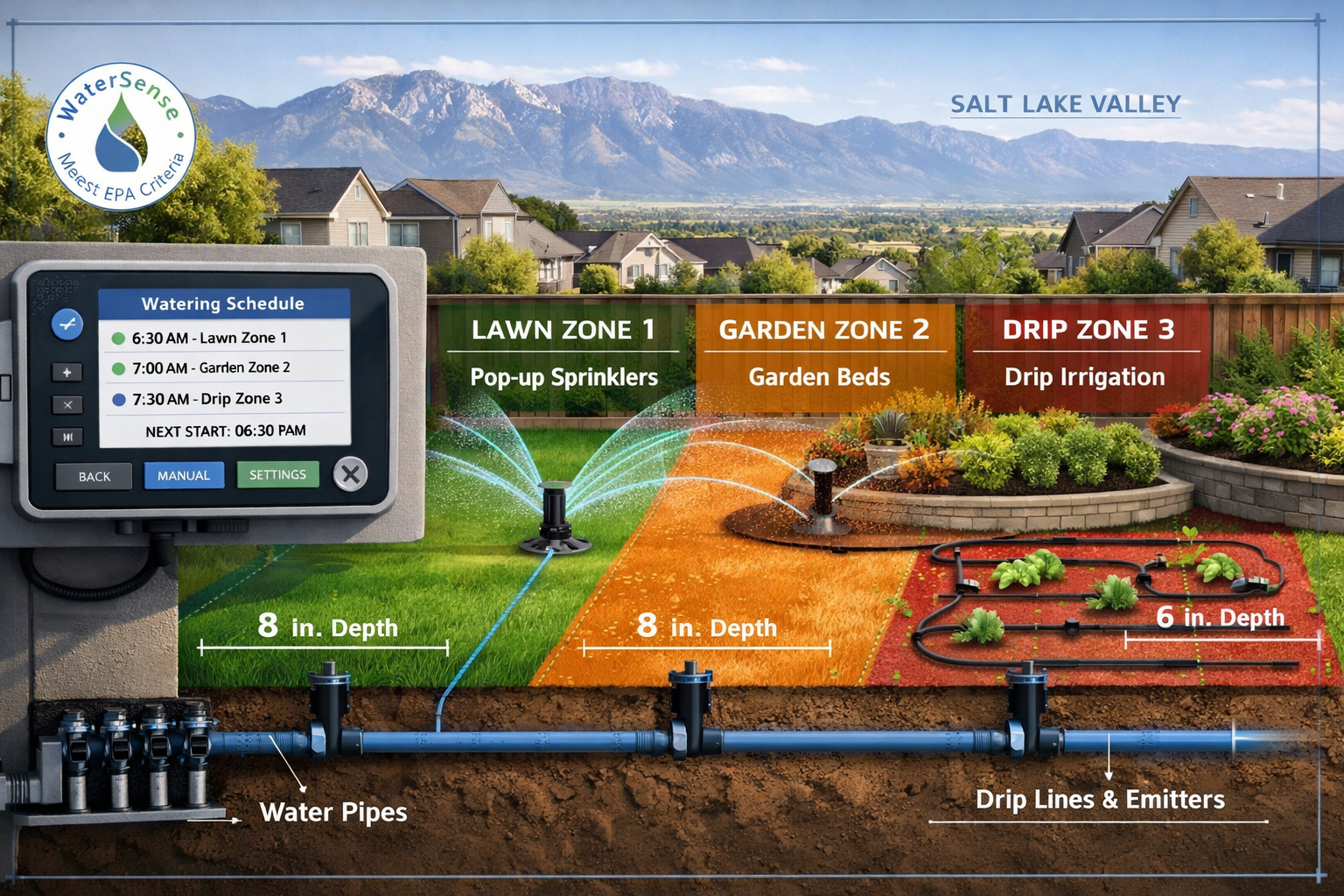
Utah landscaping directory's smart controller rebate program requires WaterSense certification and specific features. The state wants controllers that adjust watering based on weather data, not just programmable timers with more buttons.
Required Features for Rebates:
- Weather-based scheduling that connects to local weather stations
- Soil moisture sensors or evapotranspiration calculations
- Rain delay functions that skip watering during storms
- Seasonal adjustment capabilities for Utah's extreme temperature swings
- Zone-specific programming for different plant types and sun exposure
Popular models that qualify include the Rachio 3, Rain Bird ST8O-2.0, and Hunter Hydrawise Pro-HC. These controllers cost $150-$300 but the state rebate covers $50-$100 depending on your water district.
Installation Requirements:
Licensed contractors must install controllers in Salt Lake City and Provo to qualify for rebates. St. George allows homeowner installation with permit approval. The controller needs 120V power and WiFi connection for weather updates.
Most Utah irrigation contractors charge $200-$400 for smart controller installation including basic programming. Get quotes from at least three licensed pros before choosing. Real reviews from real homeowners show installation quality varies significantly between contractors.
Drip vs Sprinkler Systems for Utah Landscapes
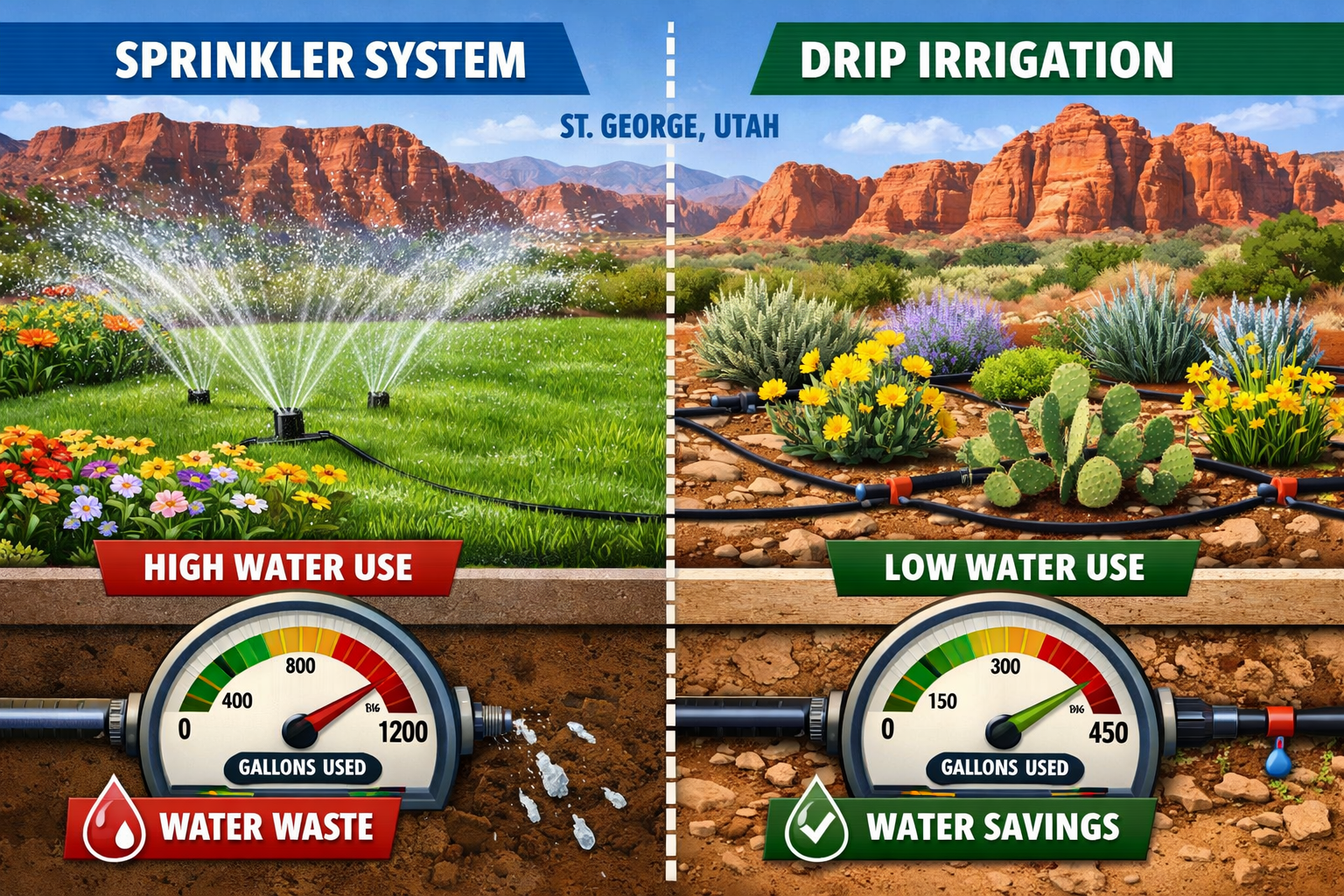
Utah's low humidity and intense sun make drip irrigation the smart choice for most landscape plants. Sprinklers lose 30-50% of water to evaporation during summer months. Drip systems deliver water directly to root zones with minimal waste.
When to Choose Drip Irrigation:
- Shrub and perennial beds where plants are spaced irregularly
- Vegetable gardens that need consistent soil moisture
- Slopes and hillsides where sprinklers cause runoff
- Areas with secondary water that contains sediment
- Xeriscaping projects with native Utah plants
When Sprinklers Make Sense:
- Turf areas larger than 500 square feet
- Play areas where kids need soft grass surface
- Front yards where HOA rules require traditional lawns
- Sports courts and recreational spaces
Cost Comparison:
Drip irrigation costs $2-4 per square foot installed. Sprinkler systems run $3-6 per square foot depending on head spacing and controller complexity. Drip systems pay for themselves within 2-3 years through water savings in most Utah locations.
Quality drip installation requires pressure regulation, filtration, and proper emitter selection. Cheap systems clog within months from Utah's mineral-heavy water. Licensed contractors know which components last in local conditions.
Secondary Water Integration and Backflow Prevention
Utah's secondary water systems deliver untreated irrigation water to many neighborhoods. These systems require specific backflow prevention devices to protect drinking water supplies.
Backflow Prevention Requirements:
- Reduced pressure zone assemblies for high-hazard connections
- Double check valve assemblies for standard residential systems
- Annual testing by certified technicians
- Permit approval before connecting to secondary water lines
Salt Lake City requires RPZ assemblies for all secondary water connections. Provo allows double check valves for residential irrigation. St. George has zone-specific requirements based on water source elevation.
Secondary Water Challenges:
- Sediment and debris that clogs drip emitters and spray nozzles
- Inconsistent pressure that affects sprinkler coverage patterns
- Seasonal availability limited to April through October in most areas
- Water quality variations that require adjustable filtration
Filtration systems for secondary water cost $300-800 installed. Screen filters work for sprinklers but drip systems need disc or media filters. Replace filter elements every 6-12 months depending on water quality.
Frost-Proof Installation and Winterization
Utah's freeze-thaw cycles destroy improperly installed irrigation systems. Pipes must reach proper depth and systems need complete drainage for winter shutdown.
Installation Depth Requirements:
- 18 inches minimum in Salt Lake and Davis counties
- 24 inches recommended in Cache and Weber counties
- 12 inches acceptable in Washington County (St. George area)
- Deeper on north-facing slopes where frost penetrates further
Winterization Process:
- Shut off water supply at main valve and meter
- Drain all pipes using compressed air or gravity drainage
- Remove above-ground components like timers and sensors
- Insulate backflow devices or move to heated locations
- Document system layout for spring startup
Most irrigation contractors charge $75-150 for professional winterization. DIY winterization saves money but improper drainage causes expensive freeze damage. Know who you're letting into your yard - get references from neighbors who've used the contractor for several seasons.
Managing Utah's Alkaline Water and Scaling
Utah's water contains high levels of calcium and magnesium that create scale buildup in irrigation systems. This scaling clogs emitters and reduces system efficiency over time.
Water Quality Challenges:
- pH levels 7.5-8.5 in most Utah water districts
- Total dissolved solids often exceed 500 ppm
- Calcium carbonate precipitation in warm weather
- Iron staining in some well water systems
Scale Prevention Methods:
- Acid injection systems for large commercial installations
- Water softening for residential drip systems
- Regular flushing of drip lines and emitters
- Emitter selection designed for hard water conditions
Pressure-compensating emitters with self-flushing features work best in Utah conditions. Avoid button emitters and micro-sprays that clog easily. Quality emitters cost more upfront but last 3-5 years versus 1-2 years for cheap components.
Maintenance Schedule:
- Monthly visual inspection of all emitters and spray patterns
- Quarterly system flushing to remove sediment buildup
- Annual deep cleaning with mild acid solutions
- Bi-annual filter replacement for drip systems
Seasonal Programming for Utah's Climate Zones
Utah spans multiple climate zones from high desert to alpine conditions. Smart irrigation programming must account for elevation, aspect, and local weather patterns.
Northern Utah (Salt Lake City, Provo):
- April-May: 2-3 times per week as soils warm up
- June-August: Daily watering for turf, every other day for shrubs
- September: Reduce frequency as temperatures drop
- October: Final deep watering before winter shutdown
Southern Utah (St. George area):
- March-April: Resume watering as growth begins
- May-September: Daily watering often necessary for turf
- October-November: Gradual reduction in frequency
- December-February: Minimal watering for established plants
Mountain Areas (Park City, Logan):
- May-June: Late start due to extended frost season
- July-August: Peak watering season with intense sun
- September: Quick transition to fall schedule
- Early October: System shutdown before hard freezes
Smart controllers adjust automatically for local conditions when properly programmed. The Utah Division of Water Resources publishes weekly watering guidelines that integrate with most WaterSense controllers.
FAQ
What rebates are available for Utah irrigation upgrades?
Utah offers up to $100 rebates for WaterSense smart controllers plus additional incentives for drip irrigation conversion. Many water districts provide extra rebates on top of state programs. Check with your local water department for current offerings.
Do I need a permit for irrigation system installation?
Most Utah cities require permits for new irrigation systems or major modifications. Simple controller replacements typically don't need permits. Salt Lake City and Provo have stricter requirements than smaller municipalities.
How much water should I expect to save with a smart controller?
Properly programmed smart controllers reduce outdoor water use by 20-40% compared to basic timers. Actual savings depend on your current watering habits and system efficiency. Overwatered lawns see the biggest improvements.
What's the best irrigation method for Utah's native plants?
Drip irrigation works best for most native Utah plants once established. These plants evolved in low-water conditions and often suffer from overwatering with sprinkler systems. Use 1-2 GPH emitters spaced 18-24 inches apart.
When should I winterize my irrigation system?
Northern Utah systems should be winterized by mid-October before hard freezes. Southern Utah can often wait until November. Watch weather forecasts and winterize before the first hard freeze below 28 degrees.
How often do irrigation systems need professional maintenance?
Annual spring startup and fall winterization by professionals prevents most problems. DIY monthly inspections catch issues early. Major repairs or system modifications should always use licensed contractors who understand local codes.
Conclusion
Smart Utah landscaping directory irrigation systems combine water-saving technology with proper design for local conditions. WaterSense controllers, drip irrigation, and professional installation create systems that use 30-50% less water while maintaining healthy landscapes.
The key is working with contractors who understand Utah's unique challenges. From alkaline water management to frost-proof installation, local knowledge makes the difference between systems that last decades versus constant repairs.
Start by getting quotes from three licensed irrigation contractors in your area. Ask about their experience with smart controllers and Utah water conditions. Real reviews from real homeowners help identify contractors who deliver quality installations.
Take advantage of current rebate programs while they're available. The combination of state incentives and long-term water savings makes 2026 an excellent time to upgrade your Utah irrigation system. Find the right landscaper for your yard through verified local directories that check licenses and insurance before listing contractors.
Liked this guide? Follow us on Google Search
Related Directory Pages
- Browse Utah Landscaping Pros
- Salt Lake City Landscaping Services
- Browse Irrigation Services in Utah
- Also Read: Smart Irrigation in California: Water-Saving Systems That Work
- Also Read: Irrigation System Repair and Maintenance in Arizona
- Also Read: Nevada Irrigation: Smart Watering in the Desert
- Also Read: Smart Irrigation in New Mexico: Water Systems for High Desert
- Search Utah Landscapers
Find a Landscaper Near You
Browse UT landscaping professionals on LandscapeProsDirectory.
Search Landscapers