
Utah Landscaping: Complete Guide for Homeowners (2026)
Complete Utah landscaping guide covering water-wise trends, alkaline soil plants, contractor licensing, costs, and climate zones. Find licensed pros for your ya
Utah homeowners spend an average of $8,000 more on landscaping repairs and replacements than residents in neighboring states. The reason? Most hire landscapers who don't understand Utah's unique alkaline soil, brutal temperature swings, and strict water regulations.
Your yard deserves someone who knows what they're doing. Utah's high-desert climate demands specific plant choices, irrigation systems, and soil amendments that work with the state's challenging conditions. From the Wasatch Front's temperature inversions to St. George's Mojave heat, successful Utah landscaping requires local knowledge.
This guide covers everything Utah homeowners need to know about landscaping in 2026. You'll learn about climate zones, water-wise design trends, contractor licensing requirements, and the real costs of common projects. No fluff, just useful advice to help you find the right landscaper for your yard.
Key Takeaways
- Utah's alkaline soil requires specific plant selections and soil amendments for successful landscaping
- Water-wise landscaping dominates 2026 trends, with shrinking lawns and drought-tolerant plant choices
- The Localscapes program offers rebates up to $2,500 for water-efficient landscape conversions
- Utah contractors must hold DOPL licenses for projects over $3,000
- Climate varies dramatically from northern Utah's cold winters to St. George's desert conditions
Table of Contents
- Understanding Utah's Climate Zones and Challenges
- Water-Wise Utah Landscaping Trends for 2026
- Plant Selection for Utah's Alkaline Soil
- Irrigation and Water Management
- Finding Licensed Utah Landscaping Contractors
- Utah Landscaping Costs and Budgeting
- Seasonal Considerations and Maintenance
- FAQ
Understanding Utah's Climate Zones and Challenges
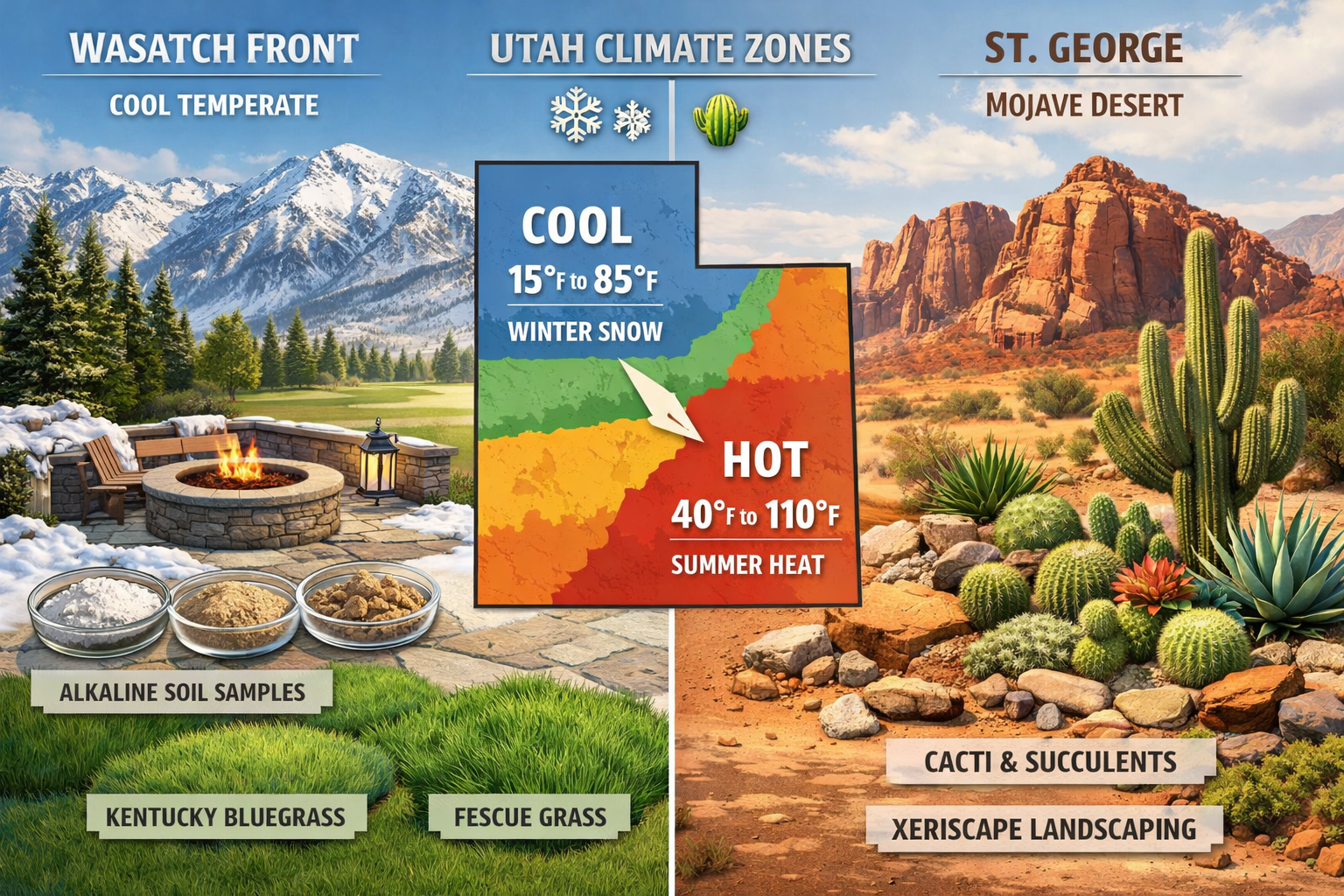
Utah landscaping directory's landscape varies dramatically from north to south. Understanding your specific climate zone determines which plants will thrive and which landscaping approaches work best.
Wasatch Front Climate
The Wasatch Front, including Salt Lake City, Provo, Ogden, and Lehi, experiences a semi-arid continental climate. Winters bring heavy snow and temperatures below 20°F. Summers reach 95°F with low humidity.
Temperature inversions create unique challenges. Cold air gets trapped in valleys during winter, leading to poor air quality and extended freezing periods. Your landscaping needs to handle these temperature extremes.
Alkaline soil dominates the region. Most soils test between pH 7.5 and 8.5. This affects nutrient availability and limits plant choices. Many common landscaping plants struggle in alkaline conditions.
St. George and Southern Utah
St. George sits in Utah's Mojave Desert region. Expect hot, dry summers with temperatures exceeding 105°F and mild winters rarely dropping below freezing.
The growing season extends nearly year-round. Desert landscaping principles apply here. Water conservation becomes critical, and plant selection focuses on heat and drought tolerance.
Mountain and High-Elevation Areas
Park City and other mountain communities face short growing seasons and extreme winter conditions. Snow loads can damage plants and hardscaping. Late spring frosts kill tender plants well into May.
Elevation affects plant hardiness. A plant that thrives in Salt Lake City might not survive Park City's conditions.
Silicon Slopes Development Boom
New construction in Lehi, Draper, and surrounding areas creates unique landscaping opportunities. Disturbed soil from construction often needs extensive amendment. Grading issues affect drainage and plant establishment.
Many new developments require HOA-approved landscaping. Check restrictions before planning major changes.
Water-Wise Utah Landscaping Trends for 2026
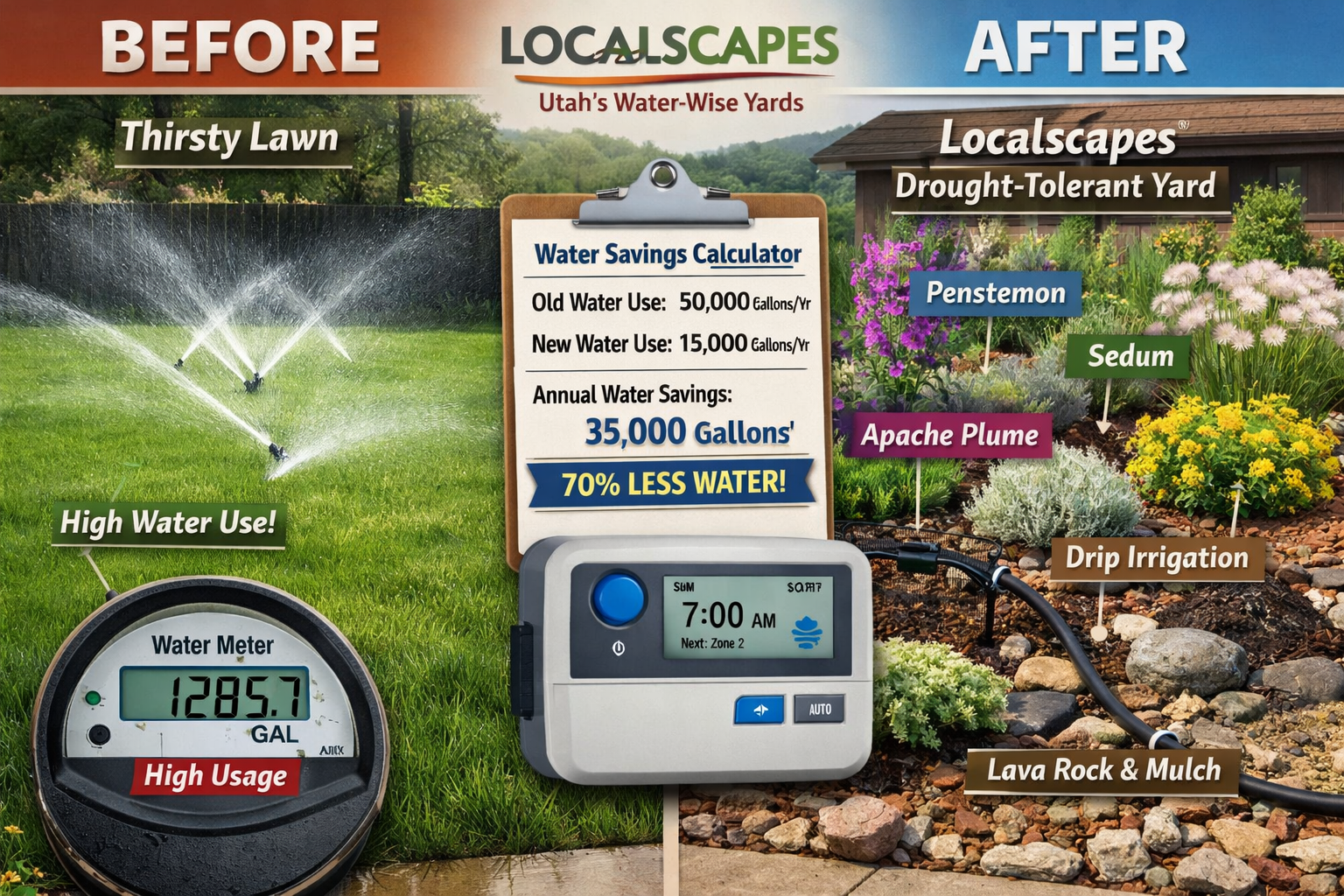
Water conservation drives Utah landscaping trends in 2026. The state's ongoing drought concerns and rising water costs push homeowners toward low-maintenance, drought-tolerant designs.
The Localscapes Program
Utah's Localscapes program remains the gold standard for water-efficient landscaping. The program offers:
- Rebates up to $2,500 for qualifying landscape conversions
- Plant lists specific to Utah conditions
- Design guidelines that reduce water use by 50% or more
Localscapes focuses on native and adapted plants that thrive without supplemental irrigation once established. The program requires specific plant coverage ratios and mulching requirements.
Shrinking Lawns, Not Disappearing
Lawns are getting smaller, not eliminated entirely. Utah homeowners keep turf where it's functional - play areas, gathering spaces, and high-traffic zones. The rest converts to drought-tolerant alternatives.
Cool-season grasses work best in northern Utah:
- Kentucky bluegrass for high-quality, moderate-water lawns
- Tall fescue for durability and lower water needs
- Fine fescue for low-traffic areas with minimal irrigation
Hardscaping and Mulching Trends
Decorative rock and mulched beds replace high-maintenance planted areas. Popular choices include:
- Crushed granite for pathways and borders
- River rock for drainage areas and accents
- Wood mulch to retain soil moisture and suppress weeds
Permeable hardscaping helps manage Utah's intense summer thunderstorms while reducing maintenance.
Smart Irrigation Systems
Drip irrigation and smart controllers become standard installations. These systems:
- Reduce water waste by 30-50%
- Adjust watering based on weather conditions
- Meet many municipal water restrictions automatically
Secondary water systems in some Utah communities provide cheaper irrigation water. Factor this into your irrigation planning.
Plant Selection for Utah's Alkaline Soil
Utah's alkaline soil limits plant choices but doesn't eliminate beautiful landscaping options. Success comes from choosing plants adapted to high pH conditions.
Trees for Utah Landscapes
Drought-tolerant trees that handle alkaline soil:
- Honey Locust - Fast growing, filtered shade, tolerates poor soil
- Austrian Pine - Evergreen, wind resistant, handles alkaline conditions
- Gambel Oak - Native, excellent fall color, very drought tolerant
- London Plane Tree - Large shade tree, tolerates urban conditions
Avoid acid-loving trees like dogwoods, azaleas, and most maples. They struggle in Utah's alkaline soil.
Shrubs and Perennials
Native and adapted shrubs perform best:
- Serviceberry - Native, spring flowers, edible berries
- Rabbitbrush - Bright yellow fall blooms, extremely drought tolerant
- Penstemon - Native wildflower, attracts pollinators
- Russian Sage - Silvery foliage, purple flowers, very low water
Ornamental grasses add texture and movement:
- Blue Grama - Native, ornamental seed heads
- Buffalo Grass - Low-water lawn alternative
- Feather Reed Grass - Tall, architectural form
Soil Amendment Strategies
Sulfur applications can lower soil pH slightly, but dramatic changes aren't practical or sustainable. Instead:
- Add organic matter to improve soil structure
- Use raised beds for acid-loving plants
- Choose alkaline-tolerant varieties of desired plants
Compost and mulch improve any soil type. They increase water retention and provide slow-release nutrients.
Irrigation and Water Management
Efficient water use defines successful Utah landscaping. Understanding irrigation options and water regulations helps you make smart choices.
Municipal Water Restrictions
Most Utah cities implement seasonal watering restrictions. Common rules include:
- Odd/even watering days based on address
- No watering during peak hours (typically 10 AM to 6 PM)
- Seasonal shut-off periods for sprinkler systems
Check your city's current restrictions. Violations can result in fines and water service penalties.
Secondary Water Systems
Many Wasatch Front communities offer secondary water for irrigation. This non-potable water costs less than culinary water but requires separate irrigation systems.
Secondary water benefits:
- Lower cost per gallon
- Often exempt from some watering restrictions
- Reduces demand on culinary water supplies
Installation requirements vary by city. Some require backflow prevention devices and separate metering.
Smart Irrigation Technology
Weather-based controllers adjust watering schedules automatically. They use local weather data to:
- Skip watering cycles during rain
- Increase watering during hot, dry periods
- Adjust seasonal watering amounts
Soil moisture sensors provide even more precision. They measure actual soil conditions and water only when needed.
Drip Irrigation Benefits
Drip systems deliver water directly to plant roots. Benefits include:
- 50-70% water savings compared to sprinklers
- Reduced weed growth by watering only desired plants
- Better plant health through consistent soil moisture
- Compliance with water restrictions in many cities
Drip irrigation works especially well for trees, shrubs, and perennial beds.
Finding Licensed Utah Landscaping Contractors
Know who you're letting into your yard. Utah requires specific licensing for landscaping contractors, and checking credentials protects your investment.
DOPL Licensing Requirements
The Utah Division of Professional Licensing (DOPL) regulates landscaping contractors. Requirements include:
- Contractor license for projects over $3,000
- General liability insurance
- Workers' compensation insurance for employees
- Continuing education to maintain licenses
Unlicensed contractors can't legally perform work over $3,000. They also can't pull permits or provide warranty protections.
What to Ask Before You Hire
License verification questions:
- What's your DOPL license number?
- Can you provide proof of current insurance?
- Do you pull permits when required?
- What warranty do you offer on your work?
Project-specific questions:
- How will you handle Utah's alkaline soil?
- What's your experience with water-wise landscaping?
- Can you work with my city's secondary water system?
- How do you protect plants during Utah's harsh winters?
Red Flags to Avoid
Warning signs of problematic contractors:
- Door-to-door solicitation with "leftover materials"
- Requests for full payment upfront
- No physical business address
- Pressure to sign contracts immediately
- Significantly lower bids than other contractors
Real reviews from real homeowners help identify quality contractors. Check multiple review platforms and ask for local references.
Utah Landscaping Costs and Budgeting
Cost guides that actually tell you what things cost. Utah landscaping prices reflect local labor costs, material availability, and project complexity.
2026 Utah Landscaping Costs
Basic lawn installation:
- Sod installation: $1.50-$2.50 per square foot
- Seed and preparation: $0.75-$1.25 per square foot
- Sprinkler system: $2,500-$4,500 for average yard
Drought-tolerant landscaping:
- Plant installation: $15-$45 per plant (depending on size)
- Drip irrigation: $1,200-$2,800 for typical installation
- Decorative rock: $45-$85 per cubic yard installed
Hardscaping projects:
- Concrete patios: $8-$15 per square foot
- Natural stone patios: $15-$25 per square foot
- Retaining walls: $25-$45 per square foot
Tree installation:
- Small trees (6-8 feet): $150-$350 installed
- Large trees (10-12 feet): $400-$800 installed
- Mature trees (15+ feet): $1,000-$3,000+ installed
Seasonal Pricing Variations
Spring (March-May) brings peak demand and highest prices. Fall (September-November) often offers better pricing and ideal planting conditions.
Winter planning allows time for design and permits. Many contractors offer discounts for off-season scheduling.
Localscapes Rebate Calculations
Qualifying projects can receive significant rebates:
- $0.50-$1.00 per square foot of converted lawn area
- Additional bonuses for specific water-saving features
- Maximum rebates up to $2,500 per property
Pre-approval required for most rebate programs. Factor rebate amounts into your total project budget.
Seasonal Considerations and Maintenance
Utah's extreme seasonal variations require specific timing for landscaping projects and maintenance.
Spring Planting and Projects
Late spring frosts can occur into May, especially in northern Utah. Wait until soil temperatures consistently reach 50°F before planting tender species.
Spring project priorities:
- Soil preparation and amendment
- Cool-season grass seeding
- Tree and shrub planting (after frost danger)
- Irrigation system startup and testing
Summer Maintenance
Heat stress affects both plants and workers. Schedule intensive work for early morning or evening hours.
Summer care essentials:
- Deep, infrequent watering
- Mulch renewal to conserve moisture
- Pest and disease monitoring
- Avoiding major transplanting or installation
Fall Preparation
Fall provides ideal conditions for many landscaping projects. Cooler temperatures reduce plant stress and allow better root establishment before winter.
Fall project benefits:
- Lower contractor demand and pricing
- Optimal planting conditions for trees and shrubs
- Time for plants to establish before winter stress
- Preparation for spring growth
Winter Protection
Heavy snow loads can damage plants and structures. Freeze-thaw cycles affect hardscaping and irrigation systems.
Winter preparation:
- Irrigation system winterization
- Tree and shrub protection from snow damage
- Salt damage prevention along walkways and driveways
- Planning and design for next year's projects
FAQ
Q: When is the best time to start a landscaping project in Utah?
A: Fall (September-November) offers ideal conditions with cooler temperatures, lower contractor demand, and time for plants to establish before winter. Spring works too, but wait until after the last frost risk in May.
Q: How much can I save with Utah's Localscapes rebate program?
A: Qualifying projects can receive up to $2,500 in rebates, typically $0.50-$1.00 per square foot of converted lawn area. Pre-approval is required, and projects must meet specific water-saving criteria.
Q: Do I need a licensed contractor for my Utah landscaping project?
A: Utah law requires DOPL licensing for landscaping projects over $3,000. Licensed contractors carry insurance, provide warranties, and can pull necessary permits. We verify so you don't have to.
Q: What grass types work best in northern Utah?
A: Cool-season grasses perform best: Kentucky bluegrass for high-quality lawns, tall fescue for durability and lower water needs, and fine fescue for low-traffic areas. Avoid warm-season grasses in northern Utah.
Q: How do I handle Utah's alkaline soil for landscaping?
A: Choose alkaline-tolerant plants rather than trying to dramatically change soil pH. Add organic matter to improve soil structure, and consider raised beds for acid-loving plants. Local pros have local knowledge about what works.
Q: What should I budget for a typical Utah backyard makeover?
A: From basic lawn care to full backyard transformations, expect $8,000-$25,000 for complete makeovers including plants, irrigation, and hardscaping. Drought-tolerant designs often cost more upfront but save money long-term through lower water bills and maintenance.
Conclusion
Successful Utah landscaping directory landscaping starts with understanding your local climate, soil conditions, and water regulations. The state's unique challenges - from alkaline soil to extreme temperature swings - require specific plant choices and design approaches.
Water-wise landscaping dominates 2026 trends for good reason. These designs reduce maintenance, lower water bills, and often qualify for substantial rebates through Utah's Localscapes program.
Find the right landscaper for your yard by verifying DOPL licensing, checking insurance coverage, and asking about their experience with Utah-specific conditions. Licensed, insured, and reviewed contractors protect your investment and ensure quality results.
Ready to transform your Utah landscape? Start by identifying your climate zone and exploring Localscapes program requirements. Get multiple quotes from licensed contractors who understand Utah's unique conditions. Your yard deserves someone who knows what they're doing.
Find your next landscaper here through our verified directory of licensed Utah landscaping professionals. Real reviews from real homeowners help you make informed decisions about this important investment in your property.
Liked this guide? Follow us on Google Search
Related Directory Pages
- Browse Utah Landscaping Pros
- St. George Landscaping Services
- Browse Landscaping Services in Utah
- Also Read: Best Desert Landscaping Ideas for Phoenix Homes
- Also Read: Flagstaff Landscaping: Mountain vs Desert Style
- Also Read: Monsoon Season Landscaping Prep for Arizona Yards
- Also Read: Tucson Landscaping: Native Plants & Desert Design
- Search Utah Landscapers
Find a Landscaper Near You
Browse UT landscaping professionals on LandscapeProsDirectory.
Search Landscapers