
Tree Care Guide for Arizona Homeowners
Expert Arizona tree care guide covering desert trees, monsoon prep, pruning, pests & when to hire certified arborists. Local tips for Phoenix, Tucson & Mesa.
Arizona homeowners lose an average of $3,200 worth of trees each year due to preventable care mistakes. Your desert landscape faces unique challenges that most tree care guides ignore completely.
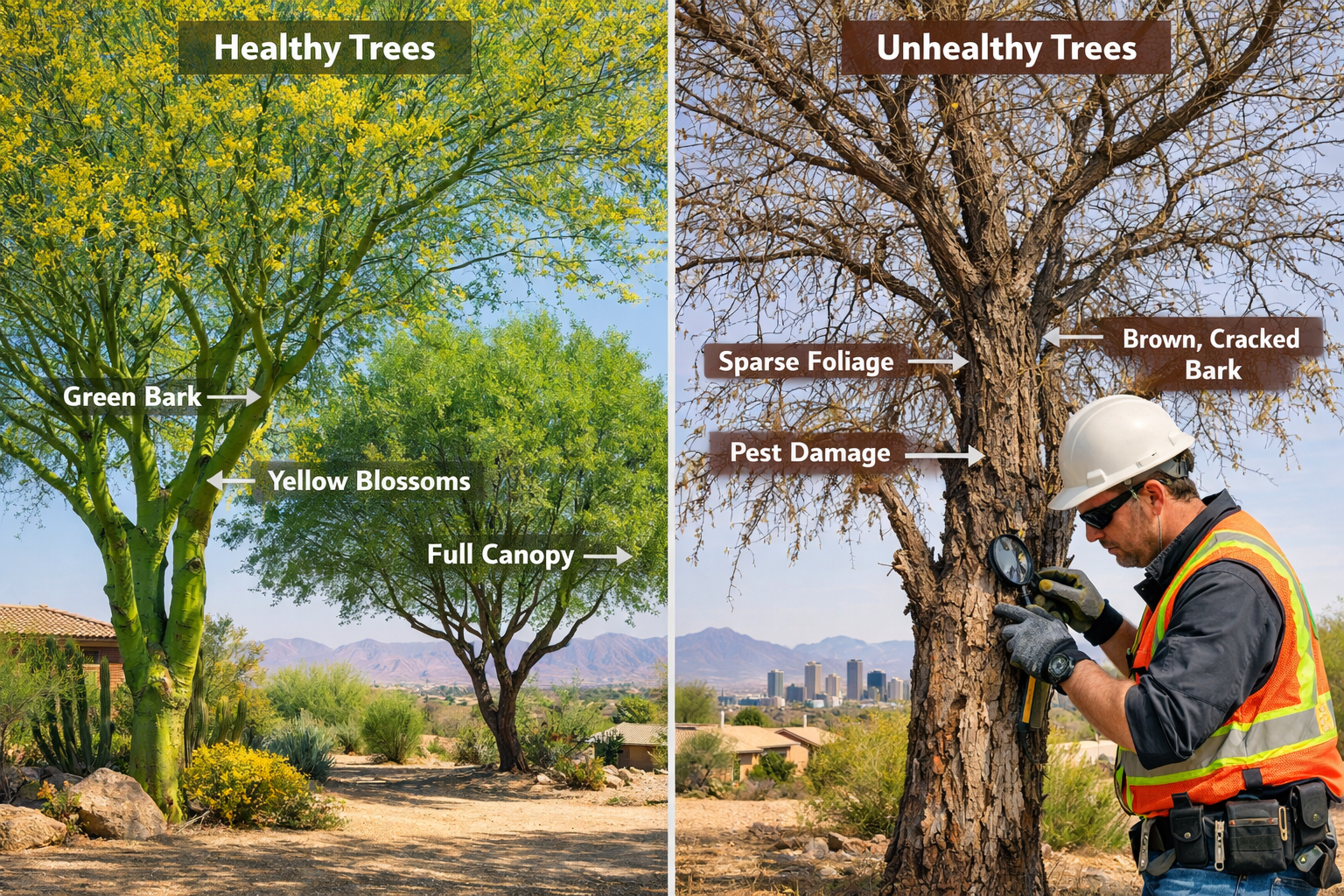
Arizona's extreme heat, monsoon storms, and alkaline soil create conditions unlike anywhere else in the country. The tree service Arizona professionals see the same problems repeatedly: sun scald on citrus trees, storm damage from improper pruning, and pest infestations that could have been prevented. Your yard deserves someone who knows what they're doing, but first you need to understand what proper desert tree care looks like.
Key Takeaways
- Desert-adapted trees like palo verde and mesquite need different care than traditional landscape trees
- Monsoon season preparation prevents 80% of storm-related tree damage in Arizona
- Proper watering schedules vary dramatically between Phoenix, Tucson, and higher elevation areas
- Certified arborists cost more upfront but save thousands in tree replacement costs
- Timing matters more in Arizona than other states due to extreme seasonal changes
Table of Contents
- Arizona's Best Desert-Adapted Trees
- Seasonal Tree Care and Storm Preparation
- Common Arizona Tree Problems and Solutions
- When to Call a Professional Tree Service
- FAQ
- Conclusion
Arizona's Best Desert-Adapted Trees
Palo Verde trees dominate Arizona landscapes for good reason. These state trees handle extreme heat and require minimal water once established. The green bark continues photosynthesis even when leaves drop during drought periods. However, palo verde trees need specific pruning techniques. Never top these trees or remove more than 25% of the canopy in one season.
Mesquite trees provide excellent shade but grow aggressively if overwatered. Chilean mesquite varieties work better in residential settings than native honey mesquite, which can spread 30 feet or more. Prune mesquite trees in late winter before spring growth begins. Remove suckers regularly to maintain tree form.
Ironwood trees grow slowly but live for centuries when properly cared for. These desert natives rarely need supplemental water after the first two years. Ironwood trees develop deep taproots that can damage nearby hardscape if planted too close to foundations or pools.
Acacia trees offer quick shade but require regular maintenance. Sweet acacia blooms attract beneficial insects but can trigger allergies. Catclaw acacia provides excellent wildlife habitat but needs aggressive pruning to prevent overgrowth. Most acacia varieties need pruning twice yearly in Arizona.
Desert willow combines beauty with low water needs. These trees produce orchid-like flowers from spring through fall. Desert willows handle alkaline soil better than most flowering trees. Prune lightly in late winter to maintain shape and remove dead wood.
Planting Location Matters
Tree placement determines long-term success in Arizona landscaping directory. Plant large shade trees 20-30 feet from structures to prevent root damage and allow for mature canopy spread. Consider mature size before planting - a 15-gallon palo verde will reach 25 feet tall and 30 feet wide.
South-facing exposures receive the most intense sun and heat. Reserve the toughest desert natives for these locations. East and west exposures work for most adapted species. North-facing areas allow for slightly less heat-tolerant varieties.
Seasonal Tree Care and Storm Preparation
Spring Tree Service Arizona Schedule
March through May represents prime tree care season across Phoenix landscaping services, Tucson, and Mesa. Temperatures remain moderate while trees enter active growth phases. Schedule major pruning during this window before summer heat stress begins.
Pruning timing varies by species:
- Palo verde: March-April before bloom
- Mesquite: February-March before leaf emergence
- Citrus: March-April after frost danger passes
- Palm trees: April-May before extreme heat
Remove dead, diseased, or crossing branches first. Thin crowns to improve air circulation and reduce wind resistance. Never remove more than one-third of live branches in a single season.
Monsoon Preparation Saves Trees
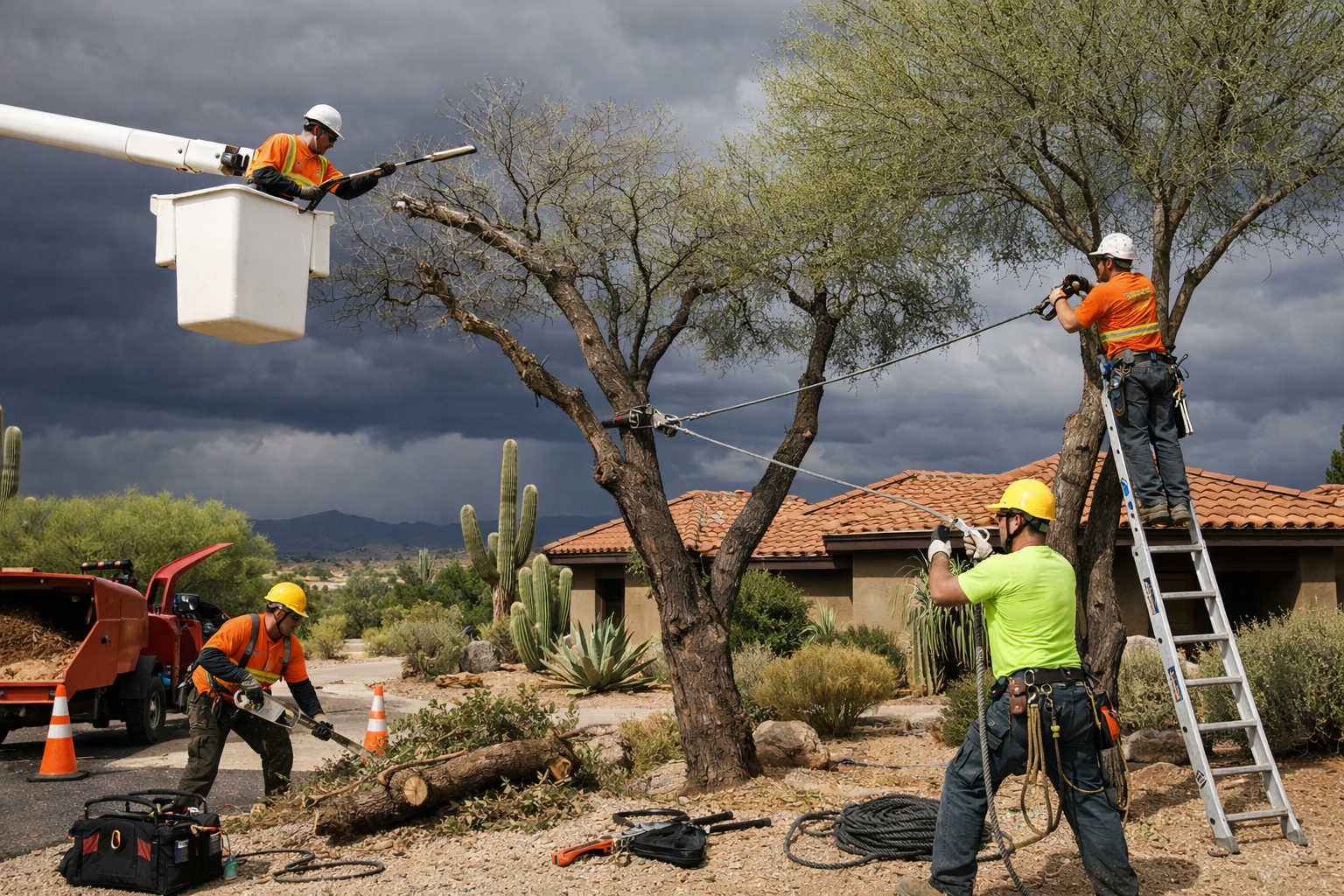
Arizona's monsoon season runs July through September, bringing sudden windstorms that topple unprepared trees. Professional tree service Arizona companies stay busy during monsoon season with emergency calls that proper preparation could prevent.
Pre-monsoon checklist:
- Remove all dead wood and weak branches
- Thin dense canopies to reduce wind sail effect
- Check tree stakes and guy wires on young trees
- Clear debris from around tree bases
- Inspect for pest damage that weakens structure
Young trees need extra protection during their first three monsoon seasons. Stake properly using flexible ties that allow some movement. Remove stakes after two years to prevent girdling.
Fall and Winter Care
October through February brings Arizona's mildest weather and optimal planting conditions. This season offers the best time for major tree work that summer heat makes dangerous.
Winter watering adjustments:
- Reduce frequency but maintain deep watering
- Water established desert trees monthly in winter
- Continue weekly watering for citrus and non-native species
- Adjust irrigation timers for shorter daylight hours
Frost protection becomes critical in December and January, especially in Tucson and higher elevations. Cover sensitive trees during freeze warnings. Avoid pruning frost-damaged wood until spring growth begins.
Common Arizona Tree Problems and Solutions
Sun Scald Prevention
Arizona's intense UV radiation damages tree bark, especially on young or newly transplanted trees. Sun scald appears as cracked, peeling bark on south and west-facing trunk sides. Once bark damage occurs, trees become vulnerable to pest invasion and disease.
Prevention strategies:
- Wrap young tree trunks with tree wrap or paint with diluted white latex paint
- Plant trees with existing lean toward the southwest
- Maintain lower branches for natural trunk shading when possible
- Choose desert-adapted species for harsh exposures
Root Care Near Hardscape
Arizona's hardscape-heavy landscapes create unique root management challenges. Concrete, pavers, and decorative rock absorb and reflect additional heat while limiting root expansion areas.
Tree roots extend 2-3 times beyond the canopy drip line in normal soil. In Arizona's compacted caliche soil, roots spread even wider seeking water and nutrients. Plan for this expansion when planting near pools, foundations, or utility lines.
Root barrier installation prevents damage while preserving tree health. Install barriers 18-24 inches deep along property lines or near structures. Use rigid plastic barriers rather than fabric types that roots eventually penetrate.
Palm Tree Trimming Mistakes
Arizona landscapes feature numerous palm species, but most homeowners trim them incorrectly. Never trim palm fronds that remain green. Palms move nutrients from older fronds to newer growth. Removing green fronds weakens the tree and creates entry points for pests.
Proper palm trimming:
- Remove only brown, broken, or hanging fronds
- Cut close to the trunk without damaging it
- Never trim the growing tip or "heart" of the palm
- Avoid "hurricane cuts" that remove all but the newest fronds
Date palms require specialized care including fruit removal and offshoot management. California fan palms need regular removal of old frond skirts that create fire hazards.
Pest Management
Palo Verde beetles emerge during monsoon season, alarming homeowners with their 3-inch size. These beetles rarely damage healthy trees but indicate stressed root systems. Improve tree health through proper watering rather than treating for beetles directly.
Shot hole borers pose serious threats to Arizona trees, especially non-native species. These tiny beetles bore into trunks and branches, introducing fungal diseases that kill trees. Early detection and removal of infected branches prevents spread.
Signs of shot hole borer infestation include:
- Small round holes in bark
- White staining around holes
- Branch dieback starting at tips
- Sawdust-like frass around tree base
Watering Schedules by Region
Phoenix area (Valley floor): Deep water established desert trees every 2-3 weeks in summer, monthly in winter. Non-native trees need weekly summer watering.
Tucson area (Higher elevation): Slightly less frequent watering due to cooler temperatures and occasional summer rainfall. Adjust based on monsoon precipitation.
Mesa and east valley: Similar to Phoenix but watch for caliche soil that prevents water penetration. Use soil probes to verify water reaches root zones.
Watering depth matters more than frequency. Apply water slowly to penetrate 2-3 feet deep. Shallow, frequent watering creates weak root systems vulnerable to wind damage.
When to Call a Professional Tree Service
Certified Arborist vs General Tree Service Arizona Companies
Not all tree service Arizona companies offer the same expertise. Certified arborists complete extensive training and continuing education requirements. They understand desert tree biology and proper pruning techniques that preserve tree health.
Look for these credentials:
- ISA (International Society of Arboriculture) certification
- Arizona contractor's license for tree work
- Workers compensation and liability insurance
- Local references from recent customers
Situations Requiring Professional Help
Emergency storm damage needs immediate professional assessment. Don't attempt to remove large broken branches or trees near power lines. Professional tree service Arizona companies have proper equipment and safety training.
Large tree removal exceeds most homeowner capabilities. Mature mesquite or palo verde trees require specialized equipment and techniques to remove safely without property damage.
Disease diagnosis benefits from professional expertise. Certified arborists identify problems early when treatment options remain viable. Many tree diseases appear similar to untrained observers.
Property line disputes involving trees need professional documentation. Certified arborists provide written assessments for insurance claims or legal proceedings.
Cost Expectations for Arizona Tree Service
Basic pruning for mature desert trees ranges $200-500 per tree depending on size and complexity. Palm trimming costs $75-150 per palm for standard maintenance.
Tree removal varies dramatically based on size, location, and access. Small trees (under 20 feet) cost $300-800 to remove. Large mature trees range $1,500-4,000 for complete removal including stump grinding.
Emergency storm work commands premium pricing due to immediate response needs and hazardous conditions. Budget 50-100% above normal rates for emergency tree service Arizona calls.
Get written estimates from multiple licensed contractors. Legitimate tree service Arizona companies provide detailed written proposals outlining specific work to be performed.
FAQ
When is the best time to prune desert trees in Arizona?
March through April offers optimal pruning conditions for most Arizona trees. Temperatures remain moderate while trees enter active growth that helps heal pruning cuts quickly. Avoid pruning during extreme summer heat or winter frost periods.
How often should I water established palo verde trees?
Established palo verde trees need deep watering every 2-3 weeks during summer months and monthly during winter. Apply water slowly to penetrate 2-3 feet deep rather than frequent shallow watering that creates weak root systems.
Do I need a permit to remove trees on my Arizona property?
Most Arizona cities don't require permits for removing trees on private property, but check local ordinances. Some areas protect certain native species or trees above specific sizes. HOA communities often have additional restrictions requiring approval before tree removal.
What's the difference between certified arborists and regular tree services?
Certified arborists complete extensive training in tree biology, proper pruning techniques, and safety procedures. They maintain certification through continuing education and testing. Regular tree services may lack this specialized knowledge, potentially damaging trees through improper techniques.
How can I tell if my tree needs professional attention?
Call a certified arborist if you notice sudden leaf drop, unusual pest activity, cracks in major branches, or changes in bark appearance. Early professional assessment often prevents minor problems from becoming expensive tree removal situations.
What should I expect to pay for professional tree service in Arizona?
Basic pruning for mature desert trees costs $200-500 per tree. Palm trimming ranges $75-150 per palm. Tree removal varies from $300-800 for small trees to $1,500-4,000 for large mature specimens. Emergency work costs significantly more due to immediate response requirements.
Conclusion
Arizona landscaping directory tree care requires understanding desert conditions that don't exist anywhere else. Your trees face extreme heat, alkaline soil, and sudden monsoon storms that demand specific care techniques. The right approach prevents costly tree loss while maintaining beautiful landscapes that increase property values.
Know who you're letting into your yard when hiring tree service Arizona professionals. Licensed, insured, and certified arborists cost more upfront but save thousands in tree replacement expenses. Real reviews from real homeowners help identify contractors who understand desert tree care.
Start with proper species selection and planting locations. Follow seasonal care schedules that work with Arizona's unique climate patterns. Watch for early signs of problems when treatment options remain effective and affordable.
Find your next landscaper through verified local directories that check licenses and insurance coverage. Your desert landscape deserves professional care from contractors who understand what makes Arizona trees thrive.
Liked this guide? Follow us on Google Search
Related Directory Pages
- Browse Arizona Landscaping Pros
- Phoenix Landscaping Services
- Browse Tree Services Services in Arizona
- Also Read: California Tree Care: Pruning, Removal & Fire Safety
- Also Read: Tree Services in Las Vegas: Care for Desert-Adapted Trees
- Also Read: Tree Care in New Mexico: Pruning, Pests & Piñon Health
- Also Read: Utah Tree Care: Pruning, Pests & Alkaline Soil Solutions
- Search Arizona Landscapers
Find a Landscaper Near You
Browse AZ landscaping professionals on LandscapeProsDirectory.
Search Landscapers