
Tempe Landscaping: Sustainable Urban Yard Design
Tempe landscaping guide for 2026. Discover sustainable urban design, native plant palettes, and small-space solutions for Tempe homeowners. Compare local pros a
Last updated: October 1, 2026
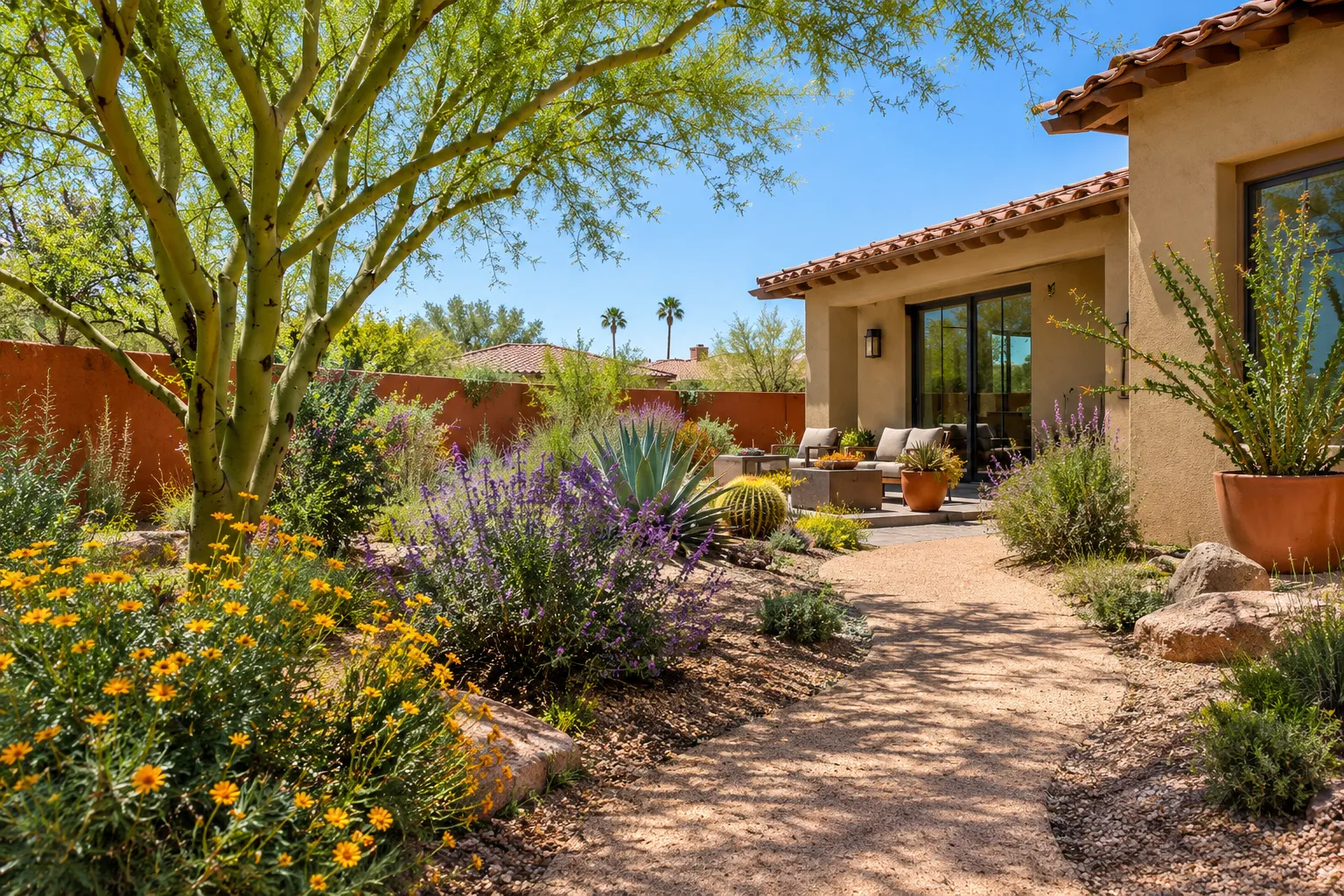
Quick Answer: Sustainable tempe landscaping means designing your yard to use far less water, handle extreme heat, and support local wildlife, all without a massive maintenance bill. In Tempe's desert climate, that typically means native plants, drip irrigation, and smart hardscaping. The City of Tempe offers rebates and grant programs that can offset a significant share of your costs.
Key Takeaways
- Xeriscape design can cut outdoor water use by 50 to 75 percent in Tempe's climate
- The City of Tempe's Landscape Rebate Program pays for desert conversions, trees, and efficient irrigation [5]
- The Neighborhood Grant Program can fund sustainable landscaping projects up to $20,000 [7]
- Native plants like desert marigold, penstemon, and palo verde require almost no supplemental watering once established
- Tempe's Xeriscape Demonstration Garden is a free, walk-through resource for design ideas [10]
- Summer landscaping is possible but requires timing work before 10 a.m. and after 5 p.m.
- Artificial turf is not a water-neutral choice, it absorbs heat and has a disposal cost
- Always verify a contractor's Arizona Registrar of Contractors (ROC) license before signing anything
Table of Contents
- What Is Sustainable Landscaping Design?
- Small Space Design for Tempe Homes
- Native Pollinator Gardens in Tempe
- Tempe's Sustainable Landscaping Rebates
- Heat Mitigation in Urban Tempe Yards
- Xeriscaping vs. Traditional Landscaping
- How to Maintain a Low-Water Landscape
- Common Mistakes People Make With Desert Landscaping
- Tempe Landscaping Permits and Regulations
- Artificial Turf vs. Native Plants in Tempe
- How Much Does Landscaping Cost in Tempe?
- Best Time to Landscape in Arizona
- FAQ
What Is Sustainable Landscaping Design?
Sustainable landscaping means designing an outdoor space that works with your local climate rather than against it. In Tempe, that means reducing turf, choosing drought-tolerant plants, and installing irrigation that delivers water directly to roots instead of spraying it into the air.
The seven core principles recognized by xeriscape programs include planning and design, soil improvement, efficient irrigation, appropriate plant selection, mulching, turf reduction, and regular maintenance. Tempe's own Xeriscape Demonstration Garden at the Water Services facility demonstrates all seven in a real yard setting, free to visit anytime [10].
Small Space Design for Tempe Homes
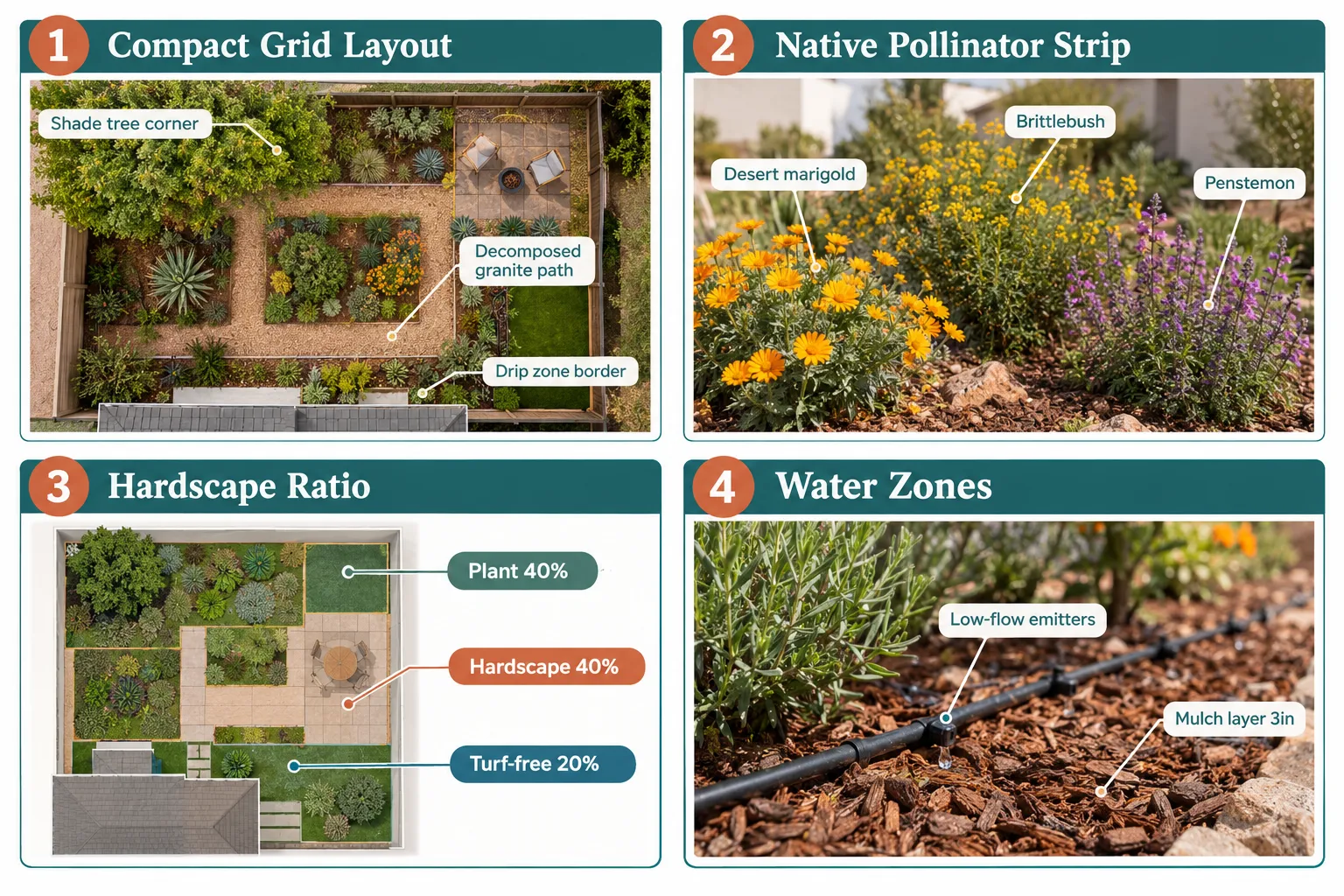
Most Tempe lots near the ASU corridor run between 4,000 and 7,000 square feet, and front yards are often under 1,500 square feet. That's enough space to do something genuinely useful, if you plan the layout before you plant anything.
A practical layout for a small Tempe yard:
- Hardscape first. Decomposed granite, flagstone, or concrete pavers should cover roughly 40 percent of the space. They reduce heat absorption better than bare soil and require zero water.
- Plant in zones. Group plants by water need. Put your lowest-water plants along the street edge, slightly thirstier ones closer to the house where they get some shade from the structure.
- One shade tree, placed well. A single palo verde or desert willow on the southwest corner of a small yard can drop afternoon temperatures by 10 to 15 degrees Fahrenheit in that zone (estimate based on standard urban forestry shade modeling; verify with your landscaper).
- Pathways matter. A simple curved path from the street to the door creates visual depth in a small yard and gives you access for maintenance without stepping on plants.
The Downtown Tempe Refresh project added over 120 trees with upgraded irrigation along key corridors in 2026, demonstrating that even tight urban spaces can support meaningful tree canopy [3].
Choose this layout if: You have a front yard under 1,500 sq ft, want to reduce your water bill, and don't want to mow anything.
Native Pollinator Gardens in Tempe
Native pollinator gardens use plants that evolved in the Sonoran Desert region, which means they feed local bees, butterflies, and hummingbirds while needing almost no supplemental water once established.
Best native pollinator plants for Tempe yards:
| Plant | Bloom Season | Water Need | Attracts |
|---|---|---|---|
| Desert Marigold | Spring, Fall | Very Low | Bees, butterflies |
| Penstemon | Spring | Low | Hummingbirds |
| Brittlebush | Winter, Spring | Very Low | Native bees |
| Globe Mallow | Spring | Very Low | Native bees |
| Red Salvia | Spring, Fall | Low | Hummingbirds |
These plants are available at most Tempe-area nurseries and are explicitly supported by the city's xeriscape guidance [10]. They also qualify for rebates under the Landscape Rebate Program [5].
A small pollinator strip along a fence line, even three feet wide and twenty feet long, can support dozens of native bee species. One Tempe homeowner near McClintock Drive converted a strip of dead grass to brittlebush and globe mallow in spring 2026 and reported zero supplemental watering after the first six weeks.
Tempe's Sustainable Landscaping Rebates
The City of Tempe runs a Landscape Rebate Program that pays residents to convert grass to desert landscaping, install trees, and upgrade to efficient irrigation [5]. This is real money, not a tax credit, but a direct rebate paid after the work is done and inspected.
What the program covers (as of 2026):
- Grass-to-desert conversions
- New desert-adapted trees
- Drip irrigation system upgrades
- Soil amendment and mulch in conversion areas
The Neighborhood Grant Program goes further, funding community-scale sustainable landscaping projects up to $20,000 per application [7]. HOAs, block associations, and neighborhood groups can apply. This is worth knowing if you're coordinating with neighbors.
The city also runs water conservation workshops from August through November 2026, aimed at both individual homeowners and HOA boards [9]. These are free and cover plant selection, irrigation scheduling, and how to apply for rebates.
"Landscape conversion rebates are designed to cut outdoor water use by 50 percent or more, and in Tempe's climate, that target is consistently achievable with a proper xeriscape design.", City of Tempe Water Conservation guidance [5]
To apply for a rebate: Contact Tempe Water Services before starting work. Pre-approval is required for most rebate categories. Starting without approval disqualifies you.
Heat Mitigation in Urban Tempe Yards
Tempe's urban heat island effect is real. Pavement, rooftops, and sparse vegetation push summer temperatures several degrees higher than surrounding areas. Your yard can either make that worse or help offset it.
Practical heat mitigation strategies for Tempe yards:
- Tree canopy. Shade from a well-placed tree is the single most effective heat reducer in a small yard. The Downtown Tempe Refresh project's 120-plus new trees are specifically positioned to reduce ground-level heat along pedestrian corridors [3].
- Light-colored hardscape. Tan or cream-colored decomposed granite reflects more heat than dark concrete. Avoid black rubber mulch, it absorbs and radiates heat aggressively.
- Ramadas and shade sails. For patios near the ASU corridor, a shade structure over an outdoor seating area can make the space usable from April through October.
- Green walls or trellises. A climbing plant like queen's wreath on a west-facing fence blocks afternoon sun from hitting your home's exterior.
- Mulch depth. Three inches of organic mulch around plants keeps soil temperatures lower, reduces evaporation, and keeps roots cooler.
The city's green infrastructure and trail maintenance programs in 2026 include shade planting along urban corridors, a model that homeowners can replicate at the yard scale [4].
Xeriscaping vs. Traditional Landscaping
Xeriscaping is not just "rocks and cactus." It's a design system that uses the right plants, the right soil prep, and the right irrigation to create a yard that looks intentional and requires minimal intervention.
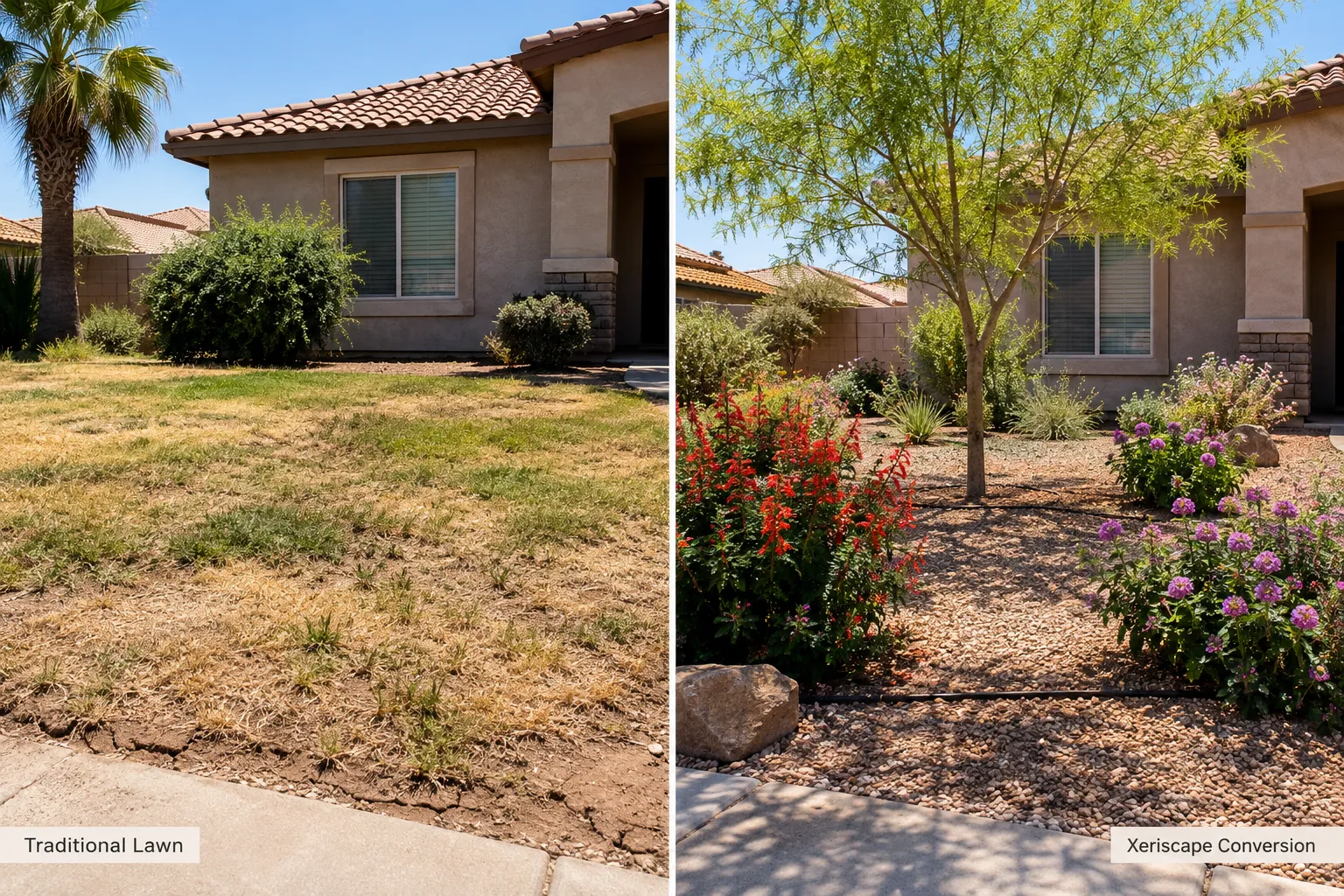
Traditional landscaping in Arizona typically means turf grass, spray irrigation, and regular fertilizing. That combination uses an estimated 50 to 75 percent more water than a comparable xeriscape design in Tempe's climate [10].
Side-by-side comparison:
| Factor | Traditional Lawn | Xeriscape |
|---|---|---|
| Weekly watering | High | Low to none (established) |
| Mowing | Weekly in season | None |
| Fertilizer | Regular | Rarely needed |
| Heat absorption | High (turf browns fast) | Lower with mulch and shade |
| Rebate eligible | No | Yes [5] |
| Upfront cost | Lower | Moderate to higher |
Choose xeriscape if: You want to reduce your water bill, qualify for rebates, and stop mowing. The upfront cost is higher, but most homeowners recover it within two to three years through lower water bills (estimate; actual savings vary by yard size and current water use).
How to Maintain a Low-Water Landscape
A low-water landscape still needs maintenance, just less of it, and at different times than a traditional lawn.
Seasonal maintenance checklist for Tempe:
- Fall (Oct, Nov): Best time to plant natives and adjust drip emitter schedules downward
- Winter (Dec, Feb): Protect frost-sensitive plants; reduce irrigation to once every two to three weeks
- Spring (Mar, May): Prime planting window; check drip lines for clogs; apply fresh mulch
- Summer (Jun, Sep): Increase irrigation frequency but water before 8 a.m.; prune dead growth after monsoon
Drip irrigation systems need an annual check for clogged emitters, cracked tubing, and proper pressure. A single clogged emitter can kill a plant in a Tempe summer. Most landscaping contractors offer seasonal tune-ups for $75 to $150 (estimate based on typical service rates in the Phoenix metro area; get quotes from at least three local contractors).
Common Mistakes People Make With Desert Landscaping
The biggest mistake is treating desert plants like they need the same care as a traditional garden. They don't, and overwatering is the number one way to kill a native plant in Tempe.
Other common mistakes:
- Planting in summer without shade protection. New plants need shade cloth for their first summer if planted after May.
- Skipping soil prep. Caliche (hardpan soil) is common in Tempe. Breaking through it before planting is essential for root development.
- Using the wrong mulch. Gravel is fine for pathways. Around plants, organic mulch is better because it breaks down and feeds the soil.
- Ignoring irrigation zones. Mixing high-water and low-water plants on the same drip line means someone always gets too much or too little.
- Hiring unlicensed contractors. Always verify an Arizona ROC license at azroc.gov before signing a contract. Your yard deserves someone who knows what they're doing.
Tempe Landscaping Permits and Regulations
Most residential landscaping in Tempe does not require a permit. But there are exceptions, and skipping a required permit can result in fines or forced removal of work.
When you likely need a permit:
- Installing a retaining wall over 30 inches high
- Adding a ramada, pergola, or shade structure over a certain square footage
- Significant grading or drainage changes
- Irrigation connections to the main water line
Tempe also has HOA overlay rules in many neighborhoods near ASU and downtown. Check with your HOA before removing turf or adding hardscape, some require design approval.
For current permit requirements, contact the Tempe Development Services department directly. Requirements do change, and what applied two years ago may not apply today.
Artificial Turf vs. Native Plants in Tempe
Artificial turf is not a water-neutral or heat-neutral choice. It eliminates irrigation, but it absorbs and radiates significantly more heat than native ground cover or decomposed granite. Surface temperatures on artificial turf in a Tempe summer can exceed 150 degrees Fahrenheit (a commonly cited figure in urban heat research; verify with current studies before citing in formal contexts).
Artificial turf makes sense if: You have children or pets who need a soft, usable surface, you're willing to manage the heat issue with shade structures, and you understand it will need replacement in 8 to 15 years.
Native plants and decomposed granite make sense if: Your priority is water savings, heat reduction, rebate eligibility, and long-term low maintenance.
Neither option is right for every yard. A small patch of artificial turf in a shaded play area alongside native plantings is a reasonable middle ground for families.
How Much Does Landscaping Cost in Tempe?
Tempe landscaping costs vary based on yard size, scope of work, and whether you're doing a full conversion or adding to an existing landscape.
Typical cost ranges for Tempe (2026 estimates; get at least three quotes):
- Basic cleanup and mulch refresh: $300 to $800
- Drip irrigation install (small yard): $800 to $2,500
- Grass-to-xeriscape conversion (front yard): $3,000 to $9,000
- Native planting design and install: $1,500 to $5,000
- Full backyard transformation: $8,000 to $25,000+
These are estimates based on typical Phoenix metro market rates. Actual costs depend on soil conditions, plant selection, and contractor pricing. The Neighborhood Grant Program can offset up to $20,000 for qualifying projects [7], and the Landscape Rebate Program provides additional per-square-foot rebates for grass removal [5].
Always ask for an itemized quote. A contractor who won't break down labor, materials, and irrigation separately is a contractor worth skipping.
Best Time to Landscape in Arizona
The best time to do major landscaping work in Tempe is October through April. Temperatures are manageable for both workers and new plants, and fall planting gives natives time to establish roots before summer.
Can you landscape in Tempe during summer? Yes, but with limits. Hardscape work, irrigation installation, and established plant maintenance can happen year-round. Planting new vegetation in June through August is risky without shade protection and careful watering. Schedule outdoor work before 10 a.m. or after 5 p.m. during summer months.
Note: ASU's Tempe campus has waterline replacement work running May through August 2026 that may affect water pressure and access in adjacent neighborhoods [2]. If you're near campus, confirm service availability with your contractor before scheduling irrigation work.
FAQ
How do I find a licensed landscaping contractor in Tempe?
Verify any contractor's license at azroc.gov before hiring. Search by company name or license number. Licensed, insured, and reviewed contractors are the baseline, not a bonus. Know who you're letting into your yard.
Does Tempe require a permit for xeriscape conversion?
Most grass-to-desert conversions do not require a permit in Tempe. However, if the project involves grading, drainage changes, or structures, a permit may be required. Contact Tempe Development Services to confirm before starting.
What native plants are best for a small Tempe yard?
Desert marigold, brittlebush, globe mallow, penstemon, and palo verde are all well-suited to small Tempe yards. They're low-water, pollinator-friendly, and available at local nurseries.
How do I apply for Tempe's landscape rebate?
Contact Tempe Water Services before starting work. Pre-approval is required. After the work is inspected and approved, the rebate is issued. Details are at the Landscape Rebate Program page [5].
Is artificial turf a good choice for Tempe yards?
It eliminates irrigation but creates significant heat. In Tempe's summer climate, artificial turf surface temperatures can be dangerously high. It works best in shaded areas or small play zones, not as a full-yard solution.
What's the difference between the Landscape Rebate Program and the Neighborhood Grant Program?
The Landscape Rebate Program [5] is for individual homeowners and pays per square foot for qualifying conversions. The Neighborhood Grant Program [7] funds larger community or HOA-scale projects up to $20,000. Both are City of Tempe programs.
Conclusion
Sustainable tempe landscaping is not a trend, it's the practical choice for anyone who wants a yard that works in this climate without a high water bill or constant upkeep. Start with a clear plan: know your yard's sun exposure, soil type, and how you actually use the space. Then build from the ground up, soil prep, irrigation, plants, hardscape.
Your next steps:
- Visit the Tempe Xeriscape Demonstration Garden [10] before hiring anyone, it's a free, real-world reference.
- Contact Tempe Water Services to check current rebate availability [5] before starting any conversion.
- Verify your contractor's Arizona ROC license at azroc.gov.
- Get at least three itemized quotes for any project over $1,500.
- If your project is community-scale, look into the Neighborhood Grant Program [7], up to $20,000 is available.
Find the right landscaper for your yard. Local pros, local knowledge, that's what makes the difference between a yard that survives a Tempe summer and one that thrives in it.
References
[1] Construction Updates - https://www.downtowntempe.com/about/merchant-resources/construction-updates
[3] Downtown Tempe Refresh - https://www.tempe.gov/government/communication-and-marketing/refresh-tempe/downtown-tempe-refresh
[4] Press Releases - https://www.tempe.gov/government/communication-and-marketing/tempe-newsroom/press-releases
[5] Landscape Rebate Program - https://www.tempe.gov/government/community-development/community-enhancement/programs/landscape-rebate-program
[7] Neighborhood Grant Program - https://www.tempe.gov/government/city-manager-s-office/neighborhood-services/neighborhood-grant-program
[8] Demonstration Gardens - https://www.amwua.org/what-you-can-do/demonstration-gardens
[9] Water Conservation Workshop Calendar - https://www.tempe.gov/Home/Components/Calendar/Event/44937/4917
[10] Xeriscape Demonstration Garden - https://www.tempe.gov/government/public-works/water/water-conservation/xeriscape-demonstration-garden
<!DOCTYPE html>
<html lang="en">
<head>
<meta charset="UTF-8">
<meta name="viewport" content="width=device-width, initial-scale=1.0">
<title>Tempe Yard Water Savings Estimator</title>
<style>
.cg-wrap{font-family:Arial,sans-serif;max-width:480px;margin:2rem auto;background:#fdf8f3;border:1px solid #d4a96a;border-radius:8px;padding:1.5rem;box-sizing:border-box}
.cg-wrap h3{margin:0 0 .75rem;font-size:1.1rem;color:#7c3d0f}
.cg-label{font-size:.85rem;color:#444;margin:.6rem 0 .2rem;display:block}
.cg-input{width:100%;padding:.45rem;border:1px solid #c8a97a;border-radius:4px;font-size:.95rem;box-sizing:border-box}
.cg-btn{margin-top:1rem;width:100%;padding:.6rem;background:#7c3d0f;color:#fff;border:none;border-radius:4px;font-size:1rem;cursor:pointer}
.cg-btn:hover{background:#9c4e14}
.cg-result{margin-top:1rem;background:#fff;border:1px solid #d4a96a;border-radius:4px;padding:.9rem;font-size:.9rem;color:#333;display:none}
.cg-result strong{color:#7c3d0f}
.cg-note{font-size:.75rem;color:#888;margin-top:.6rem}
</style>
</head>
<body>
<div class="cg-wrap">
<h3>Tempe Yard Water Savings Estimator</h3>
<label class="cg-label">Current lawn size (sq ft)</label>
<input class="cg-input" id="cg-sqft" type="number" min="100" max="10000" placeholder="e.g. 1000">
<label class="cg-label">Current monthly water bill ($)</label>
<input class="cg-input" id="cg-bill" type="number" min="20" max="500" placeholder="e.g. 120">
<label class="cg-label">Conversion type</label>
<select class="cg-input" id="cg-type">
<option value="0.60">Full xeriscape (60% savings)</option>
<option value="0.40">Partial xeriscape (40% savings)</option>
<option value="0.25">Drip irrigation upgrade only (25% savings)</option>
</select>
<button class="cg-btn" onclick="cgCalc()">Estimate My Savings</button>
<div class="cg-result" id="cg-result"></div>
<p class="cg-note">Estimates only. Actual savings vary by yard, irrigation habits, and plant selection. Rebate eligibility subject to City of Tempe approval.</p>
</div>
<script>
function cgCalc(){
var s=parseFloat(document.getElementById('cg-sqft').value);
var b=parseFloat(document.getElementById('cg-bill').value);
var r=parseFloat(document.getElementById('cg-type').value);
var el=document.getElementById('cg-result');
if(!s||!b||s<100||b<10){el.style.display='block';el.innerHTML='Please enter valid values for lawn size and water bill.';return;}
var mo=(b*r).toFixed(0);
var yr=(b*r*12).toFixed(0);
var rebEst=Math.min(Math.round(s*1.5),4000);
el.style.display='block';
el.innerHTML='<strong>Estimated monthly savings:</strong> $'+mo+'<br><strong>Estimated annual savings:</strong> $'+yr+'<br><strong>Potential Tempe rebate (estimate):</strong> up to $'+rebEst+'<br><br>Your yard could pay back the conversion cost in as little as 2–4 years.';
}
</script>
</body>
</html>
Liked this guide? Follow us on Google Search
Related Directory Pages
Find a Landscaper Near You
Browse AZ landscaping professionals on LandscapeProsDirectory.
Search Landscapers