
How to Find a Licensed Landscaper in Arizona
Find licensed landscapers in Arizona using ROC verification. Learn license types, consumer rights, red flags, and step-by-step contractor verification process.
Arizona's Registrar of Contractors receives over 15,000 complaints each year about unlicensed contractors. Your yard deserves someone who knows what they're doing, and in Arizona, that means hiring a properly licensed professional who follows state regulations.
Finding a licensed landscaper Arizona homeowners can trust requires more than checking online reviews. The state's licensing system protects consumers through specific requirements, but only if you know how to use it. Licensed contractors carry proper insurance, follow building codes, and give you legal recourse if something goes wrong.
Key Takeaways
- Arizona requires landscapers to hold ROC licenses for projects over $1,000 or involving structural work
- Verify licenses online through the Arizona ROC website using the contractor's license number
- Different license types (K-10, A-10, K-35) cover different scopes of landscaping work
- Licensed contractors must carry insurance and provide specific consumer protections
- Always get written contracts and follow proper payment schedules to protect your rights
Table of Contents
- Understanding Arizona Landscaping License Requirements
- How to Verify a Licensed Landscaper Arizona ROC Database
- Types of Arizona Landscaping Licenses Explained
- Consumer Rights and Contract Protections
- Red Flags and Questions to Ask Before Hiring
- Payment Schedules and Lien Rights Protection
- Filing Complaints and Getting Help
- Conclusion
Understanding Arizona Landscaping License Requirements
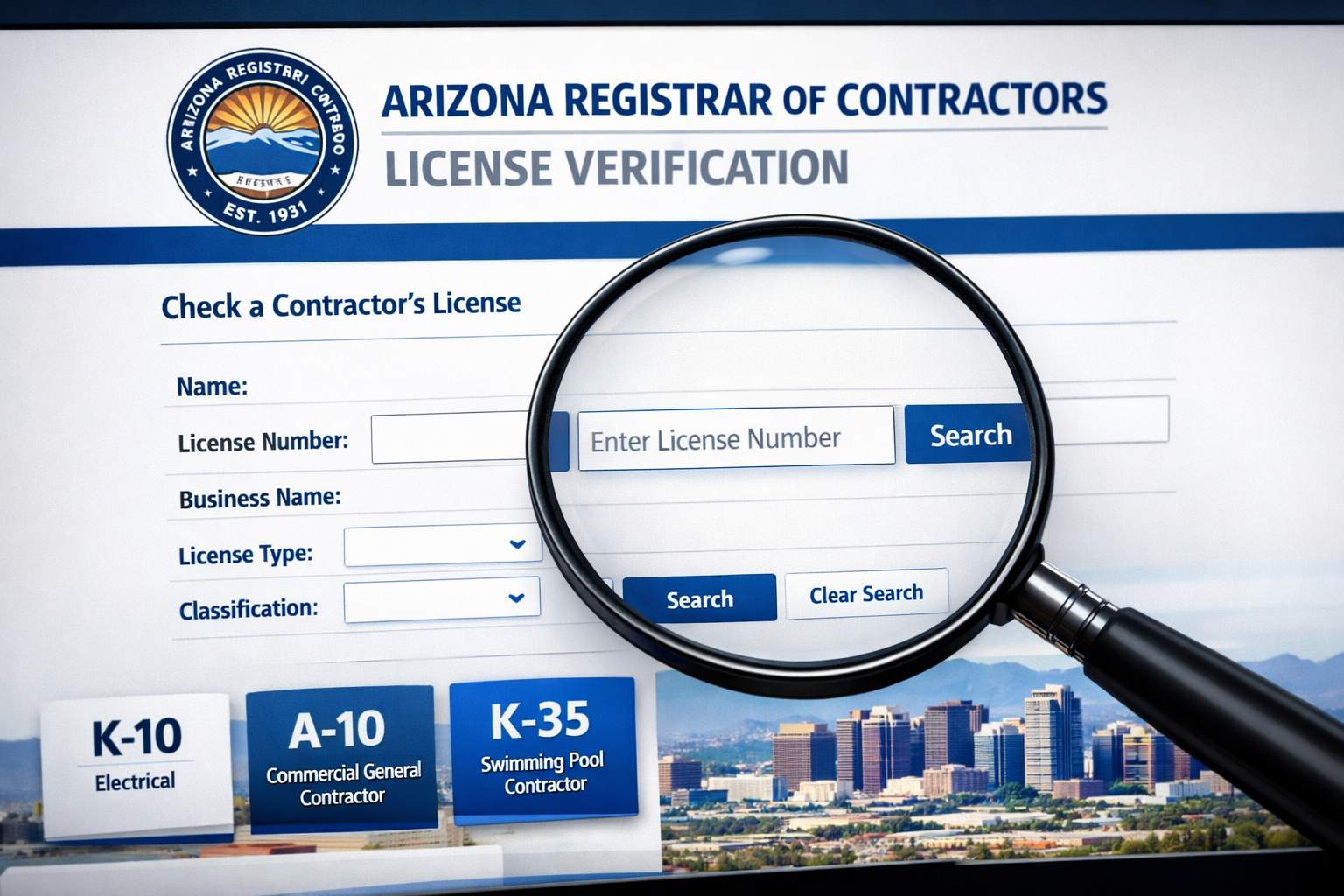
Arizona law requires landscapers to hold a Registrar of Contractors (ROC) license for specific types of work. Any landscaping project over $1,000 in labor and materials needs a licensed contractor. This includes most substantial yard work in Phoenix landscaping services, Tucson, Scottsdale, and Mesa.
When you need a licensed landscaper Arizona regulations require:
- Installing irrigation systems or sprinkler systems
- Building retaining walls, patios, or walkways
- Grading or moving large amounts of soil
- Installing outdoor lighting or electrical work
- Planting trees or major landscape installations
- Any project combining labor and materials over $1,000
Basic maintenance like mowing, pruning, or fertilizing doesn't require a license. But most homeowners hiring landscapers want more than basic upkeep.
The ROC license system exists because landscaping involves your property's drainage, electrical systems, and structural elements. Unlicensed work can damage your home's foundation, create flooding problems, or violate city codes.
Licensed contractors must pass trade exams, show financial responsibility, and carry proper insurance. They also contribute to the state's recovery fund that compensates homeowners when licensed contractors cause damage.
How to Verify a Licensed Landscaper Arizona ROC Database
The Arizona landscaping directory ROC website lets you verify any contractor's license in minutes. Here's the step-by-step process every homeowner should follow:
Step 1: Get the License Number
Ask any landscaper for their ROC license number before getting estimates. Licensed contractors display this number on business cards, trucks, and estimates. If they can't provide it immediately, that's a red flag.
Step 2: Visit the ROC Website
Go to roc.az.gov and click "License Search" on the homepage. The database updates daily and shows current license status.
Step 3: Search and Verify
Enter the license number or business name. The results show:
- Current license status (active, suspended, expired)
- License classification and limits
- Insurance information
- Complaint history
- Bond status
Step 4: Check Insurance Coverage
Verify the contractor carries general liability insurance. The ROC database shows insurance company and policy dates. Current coverage protects you if workers get injured or damage your property.
What the license lookup tells you:
- Active status means they can legally work
- Complaint history shows past customer problems
- License limits show maximum project value they can handle
- Classifications show what type of work they're authorized for
Never hire a landscaper who won't provide their license number or whose license shows as suspended or expired.
Types of Arizona Landscaping Licenses Explained
Arizona issues different license classifications for landscaping work. Understanding these helps you hire the right contractor for your project.
K-10 Landscaping License
This covers general landscaping work including:
- Planting and garden installation
- Irrigation system installation and repair
- Landscape lighting (low voltage)
- Soil preparation and grading
- Lawn installation
Most residential landscaping projects fall under K-10 licenses. These contractors can handle everything from basic xeriscaping to full backyard transformations.
A-10 Concrete License
Needed for hardscaping projects like:
- Concrete patios and walkways
- Retaining walls over 4 feet
- Decorative concrete work
- Pool decking
Many landscaping projects need both K-10 and A-10 work. Make sure your contractor holds the right licenses or partners with properly licensed subcontractors.
K-35 Swimming Pool/Spa License
Required for any water feature work:
- Swimming pools and spas
- Water fountains
- Pond installation
- Pool equipment installation
Dual Licensed Contractors
Some contractors hold multiple license types. This lets them handle complete outdoor projects without subcontracting. Verify each license classification matches your project needs.
License Limits Matter
Each license has dollar limits. A contractor with a $75,000 limit can't legally bid projects over that amount. Match the contractor's license limit to your project size.
Consumer Rights and Contract Protections

Arizona law gives homeowners specific rights when hiring licensed landscapers. Know these protections before signing any contract.
Required Contract Elements
Licensed contractors must provide written contracts including:
- Detailed scope of work
- Materials specifications
- Project timeline
- Total cost breakdown
- ROC license number
- Lien waiver information
Three-Day Right to Cancel
You can cancel most home improvement contracts within three business days without penalty. The contractor must inform you of this right and provide cancellation forms.
Lien Rights Protection
Licensed contractors must provide lien waiver forms showing subcontractors and suppliers get paid. This protects your property from mechanics' liens if the contractor doesn't pay their bills.
Recovery Fund Protection
The state recovery fund compensates homeowners up to $30,000 when licensed contractors cause damages through negligent work. This protection only applies to licensed contractors.
Change Order Requirements
Any work changes must be documented in writing with updated costs and timelines. Verbal agreements don't protect you if disputes arise.
Final Payment Protection
Never pay the full amount until work is complete and you've received all lien waivers. Arizona law limits how much contractors can request upfront.
Red Flags and Questions to Ask Before Hiring
Protect yourself by recognizing warning signs and asking the right questions. Real reviews from real homeowners show these red flags appear repeatedly with problem contractors.
Major Red Flags:
- Door-to-door solicitation or high-pressure sales
- Requests for full payment upfront
- No physical business address
- Estimates significantly lower than others
- Can't provide current ROC license number
- Asks you to pull permits
- Only accepts cash payments
Essential Questions to Ask:
- "What's your current ROC license number and classification?"
- "Can you provide references from recent projects in my area?"
- "What insurance coverage do you carry?"
- "Who pulls the permits for this work?"
- "What's your policy on change orders and additional costs?"
- "How do you handle cleanup and debris removal?"
Payment Schedule Red Flags:
Licensed contractors should never ask for:
- Full payment before starting work
- Large upfront payments for materials
- Payment in cash only
- Immediate decisions or "today only" pricing
Verify Local Knowledge:
Ask about Arizona-specific challenges like:
- Caliche soil conditions
- Desert plant water requirements
- Phoenix or Tucson climate considerations
- HOA landscape requirements
- City permit requirements
Contractors with local knowledge give better advice and avoid costly mistakes.
Payment Schedules and Lien Rights Protection
Arizona law regulates how much contractors can collect upfront and when. Follow these guidelines to protect yourself financially.
Legal Payment Limits:
- Maximum 10% down payment or $1,000, whichever is less
- Progress payments tied to completed work phases
- Final payment after work completion and lien waivers
Proper Payment Schedule:
- Down payment: 10% or $1,000 maximum when signing contract
- Progress payments: Tied to specific milestones (materials delivered, phases completed)
- Final payment: After work completion, cleanup, and receiving lien waivers
Lien Waiver Requirements:
Licensed contractors must provide:
- Preliminary lien notices listing all subcontractors and suppliers
- Progress lien waivers as work phases complete
- Final lien waiver before receiving final payment
What Lien Waivers Protect:
These documents prevent subcontractors or suppliers from placing liens on your property if the main contractor doesn't pay them. Without proper lien waivers, you could pay twice for the same work.
Safe Payment Methods:
- Write checks to the business name on the ROC license
- Keep detailed payment records
- Never pay cash or make checks out to individuals
- Hold final payment until receiving all required documentation
Project Delays and Payments:
Don't advance payments if work falls behind schedule without good reason. Licensed contractors should explain delays and adjust payment schedules accordingly.
Filing Complaints and Getting Help
When problems arise with licensed landscapers, Arizona provides several options for resolution. Know your rights and how to use them.
Arizona ROC Complaint Process:
- Try direct resolution first: Contact the contractor in writing about problems
- File ROC complaint: Submit online at roc.az.gov within four years of project completion
- Provide documentation: Include contracts, photos, correspondence, and payment records
- Investigation process: ROC investigates and may require contractor to fix problems
What ROC Can Do:
- Order contractors to complete or repair work
- Suspend or revoke licenses for violations
- Impose fines and penalties
- Facilitate mediation between parties
Recovery Fund Claims:
If a licensed contractor causes damage through negligent work, you may recover up to $30,000 from the state fund. Requirements include:
- Contractor held proper license when work was performed
- You obtained a court judgment against the contractor
- Contractor is unable to pay the judgment
Small Claims Court:
For disputes under $3,500, small claims court offers a faster, cheaper option than hiring attorneys. Bring all documentation including contracts, photos, and payment records.
Better Business Bureau:
File BBB complaints for additional pressure on contractors to resolve problems. Many contractors care about their BBB ratings and respond to complaints.
Prevention is Best Protection:
The best consumer protection is hiring the right contractor from the start. Verify licenses, check references, and follow proper payment schedules to avoid most problems.
Frequently Asked Questions
Do all landscapers in Arizona need licenses?
No. Basic maintenance like mowing and pruning doesn't require licenses. But any project over $1,000 or involving irrigation, hardscaping, or structural work needs a licensed contractor.
How do I verify a landscaper's insurance coverage?
Check the ROC database for insurance information, then call the insurance company directly to verify current coverage. Ask for a certificate of insurance naming you as additional insured for your project.
What if my landscaper's license expires during my project?
Stop work immediately. Contractors cannot legally work with expired licenses. They must renew before continuing, or you need to hire a different licensed contractor.
Can I get estimates from unlicensed landscapers?
You can get estimates from anyone, but hiring unlicensed contractors for work requiring licenses violates Arizona law and voids your consumer protections.
How long do I have to file a complaint about poor work?
You have four years from project completion to file ROC complaints. For recovery fund claims, you have two years after obtaining a court judgment.
What's the difference between bonded and insured?
Insurance protects against accidents and damage during work. Bonds guarantee the contractor will complete work as contracted. Licensed contractors must carry both.
Conclusion
Finding a licensed landscaper Arizona landscaping directory homeowners can trust requires using the state's verification systems and understanding your legal protections. The ROC database gives you instant access to license status, complaint history, and insurance information for any contractor.
Remember these key steps: verify the ROC license number, check insurance coverage, get detailed written contracts, and follow proper payment schedules. Licensed contractors cost more upfront but provide legal protections worth far more than the price difference.
Your yard deserves someone who knows what they're doing. Use these tools to find licensed, insured professionals who will transform your landscape while protecting your investment. The extra time spent verifying credentials prevents costly problems and gives you peace of mind throughout your project.
Start your search by visiting roc.az.gov to verify any landscaper's credentials before getting estimates. Know who you're letting into your yard, and hire with confidence.
Liked this guide? Follow us on Google Search
Related Directory Pages
- Browse Arizona Landscaping Pros
- Phoenix Landscaping Services
- Browse Landscaping Services in Arizona
- Also Read: The Complete Guide to California Landscaping in 2026
- Also Read: Fire-Resistant Landscaping: California Defensible Space Guide
- Also Read: Best California Native Plants for Your Landscape
- Also Read: Sacramento Landscaping: Heat-Tolerant Designs That Last
- Search Arizona Landscapers
Find a Landscaper Near You
Browse AZ landscaping professionals on LandscapeProsDirectory.
Search Landscapers