
Fire-Resistant Landscaping: California Defensible Space Guide
Complete guide to California fire-resistant landscaping requirements. Learn CAL FIRE defensible space zones, approved plants, spacing rules, and compliance tips
California homeowners face a stark reality in 2026: over 2.7 million properties sit in high fire risk zones, and insurance companies are dropping coverage at record rates. The difference between a home that survives wildfire and one that doesn't often comes down to the landscaping choices made years before the first spark ignites.
Fire resistant landscaping California requirements aren't just suggestions anymore. They're legally mandated defensible space rules that can save your home, protect your family, and keep your insurance coverage intact. CAL FIRE inspectors are cracking down, and the fines for non-compliance can reach $1,000 per day.
Your yard deserves someone who knows what they're doing when it comes to fire safety. But first, you need to understand exactly what California law requires and how to create defensible space that actually works.
Key Takeaways
- California law requires 100 feet of defensible space around all structures, divided into Zone 1 (0-30 feet) and Zone 2 (30-100 feet)
- Zone 1 must have fire-resistant plants spaced at least 6 feet apart with no dead vegetation
- Plant selection varies dramatically by region - what works in San Diego won't survive in Sacramento
- Non-combustible hardscape materials like gravel and stone create crucial fuel breaks
- CAL FIRE inspections can result in daily fines up to $1,000 for non-compliance
- Insurance companies increasingly require defensible space compliance for coverage
Table of Contents
- Understanding California's Defensible Space Law
- Fire Resistant Landscaping California: Zone Requirements
- Regional Plant Selection for Fire Resistance
- Hardscape and Construction Requirements
- CAL FIRE Inspection Process
- Maintenance and Insurance Implications
- FAQ
- Conclusion
Understanding California's Defensible Space Law
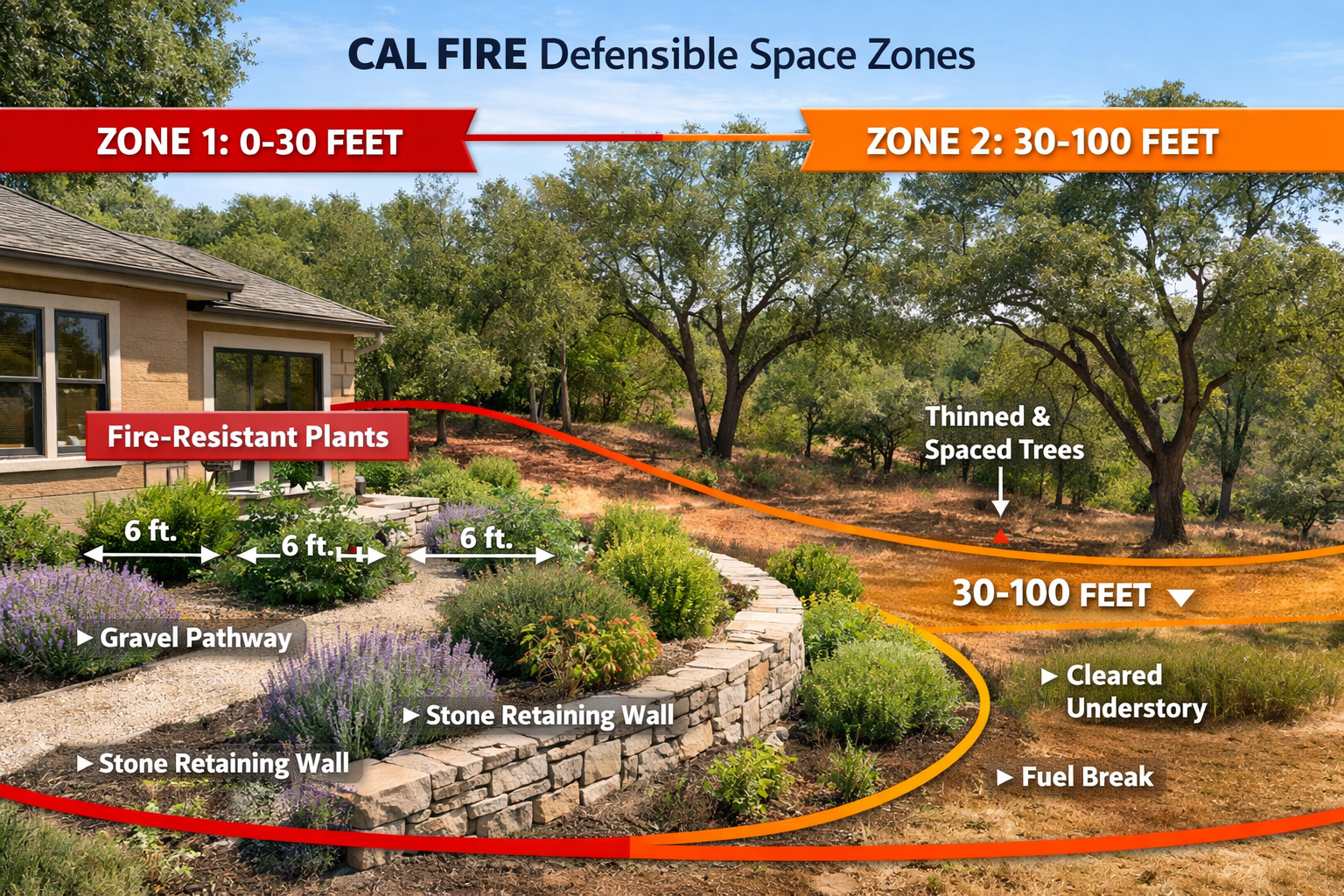
California's defensible space law applies to every property in State Responsibility Areas and Local Responsibility Areas where fire hazards exist. This covers most residential areas from Los Angeles landscaping services to Sacramento, and virtually all properties in the San Francisco Bay Area foothills.
The law divides your defensible space into two distinct zones around your home and any other structures like garages, sheds, or detached workshops.
Zone 1: The Critical 30 Feet
Zone 1 extends 30 feet from your home in all directions. This zone requires the most aggressive fire-resistant landscaping California standards:
- Remove all dead plants, grass, and weeds
- Remove tree branches within 10 feet of chimneys
- Trim tree branches to 6 feet from the ground
- Space plants so mature canopies don't touch
- Use only fire-resistant plant species
- Remove vegetation from under decks and stairs
Zone 2: Extended Protection to 100 Feet
Zone 2 covers the area from 30 to 100 feet from structures. Requirements here focus on fuel reduction:
- Cut grass to 4 inches or shorter before fire season
- Create fuel breaks with driveways, walkways, or bare soil
- Space trees so canopies are 12 feet apart
- Remove ladder fuels that connect ground vegetation to tree canopies
Local fire departments in counties like Riverside, Orange, and Ventura often add stricter requirements. Some areas require 150 feet of defensible space or prohibit certain plant species entirely.
Fire Resistant Landscaping California: Zone Requirements
The key to effective fire resistant landscaping California landscaping directory compliance lies in understanding plant spacing, moisture content, and growth habits.
Zone 1 Plant Selection Rules
Plants in Zone 1 must meet strict criteria:
- High moisture content in leaves and stems
- Low resin or oil content
- Slow growth rate
- Low, compact growth habit
- Deciduous trees preferred over evergreens
Approved Zone 1 plants include lavender, rosemary, sage, rockrose, and most succulents. These plants contain natural fire retardants and don't readily ignite.
Spacing Requirements That Actually Work
CAL FIRE requires specific spacing based on slope:
- Flat ground: 6 feet between shrub canopies
- Slopes under 20%: 12 feet between shrub canopies
- Slopes over 20%: 18 feet between shrub canopies
Trees need even more space. Mature tree canopies must be 10 feet apart on flat ground, 20 feet apart on slopes.
The Ladder Fuel Problem
Ladder fuels are vegetation that creates a path for fire to climb from ground level to tree canopies. Remove all vegetation under trees in Zone 1. This includes low shrubs, tall grass, and tree branches below 6 feet.
Zone 2 Management Strategy
Zone 2 allows more flexibility but still requires active management:
- Native grasses cut to 4 inches before fire season starts
- Strategic fuel breaks every 30-50 feet
- Selective tree thinning to prevent crown fires
- Irrigation systems that can wet down vegetation quickly
Regional Plant Selection for Fire Resistance
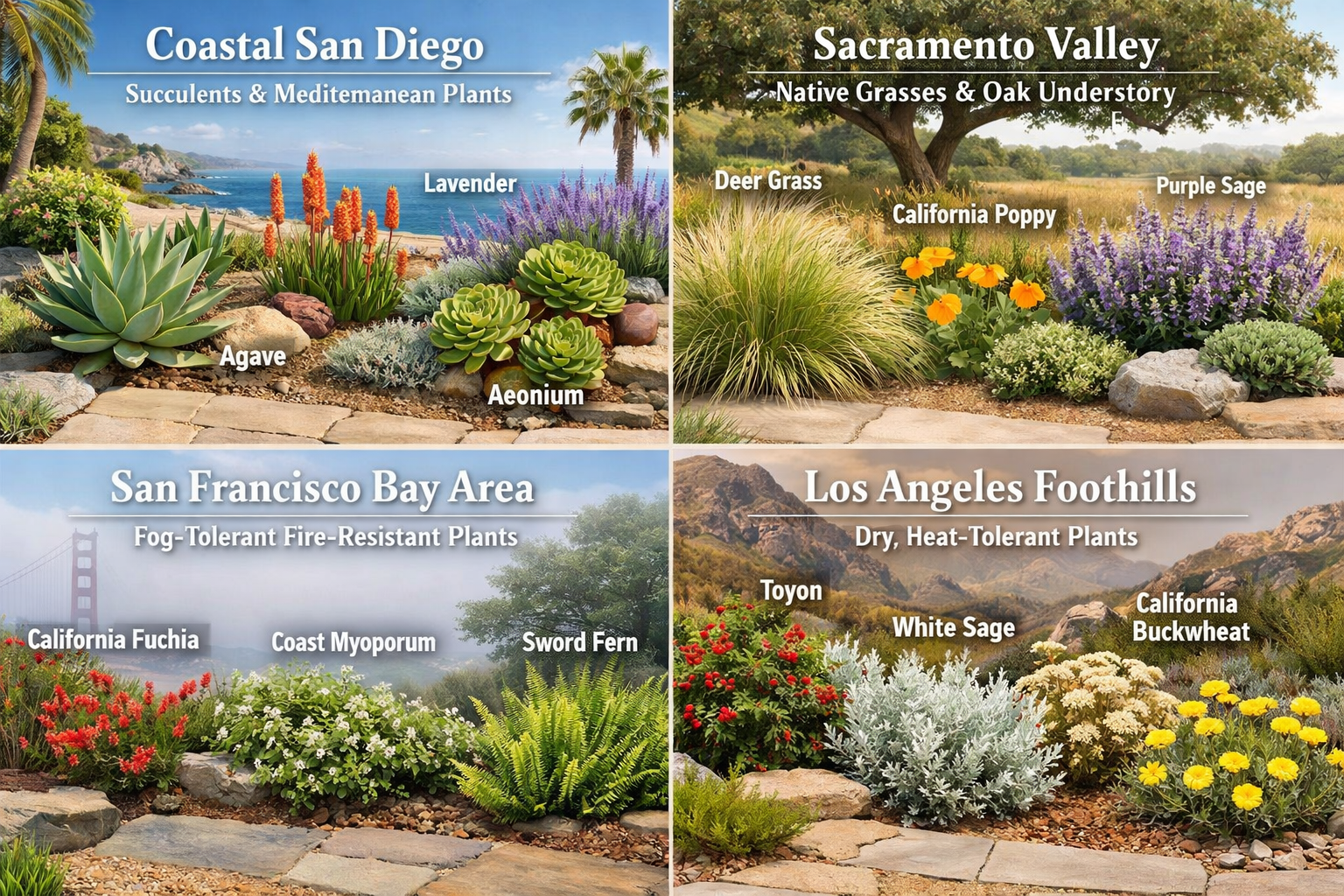
Fire resistant landscaping California plant choices must match your specific climate zone and local conditions.
Los Angeles and Inland Empire
Hot, dry summers and occasional Santa Ana winds create extreme fire conditions. Best plants include:
- Trees: Coast live oak, California sycamore, Chinese pistache
- Shrubs: Toyon, ceanothus, manzanita varieties
- Groundcover: Dymondia, trailing lantana, society garlic
- Accent plants: Agave, aloe varieties, prickly pear cactus
Avoid eucalyptus, pine trees, and ornamental grasses in fire-prone areas.
San Francisco Bay Area
Fog provides natural moisture, but dry summer conditions still create fire risk:
- Trees: Madrone, California bay laurel, valley oak
- Shrubs: Coffeeberry, spice bush, native currants
- Groundcover: Wild strawberry, creeping sage, native bunch grasses
- Accent plants: Dudleya, native iris, California fuchsia
San Diego County
Mediterranean climate allows diverse plant palette:
- Trees: Coral trees, jacaranda (with proper spacing), olive trees
- Shrubs: Leucadendron, protea varieties, native lilac
- Groundcover: Trailing rosemary, beach strawberry, native sedums
- Accent plants: Kangaroo paw, lion's tail, pride of Madeira
Sacramento Valley and Foothills
Hot summers and winter rain support different species:
- Trees: Valley oak, blue oak, Chinese hackberry
- Shrubs: Native buckwheat, salvias, native honeysuckle
- Groundcover: Native needlegrass, blue-eyed grass, creeping thyme
- Accent plants: Native penstemon, California poppies, lupines
Local pros with local knowledge understand which plants thrive in your specific microclimate while meeting fire safety requirements.
Hardscape and Construction Requirements
Non-combustible materials create essential fuel breaks and reduce ember ignition risk around your home.
Approved Hardscape Materials
- Decomposed granite: Natural-looking, permeable, affordable
- Gravel and crushed stone: Excellent drainage, various colors available
- Concrete pavers: Durable, can mimic natural stone appearance
- Natural stone: Flagstone, slate, granite - premium but long-lasting
- Brick and tile: Traditional options that meet fire codes
Creating Effective Fuel Breaks
Fuel breaks should be at least 10 feet wide and extend completely around structures when possible. Popular designs include:
- Gravel pathways connecting to driveways
- Stone patios extending from outdoor living areas
- Decomposed granite courtyards near main entries
- Concrete walkways with integrated lighting
Ember-Resistant Construction Details
Embers cause 90% of home ignitions during wildfires. Critical areas to address:
- Vents: Install 1/8-inch mesh screens on all exterior vents
- Gutters: Use non-combustible materials, install gutter guards
- Decking: Composite or metal decking preferred over wood
- Fencing: Non-combustible materials within 30 feet of structures
Irrigation Integration
Fire-resistant landscapes still need water during establishment and drought periods. Efficient systems include:
- Drip irrigation for individual plants
- Micro-spray systems for groundcover areas
- Smart controllers that adjust for weather conditions
- Emergency sprinkler zones that can wet down vegetation quickly
CAL FIRE Inspection Process
CAL FIRE conducts defensible space inspections from April through June each year, before peak fire season begins.
What Inspectors Look For
Inspectors carry detailed checklists covering:
- Vegetation clearance in both zones
- Plant spacing and species selection
- Ladder fuel removal
- Driveway and access road clearance
- Address visibility for emergency vehicles
Common Violations and Fines
Most violations involve:
- Dead vegetation not removed (80% of violations)
- Insufficient plant spacing (60% of violations)
- Ladder fuels under trees (45% of violations)
- Blocked access roads (30% of violations)
First violations typically get 30-day correction notices. Failure to comply results in fines starting at $100 per day, escalating to $1,000 per day for repeat violations.
The Re-Inspection Process
After correcting violations, property owners must request re-inspection. CAL FIRE aims to complete re-inspections within 10 business days during peak season.
County-Specific Requirements
Local fire departments often add requirements beyond state minimums:
- Riverside County: Requires 200 feet of fuel modification in some areas
- Orange County: Prohibits certain palm species near structures
- Ventura County: Mandates specific irrigation requirements during red flag warnings
- Santa Barbara County: Requires annual vegetation management plans for large properties
Maintenance and Insurance Implications
Fire resistant landscaping California compliance isn't a one-time project. It requires ongoing maintenance and documentation.
Annual Maintenance Schedule
Spring (March-April):
- Remove dead vegetation from winter
- Prune trees and shrubs before nesting season
- Check and repair irrigation systems
- Apply fresh mulch in approved areas
Early Summer (May-June):
- Cut grass to required heights
- Remove new growth that violates spacing rules
- Clean gutters and roof areas
- Test emergency sprinkler systems
Fall (September-October):
- Remove fallen leaves and debris
- Trim back summer growth
- Check for new ladder fuels
- Document compliance with photos
Insurance Requirements
Insurance companies increasingly require defensible space compliance. Many now:
- Require annual compliance photos
- Conduct their own property inspections
- Offer discounts for certified fire-resistant landscaping
- Cancel policies for repeated violations
Documentation That Protects You
Keep detailed records including:
- Annual inspection reports from CAL FIRE
- Photos showing compliance in both zones
- Receipts for vegetation management work
- Irrigation system maintenance records
Professional landscapers experienced with fire-resistant design can help maintain compliance and document your efforts.
FAQ
How much does fire-resistant landscaping cost in California?
Basic defensible space compliance typically costs $3,000-$8,000 for Zone 1 work around an average home. Complete landscape renovation with fire-resistant plants and hardscape runs $15,000-$40,000 depending on property size and materials chosen.
Can I use wood mulch in defensible space zones?
Wood mulch is prohibited within 30 feet of structures in Zone 1. Use decomposed granite, gravel, or composted organic matter instead. Zone 2 allows wood mulch if kept moist and away from structures.
What happens if my neighbor doesn't maintain defensible space?
You're only responsible for your own property, but neighboring violations can affect your fire risk. Report violations to your local fire department. Some areas allow you to extend defensible space onto neighboring property with permission.
Do I need permits for defensible space landscaping?
Most defensible space work doesn't require permits, but check with your city for large projects involving grading, irrigation, or structures. HOAs may have additional approval requirements.
How do I find qualified contractors for fire-resistant landscaping?
Look for contractors with CAL FIRE training, certified arborists, and experience with defensible space requirements. Licensed, insured, and reviewed professionals understand local fire codes and plant requirements. Real reviews from real homeowners help identify contractors who deliver quality fire-safe landscaping.
What if my property is less than 100 feet deep?
You're still required to maintain defensible space to your property line. Work with neighbors when possible to extend protection, and focus on the most fire-resistant landscaping possible within your boundaries.
Conclusion
Fire resistant landscaping California landscaping directory compliance isn't optional in 2026 - it's essential for protecting your home, family, and financial security. The two-zone defensible space system works when properly implemented with the right plants, spacing, and maintenance.
Success starts with understanding your specific regional requirements and plant palette. What works in coastal San Diego won't survive Sacramento summers, and Bay Area fog creates different challenges than inland desert conditions.
Your next steps: assess your current compliance, identify priority areas needing immediate attention, and create a maintenance plan that keeps you compliant year-round. For complex projects or ongoing maintenance, find the right landscaper for your yard - one who understands fire safety requirements and local growing conditions.
The investment in proper fire-resistant landscaping pays dividends in reduced insurance costs, increased property values, and most importantly, protection when wildfire threatens. Know who you're letting into your yard by choosing licensed, insured, and reviewed professionals who specialize in defensible space compliance.
From basic vegetation management to full backyard transformations, the right approach to fire-resistant landscaping protects what matters most while creating beautiful, sustainable outdoor spaces that thrive in California's challenging climate.
Liked this guide? Follow us on Google Search
Related Directory Pages
- Browse California Landscaping Pros
- Sacramento Landscaping Services
- Browse Landscaping Services in California
- Also Read: Best Desert Landscaping Ideas for Phoenix Homes
- Also Read: Flagstaff Landscaping: Mountain vs Desert Style
- Also Read: Monsoon Season Landscaping Prep for Arizona Yards
- Also Read: Tucson Landscaping: Native Plants & Desert Design
- Search California Landscapers
Find a Landscaper Near You
Browse CA landscaping professionals on LandscapeProsDirectory.
Search Landscapers