
Best California Native Plants for Your Landscape
Discover 20+ California native plants for water-wise landscaping. Regional guides, drought tolerance ratings, fire resistance tips, and design advice.
California homeowners spend over $2.7 billion annually on landscaping, yet most choose thirsty non-native plants that drain wallets and water supplies. California native plants landscaping offers a smarter path—cutting water bills by up to 60% while creating stunning gardens that actually belong here.
Native plants evolved here for thousands of years. They know California's climate better than any imported species ever will. Your yard deserves plants that work with nature, not against it.
Key Takeaways
- California native plants can reduce landscape water use by 50-80% compared to traditional lawns and exotic plants
- Native species support local wildlife and pollinators that non-natives cannot
- Regional selection matters—coastal natives differ from mountain and desert varieties
- Many natives offer natural fire resistance, crucial for California homeowners
- Professional installation ensures proper plant placement and long-term success
Table of Contents
- Why Choose California Native Plants Landscaping
- Best Native Plants by California Region
- Water Savings and Drought Tolerance
- Fire-Resistant Native Plant Options
- Design Tips for Native Plant Gardens
- Where to Buy and What to Ask
- FAQ
Why Choose California Native Plants Landscaping
Native plants make sense for California landscaping directory yards. They evolved here. They handle our dry summers, wet winters, and everything between.
Water savings add up fast. A typical suburban lawn needs 55 inches of water yearly. Native plant gardens need 10-15 inches after establishment. That's real money back in your pocket.
Wildlife needs natives. California's 1,600 native bee species depend on native plants. Monarch butterflies need native milkweed. Birds need native seeds and berries. Non-native plants look pretty but feed nothing.
Fire safety matters more every year. Many natives naturally resist fire. They store less volatile oils than eucalyptus or pine. Some even help create defensible space around homes.
Maintenance drops dramatically. No weekly mowing. No constant fertilizing. No fighting diseases that target non-adapted plants. Native plants want to grow here.
Best Native Plants by California Region
California spans multiple climate zones. What thrives in San Diego landscaping services struggles in Sacramento. Regional selection matters for successful California native plants landscaping.
Coastal Region Plants
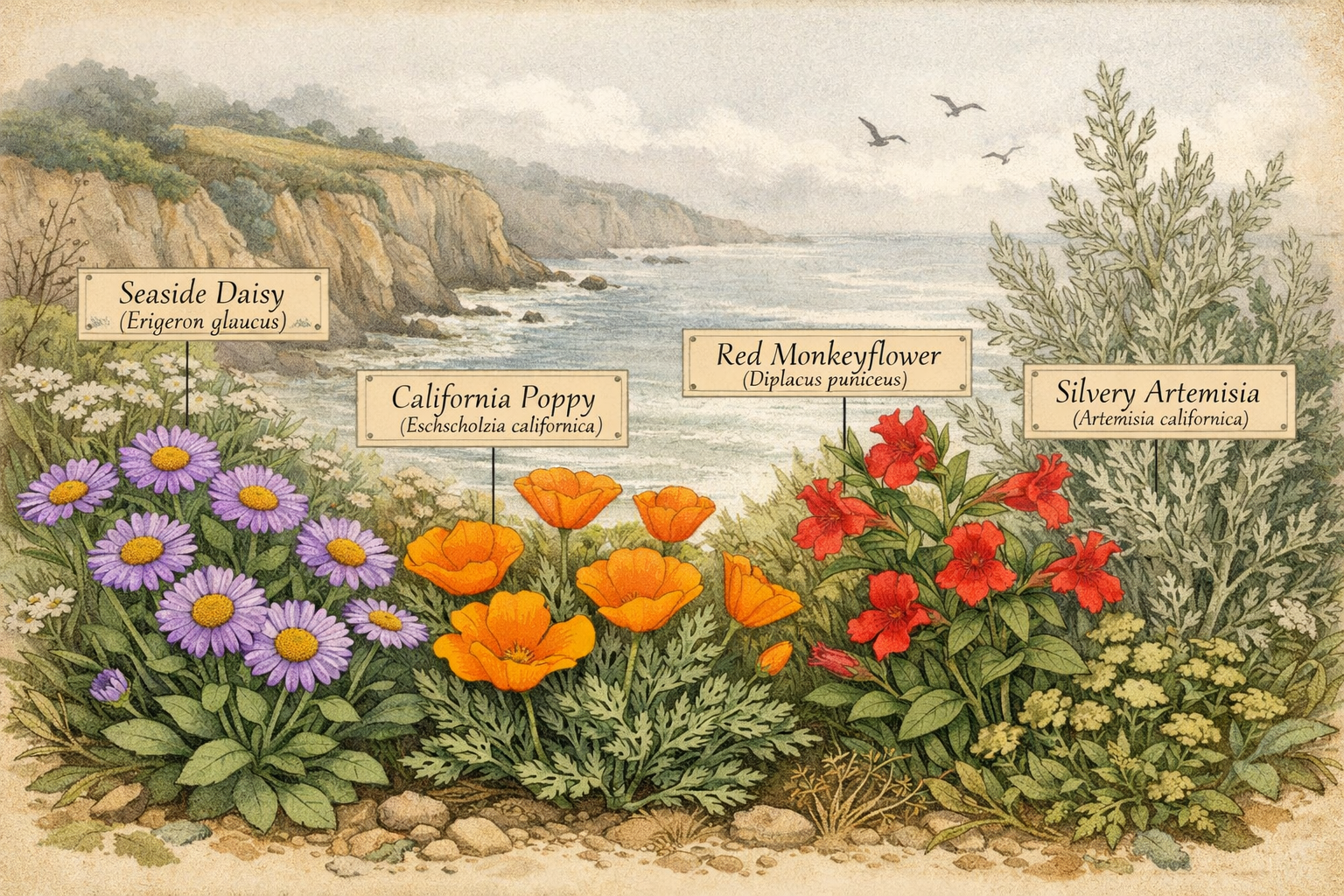
California Poppy (Eschscholzia californica)
The state flower works everywhere but shines near the coast. Orange blooms appear spring through fall. Self-seeds readily. Handles salt spray and fog.
Seaside Daisy (Erigeron glaucus)
Purple flowers bloom year-round in mild coastal areas. Forms dense groundcover. Perfect for slopes and erosion control. Thrives in sandy soil.
California Fuchsia (Epilobium canum)
Bright red-orange flowers attract hummingbirds. Blooms late summer into fall when other plants fade. Spreads by underground runners. Drought tolerant once established.
Monkey Flower (Mimulus species)
Yellow, orange, or red flowers depending on variety. Loves morning sun, afternoon shade. Some varieties handle seasonal moisture, others prefer dry conditions.
Inland Valley and Foothills
Manzanita (Arctostaphylos species)
Smooth red bark and small white or pink flowers. Over 60 species native to California. Ranges from groundcover types to 20-foot trees. Extremely drought tolerant.
Ceanothus (California Lilac)
Blue, purple, or white flower clusters cover plants in spring. Fast-growing. Fixes nitrogen in soil. Many varieties from prostrate groundcovers to large shrubs.
Toyon (Heteromeles arbutifolia)
Bright red berries follow white spring flowers. Also called Christmas Berry. Grows 8-15 feet tall. Birds love the berries. Fire resistant.
Coffeeberry (Frangula californica)
Small white flowers become red berries that turn black. Excellent bird food. Grows in sun or shade. Very adaptable to different soils.
Central Valley and Hot Interior
Valley Oak (Quercus lobata)
California's largest oak. Provides massive shade. Supports over 300 insect species. Plant where it has room to reach 100+ feet wide.
Blue Oak (Quercus douglasii)
Smaller than Valley Oak but equally tough. Blue-green leaves. Handles extreme heat and drought. Perfect for foothill properties.
Buckwheat (Eriogonum species)
White or pink flower clusters feed butterflies and bees. Many varieties from small shrubs to groundcovers. Blooms spring through fall with water.
Matilija Poppy (Romneya coulteri)
Huge white flowers with yellow centers. Grows 6-8 feet tall. Spreads by underground roots. Called "fried egg plant" for obvious reasons.
Mountain and High Desert
Flannel Bush (Fremontodendron species)
Bright yellow flowers cover plants in spring. Fuzzy leaves feel like flannel. Needs excellent drainage. Stunning against blue sky.
Catalina Cherry (Prunus lyonii)
White spring flowers become dark cherries. Fast-growing to 25 feet. Attracts birds and butterflies. Handles wind and drought.
Island Bush Poppy (Dendromecon harfordii)
Yellow poppy flowers bloom most of the year. Grows 4-8 feet tall. Silver-green foliage. Needs good drainage like most natives.
Mountain Lilac (Ceanothus species)
High-elevation varieties handle snow and cold. Blue flowers in dense clusters. Some varieties bloom twice yearly. Excellent for mountain properties.
Water Savings and Drought Tolerance
California native plants landscaping delivers real water savings. Numbers don't lie.
Establishment period matters. Most natives need regular water the first year. Deep, infrequent watering builds strong root systems. After year one, cut back gradually.
Drought tolerance ratings help planning:
- Very High: Manzanita, Ceanothus, Buckwheat (survive on rainfall alone)
- High: California Poppy, Sage, Toyon (monthly deep watering in summer)
- Moderate: Monkey Flower, some Oaks (bi-weekly summer water)
- Low: Certain ferns and riparian plants (weekly water needed)
Group plants by water needs. Put thirsty natives near downspouts or irrigation. Place drought-tolerant species on slopes and dry areas. This hydrozoning maximizes efficiency.
Mulch saves water and plants. Three-inch layer of wood chips or gravel mulch cuts water needs by 30%. Keeps roots cool. Suppresses weeds that compete for moisture.
Fire-Resistant Native Plant Options
California's fire season grows longer each year. Smart California native plants landscaping includes fire-resistant species.
Fire-resistant natives for defensible space:
- Toyon: High moisture content in leaves
- Coffeeberry: Low volatile oils
- California Fuchsia: Succulent stems store water
- Manzanita: Dense wood, high moisture
- Ceanothus: Choose low-growing varieties near structures
Avoid these fire-prone natives near buildings:
- Sage species (high volatile oils)
- Chamise in large masses
- Any dead or dying plant material
Design for fire safety. Space plants to prevent fire ladders. Keep large shrubs 30 feet from structures. Remove dead branches and leaves regularly. Licensed landscapers understand fire-safe design principles.
Design Tips for Native Plant Gardens
Successful California native plants landscaping requires planning. Random placement looks messy and wastes money.
Start with your microclimates. Walk your property at different times. Note sun patterns, wind exposure, soil drainage. Match plants to conditions, not wishful thinking.
Design in layers like nature:
- Canopy: Oaks, large shrubs (15+ feet)
- Understory: Medium shrubs, small trees (4-15 feet)
- Shrub layer: Ceanothus, Manzanita (2-8 feet)
- Groundcover: Creeping natives, bunch grasses (under 2 feet)
Create seasonal interest. Spring bloomers like Ceanothus and poppies. Summer flowers from Buckwheat and California Fuchsia. Fall color from Toyon berries. Winter structure from evergreen shrubs.
Use repetition and mass plantings. Three to five of the same plant creates impact. Single specimens look scattered. Repeat key plants throughout the design for unity.
Consider mature sizes. That cute 1-gallon Manzanita becomes 8 feet wide. Plan for growth or face expensive removal later. Licensed landscapers prevent costly spacing mistakes.
Where to Buy and What to Ask
Quality plants and proper installation determine success. Know who you're letting into your yard.
Best sources for native plants:
- Native plant nurseries: Specialize in local genetics
- Native plant society sales: Often best prices and rare varieties
- Some retail nurseries: Ask about local provenance
- Avoid: Big box stores with generic "native" plants from other states
Questions to ask nursery staff:
- Where were these plants grown?
- Are they true California natives or cultivars?
- What's the water requirement after establishment?
- How big will this plant actually get?
What to ask before you hire a landscaper:
- Do they have experience with native plant installation?
- Can they provide references for native plant projects?
- Do they understand irrigation needs for establishment vs. long-term?
- Are they licensed and insured for your protection?
Red flags when hiring:
- Promises natives need "no water ever"
- Can't explain plant spacing or mature sizes
- Suggests non-native "alternatives"
- No license or insurance verification
Find the right landscaper for your yard through verified directories. Real reviews from real homeowners help you avoid costly mistakes.
FAQ
How much water do native plants really save?
Established native plant gardens use 50-80% less water than traditional landscapes. A 1,000 square foot native garden typically needs 60-100 gallons monthly versus 300-500 gallons for lawn and exotic plants.
Do native plants attract more bugs and wildlife?
Yes, but mostly beneficial species. Native plants support pollinators, birds, and pest-eating insects. They don't attract more harmful pests than non-natives. The increased biodiversity actually helps control problem insects naturally.
Can I mix natives with non-native plants?
Yes, but group plants with similar water needs. Mixing drought-tolerant natives with thirsty exotics creates irrigation conflicts. Mediterranean plants often work well with California natives.
When is the best time to plant natives?
Fall planting gives roots time to establish before summer heat. Spring works too but requires more summer watering. Avoid planting during hot summer months or freezing winter periods.
How long before natives look established?
Most natives show good growth by the second year. Full establishment takes 2-3 years. The first year focuses on root development, so top growth may seem slow initially.
Do I need special soil for native plants?
Most California natives prefer well-draining soil. Heavy clay needs amendment with decomposed granite or sand. Avoid rich, organic soils that many natives dislike. Soil tests help determine necessary changes.
Conclusion
California native plants landscaping makes sense for 2026 and beyond. Water costs keep rising. Fire risks increase. Climate change demands smarter plant choices.
Native plants offer proven solutions. They've survived here for millennia. They support local wildlife. They cut maintenance and water bills. They create beautiful, sustainable landscapes. Explore our California landscaping directory to find licensed pros.
Success requires proper plant selection, quality installation, and realistic expectations. Licensed landscapers with native plant experience prevent costly mistakes. Your yard deserves someone who knows what they're doing.
Start planning your native plant landscape today. From basic lawn replacement to full backyard transformations, the right plants and professionals make all the difference. Find landscaping pros in your area who understand California native plants landscaping. We verify so you don't have to.
Liked this guide? Follow us on Google Search
Related Directory Pages
- Browse California Landscaping Pros
- San Diego Landscaping Services
- Browse Landscaping Services in California
- Also Read: Best Native Plants for New Mexico Landscapes
- Also Read: Best Desert Landscaping Ideas for Phoenix Homes
- Also Read: Best Drought-Tolerant Plants for Arizona Landscapes
- Also Read: Flagstaff Landscaping: Mountain vs Desert Style
- Search California Landscapers
Find a Landscaper Near You
Browse CA landscaping professionals on LandscapeProsDirectory.
Search Landscapers