
California Hardscaping: Patios, Walkways & Retaining Walls
Complete guide to hardscaping California homes. Covers materials, costs, CalGreen compliance, retaining walls, and finding licensed C-27 contractors for your pr
California homeowners spend over $2.8 billion annually on hardscaping projects, yet 40% of permits get rejected for failing to meet state stormwater requirements. Your yard deserves someone who knows what they're doing when it comes to navigating CalGreen compliance and local building codes.
Hardscaping California properties requires understanding unique challenges like hillside erosion, fire safety regulations, and water management rules. From Los Angeles hillside homes to Sacramento's flat lots, the right materials and proper installation make the difference between a beautiful outdoor space and costly repairs down the road.
Key Takeaways
- CalGreen requirements mandate permeable surfaces for most new hardscaping projects over 2,500 square feet
- C-27 licensed contractors must handle retaining walls over 4 feet or any structural hardscaping work
- Material costs range from $3-15 per square foot depending on type and installation complexity
- Fire-resistant hardscaping materials create required defensible space in high-risk areas
- Proper drainage and soil preparation prevent costly foundation issues on California's unstable soils
Table of Contents
- Hardscaping Materials for California Climate
- Retaining Walls and Hillside Solutions
- Permeable Surfaces and Stormwater Compliance
- Fire-Resistant Hardscaping for Defensible Space
- Cost Breakdown by Material and Region
- Finding Licensed C-27 Hardscape Contractors
- FAQ
Hardscaping Materials for California Climate
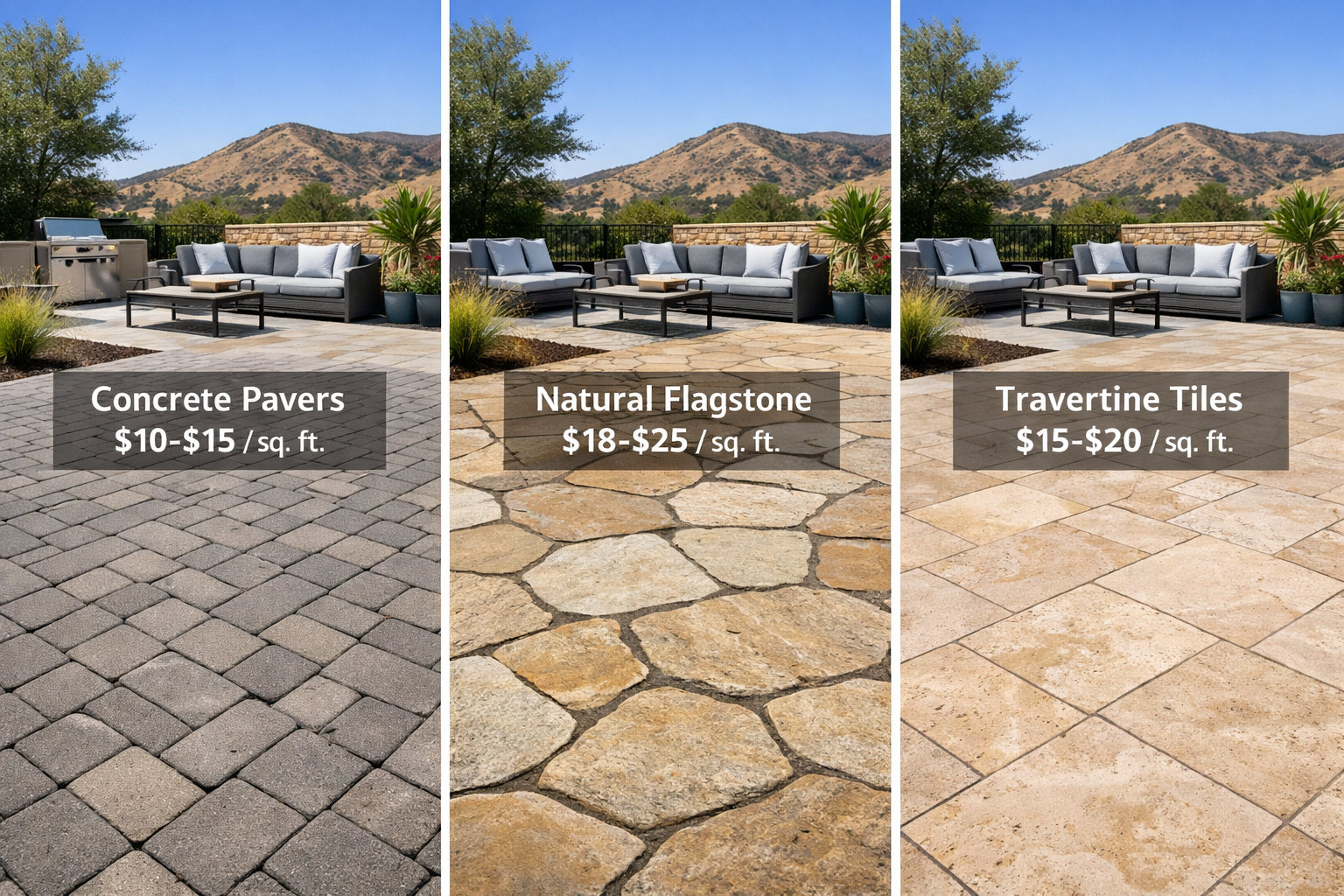
California's diverse climate zones demand materials that handle everything from coastal salt air to inland temperature swings. Concrete pavers remain the most popular choice, costing $4-8 per square foot installed. They expand and contract well with temperature changes and come in styles that mimic natural stone.
Flagstone works beautifully in Northern California but requires sealing in areas with freeze-thaw cycles. Expect $8-12 per square foot for quality Arizona flagstone. The irregular shapes create natural-looking patios but need skilled installation to prevent settling.
Travertine handles heat well, staying cool underfoot around pools. Popular in Southern California, it costs $6-10 per square foot but needs regular sealing to prevent staining. The porous surface requires professional cleaning every 2-3 years.
Decomposed granite offers the most budget-friendly option at $3-5 per square foot. It compacts well for walkways and works perfectly for fire-safe landscaping. However, it needs stabilizers in areas with heavy rain to prevent washout.
Stamped concrete provides durability at $5-9 per square foot. Modern techniques create realistic stone and wood textures. The key advantage: fewer joints mean less weed growth and easier maintenance.
Local pros know which materials work best in your specific microclimate. San Francisco's fog requires different considerations than Sacramento's dry heat or San Diego landscaping services's coastal conditions.
Retaining Walls and Hillside Solutions
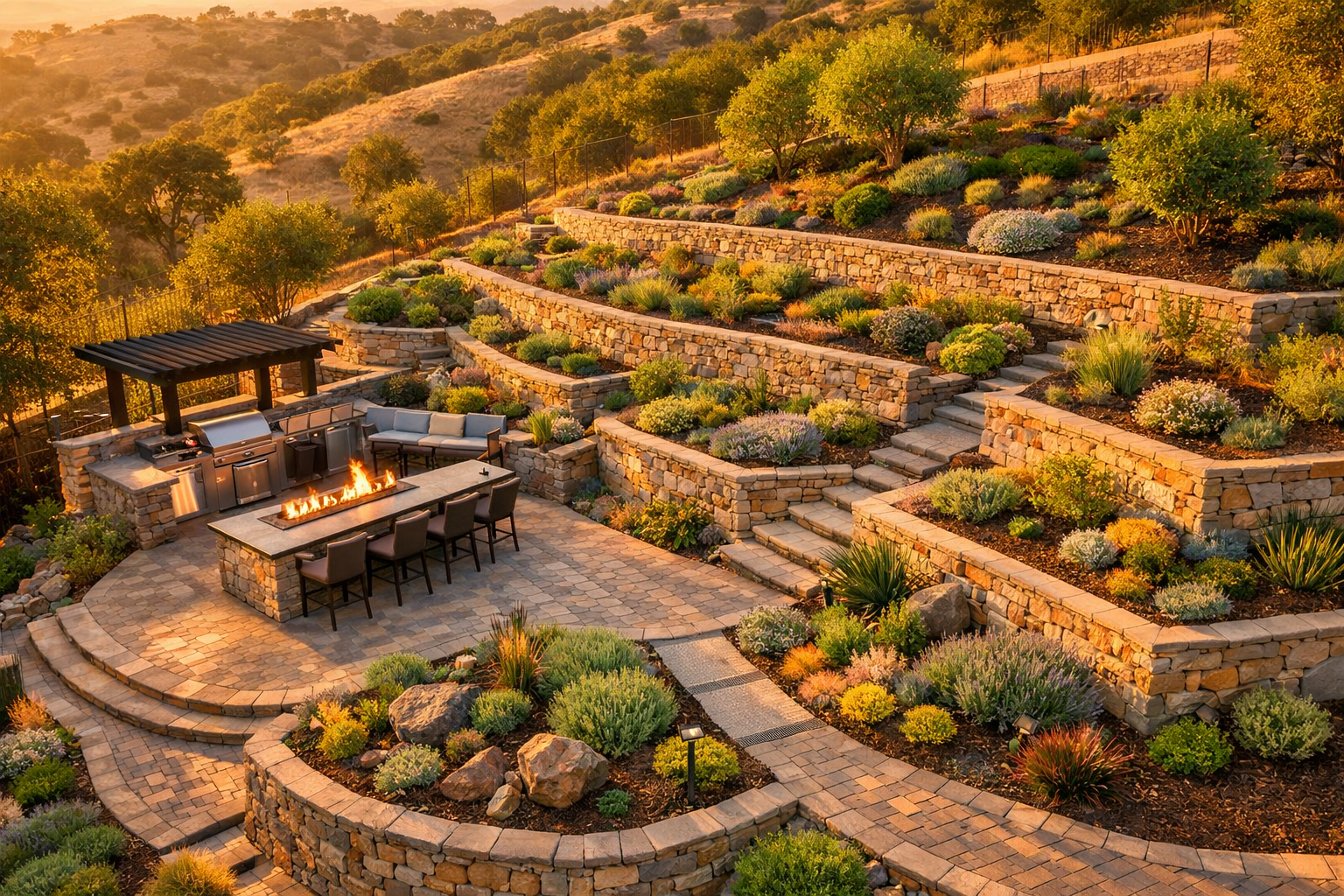
California's hilly terrain makes retaining walls essential for many properties. Any wall over 4 feet requires a C-27 licensed contractor and engineered plans. Even shorter walls need proper drainage to prevent failure during winter rains.
Segmental block walls cost $15-25 per square foot and work well for most residential applications. The interlocking system flexes with ground movement, crucial in earthquake-prone areas. Brands like Allan Block and Versa-Lok offer 50-year warranties when properly installed.
Natural stone walls range from $25-40 per square foot but provide unmatched beauty. Fieldstone and granite work well, while softer stones like sandstone may not meet structural requirements for taller walls.
Poured concrete walls handle the heaviest loads at $20-35 per square foot. They require forms, rebar, and curing time but create the strongest solution for steep slopes. Most HOAs prefer textured or colored concrete over plain gray.
Proper drainage prevents 90% of retaining wall failures. French drains behind the wall, weep holes every 6-8 feet, and gravel backfill cost extra but save thousands in repairs. Los Angeles requires specific drainage details due to clay soil conditions.
Terracing multiple shorter walls often costs less than one tall wall and creates usable planting areas. This approach works especially well on San Francisco's steep lots where space is premium.
Permeable Surfaces and Stormwater Compliance
CalGreen building codes require permeable hardscaping for projects over 2,500 square feet in most California cities. These rules aim to reduce runoff and recharge groundwater supplies.
Permeable pavers allow water to filter through joints filled with gravel or sand. They cost $6-12 per square foot but satisfy most municipal requirements. The base preparation is critical - shortcuts here lead to settling and drainage problems.
Pervious concrete looks like regular concrete but allows 3-5 gallons per minute to pass through each square foot. Installation requires specialized equipment and costs $4-8 per square foot. Not all contractors know proper techniques.
Gravel and decomposed granite naturally meet permeability requirements. They work well for secondary pathways and fire-safe areas around structures. Proper edge restraints prevent material migration.
Stormwater calculations determine how much permeable surface you need. Local building departments provide worksheets, but many homeowners hire engineers to ensure compliance. Permit fees range from $200-800 depending on project size.
Sacramento landscaping services and other Central Valley cities offer rebates for permeable hardscaping that reduces stormwater system loads. San Diego requires bioretention areas for larger projects.
Fire-Resistant Hardscaping for Defensible Space
California's wildfire risk makes fire-resistant materials essential within 30 feet of structures. Insurance companies increasingly require defensible space compliance for coverage.
Concrete, stone, and brick provide the best fire resistance. Avoid wood borders, mulch, and flammable decorative elements near buildings. Gravel pathways create natural firebreaks while providing access for emergency vehicles.
Defensible space zones have specific requirements:
- Zone 1 (0-30 feet): Only fire-resistant plants and hardscaping
- Zone 2 (30-100 feet): Reduced vegetation density with fuel breaks
Outdoor kitchens and fire features need special permits in high-risk areas. Gas lines require C-36 plumbing contractors, while electrical work needs C-10 licensing. Many cities ban wood-burning features entirely.
Irrigation integration keeps defensible landscaping green during fire season. Drip systems work better than spray irrigation around hardscaping. Smart controllers adjust watering based on weather conditions.
Local fire departments provide free defensible space inspections. They identify problem areas and suggest hardscaping solutions that improve safety while maintaining property values.
Cost Breakdown by Material and Region
Northern California (San Francisco Bay Area):
- Basic concrete: $4-6 per sq ft
- Pavers: $6-10 per sq ft
- Natural stone: $10-15 per sq ft
- Retaining walls: $20-35 per sq ft
Southern California (Los Angeles/San Diego):
- Basic concrete: $3-5 per sq ft
- Pavers: $5-9 per sq ft
- Natural stone: $8-12 per sq ft
- Retaining walls: $18-30 per sq ft
Central Valley (Sacramento/Fresno):
- Basic concrete: $3-4 per sq ft
- Pavers: $4-7 per sq ft
- Natural stone: $7-10 per sq ft
- Retaining walls: $15-25 per sq ft
Additional costs include:
- Permits: $200-1,500
- Soil preparation: $2-4 per sq ft
- Drainage systems: $8-15 per linear foot
- Lighting: $150-400 per fixture
Labor represents 60-70% of total project costs. Skilled installers charge $75-120 per hour in major metro areas. Rural areas see lower labor costs but higher material delivery fees.
Financing options include home equity loans, contractor financing, and PACE programs for energy-efficient improvements. Some cities offer rebates for permeable surfaces and drought-resistant landscaping.
Finding Licensed C-27 Hardscape Contractors
C-27 licensing covers landscaping contractors who can handle structural work like retaining walls and major grading. Always verify licenses through the California Contractors State License Board website.
Key questions to ask contractors:
- Current license number and expiration date
- Workers compensation and liability insurance
- Local permit experience
- References from recent similar projects
- Material supplier relationships
Red flags include:
- Door-to-door solicitation
- Cash-only payment requests
- No local business address
- Pressure for immediate decisions
- Prices significantly below others
Licensed, insured, and reviewed contractors protect your investment. Real reviews from real homeowners tell you more than fancy websites. We verify so you don't have to - check contractor backgrounds before signing contracts.
Local knowledge matters. San Francisco contractors understand expansive clay soils. Los Angeles pros know hillside regulations. Sacramento specialists handle valley heat and winter flooding.
Get three detailed bids for any project over $5,000. Compare materials, timeline, and warranty terms. The lowest bid often means corners get cut on preparation or materials.
Payment schedules should tie to completion milestones, not contractor cash flow needs. Never pay large amounts upfront. Final payment waits until you approve completed work.
FAQ
Q: Do I need permits for a simple patio?
A: Most cities require permits for patios over 200 square feet or any project involving electrical/plumbing. Check with local building departments before starting work.
Q: How long do hardscaping materials last in California?
A: Quality concrete and stone last 20-30 years with proper installation. Pavers may need releveling every 10-15 years. Sealers need reapplication every 3-5 years.
Q: Can I install hardscaping myself?
A: Simple walkways and small patios work for DIY projects. Retaining walls over 4 feet, electrical work, and structural elements require licensed contractors by law.
Q: What's the best time of year for hardscaping projects?
A: Fall through early spring avoids extreme heat and allows curing before summer stress. Avoid winter work in areas with freezing temperatures.
Q: How do I maintain permeable surfaces?
A: Vacuum or pressure wash joints annually to prevent clogging. Refill joint material as needed. Avoid sealing permeable surfaces - it defeats their purpose.
Q: Are there rebates available for hardscaping?
A: Many water districts offer rebates for drought-resistant landscaping and permeable surfaces. Check with local utilities and building departments for current programs.
Conclusion
Hardscaping California landscaping directory properties successfully requires understanding local regulations, climate challenges, and material performance. From permeable pavers that satisfy stormwater requirements to fire-resistant materials that create defensible space, the right choices protect your investment and enhance property values.
Find the right landscaper for your yard by verifying C-27 licensing, checking insurance coverage, and reviewing recent project references. Local pros bring local knowledge about soil conditions, permit requirements, and material suppliers that make projects run smoothly.
Start by defining your needs - drainage solutions, fire safety, entertaining space, or hillside stabilization. Get detailed bids from licensed contractors who understand California's unique requirements. Your yard deserves someone who knows what they're doing when it comes to navigating building codes and creating lasting outdoor spaces.
Cost guides that actually tell you what things cost help you budget realistically. Plan for permits, proper drainage, and quality materials that handle California's diverse climate conditions. The investment in professional installation pays off through decades of trouble-free enjoyment and increased home values.
Liked this guide? Follow us on Google Search
Related Directory Pages
- Browse California Landscaping Pros
- Sacramento Landscaping Services
- Browse Hardscaping Services in California
- Also Read: Hardscaping Ideas for Arizona Outdoor Living Spaces
- Also Read: Nevada Hardscaping: Patios, Pavers, Desert Outdoor Living
- Also Read: New Mexico Hardscaping: Patios, Walls & Adobe-Compatible Design
- Also Read: Utah Hardscaping: Patios, Driveways & Snow-Ready Designs
- Search California Landscapers
Find a Landscaper Near You
Browse CA landscaping professionals on LandscapeProsDirectory.
Search Landscapers