
Utah Hardscaping: Patios, Driveways & Snow-Ready Designs
Expert Utah hardscaping guide covering freeze-thaw materials, permeable pavers, retaining walls, costs, and snow-ready designs for Salt Lake City area homes.
Utah's freeze-thaw cycles destroy more hardscaping projects than any other factor. Every winter, temperatures swing from below zero to above freezing dozens of times, turning water in concrete cracks into tiny jackhammers that split apart driveways and patios.
Smart Utah hardscaping means choosing materials and designs that laugh at winter weather. From Salt Lake City's clay soils to Park City's heavy snow loads, your yard deserves someone who knows what they're doing when it comes to building structures that last through Utah's extreme conditions.
Key Takeaways
- Permeable pavers outperform concrete on Utah's clay soils and handle freeze-thaw cycles better
- Proper base preparation costs more upfront but prevents expensive repairs later
- Natural stone requires less maintenance than concrete in Utah's climate
- Snow load calculations are required for pergolas and covered structures in most Utah counties
- De-icing salt damages concrete but has minimal impact on natural stone and quality pavers
Table of Contents
- Materials That Survive Utah Winters
- Utah Hardscaping for Sloped Properties
- Outdoor Living Spaces That Work Year-Round
- Cost Breakdown for Utah Hardscaping Projects
- FAQ
- Conclusion
Materials That Survive Utah Winters
Concrete vs Pavers vs Natural Stone
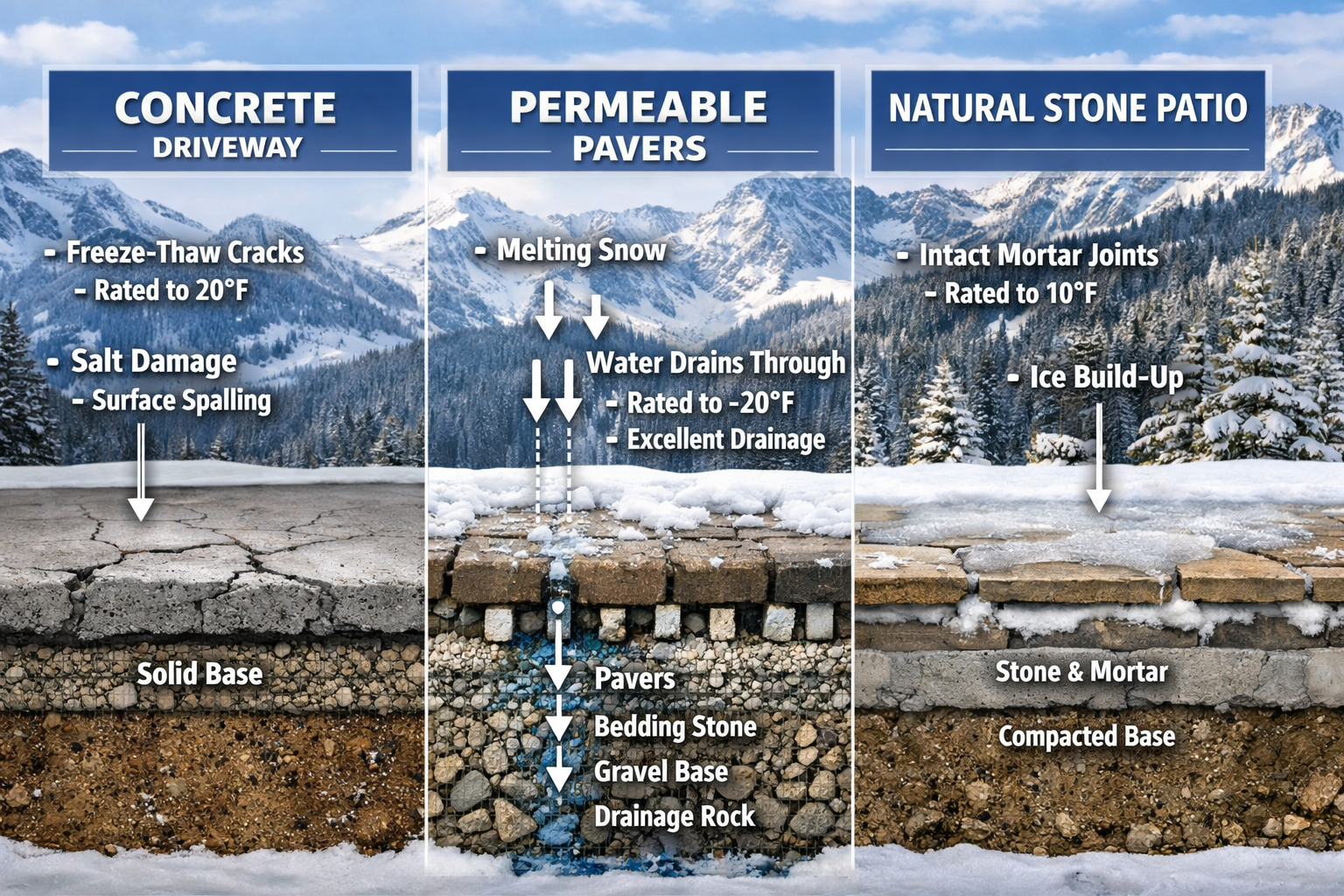
Concrete seems like the budget-friendly choice until you factor in Utah's climate. Standard concrete driveways in Salt Lake City landscaping services typically show cracking within three years. The Wasatch Front's clay soil expands and contracts with moisture changes. Add freeze-thaw cycles and you get a perfect storm for concrete failure.
Concrete pros and cons:
- Lower upfront cost ($8-12 per square foot installed)
- Fast installation
- Cracks from freeze-thaw cycles
- Salt damage from de-icing
- Difficult to repair without visible patches
Permeable pavers work better:
- Handle freeze-thaw cycles without cracking
- Individual units can be replaced if damaged
- Allow water drainage through clay soils
- Cost $12-18 per square foot installed
- Last 25+ years with minimal maintenance
Natural stone offers the best longevity:
- Flagstone and sandstone handle Utah weather naturally
- No freeze-thaw damage when properly installed
- Resistant to de-icing salt
- Cost $15-25 per square foot
- Increases property value more than other options
Base Preparation Makes the Difference
Utah's clay soil requires specific base preparation. Licensed contractors know to excavate deeper and use proper drainage layers. Shortcuts here cause expensive problems later.
Proper base for Utah conditions:
- Excavate 8-12 inches deep
- Install geotextile fabric
- Add 4-6 inches of crushed gravel base
- Compact in 2-inch lifts
- Install 1-2 inches of sand leveling course
This preparation costs more upfront but prevents the settling and cracking that plague cheaper installations.
Utah Hardscaping for Sloped Properties
Retaining Walls That Handle Snow Loads
Many Utah properties have sloped lots that need retaining walls. These structures must handle both soil pressure and snow loads. In Park City landscaping services and other mountain areas, snow loads can exceed 50 pounds per square foot.
Retaining wall options for Utah:
| Material | Height Limit | Snow Load Rating | Cost per sq ft |
|---|---|---|---|
| Segmental block | 4 feet | Excellent | $15-25 |
| Natural stone | 6 feet | Excellent | $25-40 |
| Poured concrete | 8+ feet | Good with rebar | $20-35 |
Segmental block walls work well for most residential projects. The interlocking design flexes with ground movement. Natural stone costs more but looks better and lasts longer.
Engineering requirements:
- Walls over 4 feet need engineering in most Utah cities
- Drainage behind walls prevents ice damage
- Proper footing depth below frost line (30-36 inches in northern Utah)
Drainage Solutions for Clay Soils
The Wasatch Front's clay soil creates drainage challenges. Water sits on the surface instead of soaking in. This creates ice problems in winter and erosion issues during spring runoff.
Effective drainage strategies:
- French drains around hardscaped areas
- Permeable materials instead of solid concrete
- Proper grading to direct water away from structures
- Catch basins at low points
Licensed contractors understand local soil conditions. They know where clay layers sit and how to work around them.
Outdoor Living Spaces That Work Year-Round
Fire Features for Extended Seasons
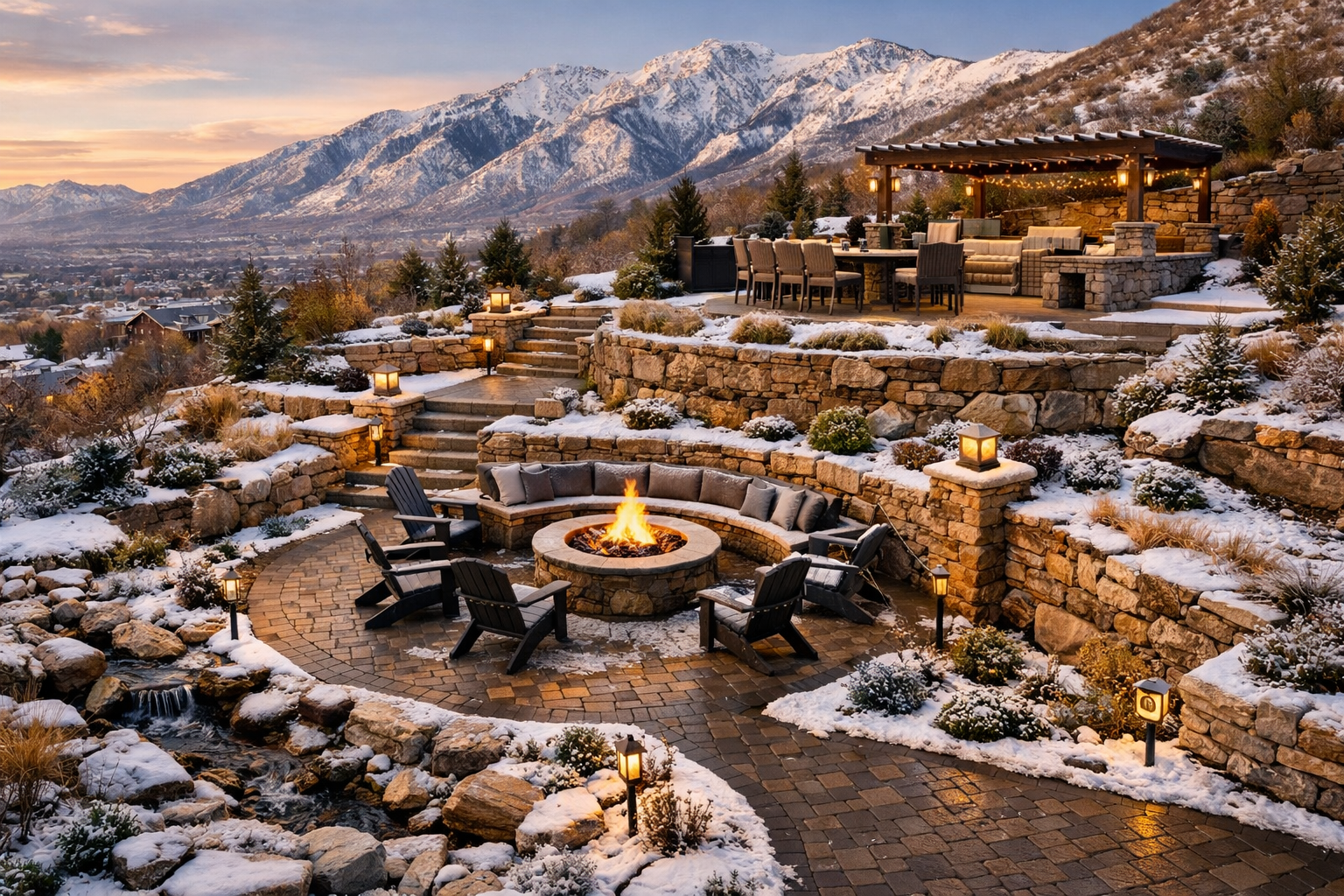
Utah landscaping directory's short summers make outdoor living spaces more valuable. Fire pits and fireplaces extend the usable season into fall and winter. But these features need proper planning for safety and function.
Fire feature considerations:
- Gas lines require permits and licensed installation
- Clearances from structures and property lines
- Wind patterns affect smoke and safety
- Materials that handle temperature changes
Natural gas fire features work better than wood-burning in Utah cities with air quality restrictions. Provo, Salt Lake City, and other Wasatch Front cities limit wood burning during winter inversions.
Covered Structures and Snow Loads
Pergolas, gazebos, and covered patios add value but must handle snow loads. Utah building codes specify minimum snow load requirements:
- Salt Lake Valley: 25 pounds per square foot
- Park City area: 50+ pounds per square foot
- St. George: 10 pounds per square foot
Design considerations:
- Beam sizing for snow loads
- Proper footings below frost line
- Materials that handle temperature swings
- Permits required for most covered structures
Outdoor Kitchens in Utah Climate
Outdoor kitchens need protection from freezing temperatures. Water lines must be below frost line or have shut-off valves for winter. Gas lines need proper installation by licensed professionals.
Utah-specific requirements:
- Shut-off valves accessible for winter
- Countertop materials that handle freeze-thaw
- Storage for equipment during winter months
- Permits for electrical and gas connections
Cost Breakdown for Utah Hardscaping Projects
Typical Project Costs in 2026
Utah hardscaping costs vary by location and material choice. These ranges reflect current pricing from licensed contractors:
Patios (per square foot):
- Concrete: $8-12
- Pavers: $12-18
- Natural stone: $15-25
- Stamped concrete: $10-16
Driveways (per square foot):
- Concrete: $6-10
- Pavers: $10-15
- Exposed aggregate: $8-14
- Asphalt: $4-7
Retaining walls (per square foot):
- Segmental block: $15-25
- Natural stone: $25-40
- Poured concrete: $20-35
Factors That Affect Pricing
Several factors influence Utah hardscaping costs:
Site conditions:
- Sloped lots cost more
- Poor soil requires more base work
- Access for equipment affects labor costs
- Existing landscaping removal
Material choices:
- Local materials cost less than imported stone
- Higher-end pavers increase costs significantly
- Natural stone varies widely in price
Permit and inspection fees:
- Most cities charge $100-300 for permits
- Engineering adds $500-1500 for complex projects
- Utility locates required before excavation
Getting Accurate Estimates
Licensed contractors provide detailed estimates that break down costs. Look for contractors who:
- Include base preparation in pricing
- Specify material grades and sources
- Show permit costs separately
- Provide timeline for completion
- Carry proper insurance for Utah projects
Real reviews from real homeowners help identify contractors who deliver quality work. Know who you're letting into your yard by checking licenses and insurance.
FAQ
Q: How long do pavers last compared to concrete in Utah?
A: Quality pavers typically last 25-30 years in Utah conditions, while concrete often shows cracking within 3-5 years due to freeze-thaw cycles and clay soil movement.
Q: Do I need permits for a patio in Utah?
A: Most cities don't require permits for basic patios, but retaining walls over 4 feet and any covered structures typically need permits. Check with your local building department.
Q: What's the best time of year for Utah hardscaping projects?
A: Late spring through early fall works best. Avoid winter installation due to ground freezing. Many contractors book spring projects during winter months.
Q: How do I prevent salt damage to my driveway?
A: Use calcium chloride instead of rock salt, seal concrete annually, and consider switching to pavers or natural stone for better salt resistance.
Q: Should I use local Utah stone or imported materials?
A: Local sandstone and quartzite perform well in Utah climate and cost less than imported stone. They're naturally adapted to local freeze-thaw conditions.
Q: How much does proper drainage add to project costs?
A: Drainage typically adds 10-20% to project costs but prevents expensive repairs later. It's essential for Utah's clay soils and freeze-thaw conditions.
Conclusion
Utah landscaping directory hardscaping success depends on choosing the right materials and contractors for local conditions. Freeze-thaw cycles, clay soils, and snow loads create unique challenges that require specific solutions.
Invest in proper base preparation and materials designed for Utah's climate. Permeable pavers and natural stone outperform concrete in most applications. Licensed contractors who understand local soil conditions and building codes deliver better results.
Find the right landscaper for your yard by checking licenses, insurance, and local reviews. Cost guides that actually tell you what things cost help you budget properly for quality work that lasts.
Your next step is getting estimates from licensed Utah hardscaping contractors. Ask about base preparation methods, material warranties, and their experience with local soil conditions. The right contractor makes the difference between a project that lasts decades and one that needs repairs in a few years.
Liked this guide? Follow us on Google Search
Related Directory Pages
- Browse Utah Landscaping Pros
- Salt Lake City Landscaping Services
- Browse Hardscaping Services in Utah
- Also Read: Hardscaping Ideas for Arizona Outdoor Living Spaces
- Also Read: California Hardscaping: Patios, Walkways & Retaining Walls
- Also Read: Nevada Hardscaping: Patios, Pavers, Desert Outdoor Living
- Also Read: New Mexico Hardscaping: Patios, Walls & Adobe-Compatible Design
- Search Utah Landscapers
Find a Landscaper Near You
Browse UT landscaping professionals on LandscapeProsDirectory.
Search Landscapers