
New Mexico Hardscaping: Patios, Walls & Adobe-Compatible Design
Expert guide to hardscaping New Mexico properties. Adobe-compatible materials, freeze-resistant installation, monsoon drainage solutions & CID contractor tips.
New Mexico's high desert climate destroys more hardscaping projects than homeowners realize. Between freeze-thaw cycles in Taos and flash floods in Albuquerque, your yard needs hardscaping that works with the Land of Enchantment's unique challenges, not against them. The right materials and installation methods can create outdoor spaces that last decades while honoring the state's distinctive architectural heritage.
Key Takeaways
- Adobe-compatible materials like flagstone and decomposed granite complement New Mexico's architectural styles
- Northern New Mexico requires freeze-thaw resistant installation techniques and proper drainage
- Permeable hardscaping options help manage monsoon season water runoff effectively
- CID-licensed contractors understand local building codes and climate requirements
- Material costs vary significantly between Santa Fe, Albuquerque, and Las Cruces markets
Table of Contents
- Adobe-Compatible Materials for Authentic New Mexico Design
- Climate-Resistant Installation Techniques
- Territorial and Pueblo Design Integration
- Managing Monsoon Drainage with Permeable Options
- Retaining Walls for New Mexico's Hillside Properties
- Material Costs Across New Mexico Markets
- Working with CID-Licensed Contractors
- FAQ
Adobe-Compatible Materials for Authentic New Mexico Design
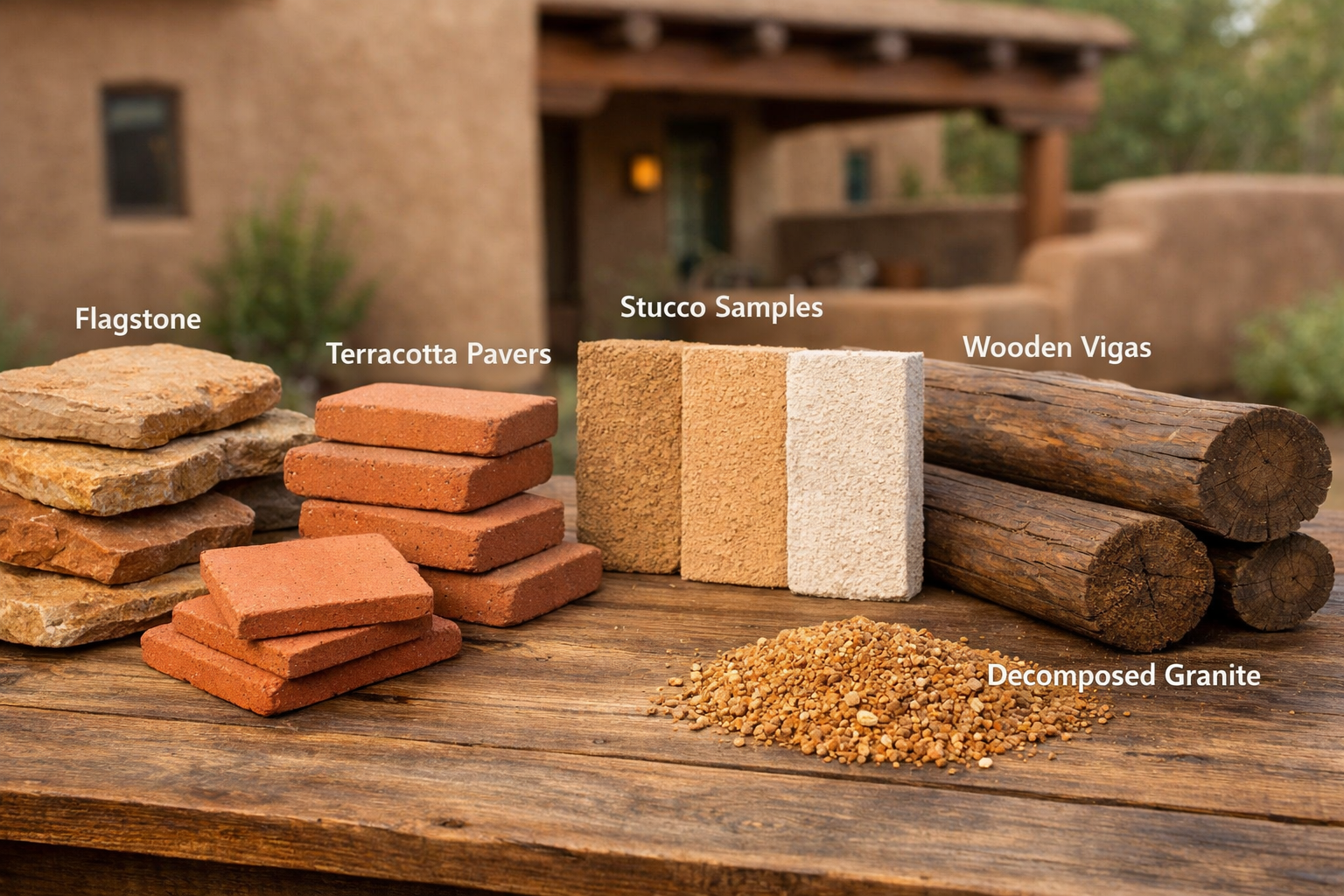
Flagstone remains the gold standard for hardscaping New Mexico properties. This natural stone comes in earth tones that blend seamlessly with adobe walls and stucco exteriors. Local quarries near Santa Fe produce flagstone in colors ranging from buff to deep red, matching the region's natural palette.
Decomposed granite creates excellent pathways and patio surfaces. This crushed granite compacts well in New Mexico's dry climate and allows water penetration during monsoon season. Choose colors like "Santa Fe Gold" or "Desert Tan" to complement adobe architecture.
Terra cotta pavers offer another authentic option. These fired clay tiles echo traditional Spanish colonial materials while providing durability. Modern terra cotta pavers resist freeze-thaw damage better than historical versions.
Stucco-finished concrete works well for larger patios and pool decks. Adding earth-tone pigments to concrete creates surfaces that look natural while offering modern durability. Stucco finishes hide minor cracks and provide texture that matches adobe walls.
Wooden vigas serve as excellent accent elements in hardscape design. These traditional roof beams work as pergola supports, retaining wall caps, or decorative borders. Use treated pine or cedar for longevity in New Mexico's UV-intense environment.
Natural stone walls using sandstone or limestone create authentic boundaries. Local stone quarries provide materials that match regional geology. Stack walls dry or use minimal mortar to allow thermal expansion.
Climate-Resistant Installation Techniques
Northern New Mexico's elevation creates freeze-thaw cycles that destroy improperly installed hardscaping. Proper base preparation starts with excavating below the frost line, typically 18-24 inches in areas like Taos and Los Alamos.
Drainage systems prevent water from pooling under hardscaping elements. Install French drains along retaining walls and use permeable base materials like crushed gravel. Water that cannot drain will freeze and crack even the best materials.
Flexible installation methods accommodate thermal movement. Use sand-set pavers instead of mortared joints where possible. When mortar is necessary, choose flexible formulations designed for temperature extremes.
Proper grading directs water away from structures and prevents erosion. New Mexico's intense summer storms can move surprising amounts of soil. Grade surfaces with a minimum 2% slope away from buildings.
UV protection matters more in New Mexico than most states. The high elevation and thin atmosphere create intense ultraviolet exposure. Choose materials and sealers rated for high-UV environments.
Territorial and Pueblo Design Integration
Territorial style hardscaping emphasizes clean lines and geometric patterns. Use rectangular flagstone or brick pavers in running bond patterns. Keep color palettes neutral with occasional terra cotta accents.
Pueblo style calls for more organic, curved elements. Create flowing pathways using irregular flagstone. Build low, thick walls that echo pueblo architecture. Use natural materials in their unfinished state when possible.
Courtyard designs work well with both styles. Create enclosed outdoor rooms using walls, pergolas, and plantings. Traditional New Mexican courtyards feature central water elements and surrounding covered walkways.
Portal integration connects indoor and outdoor spaces. Design hardscaping that flows seamlessly from covered porches to open patios. Use consistent materials to create visual continuity.
Managing Monsoon Drainage with Permeable Options
New Mexico's monsoon season brings intense, brief storms that can overwhelm traditional drainage systems. Permeable pavers allow water to soak through surfaces instead of running off. These work especially well in Albuquerque and Las Cruces where summer storms are most intense.
Gravel gardens between hardscaped areas capture and filter runoff. Use decorative gravels in earth tones to maintain aesthetic appeal while managing water flow.
Bioswales integrate natural drainage with landscape design. These shallow depressions planted with native grasses slow water flow and prevent erosion.
Permeable concrete offers the durability of traditional concrete with water management benefits. This material works well for driveways and large patio areas.
Retaining Walls for New Mexico's Hillside Properties
Many New Mexico properties feature sloped terrain requiring retaining walls. Segmental block walls offer flexibility and drainage capabilities. Choose blocks in earth tones that complement regional architecture.
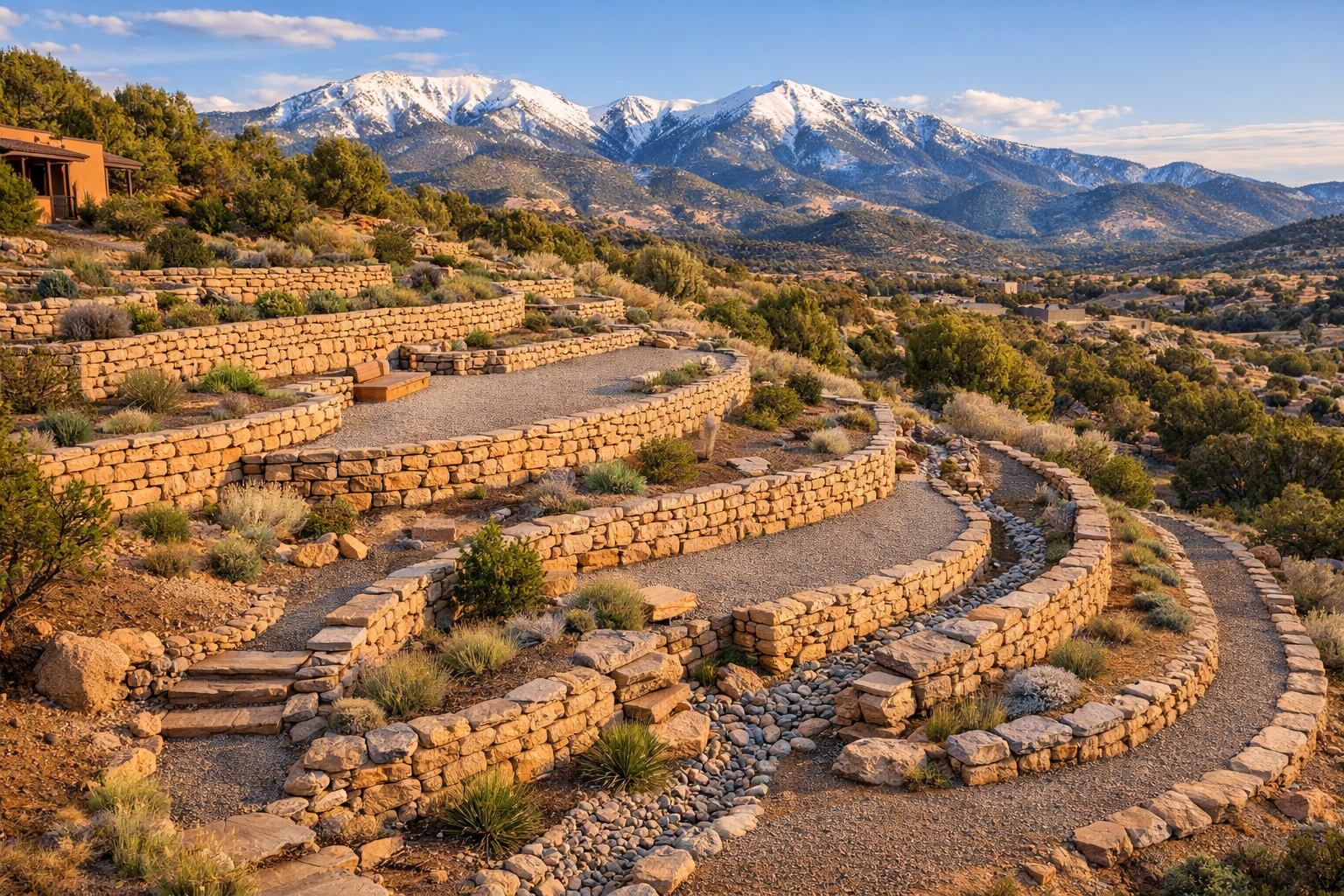
Natural stone walls provide the most authentic appearance. Stack walls using local sandstone or limestone. Include drainage behind walls to prevent water buildup and freeze damage.
Terracing creates usable space on steep slopes while preventing erosion. Design multiple smaller walls instead of single tall walls for better stability and visual appeal.
Proper footings become critical in New Mexico's expansive clay soils. These soils shrink and swell with moisture changes, potentially shifting inadequately supported walls.
Material Costs Across New Mexico Markets
Santa Fe typically shows the highest material costs due to transportation challenges and high demand. Expect to pay premium prices for natural stone and specialty materials.
Albuquerque offers more competitive pricing with better supplier access. The larger market supports more material dealers and contractors.
Las Cruces often has the most affordable materials, especially for concrete products and basic pavers.
Taos material costs vary seasonally due to weather-related transportation issues. Plan projects for late spring through early fall when access is most reliable.
Typical 2026 material costs per square foot:
- Flagstone: $8-15
- Decomposed granite: $3-6
- Concrete pavers: $5-12
- Natural stone walls: $15-25 per square foot of wall face
Working with CID-Licensed Contractors
New Mexico requires contractors to hold Construction Industries Division (CID) licenses for most hardscaping work. Verify licensing before hiring any contractor. Licensed contractors understand local building codes and proper installation techniques.
Get multiple bids from licensed contractors. Hardscaping costs vary significantly based on site conditions and material choices. Your yard deserves someone who knows what they're doing with New Mexico's unique challenges.
Ask about warranties on both materials and installation. Reputable contractors stand behind their work with multi-year warranties.
Check references from recent projects in similar climates. A contractor successful in Phoenix may not understand Taos freeze-thaw requirements.
Discuss maintenance requirements upfront. Some materials need regular sealing or cleaning to maintain appearance and function.
FAQ
Q: What hardscaping materials work best in northern New Mexico's freeze-thaw climate?
A: Natural flagstone and properly installed concrete pavers handle freeze-thaw cycles well. Avoid mortared joints and ensure proper drainage underneath all hardscaping.
Q: How much does professional hardscaping cost in New Mexico?
A: Basic patio installation ranges from $12-25 per square foot installed. Complex projects with retaining walls and drainage systems can cost $30-50 per square foot or more.
Q: Do I need permits for hardscaping in New Mexico?
A: Most cities require permits for retaining walls over 4 feet tall and major drainage modifications. Check with your local building department before starting work.
Q: What's the best time of year for hardscaping projects in New Mexico?
A: Late spring through early fall offers the best weather for installation. Avoid winter work in northern areas due to freeze risk during curing.
Q: How do I find licensed hardscaping contractors in New Mexico?
A: Check the CID website for licensed contractors in your area. Find the right landscaper for your yard by verifying licenses and checking local references.
Q: What maintenance do hardscaped surfaces need in New Mexico?
A: Annual cleaning and resealing help surfaces withstand UV exposure. Clear debris from drainage areas before monsoon season to prevent water damage.
Conclusion
Successful hardscaping New Mexico landscaping directory properties requires understanding the state's unique climate challenges and architectural heritage. From freeze-resistant installation in Taos to monsoon drainage in Albuquerque, every project needs materials and techniques matched to local conditions.
Work with CID-licensed contractors who understand regional requirements. Choose adobe-compatible materials that honor New Mexico's distinctive style while providing modern durability. Proper planning and professional installation create outdoor spaces that enhance your property for decades.
Start by getting quotes from multiple licensed contractors in your area. Know who you're letting into your yard by checking references and verifying credentials. Your hardscaping investment deserves professional expertise that matches New Mexico's demanding environment.
Liked this guide? Follow us on Google Search
Related Directory Pages
- Browse New Mexico Landscaping Pros
- Albuquerque Landscaping Services
- Browse Hardscaping Services in New Mexico
- Also Read: Hardscaping Ideas for Arizona Outdoor Living Spaces
- Also Read: California Hardscaping: Patios, Walkways & Retaining Walls
- Also Read: Nevada Hardscaping: Patios, Pavers, Desert Outdoor Living
- Also Read: Utah Hardscaping: Patios, Driveways & Snow-Ready Designs
- Search New Mexico Landscapers
Find a Landscaper Near You
Browse NM landscaping professionals on LandscapeProsDirectory.
Search Landscapers