
Nevada Hardscaping: Patios, Pavers, Desert Outdoor Living
Complete guide to Nevada hardscaping with heat-resistant materials, pool coping, shade structures, and building codes for Las Vegas, Henderson, and Reno.
Nevada's summer heat can melt your shoes to the pavement. When temperatures hit 115°F in Las Vegas and stay there for weeks, your backyard becomes unusable unless you choose the right hardscaping materials. Most homeowners learn this lesson the hard way when their concrete patio becomes too hot to walk on barefoot even at midnight.
Nevada hardscaping requires specific materials and techniques that can handle extreme heat, sudden temperature swings, and the unique challenges of desert living. Your yard deserves someone who knows what they're doing when it comes to building outdoor spaces that work year-round in the Silver State.
Key Takeaways
- Travertine and cool deck concrete stay 20-30°F cooler than standard concrete in Nevada heat
- Pool coping must handle 100°F temperature swings between day and night without cracking
- Shade structures are essential for usable outdoor space during summer months
- Fire pits extend outdoor season into comfortable desert evenings and winter months
- Clark County requires permits for most hardscaping projects over $1,000 in value
Table of Contents
- Heat-Resistant Materials for Nevada Hardscaping
- Pool Coping and Water Feature Integration
- Essential Shade Structures and Pergolas
- Fire Features for Desert Evening Entertainment
- Dust Control and Maintenance Strategies
- Navigating Nevada Building Codes and Permits
- Cost Considerations for Nevada Hardscaping Projects
- FAQ
- Conclusion
Heat-Resistant Materials for Nevada Hardscaping
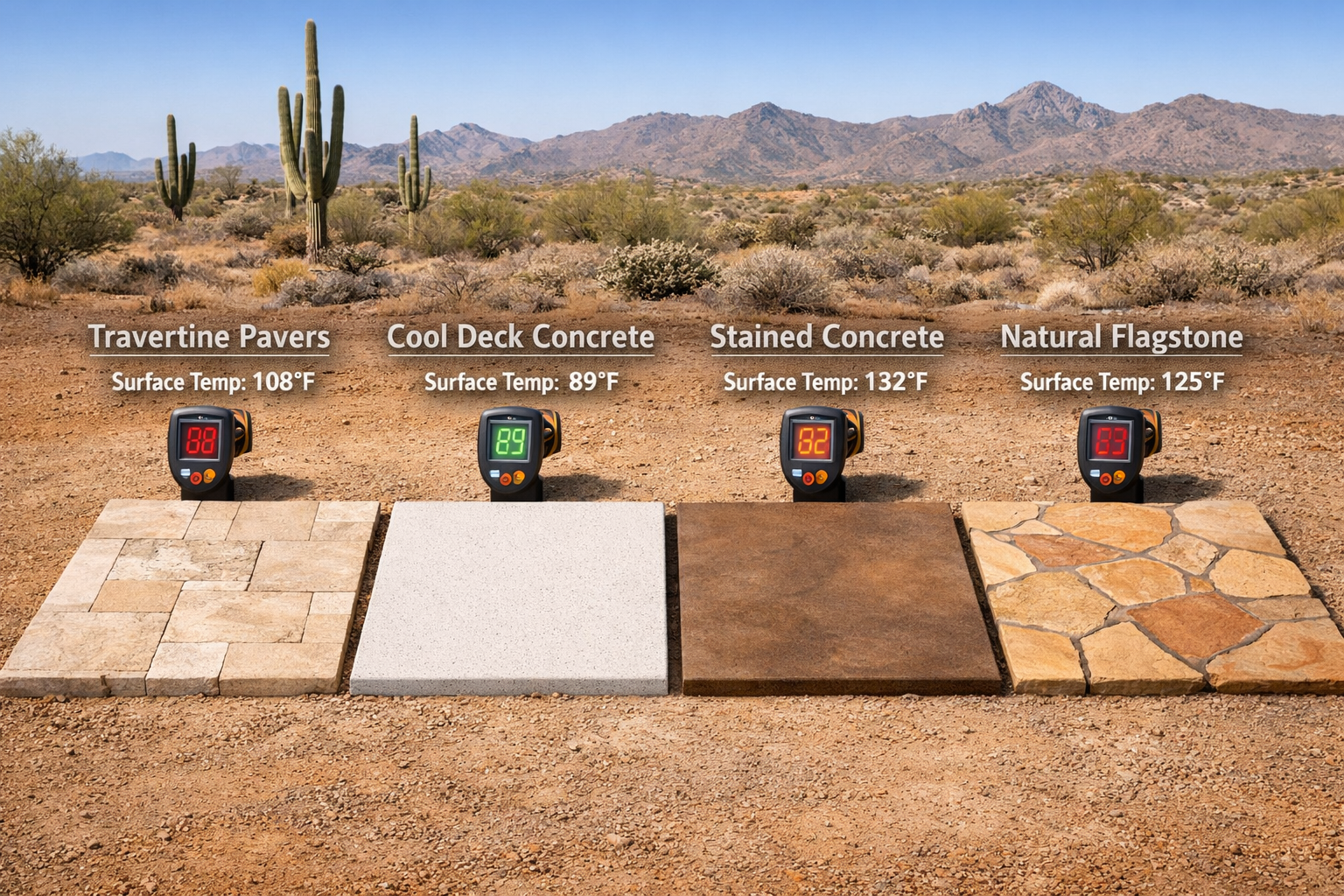
Standard concrete becomes a griddle in Nevada landscaping directory summers. Surface temperatures can reach 160°F or higher, making patios unusable for months. Smart Nevada hardscaping starts with materials engineered for extreme heat.
Travertine: The Gold Standard
Travertine naturally stays cooler than concrete due to its porous structure and light color. This natural stone typically runs 20-30°F cooler than standard concrete on the same day. The material's cellular structure allows air circulation, preventing heat buildup.
Pros of travertine in Nevada:
- Naturally cool surface temperature
- Non-slip texture when wet
- Available in earth tones that complement desert landscapes
- Handles freeze-thaw cycles in northern Nevada
Cons to consider:
- Higher upfront cost than concrete
- Requires sealing every 2-3 years
- Can be damaged by pool chemicals if not properly sealed
Cool Deck Concrete Systems
Cool deck coatings and concrete systems use special aggregates and reflective properties to reduce surface temperatures. These systems can lower surface temps by 15-20°F compared to standard concrete.
Popular cool deck options include:
- Acrylic-based cool deck coatings
- Spray-applied textured systems
- Stamped concrete with cool additives
- Exposed aggregate with light-colored stones
Stained Concrete for Desert Aesthetics
Acid-stained concrete in earth tones works well in Nevada hardscaping when combined with cooling techniques. Light colors like tan, beige, and terra cotta reflect more heat than dark surfaces while maintaining an attractive appearance.
The key is using integral color and light-reflective sealers rather than dark stains that absorb heat.
Natural Flagstone Options
Arizona flagstone and Utah sandstone perform well in Nevada's climate. These materials offer natural heat resistance and complement desert landscaping. Flagstone works especially well for:
- Walkways and pathways
- Accent areas around pools
- Fire pit surrounds
- Retaining wall caps
Pool Coping and Water Feature Integration
Pool coping takes the biggest beating in Nevada hardscaping projects. The material sits at the water line where it faces constant temperature changes, chemical exposure, and thermal expansion.
Coping Material Performance
Travertine coping remains the most popular choice for Nevada pools. Its cool surface temperature makes it comfortable for bare feet, and the material handles pool chemicals well when properly sealed.
Natural stone coping like sandstone or limestone offers durability but requires careful selection. Some stones become too hot for comfort, while others may react with pool chemicals.
Precast concrete coping costs less than natural stone but can become uncomfortably hot. Choose light colors and textured surfaces for better performance.
Water Feature Considerations
Fountains and water features help cool surrounding hardscape areas through evaporation. In Nevada's dry climate, this cooling effect can lower nearby surface temperatures by 5-10°F.
Design considerations for Nevada water features:
- Use recirculating systems to conserve water
- Choose materials that won't stain from mineral deposits
- Plan for easy cleaning access
- Consider wind patterns that affect spray
Essential Shade Structures and Pergolas
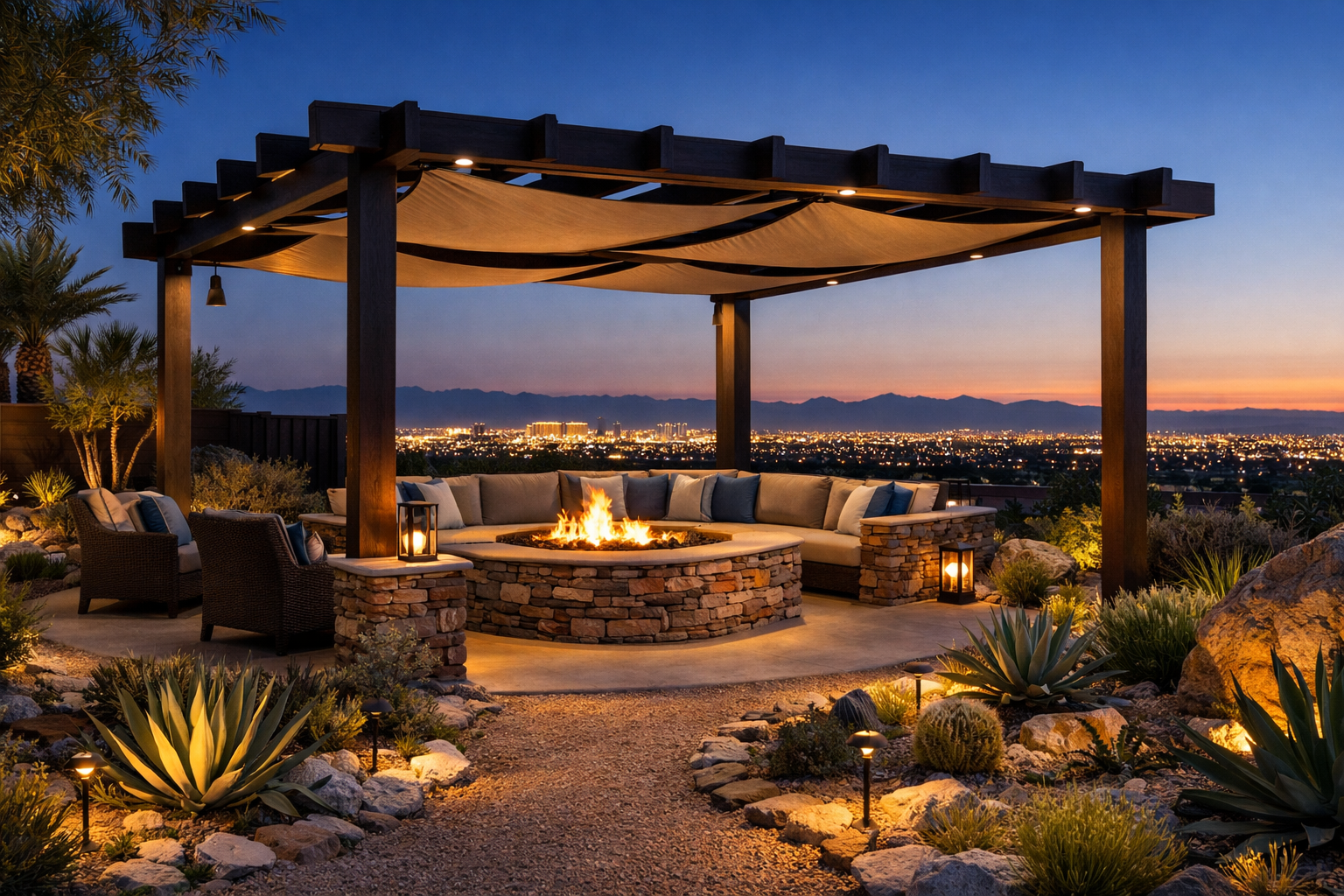
Shade structures transform unusable summer space into comfortable outdoor living areas. Without shade, even the coolest hardscaping materials become too hot for extended use during Nevada summers.
Pergola Design for Extreme Heat
Traditional wood pergolas struggle in Nevada's intense UV and temperature swings. Better options include:
Composite materials resist warping and fading while providing structural integrity. High-quality composite beams handle temperature swings better than wood.
Aluminum pergolas offer excellent durability and can incorporate retractable shade systems. Powder-coated aluminum resists corrosion and maintains appearance in harsh desert conditions.
Steel frame systems provide maximum strength for large spans and heavy shade materials.
Shade Sail Integration
Retractable shade sails offer flexibility for Nevada's varied weather. These systems allow full sun exposure during mild months while providing essential coverage during summer heat.
Key features for Nevada installations:
- UV-resistant fabric rated for extreme conditions
- Stainless steel hardware to prevent corrosion
- Proper tensioning systems for high winds
- Easy retraction for winter storage
Solid Roof Options
Solid roof structures provide maximum shade and weather protection. Options include:
- Insulated patio covers
- Louvered roof systems
- Traditional ramadas with tile or metal roofing
Solid roofs work especially well in areas with frequent afternoon thunderstorms.
Fire Features for Desert Evening Entertainment
Nevada's desert climate creates perfect conditions for outdoor fire features. Cool evenings and low humidity make fire pits and fireplaces comfortable for most of the year.
Fire Pit Design Considerations
Material selection affects both safety and aesthetics. Natural stone fire pits complement desert landscapes while providing excellent heat retention. Steel fire bowls offer portability but may not match permanent hardscaping.
Fuel options include:
- Natural gas for convenience and consistent flame
- Propane for areas without gas lines
- Wood-burning for traditional ambiance (check local regulations)
Safety requirements in Nevada include:
- Minimum clearances from structures and property lines
- Spark arrestors for wood-burning units
- Access to water or fire extinguisher
- Compliance with local fire restrictions
Fireplace Integration
Outdoor fireplaces create focal points for Nevada hardscaping projects. These structures work year-round, providing warmth during surprisingly cool desert winters.
Design elements for Nevada fireplaces:
- Heat-resistant materials like fire brick and refractory concrete
- Proper chimney design for desert wind conditions
- Integration with seating areas and traffic flow
- Protection from monsoon rains
Dust Control and Maintenance Strategies
Desert dust affects all Nevada hardscaping projects. Proper design and material selection minimize maintenance while keeping outdoor spaces usable.
Surface Selection for Dust Control
Sealed surfaces like stained concrete and sealed pavers resist dust accumulation and clean easily with water.
Textured surfaces can trap dust but provide better slip resistance. Balance texture needs with cleaning requirements.
Permeable materials like decomposed granite require regular maintenance but provide natural drainage.
Drainage and Water Management
Nevada's intense but infrequent rainfall creates unique drainage challenges. Hardscaping must handle both daily dust control and occasional flash flooding.
Design strategies include:
- Proper grading to direct water away from structures
- French drains for areas with poor natural drainage
- Permeable pavers for sustainable water management
- Retention areas for monsoon runoff
Navigating Nevada Building Codes and Permits
Most Nevada hardscaping projects require permits, especially in Clark County (Las Vegas landscaping services, Henderson) and Washoe County (Reno). Understanding requirements prevents costly delays and ensures safety.
Clark County Requirements
Clark County requires permits for:
- Patios over 200 square feet
- Any structure over 30 inches high
- Fire pits and outdoor fireplaces
- Electrical work for lighting or water features
- Plumbing for water features
Setback requirements vary by neighborhood but typically require:
- 5-foot minimum from property lines for structures
- 10-foot minimum from septic systems
- Special clearances for fire features
Henderson and Las Vegas Specifics
Henderson has additional requirements for:
- Drought-resistant landscaping integration
- Water conservation compliance
- HOA approval documentation
Las Vegas focuses on:
- Fire safety in high-density areas
- Utility clearances
- Flood zone considerations
Reno and Northern Nevada Codes
Northern Nevada codes address:
- Freeze-thaw considerations for materials
- Snow load requirements for covered structures
- Wind resistance for shade structures
- Seasonal access requirements
Cost Considerations for Nevada Hardscaping Projects
Nevada hardscaping costs vary significantly based on materials, site conditions, and permit requirements. Real reviews from real homeowners show wide price ranges depending on project complexity.
Material Cost Ranges
Basic concrete patios: $8-12 per square foot installed
Cool deck systems: $12-18 per square foot
Travertine installations: $15-25 per square foot
Natural stone patios: $20-35 per square foot
Pergola structures: $15-40 per square foot of coverage
Labor Considerations
Nevada's extreme working conditions affect labor costs. Summer installations may cost 10-20% more due to:
- Early morning and evening work schedules
- Increased water and break requirements
- Material protection from heat damage
- Faster concrete curing times
Seasonal Pricing
Best pricing: October through March when demand drops
Peak pricing: April through June before summer heat
Limited availability: July through September due to extreme temperatures
FAQ
What hardscaping materials stay coolest in Nevada heat?
Travertine performs best, staying 20-30°F cooler than concrete. Cool deck coatings and light-colored natural stone also provide significant temperature reduction compared to standard concrete or dark materials.
Do I need permits for a patio in Las Vegas?
Yes, Clark County requires permits for patios over 200 square feet, any structures over 30 inches high, and all fire features. Check with your local building department and HOA before starting work.
How much does Nevada hardscaping cost per square foot?
Basic concrete runs $8-12 per square foot, while premium materials like travertine cost $15-25 per square foot installed. Shade structures add $15-40 per square foot of coverage depending on materials and complexity.
What's the best time of year for hardscaping in Nevada?
October through March offers the best working conditions and pricing. Avoid July through September when extreme heat makes installation difficult and more expensive.
How do I find licensed hardscaping contractors in Nevada?
Check the Nevada State Contractors Board website for license verification. Look for contractors with desert climate experience and recent local references. Licensed, insured, and reviewed contractors provide the best protection for your investment.
What maintenance does Nevada hardscaping require?
Sealed surfaces need resealing every 2-3 years. Regular cleaning removes dust buildup, and proper drainage prevents damage from monsoon rains. Fire features require annual safety inspections and cleaning.
Conclusion
Nevada landscaping directory hardscaping success depends on choosing materials that handle extreme heat while creating comfortable outdoor living spaces. Travertine, cool deck systems, and proper shade structures make the difference between a backyard that works year-round and one that's unusable for months.
The directory built for homeowners, not advertisers, helps you find the right landscaper for your yard. Know who you're letting into your yard by checking licenses, reading real reviews from real homeowners, and asking the right questions about desert climate experience.
Your next step is getting quotes from licensed Nevada hardscaping contractors who understand local building codes and climate challenges. We verify so you don't have to - find landscaping pros in your area who specialize in desert hardscaping and can handle everything from basic patios to full backyard transformations.
Liked this guide? Follow us on Google Search
Related Directory Pages
- Browse Nevada Landscaping Pros
- Las Vegas Landscaping Services
- Browse Hardscaping Services in Nevada
- Also Read: Hardscaping Ideas for Arizona Outdoor Living Spaces
- Also Read: California Hardscaping: Patios, Walkways & Retaining Walls
- Also Read: New Mexico Hardscaping: Patios, Walls & Adobe-Compatible Design
- Also Read: Utah Hardscaping: Patios, Driveways & Snow-Ready Designs
- Search Nevada Landscapers
Find a Landscaper Near You
Browse NV landscaping professionals on LandscapeProsDirectory.
Search Landscapers