
Flagstaff Landscaping: Mountain vs Desert Style
Expert guide to Flagstaff landscaping styles. Learn mountain vs desert approaches, native plants, wildfire rules, and costs for 7,000-foot elevation yards.
Flagstaff sits at 7,000 feet elevation where ponderosa pines meet high desert. This unique location creates landscaping challenges that stump even experienced gardeners. Your yard deserves someone who knows what they're doing when it comes to navigating volcanic soil, four-season weather, and strict wildfire regulations.
Key Takeaways
- Flagstaff's 7,000-foot elevation requires cold-hardy plants that can handle snow and freezing temperatures
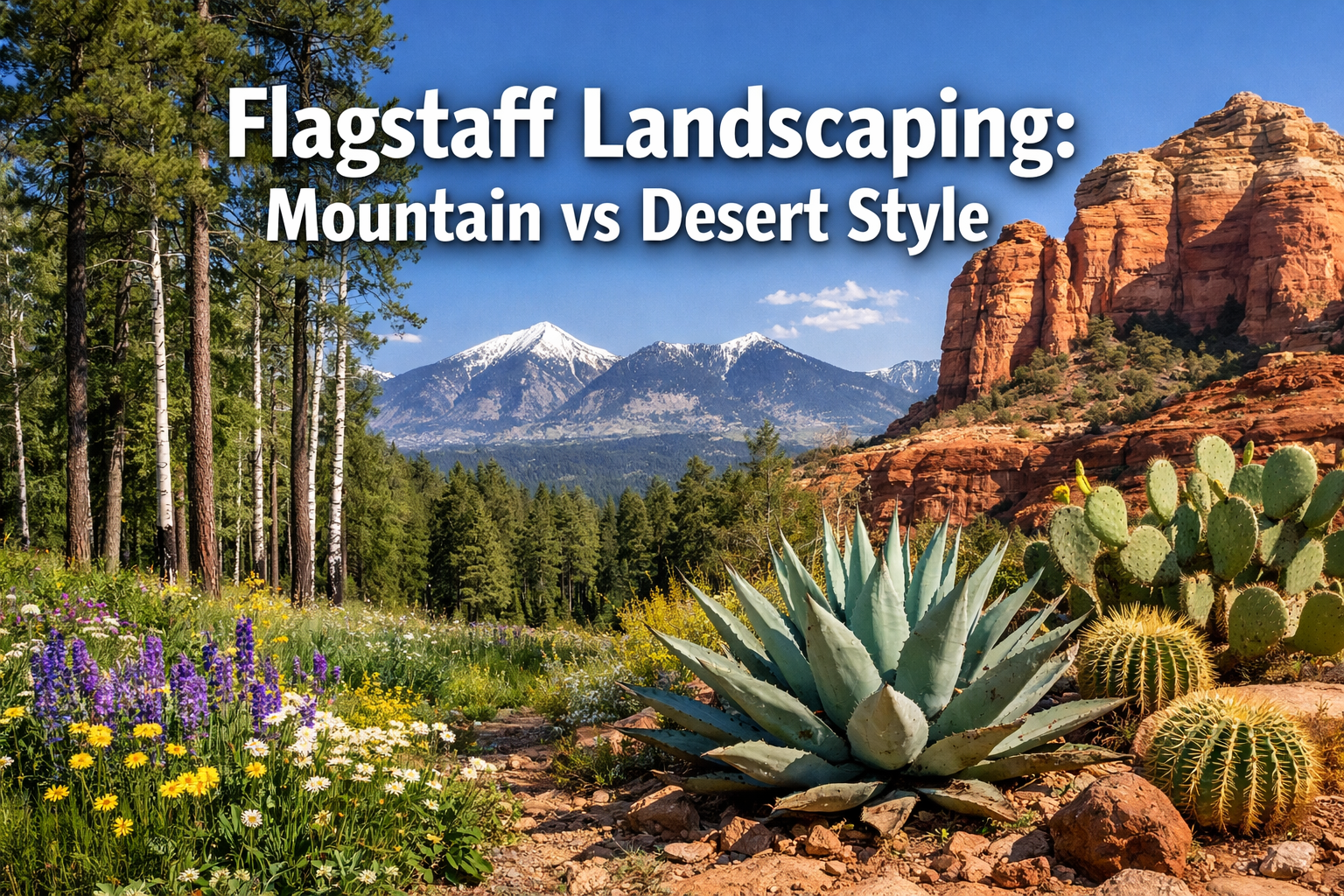
- Mountain style uses native pines, aspen, and wildflowers while desert style adapts drought-tolerant plants for high altitude
- Coconino County requires defensible space around homes due to wildfire risk
- Volcanic soil drains quickly but may need amendments for some plants
- Licensed landscapers understand local regulations and climate challenges
Table of Contents
- Mountain Style Flagstaff Landscaping
- Desert Style Flagstaff Landscaping
- Climate and Soil Considerations
- Wildfire Defensible Space Requirements
- Working with Local Regulations
- Cost Considerations
- FAQ
- Conclusion
Mountain Style Flagstaff Landscaping
Mountain landscaping in Flagstaff landscaping services works with the natural ponderosa pine forest environment. This approach uses native trees, shrubs, and wildflowers that already thrive at high elevation.
Native Trees and Large Plants
Ponderosa pines dominate Flagstaff's natural landscape. These trees handle snow loads and provide natural windbreaks. Quaking aspen add seasonal color with bright yellow fall foliage. Both species are fire-adapted and create natural defensible space when properly maintained.
Gambel oak grows well in partially shaded areas and provides wildlife habitat. These native oaks stay smaller than other oak species and handle Flagstaff's freeze-thaw cycles.
Understory Shrubs
Serviceberry produces white spring flowers and edible berries. This native shrub grows 6-8 feet tall and handles full sun to partial shade. Manzanita varieties adapted to northern Arizona provide evergreen structure and pink bell-shaped flowers.
Fernbush grows in rocky volcanic soil and produces fragrant white flowers. This drought-tolerant native requires minimal water once established.
Ground Cover and Wildflowers
Mountain wildflowers create seasonal color without intensive maintenance. Lupine produces purple flower spikes in late spring. Indian paintbrush adds red and orange colors. Penstemon varieties bloom in purple, pink, and white.
Native bunch grasses like blue grama and buffalo grass provide natural ground cover. These grasses go dormant in winter but return each spring without replanting.
Maintenance Requirements
Mountain style landscaping requires seasonal cleanup of pine needles and fallen branches. Snow removal from walkways and driveways is necessary during winter months. Pruning should follow wildfire defensible space guidelines.
Watering needs are minimal once plants establish. Most native mountain plants survive on natural precipitation after the first growing season.
Desert Style Flagstaff Landscaping
Desert landscaping in Flagstaff adapts water-wise principles for high elevation and cold winters. This style uses drought-tolerant plants that can also handle snow and freezing temperatures.
Cold-Hardy Succulents
Not all desert plants survive Flagstaff winters. Agave parryi and other high-elevation agaves handle temperatures down to -10°F. These plants need excellent drainage to prevent freeze damage.
Prickly pear cactus varieties native to northern Arizona survive snow and ice. Opuntia fragilis and Opuntia polyacantha are the most cold-hardy options.
Ornamental Grasses
Ornamental grasses add movement and texture to desert-style designs. Blue oat grass stays evergreen through mild winters. Fountain grass varieties die back but return each spring.
Native grasses like little bluestem provide fall color and winter interest. These grasses require minimal water and handle temperature extremes.
Flowering Desert Plants
Desert marigold blooms from spring through fall and handles light frost. This native wildflower self-seeds and spreads naturally. Blanket flower produces red and yellow daisy-like blooms and attracts butterflies.
Penstemon species bridge mountain and desert styles. These native plants produce tubular flowers in various colors and handle both drought and cold.
Design Elements
Gravel mulch and decorative rock work well in desert-style designs. Volcanic rock from local quarries matches Flagstaff's natural geology. Decomposed granite creates pathways that drain well.
Raised beds improve drainage for sensitive plants. Berms and slopes help shed winter moisture away from plant crowns.
Winter Protection
Some desert plants need winter protection in Flagstaff. Burlap screens block cold winds. Mulch around plant bases prevents freeze damage to roots.
Container plants can move to protected areas during extreme cold snaps. Frost cloth provides temporary protection during late spring freezes.
Climate and Soil Considerations for Flagstaff Landscaping
Flagstaff's climate combines high desert conditions with mountain weather patterns. Understanding these conditions helps choose plants that will thrive long-term.
Four-Season Climate
Flagstaff receives 100+ inches of snow annually. Winter temperatures drop below zero regularly. Spring brings late freezes that can damage tender plants.
Summer monsoons provide most annual moisture between July and September. Fall frosts start in early October. The growing season runs from May through September.
Volcanic Soil Characteristics
Flagstaff sits on volcanic soil that drains quickly. This prevents waterlogged conditions but requires more frequent watering for some plants. The soil pH tends to be neutral to slightly alkaline.
Cinder soil lacks organic matter. Adding compost improves water retention and provides nutrients. Mulching helps retain moisture and moderate soil temperature.
Freeze-Thaw Cycles
Daily temperature swings stress plants and hardscape materials. Concrete and stone can crack from repeated freezing and thawing. Proper installation with adequate drainage prevents damage.
Plant selection must account for temperature fluctuations. Plants that break dormancy too early risk damage from late freezes.
Wildfire Defensible Space Requirements
Coconino County requires defensible space around all structures. These regulations affect plant choices and landscape design throughout Flagstaff.
Zone 1: Immediate Zone (0-5 feet)
No flammable plants within 5 feet of structures. Use hardscape materials like gravel, stone, or concrete. Remove all dead vegetation and debris regularly.
Irrigation systems help keep this zone moist during fire season. Non-combustible mulches like gravel or stone are required.
Zone 2: Intermediate Zone (5-30 feet)
Low-growing, fire-resistant plants are allowed with proper spacing. Remove ladder fuels that could carry fire into tree canopies. Maintain green, irrigated vegetation during fire season.
Native plants like penstemon and desert marigold are good choices. Avoid highly flammable plants like juniper and ornamental grasses near structures.
Tree Maintenance
Remove lower branches up to 6-10 feet from ground level. Thin tree canopies to reduce fire intensity. Maintain 10-foot spacing between tree crowns.
Dead trees must be removed promptly. Professional arborists understand local fire safety requirements.
Working with Coconino County Regulations
Local regulations affect many landscaping projects in Flagstaff. Licensed landscapers understand permit requirements and design restrictions.
Water Use Restrictions
Coconino County has seasonal water restrictions during dry periods. Landscape designs should minimize water needs during peak summer months.
Drip irrigation systems are more efficient than spray irrigation. Native and adapted plants reduce water requirements significantly.
Grading and Drainage
Permits are required for significant grading projects. Proper drainage prevents erosion and protects neighboring properties. Retaining walls over 4 feet high require engineering.
Tree Protection
Large native trees may be protected during construction. Damage to significant trees can result in fines. Professional landscapers know how to work around existing vegetation.
Cost Considerations for Flagstaff Landscaping
Flagstaff landscaping costs reflect the challenges of high-elevation gardening and remote location. Understanding typical costs helps budget projects appropriately.
Plant Costs
Native plants cost more initially but require less water and maintenance long-term. Specialty high-elevation plants may need to be special ordered. Local nurseries stock plants adapted to Flagstaff conditions.
Installation Costs
Rocky volcanic soil increases installation time and costs. Specialized equipment may be needed for large tree planting. Winter weather limits the working season for major projects.
Maintenance Costs
Snow removal adds seasonal maintenance costs. Irrigation system winterization prevents freeze damage. Professional wildfire mitigation services ensure compliance with regulations.
Licensed insured and reviewed contractors provide cost estimates that include all local requirements. Get multiple quotes from landscaping pros in your area who understand Flagstaff's unique conditions.
FAQ
What plants survive Flagstaff winters?
Native plants like ponderosa pine, aspen, serviceberry, and penstemon handle Flagstaff's cold winters. Cold-hardy agaves and native grasses also survive. Avoid plants rated only to zone 6 or higher.
Do I need a permit for landscaping in Flagstaff?
Major grading, retaining walls over 4 feet, and some irrigation projects require permits. Tree removal may need approval. Licensed landscapers handle permit requirements and know local regulations.
How much does Flagstaff landscaping cost?
Basic plantings cost $3-8 per square foot installed. Complete landscape renovations run $8-15 per square foot. Costs are higher due to rocky soil, short growing season, and specialized plant requirements.
When is the best time to plant in Flagstaff?
Late spring through early fall provides the best planting window. Avoid planting during winter months when soil freezes. Fall planting gives roots time to establish before winter stress.
How do I create defensible space around my home?
Remove all vegetation within 5 feet of structures. Thin trees and shrubs in the 30-foot zone around buildings. Use fire-resistant plants and maintain green vegetation during fire season. Professional wildfire mitigation ensures compliance.
What type of irrigation works best in Flagstaff?
Drip irrigation conserves water and prevents freeze damage better than spray systems. Systems need professional winterization each fall. Smart controllers adjust for seasonal water needs and local restrictions.
Conclusion
Arizona landscaping directory landscaping requires balancing mountain and desert principles while meeting strict fire safety requirements. Your yard deserves someone who knows what they're doing when it comes to volcanic soil, four-season weather, and local regulations.
Find the right landscaper for your yard by checking licenses, insurance, and reviews from real homeowners. Local pros with local knowledge understand Flagstaff's unique challenges and opportunities.
Start by defining your style preference and budget range. Get quotes from multiple licensed contractors who specialize in high-elevation landscaping. Ask about wildfire compliance, irrigation winterization, and plant warranties.
The right landscape design will thrive in Flagstaff's mountain environment while protecting your property investment. From basic lawn care to full backyard transformations, choose contractors who understand what works at 7,000 feet elevation.
Liked this guide? Follow us on Google Search
Related Directory Pages
- Browse Arizona Landscaping Pros
- Flagstaff Landscaping Services
- Browse Landscaping Services in Arizona
- Also Read: The Complete Guide to California Landscaping in 2026
- Also Read: Fire-Resistant Landscaping: California Defensible Space Guide
- Also Read: Best California Native Plants for Your Landscape
- Also Read: Sacramento Landscaping: Heat-Tolerant Designs That Last
- Search Arizona Landscapers
Find a Landscaper Near You
Browse AZ landscaping professionals on LandscapeProsDirectory.
Search Landscapers