
Las Vegas Landscaping: Transform Your Desert Yard
Transform your Las Vegas yard with drought-tolerant plants, artificial turf, and desert landscaping. Expert tips for SNWA compliance and extreme heat survival.
Las Vegas homeowners remove over 180 million square feet of grass each year, yet most still don't know the 2027 SNWA mandate will require even more water restrictions. Your yard deserves someone who knows what they're doing when it comes to desert landscaping that actually survives 115-degree summers.
The Mojave Desert climate doesn't forgive landscaping mistakes. One wrong plant choice or poor irrigation setup can cost thousands in replacement costs and sky-high water bills. Smart Las Vegas landscaping means working with the desert, not against it.
Key Takeaways
- SNWA water restrictions tighten in 2027 with mandatory grass removal programs expanding across Clark County
- Artificial turf requires specific heat ratings for Las Vegas summers - cool deck technology prevents surface temperatures over 140°F
- Desert-adapted plants like Texas sage and lantana thrive in extreme heat while using 70% less water than traditional landscaping
- Pool area integration demands heat-resistant hardscaping materials like travertine and specialized cool deck surfaces
- Licensed contractors in Henderson, Summerlin, and North Las Vegas must understand both city codes and HOA desert landscaping requirements
Table of Contents
- Understanding Las Vegas Climate Challenges
- SNWA Water Restrictions and 2027 Mandates
- Las Vegas Landscaping Plant Selection Guide
- Artificial Turf and Heat Management
- Pool Area Desert Landscaping Integration
- Hardscaping Materials for Extreme Heat
- Shade Structures and Cooling Solutions
- Working with Clark County Contractors
- Cost Breakdown for Desert Yard Transformation
- FAQ
Understanding Las Vegas Climate Challenges
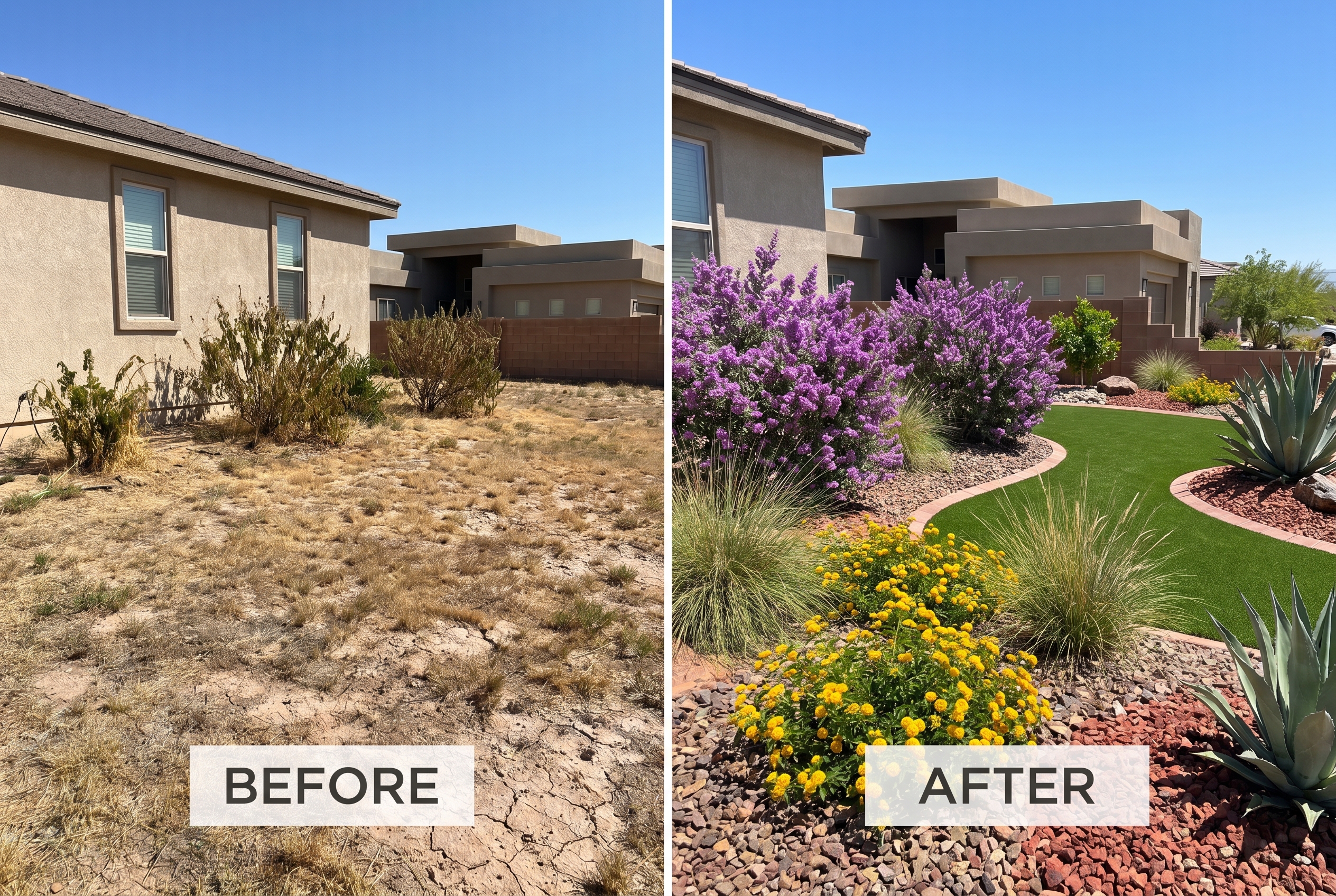
The Mojave Desert presents unique challenges that separate amateur landscapers from pros who actually know the local conditions. Las Vegas landscaping services gets just 4 inches of rainfall annually, with summer temperatures regularly exceeding 110°F and winter lows dropping to the 30s.
Soil Conditions Reality Check
Las Vegas soil is alkaline caliche - basically concrete-hard clay mixed with rocks. Most plants from other regions can't handle the pH levels between 7.5 and 8.5. Professional Las Vegas landscaping starts with soil amendment or complete replacement in planting areas.
The hardpan layer sits 6-18 inches below surface level. This impermeable barrier stops root growth and creates drainage nightmares. Licensed contractors know to break through caliche or build raised planting areas.
Microclimate Variations
Henderson sits 200 feet higher than Las Vegas Strip, creating temperature differences of 5-8 degrees. Summerlin's elevation changes affect plant survival rates. North Las Vegas faces stronger winds that increase water evaporation rates.
South-facing slopes get 40% more sun exposure than north-facing areas. Reflected heat from concrete and stucco walls creates zones that reach 130°F in summer. Real reviews from real homeowners show that contractors who ignore microclimates deliver failed landscapes.
SNWA Water Restrictions and 2027 Mandates
The Southern Nevada landscaping directory Water Authority isn't playing games with water conservation. Current restrictions limit residential outdoor watering to three days per week, but 2027 brings mandatory grass removal programs for properties over 8,000 square feet.
What the 2027 Rules Mean
Starting January 2027, HOAs in Henderson and Summerlin must remove non-functional grass areas or face fines up to $10,000 per violation. "Non-functional" means grass that's purely decorative - not used for recreation or sports.
Properties with pools get rebates up to $3 per square foot for grass removal. The catch? Replacement landscaping must use plants from the approved SNWA list. We verify so you don't have to - make sure your contractor knows which plants qualify for rebates.
Current Water Allowances
Single-family homes get 6 acre-feet annually for outdoor use. That's roughly 1,950,000 gallons - sounds like a lot until you realize traditional grass uses 73 inches of water per year in Las Vegas heat.
Desert landscaping uses 18-25 inches annually for the same coverage area. The math is simple: drought-tolerant Las Vegas landscaping cuts water bills by 60-70% compared to grass.
Las Vegas Landscaping Plant Selection Guide
Know who you're letting into your yard when it comes to plant selection. Many contractors push plants that look good in nurseries but die within two summers in actual Las Vegas conditions.
Proven Desert Performers
Texas Sage (Leucophyllum) handles 120°F temperatures and blooms purple flowers after rare summer rains. Mature plants reach 4-6 feet and need water just twice monthly in summer. Cost: $15-25 per plant.
Desert Spoon (Dasylirion wheeleri) creates dramatic focal points with sword-like leaves and 15-foot flower stalks. Zero summer watering needed after establishment. Expect to pay $75-150 for mature specimens.
Lantana delivers non-stop color from March through November. Yellow, orange, and red varieties handle reflected heat from walls and pavement. Monthly water requirements: just 2-3 deep soakings.
Ornamental Grasses for Movement
Mexican Feather Grass adds soft texture and movement in desert winds. Grows 2 feet tall, turns golden in winter. Drought-tolerant after first year.
Desert Willow provides tree-like structure with orchid-shaped flowers. Native to Mojave Desert, so it actually thrives in Las Vegas summers. Mature height: 15-25 feet.
Plants to Avoid
Skip anything labeled "drought-tolerant" from other regions. Mediterranean plants often fail in alkaline soil. Roses need too much water and struggle with reflected heat. Bermuda grass goes dormant and brown for 4-5 months annually.
Artificial Turf and Heat Management
Standard artificial turf reaches 180°F surface temperatures in Las Vegas summers - hot enough to burn skin and paws. Cool deck technology and proper installation make the difference between usable outdoor space and a furnace.
Heat Rating Requirements
Look for turf with "cool deck" or "heat reduction" technology. These products use reflective backing and specialized fibers to stay 30-40 degrees cooler than standard options.
HeatBlock Technology keeps surface temperatures under 140°F even in direct sunlight. Costs 40% more than standard turf but prevents burns and extends usability.
Proper Installation Matters
Base preparation affects heat retention. Decomposed granite bases stay cooler than concrete. Proper drainage prevents water buildup that creates steam in extreme heat.
Infill choice impacts temperature. Silica sand gets scorching hot. Zeolite or organic infills stay significantly cooler and provide better drainage.
Maintenance Reality
Artificial turf needs monthly cleaning in Las Vegas due to dust storms and debris. Budget $200-400 annually for professional cleaning. Quality installations last 12-15 years with proper care.
Pool Area Desert Landscaping Integration
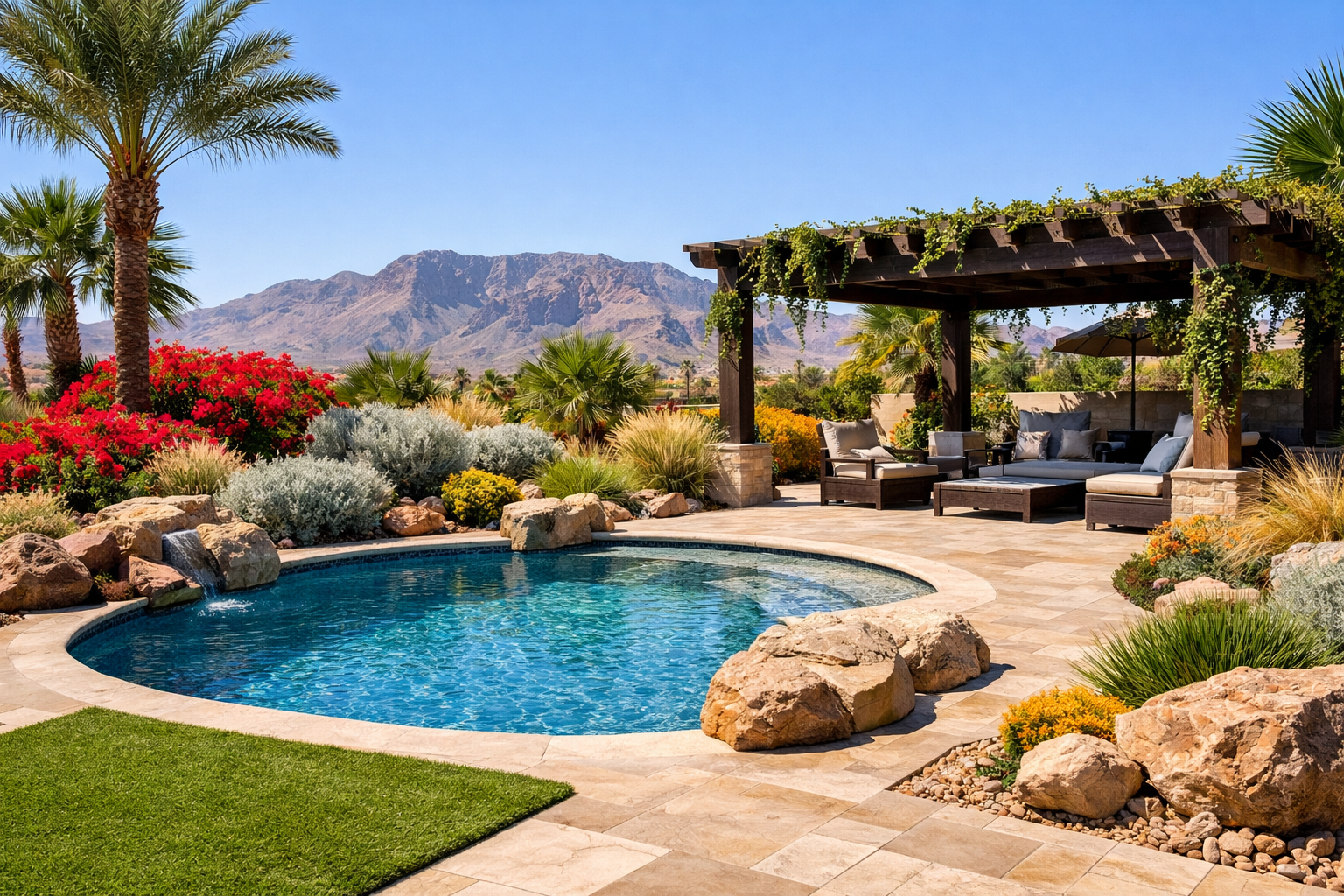
Pool areas create unique challenges for Las Vegas landscaping. Chlorine spray kills most plants, while reflected heat and humidity create microclimates that few desert plants tolerate.
Chlorine-Resistant Plant Choices
Bougainvillea handles pool chemicals and provides vibrant color year-round. Plant 8-10 feet from pool edge to avoid direct spray. Comes in red, purple, orange, and white varieties.
Date Palms create tropical aesthetics while tolerating both chlorine and extreme heat. Canary Island Date Palms work best for residential pools. Expect 15-20 year lifespans with proper care.
Hardscaping Integration
Travertine Decking stays 20-30 degrees cooler than concrete around pools. Natural stone provides slip resistance and handles freeze-thaw cycles better than manufactured materials.
Cool Deck Coatings over existing concrete reduce surface temperatures by 30%. Professional application costs $3-5 per square foot but makes pool areas usable during summer afternoons.
Shade Structure Necessities
Pergolas with climbing vines provide natural cooling. Grape vines work well but need winter pruning. Artificial shade cloth blocks 70-90% of UV while allowing air circulation.
Misters integrated into pergolas drop ambient temperatures by 15-20 degrees. Professional misting systems cost $1,200-2,500 installed but make outdoor spaces livable in 115°F heat.
Hardscaping Materials for Extreme Heat
Las Vegas summers test every material choice. Cheap pavers crack, standard concrete becomes untouchable, and dark colors create heat islands that kill nearby plants.
Material Performance Guide
Travertine remains walkable even in direct sunlight due to its light color and porous structure. Costs $8-15 per square foot installed. Requires sealing every 2-3 years.
Flagstone in light colors stays relatively cool. Avoid dark slate or granite that becomes burning hot. Proper installation requires thick sand base for stability.
Stamped Concrete with light colors and cool deck additives performs well. Standard gray concrete reaches 150°F+ in summer sun. Professional cool deck treatments add $2-3 per square foot.
Decomposed Granite pathways stay cooler than solid surfaces while providing natural desert aesthetics. Stabilized DG resists erosion during monsoon rains.
Avoid These Materials
Dark pavers, black granite, and standard asphalt become dangerously hot. Metal edging burns skin on contact. Rubber mulch melts in extreme heat.
Shade Structures and Cooling Solutions
Shade isn't optional in Las Vegas landscaping - it's survival equipment for both plants and people. Professional installations consider sun angles, wind patterns, and structural requirements for 70+ mph desert winds.
Pergola Design Considerations
Orientation matters more than aesthetics. East-west running pergolas provide maximum afternoon shade when temperatures peak. North-south orientation offers morning and evening shade but leaves midday sun exposure.
Spacing between rafters affects cooling. 12-inch spacing blocks 60% of sunlight. 8-inch spacing increases shade to 75% but reduces air circulation.
Material Choices for Durability
Aluminum pergolas handle extreme temperature swings without warping. Powder-coated finishes resist UV damage for 15+ years. Initial cost: $15-25 per square foot.
Pressure-treated lumber works but requires annual staining in desert conditions. Cedar naturally resists insects but needs protection from UV damage.
Shade Cloth Integration
Retractable shade cloth allows seasonal adjustment. 70% shade cloth works for most desert plants. 90% shade creates too much darkness for healthy growth.
Cooling Technology Add-ons
Misting systems drop temperatures 15-25 degrees through evaporation. High-pressure systems prevent oversaturation that damages desert plants.
Ceiling fans rated for outdoor use increase air circulation. Look for models rated for 120°F operation and dust resistance.
Working with Clark County Contractors
Licensed contractors in Las Vegas must understand both desert conditions and local regulations. Clark County requires permits for hardscaping over 30 square feet, while HOAs in Summerlin and Henderson landscaping services have additional design restrictions.
Licensing Requirements
Nevada requires C-10 landscape contractor licenses for projects over $1,000. Verify licenses through Nevada State Contractors Board website. We verify so you don't have to - but double-check anyway.
Insurance Necessities
General liability insurance protects against property damage during installation. Workers compensation covers crew injuries. Bonding protects homeowners if contractors abandon projects.
What to Ask Before You Hire
- How many Las Vegas desert landscapes have you installed?
- Do you break through caliche or work around it?
- Which plants do you guarantee for two full summers?
- How do you handle monsoon drainage issues?
- What's included in your maintenance recommendations?
Red Flags to Avoid
Contractors who don't mention soil amendment or drainage solutions don't understand Las Vegas conditions. Anyone promising grass alternatives without discussing water restrictions isn't current on regulations.
Door-to-door sales tactics often indicate unlicensed operators. Legitimate landscaping pros in your area build reputations through referrals and completed projects.
Cost Breakdown for Desert Yard Transformation
From basic lawn care to full backyard transformations, Las Vegas landscaping costs vary dramatically based on scope and material choices. Cost guides that actually tell you what things cost help prevent budget surprises.
Basic Desert Conversion (1,000 sq ft)
- Grass removal and disposal: $800-1,200
- Soil amendment: $600-900
- Drought-tolerant plants: $1,500-2,500
- Drip irrigation installation: $800-1,200
- Decorative rock mulch: $400-600
- Total: $4,100-7,400
Premium Pool Area Redesign
- Travertine decking (500 sq ft): $4,000-7,500
- Pergola with misting: $3,500-6,000
- Mature palm trees (3): $1,200-2,400
- Landscape lighting: $1,500-3,000
- Total: $10,200-18,900
Maintenance Budgets
Annual maintenance for desert landscaping runs $800-1,500 for average residential properties. This includes pruning, fertilizing, irrigation adjustments, and rock refreshing.
Traditional grass maintenance costs $2,400-4,000 annually when factoring water, fertilizer, pest control, and weekly service.
Conclusion
Nevada landscaping directory landscaping success depends on understanding desert realities, not fighting them. The 2027 SNWA mandates make water-wise landscaping essential, not optional. Smart plant choices, proper hardscaping materials, and adequate shade structures create outdoor spaces that thrive in extreme conditions.
Your yard deserves someone who knows what they're doing with Mojave Desert challenges. Find the right landscaper for your yard by verifying licenses, checking local references, and ensuring they understand both Clark County regulations and HOA requirements.
The directory built for homeowners, not advertisers, helps connect you with licensed, insured, and reviewed contractors who specialize in desert landscaping. Real reviews from real homeowners provide insights that sales pitches can't match.
Start your desert yard transformation by getting quotes from multiple licensed contractors. Compare their plant recommendations, hardscaping suggestions, and maintenance plans. The investment in proper Las Vegas landscaping pays dividends through lower water bills, reduced maintenance, and increased property values.
FAQ
How much water do desert plants really save compared to grass?
Desert-adapted plants use 60-70% less water than traditional grass lawns. Texas sage and lantana need deep watering just twice monthly in summer, while grass requires daily watering to survive Las Vegas heat.
Will artificial turf get too hot for kids and pets in summer?
Standard artificial turf reaches dangerous temperatures, but cool deck technology keeps surfaces under 140°F. Look for products specifically rated for extreme heat climates and consider partial shade coverage.
Do HOAs in Summerlin and Henderson allow desert landscaping?
Most HOAs now encourage or require drought-tolerant landscaping. However, design guidelines vary by community. Check CC&Rs before starting projects and submit plans for approval when required.
How long do desert plants take to establish in Las Vegas soil?
Most desert plants establish within 12-18 months with proper soil preparation and irrigation. First-year water requirements are higher, but mature plants become extremely drought-tolerant.
What permits do I need for hardscaping projects?
Clark County requires permits for hardscaping over 30 square feet, retaining walls over 4 feet, and electrical work for lighting or irrigation. Check with local building departments before starting major projects.
When is the best time to install desert landscaping in Las Vegas?
Fall installation (October-November) allows plants to establish before summer heat. Spring planting works but requires more intensive first-year watering during establishment.
Liked this guide? Follow us on Google Search
Related Directory Pages
- Browse Nevada Landscaping Pros
- Las Vegas Landscaping Services
- Browse Landscaping Services in Nevada
- Also Read: Las Cruces Landscaping: Chihuahuan Desert Designs
- Also Read: Best Desert Landscaping Ideas for Phoenix Homes
- Also Read: Flagstaff Landscaping: Mountain vs Desert Style
- Also Read: Monsoon Season Landscaping Prep for Arizona Yards
- Search Nevada Landscapers
Find a Landscaper Near You
Browse NV landscaping professionals on LandscapeProsDirectory.
Search Landscapers