
Monsoon Season Landscaping Prep for Arizona Yards
Complete guide to preparing Arizona yards for monsoon season. Tree trimming, drainage solutions, plant protection, and irrigation tips from local landscaping pr
Arizona's monsoon season delivers 40% of the state's annual rainfall in just three months. That's enough water to turn your carefully planned landscape into a disaster zone if you're not prepared.
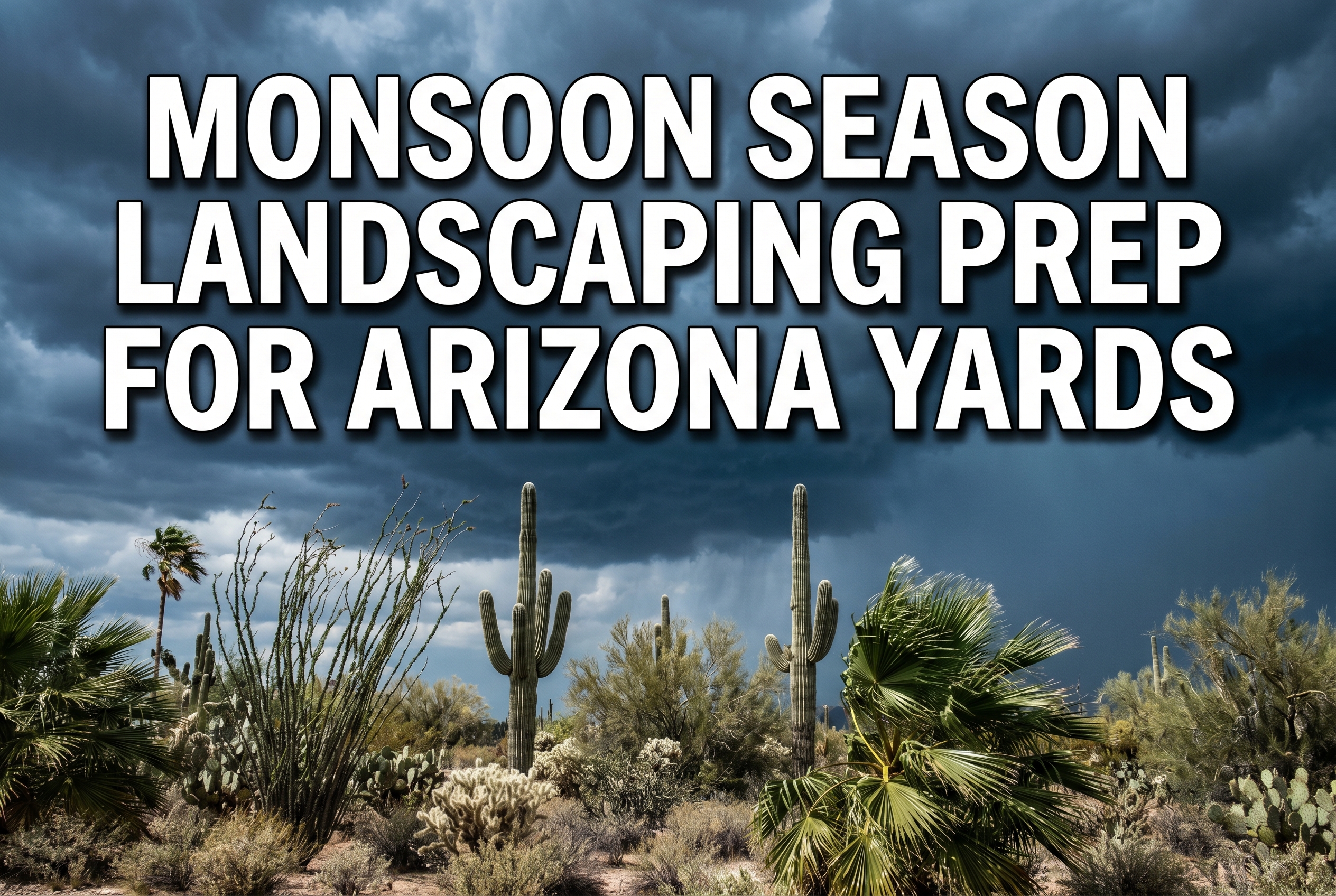
The Arizona monsoon season runs from July through September, bringing microbursts with winds over 100 mph, flash floods that can move boulders, and hail that shreds plants in minutes. Your yard deserves someone who knows what they're doing when it comes to monsoon prep. The difference between a landscape that survives and one that gets destroyed often comes down to preparation work done in May and June.
Key Takeaways
- Trim trees and shrubs by mid-June to prevent wind damage from microbursts
- Install proper drainage systems before monsoons arrive to prevent foundation damage
- Protect valuable plants with temporary covers during severe weather warnings
- Adjust irrigation schedules to account for increased rainfall and humidity
- Plan post-monsoon cleanup and replanting for October when temperatures cool
Table of Contents
- Understanding Arizona Monsoon Hazards
- Pre-Monsoon Tree and Shrub Management
- Drainage Solutions and Flash Flood Prevention
- Plant Protection Strategies
- Irrigation Adjustments for Monsoon Season
- Post-Monsoon Recovery and Cleanup
- FAQ
Understanding Arizona Monsoon Hazards
Arizona landscaping directory's monsoon season brings unique challenges that don't exist anywhere else in the country. The combination of extreme heat buildup and moisture from the Gulf of California creates weather patterns that can destroy landscapes in minutes.
Microbursts are the biggest threat to Arizona yards. These concentrated downdrafts hit the ground and spread out in all directions with winds reaching 100+ mph. Unlike tornadoes that you can see coming, microbursts develop quickly and strike without warning. They snap mature trees, turn patio furniture into projectiles, and can level entire sections of landscaping.
Flash floods happen when hard-packed caliche soil can't absorb sudden rainfall. In Phoenix and Tucson, neighborhoods built on former desert see water rushing through yards, carrying away topsoil, plants, and hardscaping. The water moves fast enough to relocate boulders and destroy retaining walls.
Dust storms (haboobs) create their own problems. These walls of dust can be over a mile high and reduce visibility to zero. They strip leaves from plants, clog irrigation systems, and deposit inches of fine dust that takes weeks to clean up.
Hail damage varies by elevation and location. Higher elevations around Phoenix and Tucson see larger hail that can shred plant leaves and damage irrigation equipment. Even small hail can destroy tender new growth on desert plants.
The key to monsoon landscaping Arizona success is understanding that these aren't just bigger versions of regular storms. They require specific preparation techniques that work with Arizona's unique climate and soil conditions.
Pre-Monsoon Tree and Shrub Management
Tree trimming for monsoon season isn't the same as regular pruning. You're preparing plants to survive extreme wind events, not just maintaining their shape.
Timing matters more than technique. All major trimming should be completed by mid-June. Trees and shrubs need time to heal cuts before monsoon winds arrive. Fresh cuts create weak points where branches can snap under wind stress.
Focus on wind resistance, not appearance. Remove branches that cross or rub against each other, as these create stress points during high winds. Thin dense canopies to allow wind to pass through rather than creating a sail effect. The goal is reducing wind load, not creating perfect symmetry.
Mesquite trees require special attention. Their brittle wood breaks easily in microbursts. Remove any branches hanging over roofs, patios, or walkways. Mesquites can drop limbs weighing hundreds of pounds with no warning during wind events.
Palm trees need different care. Remove only completely brown fronds. Green and partially brown fronds help protect the growing tip during storms. Never "hurricane cut" palms by removing all fronds - this weakens the tree and makes it more likely to fail.
Palo verde trees should have their canopies thinned by 20-30%. These trees naturally shed branches during drought stress, but monsoon winds can cause major limb failure if the canopy is too dense.
What to ask before you hire a landscaper for monsoon prep: Do they understand microburst wind patterns? Have they worked in Arizona for at least three full monsoon seasons? Can they show you examples of trees they've prepped that survived major wind events?
Licensed, insured professionals know that improper pruning can make trees more dangerous during storms, not less. Real reviews from real homeowners will tell you if a contractor's monsoon prep work actually protected their property.
Drainage Solutions and Flash Flood Prevention
Arizona's caliche soil creates unique drainage challenges. This cement-hard layer sits just below the surface in most Phoenix landscaping services and Tucson neighborhoods, preventing water from soaking in naturally. When monsoon rains hit, water has nowhere to go except across the surface.
French drains work well in Arizona if installed correctly. The drain needs to extend below the caliche layer to be effective. Shallow drains that sit above the hardpan will fail during heavy rainfall. Expect to pay more for proper installation that breaks through caliche.
Grading and slope are critical for monsoon drainage. Water needs to flow away from structures at a minimum 2% slope. Many Arizona homes were built with minimal grading, assuming the desert doesn't get much rain. Monsoon events prove this assumption wrong every year.
Dry creek beds serve double duty as landscape features and drainage channels. Size them larger than you think you need - monsoon flows are much higher than regular rainfall. Use rounded river rock that won't shift as easily during high water flow.
Retention basins help manage water on larger properties. These shallow depressions collect runoff and allow it to soak in slowly. Plant them with native grasses that can handle both flooding and drought conditions.
Hardscaping considerations matter for drainage. Solid walls and fences create dams during flood events. Install drainage gaps or use permeable materials in flood-prone areas. Decorative rock should be sized large enough that it won't wash away - anything smaller than 3 inches will move during heavy flows.
Cost guides that actually tell you what things cost: Basic French drain installation runs $15-25 per linear foot. Caliche removal adds $8-12 per linear foot. Full yard regrading for proper drainage typically costs $3,000-8,000 depending on lot size and complexity.
Plant Protection Strategies
Protecting plants during Arizona monsoon season requires understanding which plants are vulnerable and which protection methods actually work in extreme conditions.
Hail protection is the most common need. Shade cloth rated at 30-50% provides good protection without blocking too much light. Install it on a frame system that can be deployed quickly when storms approach. Don't leave protection in place permanently - plants need full sun between storm events.
Wind protection works for smaller plants and new plantings. Temporary windbreaks using burlap or shade cloth can prevent desiccation from hot, dry winds that often follow monsoon storms. Stake the protection securely - loose materials become projectiles in high winds.
Flood protection means choosing the right locations for vulnerable plants. Succulents and cacti that can't tolerate wet feet should be planted in raised areas or mounded beds. Native plants generally handle temporary flooding better than exotic species.
Mulch management changes during monsoon season. Organic mulches can wash away or become waterlogged and rot plant roots. Inorganic mulches like decomposed granite or gravel stay in place better during heavy rains.
Container plant care requires special attention. Move valuable containers to protected areas during severe weather warnings. Large containers are surprisingly vulnerable to wind damage - the sail effect of plant canopies can tip over heavy pots.
Newly planted materials need extra protection their first monsoon season. Root systems haven't developed enough to anchor plants against wind or handle flooding. Plan installation timing so plants have at least 6-8 weeks to establish before monsoon season begins.
From basic lawn care to full backyard transformations, experienced Arizona landscapers know which plants survive monsoons and which don't. Local pros have local knowledge about microclimates and drainage patterns that affect plant survival.
Irrigation Adjustments for Monsoon Season
Arizona's irrigation needs change dramatically during monsoon season. The combination of increased humidity, cloud cover, and rainfall means plants need much less supplemental water.
Reduce watering frequency starting in July. Most established desert plants can go 2-3 weeks without irrigation during active monsoon periods. Overwatering during humid conditions leads to root rot and fungal problems that kill more plants than drought stress.
Install rain sensors on automatic systems. These inexpensive devices prevent irrigation from running during and immediately after rainfall. Many HOAs now require rain sensors on new installations.
Monitor soil moisture rather than following fixed schedules. Monsoon rains penetrate deeper than regular irrigation, keeping root zones moist longer than expected. Dig down 6-8 inches to check actual soil conditions before watering.
Adjust for microclimates within your yard. Areas that receive runoff from roofs or paved surfaces may not need any supplemental water during active monsoon periods. Protected areas under eaves may still need regular irrigation.
Drip system maintenance becomes critical during monsoon season. Dust storms clog emitters, and flooding can shift or damage supply lines. Check systems weekly during active weather periods.
Drainage for irrigated areas prevents water from pooling around plant roots. Even desert plants that handle drought well can die from root rot if water stands around their base for extended periods.
Post-storm adjustments help plants recover from stress. Light, frequent watering helps plants uptake nutrients after heavy rains wash minerals from the soil. Resume normal schedules gradually as monsoon activity decreases in September.
Post-Monsoon Recovery and Cleanup
October marks the beginning of Arizona's best planting season, but monsoon cleanup needs to happen first. The combination of wind damage, flooding, and intense humidity creates specific recovery challenges.
Damage assessment should be systematic. Check trees for cracked or split branches that may not have fallen yet. Look for signs of root damage from flooding - plants may appear fine initially but decline weeks later as damaged roots fail.
Soil restoration often requires adding organic matter washed away by flooding. Monsoon rains can strip topsoil and leave behind hard-packed surfaces that won't support new growth. Compost and soil amendments help restore growing conditions.
Replanting timing is crucial in Arizona. October through March offers the best conditions for establishing new plants before summer heat arrives. Plan replacement plantings to take advantage of this narrow window.
Irrigation system repairs should be completed before temperatures drop. Frozen pipes are rare in Arizona, but damaged systems waste water and stress plants during the critical establishment period.
Hardscape repairs may require professional help. Monsoon flooding can undermine retaining walls, shift pavers, and damage concrete surfaces. Address structural issues before they become safety hazards.
Pest management changes after monsoons. Increased humidity and plant stress create conditions for fungal diseases and insect problems that don't occur during dry periods. Monitor plants closely and treat problems early.
Planning improvements for next year should happen while damage is fresh in memory. Document problem areas with photos and notes about what failed and why. This information helps guide better preparation for future monsoon seasons.
FAQ
When should I start preparing my Arizona landscape for monsoon season?
Begin preparation in May. Complete all major tree trimming by mid-June, install drainage improvements by early July, and have plant protection materials ready to deploy when storms approach. Don't wait until monsoon season starts - you'll be too late.
How much should I expect to pay for professional monsoon prep?
Tree trimming runs $200-800 per tree depending on size and complexity. Drainage improvements cost $15-25 per linear foot for French drains, $3,000-8,000 for full yard regrading. Get quotes from multiple licensed contractors - prices vary significantly based on experience and quality.
Which plants are most vulnerable during Arizona monsoons?
Newly planted materials, non-native trees with dense canopies, and succulents in low-lying areas face the highest risk. Mesquite trees are particularly prone to wind damage due to brittle wood. Plants in containers need special protection from both wind and flooding.
Should I adjust my irrigation during monsoon season?
Yes, reduce watering frequency by 50-75% during active monsoon periods. Install rain sensors on automatic systems and check soil moisture manually before watering. Overwatering during humid monsoon conditions kills more plants than underwatering.
What's the most important monsoon prep task for Arizona homeowners?
Tree trimming and removal of hazardous branches. A falling tree can cause tens of thousands in damage to homes and vehicles. This is not a DIY job - hire licensed professionals who understand wind load and proper pruning techniques for Arizona trees.
How do I find reliable contractors for monsoon landscaping prep?
Look for contractors with at least three years of Arizona monsoon experience. Check that they're licensed and insured. Read reviews specifically about storm prep work, not just general landscaping. Ask to see examples of properties they've prepped that survived major wind events.
Conclusion
Arizona monsoon season transforms beautiful landscapes into disaster zones for unprepared homeowners. The combination of microbursts, flash floods, and extreme weather requires specific preparation techniques that work with Arizona's unique climate conditions.
Start your monsoon landscaping Arizona landscaping directory prep in May with professional tree trimming and hazard removal. Install proper drainage systems before July to prevent foundation damage and plant loss. Adjust irrigation schedules to account for increased rainfall and humidity. Have plant protection materials ready to deploy when severe weather approaches.
Find the right landscaper for your yard by choosing professionals with proven Arizona monsoon experience. Licensed, insured contractors who understand microburst wind patterns and caliche soil drainage can save you thousands in storm damage. Real reviews from real homeowners will tell you which contractors deliver results when extreme weather hits.
The investment in proper monsoon preparation pays for itself the first time a major storm passes through your neighborhood. Your yard deserves someone who knows what they're doing when it comes to surviving Arizona's most challenging weather season.
Liked this guide? Follow us on Google Search
Related Directory Pages
- Browse Arizona Landscaping Pros
- Phoenix Landscaping Services
- Browse Landscaping Services in Arizona
- Also Read: Monsoon-Proof Landscaping: Surviving NM's Storm Season
- Also Read: The Complete Guide to California Landscaping in 2026
- Also Read: Fire-Resistant Landscaping: California Defensible Space Guide
- Also Read: Best California Native Plants for Your Landscape
- Search Arizona Landscapers
Find a Landscaper Near You
Browse AZ landscaping professionals on LandscapeProsDirectory.
Search Landscapers