
Best Desert Landscaping Ideas for Phoenix Homes
Discover proven desert landscaping Phoenix ideas that survive 115°F summers. Plants, hardscaping, and design tips from local pros who know what works.
Phoenix homeowners spend an average of $15,000 on desert landscaping Phoenix projects, yet many still struggle with dead plants and sky-high water bills. The secret isn't throwing more money at the problem. It's understanding what actually thrives in 115-degree summers and monsoon floods.
Desert landscaping Phoenix isn't about copying California's green lawns or Colorado's mountain gardens. Your yard deserves someone who knows what they're doing with Sonoran Desert conditions. The right approach saves water, cuts maintenance, and creates outdoor spaces you'll actually use year-round.
Key Takeaways
- Choose desert-adapted plants like palo verde, agave, and red yucca that handle extreme Phoenix heat without constant watering
- Use heat-reflecting hardscape materials such as decomposed granite and flagstone to create comfortable outdoor spaces
- Design shade structures and covered areas essential for outdoor living during Phoenix's intense summer months
- Work within HOA guidelines common in Phoenix, Scottsdale, Chandler, and Gilbert while maximizing curb appeal
- Plan separate zones for front yard presentation and backyard entertainment that suit desert conditions
Table of Contents
- Desert-Adapted Plants That Actually Survive Phoenix Heat
- Hardscaping Materials and Outdoor Living Spaces
- Working with Local Regulations and Design Ideas
- Frequently Asked Questions
Desert-Adapted Plants That Actually Survive Phoenix Heat
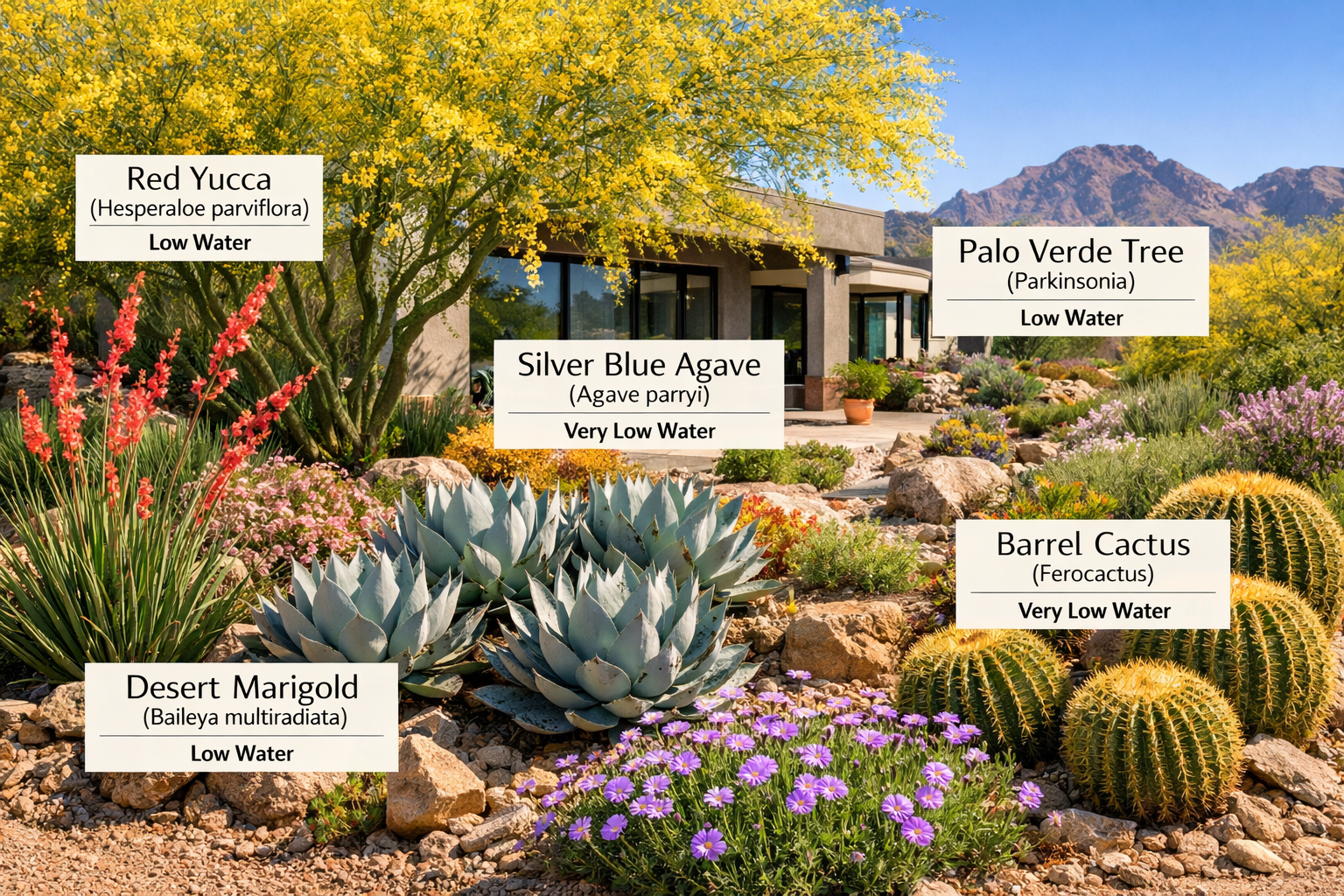
Phoenix landscaping services summers hit 110 degrees for weeks straight. Most landscaping plants die. Desert-adapted species don't just survive - they thrive with minimal water and care.
Trees That Provide Real Shade
Palo Verde trees are Arizona's state tree for good reason. They grow fast, need little water once established, and provide filtered shade that cools your yard by 15-20 degrees. The green bark photosynthesizes even when leaves drop during drought. Plant them 15 feet from your house to avoid root issues.
Desert Willow offers purple or pink trumpet flowers from spring through fall. These trees handle both extreme heat and sudden temperature drops. They grow 15-25 feet tall and work well near patios where you want seasonal shade.
Mesquite trees create dense shade and attractive twisted trunks. Chilean Mesquite grows faster than native varieties. Just know the roots spread wide and deep. Keep them away from pools and septic systems.
Colorful Desert Shrubs and Perennials
Red Yucca isn't actually a yucca, but it produces red flower spikes from March through October. Hummingbirds love them. They handle reflected heat from driveways and south-facing walls where other plants burn up.
Desert Marigold blooms yellow flowers nearly year-round with almost no water. Plant them in groups for color impact. They reseed naturally, filling in bare spots over time.
Brittlebush creates silver-gray mounds topped with bright yellow daisy flowers in winter and spring. The foliage reflects heat and light, helping cool surrounding areas.
Fairy Duster produces pink puff-ball flowers that attract butterflies. It stays compact at 2-3 feet and works well as a foundation plant or border.
Dramatic Architectural Plants
Agave species provide bold focal points with minimal care. Century plants create 6-foot rosettes. Agave parryi stays smaller at 2-3 feet. Most bloom once after 10-20 years, then die, but produce offsets to continue the cycle.
Ocotillo creates living sculptures with tall canes topped by red flowers after rain. They look dead most of the year but leaf out quickly when moisture arrives. Perfect for modern desert landscaping Phoenix designs.
Barrel Cactus and Prickly Pear add authentic Sonoran Desert character. Golden Barrel cactus creates perfect spheres. Prickly pear produces colorful flowers and edible fruit. Both handle neglect better than any other landscape plant.
Smart Planting Tips
Group plants by water needs. Put thirsty plants near irrigation zones. Place drought-tolerant species in areas that rely on natural rainfall.
Plant in fall or early spring when temperatures moderate. This gives roots time to establish before summer stress.
Mulch with decomposed granite or gravel, not wood chips. Organic mulches hold moisture that can rot desert plants and attract termites.
Hardscaping Materials and Outdoor Living Spaces
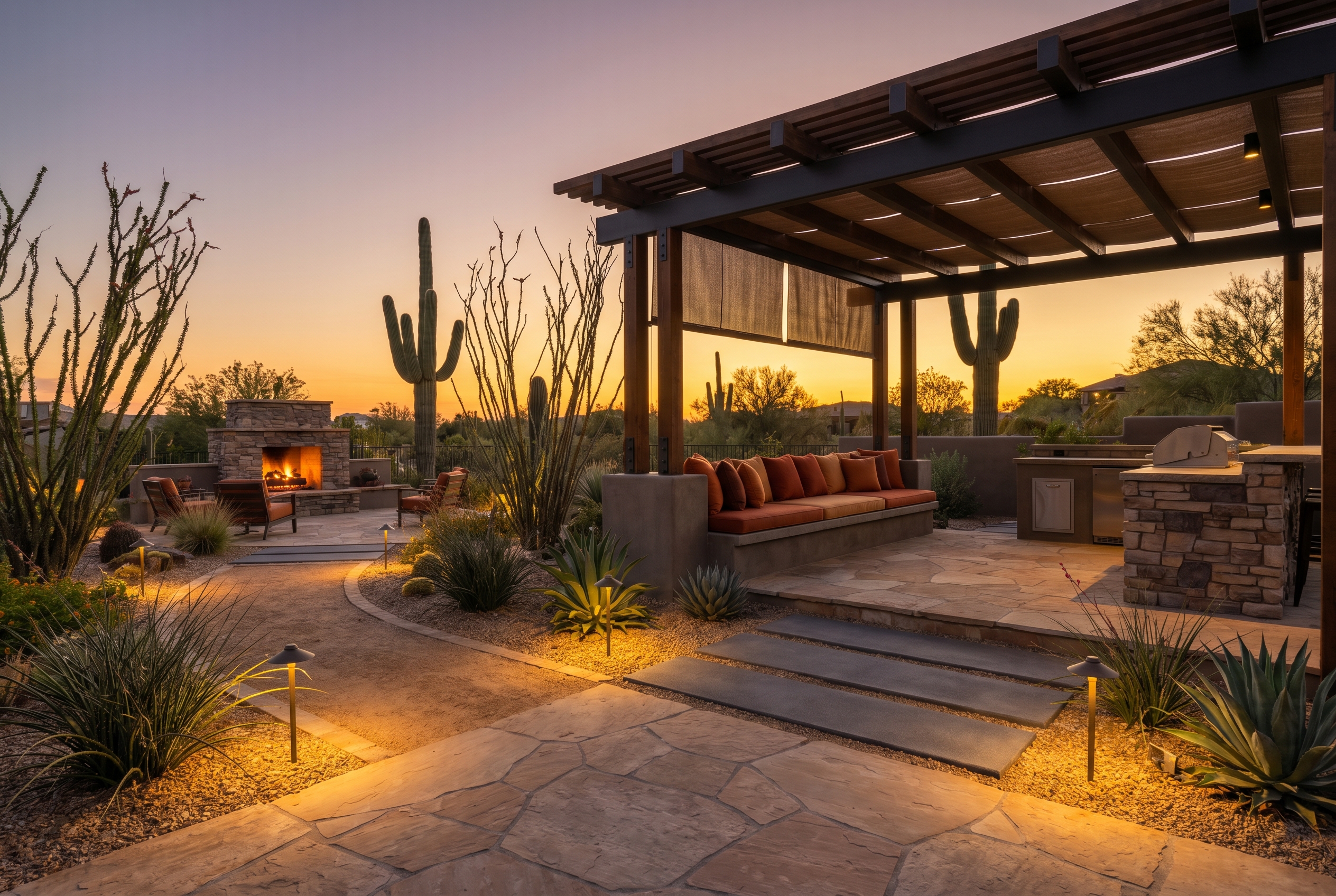
Phoenix outdoor spaces need materials that don't store heat or crack under temperature swings. The right hardscaping creates comfortable areas for entertaining during cooler months and monsoon season.
Heat-Smart Paving Materials
Decomposed Granite stays cooler than concrete or asphalt. It compacts into solid surfaces for pathways and patios. Choose buff or tan colors that reflect heat. Avoid dark gray varieties that absorb solar energy.
Flagstone provides natural beauty with excellent heat resistance. Arizona sandstone and Colorado red stone work well. The irregular shapes create interesting patterns. Seal joints with sand, not mortar, to allow for thermal expansion.
Concrete Pavers offer durability and design flexibility. Light colors reflect heat better than dark ones. Textured surfaces provide slip resistance during monsoons. Leave gaps between pavers for drainage and thermal movement.
Travertine stays surprisingly cool even in direct sun due to its porous structure. It costs more than other options but provides luxury appeal for pool decks and main entertainment areas.
Essential Shade Structures
Ramadas are traditional Southwest shade structures with flat roofs supported by posts. They block intense overhead sun while allowing air circulation. Build them 10-12 feet high for maximum cooling effect.
Pergolas with adjustable shade cloth let you control sun exposure seasonally. Retract coverings in winter for warmth, extend them in summer for protection. Choose fabrics rated for UV resistance and wind loads.
Shade Sails create modern geometric patterns while blocking sun. Install them at angles to shed rain and prevent water pooling. Use stainless steel hardware rated for desert wind conditions.
Outdoor Living Zones
Covered Patios extend indoor comfort outside. Include ceiling fans for air movement. Plan electrical outlets for lighting and entertainment equipment. Consider misting systems for extreme summer days.
Fire Features make outdoor spaces usable during Phoenix's brief winter season. Gas fire pits avoid wood burning restrictions. Position them away from overhead shade structures and desert plants.
Outdoor Kitchens should include refrigeration, shade, and wind protection. Monsoon storms arrive suddenly with driving rain. Plan covered storage for cushions and equipment.
Pool Areas need non-slip surfaces and heat-resistant materials. Travertine, textured concrete, and certain pavers work well. Avoid dark materials that become too hot for bare feet.
Water Features That Work
Fountains add cooling sounds and humidity to dry desert air. Choose recirculating designs to conserve water. Position them where prevailing winds carry mist toward seating areas.
Dry Creek Beds handle monsoon runoff while adding visual interest during dry periods. Line them with river rock and native plants. They prevent erosion and create natural-looking drainage solutions.
Working with Local Regulations and Design Ideas
Desert landscaping Phoenix projects must work within HOA rules common throughout the Valley. Each city has different requirements for water conservation and plant materials.
HOA Guidelines Across the Valley
Scottsdale HOAs often require professional landscape plans and specific plant lists. Many mandate minimum percentages of living plants versus hardscape. Some restrict certain cacti near common areas due to safety concerns.
Chandler and Gilbert communities frequently have strict front yard maintenance standards. Dead or dying plants must be replaced promptly. Weed control requirements are typically more stringent than in older Phoenix neighborhoods.
Mesa HOAs vary widely depending on community age. Newer developments often embrace desert landscaping while older areas may still require traditional green landscapes.
Get HOA approval before starting major projects. Submit detailed plans showing plant species, hardscape materials, and irrigation systems. This prevents costly changes later.
Front Yard Curb Appeal Strategies
Create welcoming entries with structured plantings. Use agaves or red yucca as anchor plants near the front door. Add seasonal color with desert marigold or fairy duster.
Design clear pathways with decomposed granite or flagstone. Avoid gravel that scatters onto sidewalks and streets. Edge pathways with steel or concrete borders for clean lines.
Add night lighting to highlight architectural plants and improve security. LED fixtures use less energy and generate less heat than traditional bulbs.
Backyard Entertainment Concepts
Sonoran Modern style combines clean lines with native plants. Use geometric planting beds filled with architectural agaves and ocotillo. Add modern fire features and minimalist furniture.
Traditional Desert designs embrace natural curves and informal plantings. Group plants as they appear in nature. Use flagstone and natural materials for hardscaping.
Resort Style creates vacation-like outdoor rooms. Include multiple seating areas, water features, and extensive shade structures. This approach requires higher maintenance but provides maximum outdoor living space.
Color Palettes That Work
Earth Tones complement desert surroundings naturally. Use sandstone, terracotta, and sage green as base colors. Add accents with desert sunset oranges and purples.
Modern Neutrals create sophisticated looks with grays, whites, and blacks. This palette works well with contemporary architecture. Add plant color for seasonal interest.
Warm Southwestern colors include deep reds, golden yellows, and turquoise blues. These traditional hues reflect regional culture and complement desert light.
Budget-Smart Phasing
Start with essential infrastructure like irrigation and major hardscaping. These elements are expensive to change later.
Add shade structures next. You'll use outdoor spaces more once they're protected from sun.
Install plants last, starting with trees for long-term shade, then shrubs and accent plants. This approach spreads costs over multiple seasons.
Frequently Asked Questions
How much does desert landscaping cost in Phoenix?
Basic desert landscaping Phoenix projects start around $8,000 for front yards. Full backyard transformations with shade structures and outdoor living spaces typically run $15,000-$30,000. Get quotes from licensed landscaping pros in your area who understand local conditions.
What plants survive Phoenix summers without daily watering?
Palo verde trees, red yucca, desert marigold, agave, and most cacti thrive with weekly deep watering or less once established. Avoid plants that need daily water - they'll struggle and drive up utility bills.
Do I need HOA approval for desert landscaping changes?
Most Phoenix area HOAs require approval for significant landscape changes. Submit plans showing plant species and hardscape materials. Know who you're letting into your yard - use licensed contractors familiar with local HOA requirements.
When is the best time to install desert landscaping in Phoenix?
Fall and early spring offer the best planting conditions. Avoid summer installations when extreme heat stresses new plants. Plan hardscaping projects for cooler months when workers can be more productive.
How do I choose the right landscaper for desert projects?
Find landscaping pros who specialize in desert conditions and carry proper licensing and insurance. Real reviews from real homeowners tell you more than marketing promises. Ask about their experience with your specific city's regulations.
What's the biggest mistake Phoenix homeowners make with desert landscaping?
Overwatering kills more desert plants than underwatering. Many homeowners also choose plants based on looks rather than heat tolerance, leading to constant replacement costs.
Conclusion
Desert landscaping Arizona landscaping directory success comes down to choosing the right plants, materials, and professionals for Sonoran Desert conditions. Palo verde trees, agave, and red yucca handle extreme heat while providing year-round beauty. Heat-reflecting hardscapes like decomposed granite and flagstone create comfortable outdoor spaces.
Your yard deserves someone who knows what they're doing with desert conditions. Licensed landscaping pros in your area understand local HOA requirements and plant performance. They prevent costly mistakes that come from treating Phoenix like other climates.
Start with a solid plan that phases installation over time. Focus on infrastructure first, then shade structures, then plants. This approach controls costs while creating outdoor spaces you'll actually use.
Find the right landscaper for your yard through verified reviews and proper licensing checks. The directory built for homeowners, not advertisers, helps you make informed decisions about who enters your property.
Liked this guide? Follow us on Google Search
Related Directory Pages
- Browse Arizona Landscaping Pros
- Phoenix Landscaping Services
- Browse Landscaping Services in Arizona
- Also Read: The Complete Guide to California Landscaping in 2026
- Also Read: Fire-Resistant Landscaping: California Defensible Space Guide
- Also Read: Best California Native Plants for Your Landscape
- Also Read: Sacramento Landscaping: Heat-Tolerant Designs That Last
- Search Arizona Landscapers
Find a Landscaper Near You
Browse AZ landscaping professionals on LandscapeProsDirectory.
Search Landscapers