
Tucson Landscaping: Native Plants & Desert Design
Complete guide to Tucson landscaping with native Sonoran Desert plants. Get up to $2,000 in city rebates for xeriscaping. Find licensed pros who know desert des
Water bills in Tucson average $75 monthly, but homeowners with traditional grass lawns often pay double that amount. Meanwhile, neighbors with native desert landscaping spend less than $30 per month while creating stunning outdoor spaces that actually thrive in Arizona's climate.
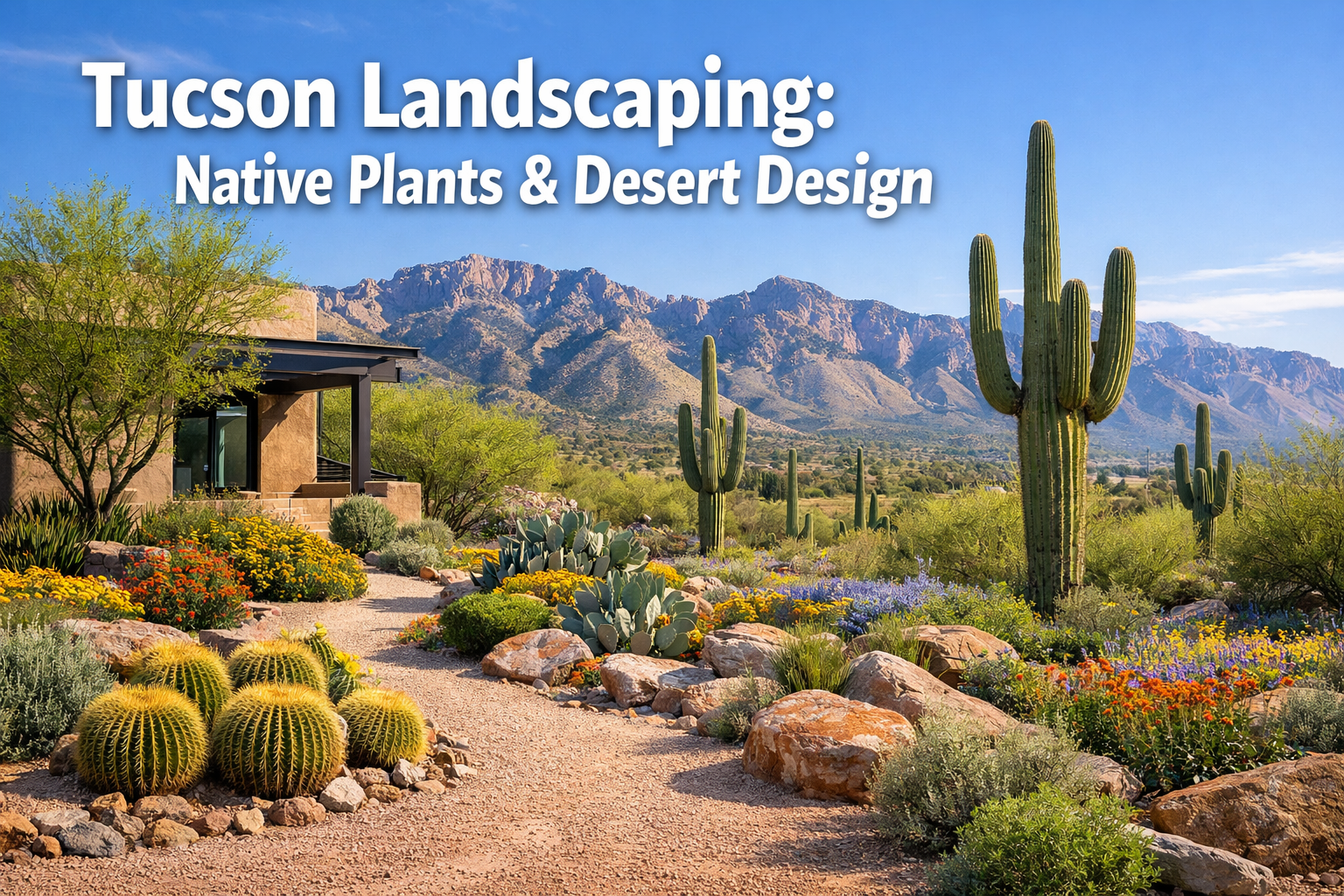
Tucson landscaping presents unique opportunities that most cities can't match. The Sonoran Desert offers an incredible palette of native plants, the city provides substantial water rebates, and your yard can showcase mountain views while supporting local wildlife. Your yard deserves someone who knows what they're doing with desert conditions.
Key Takeaways
- Tucson offers up to $2,000 in rebates for xeriscaping projects that reduce water usage
- Native Sonoran Desert plants require 75% less water than traditional landscaping once established
- HOA rules in Tucson often favor native landscaping over high-water-use alternatives
- Proper native plant selection can create year-round color while supporting local wildlife
- Professional installation ensures plants are positioned correctly for mountain views and sun exposure
Table of Contents
- Understanding Sonoran Desert Native Plants for Tucson Landscaping
- Water-Smart Design and Tucson Landscaping Incentives
- Working with Tucson's Unique Conditions
- FAQ
- Conclusion
Understanding Sonoran Desert Native Plants for Tucson Landscaping
The Sonoran Desert around Tucson landscaping services contains over 2,000 plant species. Many homeowners think desert landscaping means boring beige, but native plants offer incredible variety in colors, textures, and seasonal interest.
Foundation Plants for Tucson Yards
Palo Verde trees serve as excellent shade trees that don't block mountain views. These Arizona state trees produce bright yellow blooms in spring and cast filtered shade that protects understory plants. They're drought-tolerant once established and rarely need pruning.
Mesquite trees grow faster than palo verde and provide denser shade. Their deep taproots make them extremely drought-resistant. Choose native velvet mesquite over Chilean mesquite, which can become invasive.
Desert willow offers the closest thing to a traditional flowering tree in desert landscaping. These plants produce orchid-like blooms from spring through fall in colors ranging from white to deep purple.
Accent Plants That Add Color
Brittlebush creates masses of bright yellow daisy-like flowers from February through May. The silvery foliage provides year-round interest and contrasts beautifully with darker desert plants.
Fairy duster produces delicate pink puffball flowers almost year-round. This low-growing shrub works well as a border plant or in rock gardens.
Desert marigold blooms nearly continuously with proper care. These cheerful yellow flowers attract butterflies and require minimal water once established.
Penstemon species offer tubular flowers in red, pink, or purple that hummingbirds love. Different varieties bloom at different times, extending the flowering season.
Structural Plants for Drama
Ocotillo creates dramatic vertical elements with its long, thorny canes topped by bright red flowers in spring. These plants can reach 15-20 feet tall and serve as living sculptures.
Barrel cacti provide round, architectural forms that work well in groupings. Golden barrel and fishhook barrel cacti are popular choices that produce yellow or red flowers.
Agave species offer bold, sculptural forms. Century plants create dramatic focal points, while smaller varieties like agave geminiflora work in borders. Remember that most agaves die after flowering, so plan accordingly.
Native Plant Establishment Tips
Native doesn't mean no care. New plantings need regular water for the first year while roots establish. Deep, infrequent watering works better than frequent shallow watering.
Plant in fall or early spring when temperatures are moderate. Summer planting stresses plants and increases water needs during establishment.
Soil preparation matters even for native plants. Adding decomposed granite or pumice improves drainage in clay soils. Most desert plants hate wet feet.
Water-Smart Design and Tucson Landscaping Incentives
Tucson leads the Southwest in water conservation programs. The city's rebate programs can cover significant portions of landscaping costs when you choose water-efficient designs.
Tucson Water Rebates and Programs
The Zanjero Rebate Program offers up to $2,000 for residential xeriscaping projects. Requirements include removing at least 200 square feet of turf, installing water-efficient plants, and using efficient irrigation.
Rainwater Harvesting Rebates provide up to $2,000 for cistern installations. Tucson requires new homes to include rainwater harvesting, but existing homes can retrofit systems with rebate support.
Gray Water Rebates cover up to $1,000 for laundry-to-landscape systems. These systems redirect washing machine water to irrigate trees and large shrubs.
To qualify for rebates, work with contractors familiar with Tucson Water requirements. The city maintains a list of approved contractors who understand the application process and plant requirements.
Rainwater Harvesting Culture
Tucson pioneered residential rainwater harvesting in the Southwest. Even modest rainfall can generate significant water for landscape irrigation.
Passive harvesting uses berms, basins, and swales to direct roof runoff to planted areas. This approach costs less than active systems and requires no maintenance.
Active harvesting uses gutters, downspouts, and storage tanks to collect and store rainwater. Stored water extends the growing season and reduces reliance on municipal water.
Curb cuts and street harvesting capture street runoff for large trees. This technique works especially well for palo verde and mesquite trees that can handle occasional flooding.
Efficient Irrigation Design
Drip irrigation works best for most desert landscaping. Point emitters deliver water directly to plant root zones with minimal evaporation loss.
Micro-spray systems work well for groundcover areas and newly seeded wildflower patches. These systems provide more coverage than drip emitters but use more water.
Bubbler systems efficiently water large shrubs and trees. Bubblers flood small basins around plants, encouraging deep root growth.
Zone irrigation by plant water needs. Group high-water plants together and separate them from drought-tolerant natives. This prevents overwatering established native plants.
Mountain Views and Water Management
Tucson's mountain views are precious assets that landscaping should enhance, not block. Water-smart design can frame views while creating sustainable gardens.
Keep tall plants away from view corridors. Use low-growing natives like brittlebush, fairy duster, and desert marigold in areas where mountain views matter most.
Terraced plantings can create depth without blocking views. Use retaining walls or natural slopes to create planting levels that step down toward view areas.
Strategic tree placement frames views rather than blocking them. A single palo verde or mesquite positioned correctly can enhance mountain views by creating a natural frame.
Working with Tucson's Unique Conditions
Climate Considerations for Tucson Landscaping
Tucson's elevation creates a unique microclimate within the Sonoran Desert. At 2,400 feet, the city experiences cooler winters than Phoenix landscaping services and occasional freezes that affect plant selection.
Frost protection matters for tender desert plants. Prickly pear cacti and barrel cacti handle frost well, but some agaves and desert trees need protection during cold snaps.
Summer heat management requires strategic plant placement. Even heat-loving desert plants benefit from afternoon shade during July and August when temperatures exceed 110 degrees.
Monsoon season brings intense summer rains that can damage plants not adapted to sudden flooding. Proper drainage and plant selection prevent monsoon damage.
HOA Considerations in Tucson
Many Tucson HOAs now favor native landscaping over water-intensive alternatives. However, specific rules vary significantly between communities.
Design standards often require professional landscape plans for major changes. Some HOAs maintain approved plant lists that favor natives and water-efficient species.
Maintenance requirements may specify weed control, plant replacement, and irrigation system upkeep. Native landscapes often meet these requirements more easily than traditional landscaping.
Architectural review processes typically require approval before major landscape changes. Submit detailed plans showing plant locations, irrigation systems, and hardscape elements.
Work with landscaping pros in your area who understand local HOA requirements. Experienced contractors know which communities have specific restrictions and can design accordingly.
Seasonal Maintenance Needs
Desert landscaping requires different maintenance than traditional yards. Understanding seasonal needs helps budget for ongoing care.
Spring maintenance includes pruning frost-damaged growth, refreshing mulch, and planting new additions. This is the best time for major landscape changes.
Summer care focuses on efficient watering and monitoring plant stress. Deep watering early morning or evening reduces water loss and heat stress.
Fall preparation includes cleaning up summer growth, preparing tender plants for winter, and planting cool-season annuals like desert lupine.
Winter protection may require covering tender plants during freezes and adjusting irrigation schedules for reduced water needs.
Finding Qualified Tucson Landscaping Professionals
Licensed contractors understand local regulations, rebate programs, and plant requirements. Verify licenses through the Arizona Registrar of Contractors before hiring.
Look for contractors with Certified Landscape Professional credentials or similar desert landscaping certifications. These professionals understand native plant requirements and water-efficient design principles.
Real reviews from real homeowners provide insight into contractor reliability and work quality. Check multiple review sources and ask for local references.
Get detailed written estimates that specify plant varieties, irrigation components, and maintenance requirements. Quality contractors provide comprehensive proposals that help you understand exactly what you're getting.
FAQ
How much can Tucson water rebates reduce landscaping costs?
Tucson Water rebates can cover up to $4,000 per property when combining xeriscaping and rainwater harvesting programs. The Zanjero Program provides up to $2,000 for turf removal and native plant installation, while rainwater harvesting rebates add another $2,000 for cistern systems.
Do native plants really need less water once established?
Yes, established native Sonoran Desert plants typically use 75% less water than traditional landscaping. However, they need regular watering for 12-18 months during establishment. After that, most natives survive on rainfall and occasional deep watering during dry periods.
Will my HOA approve native desert landscaping?
Most Tucson HOAs now favor water-efficient native landscaping over high-water alternatives. However, you'll likely need professional design plans and architectural review approval. Check your CC&Rs for specific plant lists and design requirements before starting any project.
When is the best time to install native plants in Tucson?
Fall planting (October through November) gives plants time to establish roots before summer heat. Spring planting (March through April) also works well but requires more careful watering through the first summer. Avoid planting during summer months when heat stress is highest.
How do I maintain mountain views while creating privacy?
Use low-growing natives like brittlebush and fairy duster in view corridors, and place taller plants like palo verde trees strategically to frame rather than block views. Terraced plantings and careful plant placement can create privacy where needed while preserving important sight lines.
What's the difference between xeriscaping and native landscaping?
Xeriscaping refers to any water-efficient landscaping, which might include non-native drought-tolerant plants. Native landscaping specifically uses plants indigenous to the Sonoran Desert. Tucson rebate programs favor native plants because they support local wildlife and require minimal long-term inputs.
Conclusion
Arizona landscaping directory landscaping offers unique advantages that homeowners in other cities can't access. The combination of diverse native plants, substantial city rebates, and year-round growing seasons creates opportunities for beautiful, sustainable outdoor spaces that cost less to maintain than traditional yards.
Success with desert landscaping requires understanding native plant needs, taking advantage of available rebates, and working with professionals who know Tucson's specific conditions. From basic plant installations to full backyard transformations, the right approach creates landscapes that thrive in the Sonoran Desert while showcasing the mountain views that make Tucson special.
Start by researching Tucson Water rebate programs to understand available incentives. Then find licensed landscaping professionals who specialize in native plants and water-efficient design. Know who you're letting into your yard by checking licenses, reading reviews, and asking the right questions about plant selection and maintenance requirements.
Your desert landscape can provide year-round beauty, support local wildlife, and reduce water bills while increasing property value. The key is working with knowledgeable professionals who understand that successful Tucson landscaping means embracing the desert rather than fighting it.
Liked this guide? Follow us on Google Search
Related Directory Pages
- Browse Arizona Landscaping Pros
- Tucson Landscaping Services
- Browse Landscaping Services in Arizona
- Also Read: The Complete Guide to California Landscaping in 2026
- Also Read: Fire-Resistant Landscaping: California Defensible Space Guide
- Also Read: Best California Native Plants for Your Landscape
- Also Read: Sacramento Landscaping: Heat-Tolerant Designs That Last
- Search Arizona Landscapers
Find a Landscaper Near You
Browse AZ landscaping professionals on LandscapeProsDirectory.
Search Landscapers