
Albuquerque Landscaping: High Desert Solutions
Expert guide to Albuquerque landscaping challenges. Learn about caliche soil, native plants, xeriscaping, and finding licensed contractors for high desert succe
Albuquerque homeowners face a landscaping challenge unlike anywhere else in the country. At 5,300 feet elevation with bone-dry air and soil so hard it breaks shovels, creating a beautiful yard here takes more than good intentions. It takes someone who knows what they're doing in the high desert.
Your yard deserves someone who understands that what works in Phoenix won't work here. What thrives in Denver will die here. Albuquerque landscaping requires local knowledge, the right plants, and contractors who've dealt with caliche soil before.
Key Takeaways
- Albuquerque's unique high desert climate demands specialized landscaping approaches
- Caliche soil layer creates drainage and planting challenges requiring professional expertise
- Native plants like piñon, chamisa, and Apache plume thrive with minimal water
- Different areas of the city have distinct microclimates and soil conditions
- Proper contractor licensing through CID protects homeowners from costly mistakes
- Rainwater harvesting and xeriscaping reduce water bills significantly
Table of Contents
- Understanding Albuquerque's High Desert Climate
- Conquering Caliche: Soil Challenges and Solutions
- Native Plants That Actually Work Here
- Neighborhood-Specific Landscaping Considerations
- Water-Smart Solutions for the Desert
- Finding Licensed Albuquerque Landscaping Contractors
Understanding Albuquerque's High Desert Climate
Albuquerque landscaping services sits in a climate zone that confuses even experienced landscapers from other regions. The high desert environment creates conditions that can kill plants in ways most people never expect.
Elevation Changes Everything
At 5,300 feet above sea level, Albuquerque gets more intense UV radiation than lower elevations. Plants that handle full sun elsewhere get scorched here. The thin air also means faster moisture evaporation from soil and plant leaves.
Extreme Temperature Swings
Summer days hit 95°F while nights drop to 65°F. Winter brings freezing nights followed by 60°F afternoons. These daily temperature swings stress plants that aren't adapted to high desert conditions.
Humidity That Hurts Plants
Relative humidity often drops below 20 percent. This desert-dry air pulls moisture from plants faster than they can replace it. Many popular landscaping plants simply can't survive here without constant watering.
Wind That Never Stops
Albuquerque's constant wind dries out soil and plants even faster. Spring winds can reach 40 mph, breaking branches and sandblasting tender plants with grit.
Conquering Caliche: Soil Challenges and Solutions
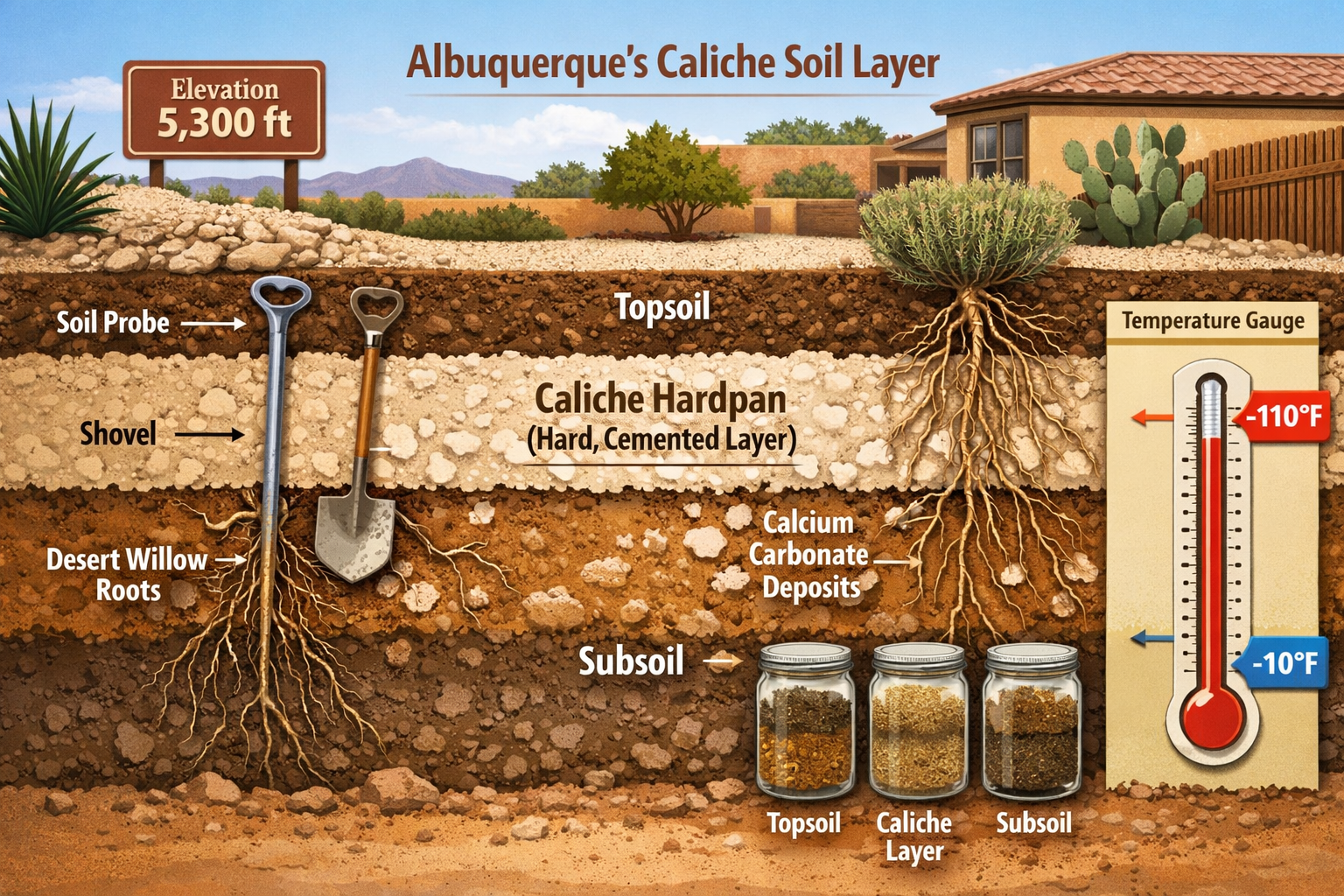
The biggest shock for new Albuquerque homeowners comes when they try to dig. That concrete-hard layer just below the surface isn't rock. It's caliche, a cement-like soil layer that forms naturally in arid climates.
What Caliche Does to Your Yard
Caliche creates a barrier that stops water drainage and root growth. Water sits on top, creating boggy conditions that kill desert plants. Roots can't penetrate down to find moisture during dry periods.
Breaking Through Caliche Properly
Professional Albuquerque landscaping contractors use specialized equipment to break through caliche without damaging underground utilities. They know how to create proper drainage channels and amend the soil for long-term plant health.
Soil Amendment That Works
Simply adding topsoil over caliche creates problems. Water pools at the interface between different soil types. Proper soil amendment involves breaking up the caliche layer and mixing in organic matter and sand to improve drainage.
Drainage Solutions
French drains, dry creek beds, and proper grading direct water away from foundations and prevent pooling. These solutions require understanding Albuquerque's specific drainage patterns and monsoon rainfall intensity.
Native Plants That Actually Work Here
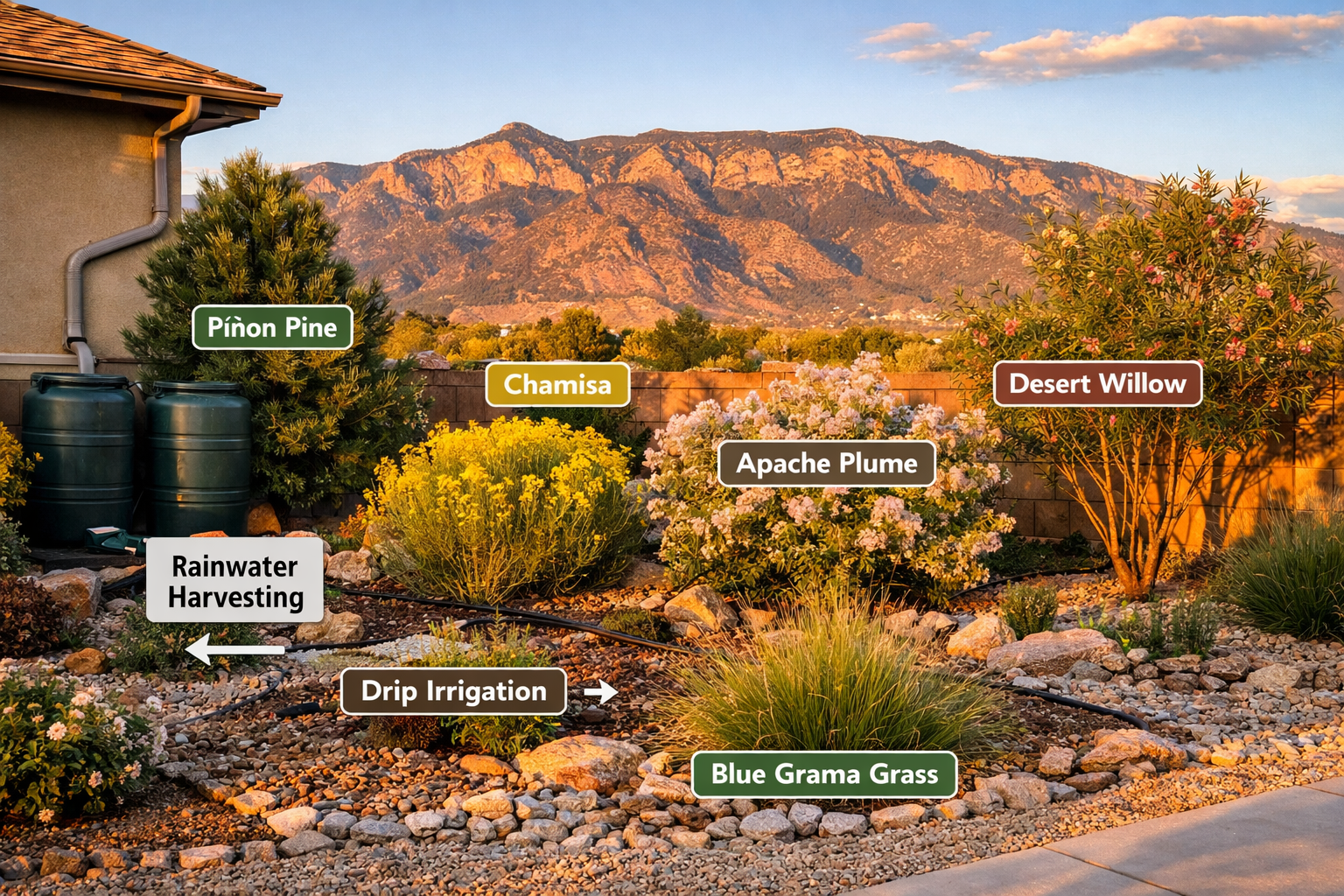
Forget the plants you see in magazines. Albuquerque landscaping succeeds with plants that evolved here over thousands of years. These natives handle the climate extremes and actually look better with less water.
Trees That Thrive
Piñon Pine grows slowly but lives for centuries. It provides shade, attracts wildlife, and needs almost no supplemental watering once established. Plant it away from structures since it can reach 20 feet wide.
Desert Willow blooms from spring through fall with orchid-like flowers. It handles wind, drought, and poor soil while providing quick-growing shade for patios.
Shrubs for Structure
Chamisa explodes with yellow flowers in fall when everything else looks dead. It grows fast, needs no water, and provides year-round structure in landscape beds.
Apache Plume offers white flowers in spring and feathery seed heads that catch light beautifully. It stays compact and works well as a foundation plant.
Grasses That Stay Green
Blue Grama forms clumps of fine-textured grass that stays attractive through winter. It needs water only during establishment and provides movement in the landscape.
Buffalo Grass creates a lawn alternative that goes dormant in winter but needs 70 percent less water than traditional turf.
Neighborhood-Specific Landscaping Considerations
Albuquerque's different areas have distinct microclimates that affect plant selection and landscape design. Local pros know these differences and plan accordingly.
Northeast Heights Challenges
The foothills face different wind patterns and get more winter freezing. Plants need protection from downslope winds. The rocky soil drains fast but makes installation more difficult.
Properties here often have slopes that require terracing and erosion control. The views are spectacular, but landscape design must frame them properly while handling drainage.
South Valley Conditions
Lower elevation means warmer temperatures but also more alkaline soil. The Rio Grande's influence creates slightly higher humidity in some areas.
Older neighborhoods often have mature trees that create microclimates. New landscaping must work with existing shade patterns and root systems.
West Side Realities
Newer development means less mature vegetation and more extreme conditions. The mesa top gets constant wind and has minimal natural windbreaks.
Soil here is often more disturbed from construction. Proper soil preparation becomes even more critical for plant establishment.
Water-Smart Solutions for the Desert
Albuquerque encourages water conservation through rebates and regulations. Smart homeowners use these programs to create beautiful landscapes that cost less to maintain.
Rainwater Harvesting Benefits
The city offers rebates for rain barrels and cisterns. Monsoon rains from July through September can provide significant water for landscape irrigation.
Proper rainwater harvesting systems include first-flush diverters and mosquito screening. Professional installation ensures systems work efficiently and meet city codes.
Xeriscaping Done Right
Real xeriscaping isn't just rocks and cactus. It's designing landscapes that work with natural rainfall patterns and use appropriate plants in the right locations.
Microclimates within your yard allow for different plant zones. Areas near downspouts can support plants that need more water. Exposed slopes get the most drought-tolerant species.
Drip Irrigation Systems
Drip irrigation delivers water directly to plant roots with minimal evaporation loss. Systems can be zoned to provide different watering schedules for different plant needs.
Professional installation includes pressure regulation, filtration, and proper emitter selection. Cheap systems clog and waste water.
Seasonal Watering Schedules
Albuquerque's watering restrictions change seasonally. Landscapes designed by local pros work within these restrictions while keeping plants healthy.
Winter watering prevents desiccation during dry, windy periods. Spring establishment watering helps new plants develop deep root systems before summer heat.
Finding Licensed Albuquerque Landscaping Contractors
Know who you're letting into your yard. Albuquerque landscaping projects require contractors who understand local conditions and carry proper licensing and insurance.
CID Licensing Requirements
New Mexico's Construction Industries Division requires licensing for landscape contractors doing work over $7,200. Licensed contractors have demonstrated knowledge of proper installation techniques and business practices.
Check license status online at the CID website. Active licenses mean contractors maintain insurance and continuing education requirements.
What to Ask Before You Hire
Ask about experience with caliche soil and high desert plants. Contractors should explain their soil preparation methods and plant selection reasoning.
Request references from jobs completed in your specific area of Albuquerque. Different neighborhoods present different challenges that require local experience.
Red Flags to Avoid
Door-to-door contractors often lack proper licensing and insurance. They may use inappropriate plants or installation methods that fail within a year.
Extremely low bids usually mean corners get cut on soil preparation or plant quality. Proper Albuquerque landscaping requires investment in soil amendment and appropriate plants.
Getting Accurate Estimates
Legitimate contractors provide detailed written estimates that break down materials, labor, and timeline. They should visit your property and test soil conditions before providing quotes.
Estimates should include plant establishment care and warranty information. Professional contractors stand behind their work with guarantees.
Frequently Asked Questions
How much does Albuquerque landscaping cost per square foot?
Basic xeriscaping runs $3-8 per square foot. Complex projects with extensive soil amendment, irrigation, and mature plants cost $15-25 per square foot. Caliche removal adds $2-5 per square foot depending on depth and access.
When is the best time to plant in Albuquerque?
Fall planting (September-October) gives plants time to establish roots before summer heat. Spring planting (March-April) works but requires more summer watering. Avoid planting during winter freezes or summer heat waves.
Do I need a permit for landscape installation?
Most residential landscaping doesn't require permits. However, major grading, retaining walls over 4 feet, or irrigation connections to city water may need permits. Check with the city planning department for specific requirements.
How long does it take for native plants to establish?
Most native shrubs and perennials establish in 1-2 growing seasons with proper care. Trees may take 3-5 years to become fully drought tolerant. First-year watering is critical for establishment success.
Can I install drip irrigation myself?
Simple drip systems are DIY-friendly, but complex zoned systems benefit from professional installation. Improper pressure regulation or emitter selection wastes water and harms plants. Professional installation often pays for itself through water savings.
What's the difference between xeriscaping and zero-scaping?
Xeriscaping uses drought-tolerant plants and efficient irrigation to create attractive, low-water landscapes. Zero-scaping eliminates most vegetation in favor of hardscaping. True xeriscaping includes appropriate plants for beauty and environmental benefits.
Conclusion
Successful New Mexico landscaping directory landscaping starts with understanding what makes the high desert unique. The elevation, climate extremes, and caliche soil create challenges that require local expertise and appropriate plant selection.
Your yard deserves someone who knows what they're doing in these conditions. Find the right landscaper for your yard by checking CID licensing, asking about local experience, and getting detailed estimates that address soil preparation and plant establishment.
From basic xeriscaping to full backyard transformations, the key is working with Albuquerque's natural conditions rather than fighting them. Native plants, proper soil amendment, and efficient irrigation create landscapes that thrive with minimal inputs while providing maximum beauty.
Start by identifying your yard's specific microclimates and soil conditions. Then connect with licensed professionals who understand high desert landscaping. With the right approach, your Albuquerque landscape will flourish for decades while conserving water and reducing maintenance.
Liked this guide? Follow us on Google Search
Related Directory Pages
- Browse New Mexico Landscaping Pros
- Albuquerque Landscaping Services
- Browse Landscaping Services in New Mexico
- Also Read: Best Desert Landscaping Ideas for Phoenix Homes
- Also Read: Flagstaff Landscaping: Mountain vs Desert Style
- Also Read: Monsoon Season Landscaping Prep for Arizona Yards
- Also Read: Tucson Landscaping: Native Plants & Desert Design
- Search New Mexico Landscapers
Find a Landscaper Near You
Browse NM landscaping professionals on LandscapeProsDirectory.
Search Landscapers