
Best Drought-Tolerant Plants for Arizona Landscapes
Discover 20+ drought tolerant plants Arizona natives love. Complete guide covers trees, shrubs, cacti with water needs, sun requirements & growing tips.
Arizona homeowners face water restrictions every year. The average Phoenix household uses 30% more water on landscaping than the national average. Yet smart plant choices can cut outdoor water use by 60% while creating stunning desert landscapes that thrive in triple-digit heat.
The key lies in selecting drought tolerant plants Arizona natives have perfected over thousands of years. These plants don't just survive the desert. They flourish with minimal water once established.
Key Takeaways
- Native Arizona plants need deep watering for 1-2 years to establish, then require irrigation only every 10-21 days in summer
- Palo verde, Texas sage, and barrel cactus rank as the most bulletproof choices for Phoenix-area yards
- Proper plant selection can reduce landscape water use by 60% compared to traditional grass lawns
- Most drought-tolerant plants perform best with deep, infrequent watering rather than daily sprinkler systems
- Combining trees, shrubs, and ground covers creates layered landscapes that provide shade and visual interest year-round
Table of Contents
- Drought-Tolerant Trees for Arizona Shade and Structure
- Low-Water Shrubs and Perennials
- Desert Succulents and Cacti
- Ground Covers and Grasses
- Watering Guidelines for Established Plants
- Regional Considerations Across Arizona
- FAQ
- Conclusion
Drought-Tolerant Trees for Arizona Shade and Structure
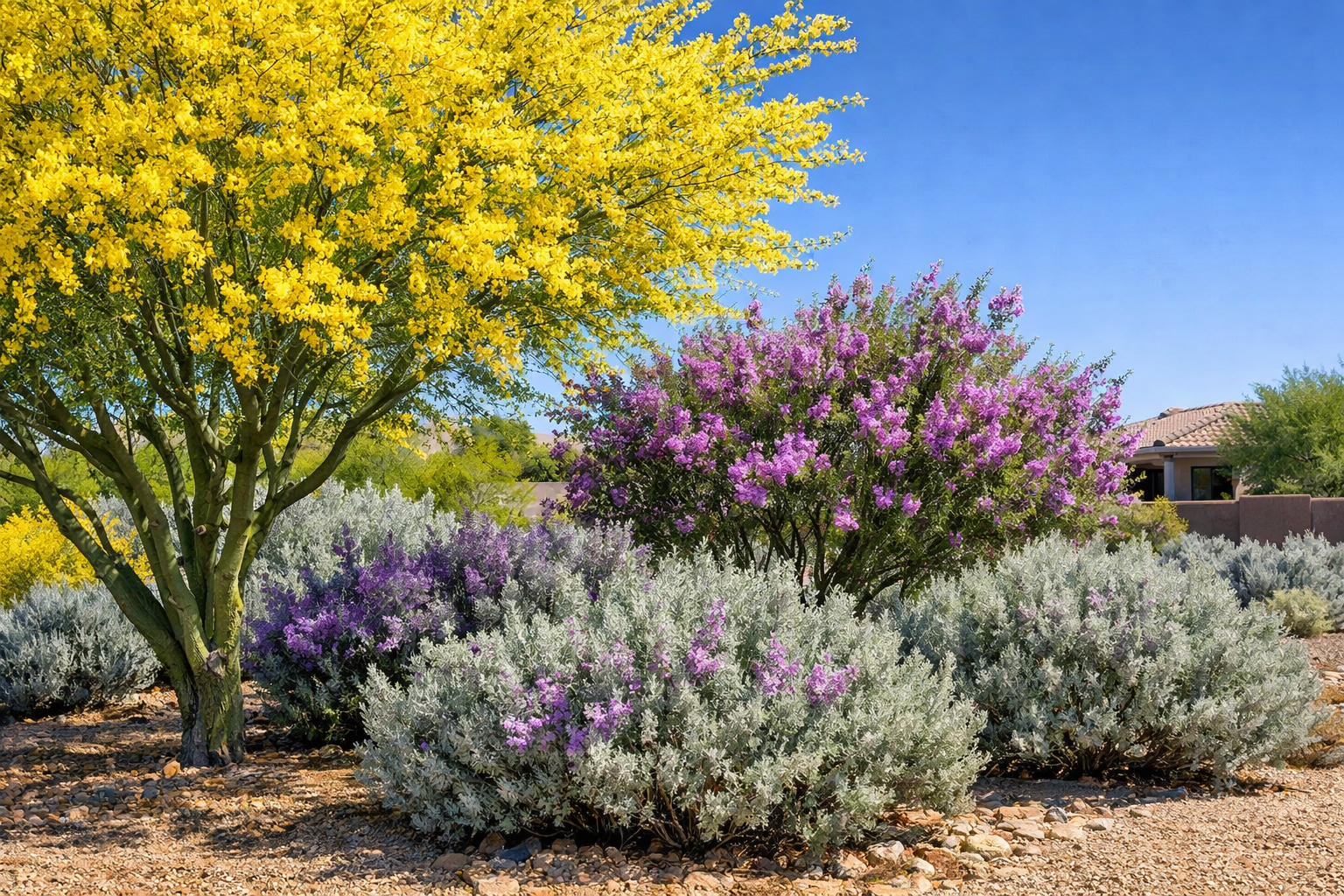
Trees form the backbone of any Arizona landscaping directory landscape. The right drought tolerant plants Arizona trees provide essential shade while handling intense sun and minimal water.
Palo Verde stands as Arizona's state tree for good reason. These native beauties produce brilliant yellow blooms each spring and cast filtered shade perfect for desert living. Mature trees reach 20-25 feet tall and wide. They need deep watering every 2-3 weeks once established. Palo verde thrives throughout the Phoenix and Tucson metro areas.
Desert Willow offers graceful beauty with orchid-like purple or white flowers from spring through fall. These fast-growing trees reach 15-20 feet tall with an open, airy canopy. Desert willow handles extreme heat and needs watering only every 2-3 weeks after the first year. They work well as accent trees or grouped for privacy screening.
Chinese Pistache provides reliable fall color rare in desert landscapes. The leaves turn brilliant orange and red each autumn. These sturdy trees grow 25-30 feet tall and wide. They tolerate alkaline soil and need deep watering every 2 weeks in summer once mature. Chinese pistache works well in Scottsdale and Phoenix neighborhoods.
Mesquite trees offer deep shade and edible pods. Native varieties like Chilean mesquite stay compact at 20-25 feet while Argentine mesquite can reach 30 feet. Both handle drought exceptionally well, needing water only monthly after establishment. The filtered shade allows grass or ground covers to grow underneath.
Live Oak brings classic tree shape to desert yards. These evergreen trees grow slowly to 40-50 feet tall and wide. They need more water than true desert natives but far less than traditional shade trees. Deep watering every 10-14 days keeps live oak healthy in Phoenix and Tucson.
Low-Water Shrubs and Perennials
Shrubs and flowering perennials add color and texture while using minimal water. The best drought tolerant plants Arizona shrubs bloom for months with proper care.
Texas Sage (also called Texas Ranger) produces masses of purple, pink, or white tubular flowers after summer rains. The silvery-gray foliage looks attractive year-round. These compact shrubs grow 3-5 feet tall and wide. They need watering only every 2-3 weeks once established. Texas sage handles reflected heat from walls and pavement.
Red Bird of Paradise delivers non-stop orange and red flowers from spring through fall. The delicate foliage provides nice texture contrast. These shrubs reach 6-8 feet tall and 4-6 feet wide. They need weekly watering the first year, then every 10-14 days. Red bird of paradise attracts hummingbirds and butterflies.
Brittlebush offers bright yellow daisy flowers from fall through spring. The gray-green leaves form neat mounds 2-3 feet tall and wide. This true desert native needs water only every 3-4 weeks after establishment. Brittlebush works well as a ground cover or massed planting.
Lantana blooms continuously in yellow, orange, red, purple, or white clusters. These tough shrubs handle extreme heat and drought. Most varieties stay 2-4 feet tall and spread 3-5 feet wide. Water every 10-14 days for best flowering. Lantana attracts butterflies and works well in containers.
Penstemon produces spikes of tubular flowers in red, pink, purple, or white. Native varieties bloom spring through fall. These perennials form clumps 1-3 feet tall and wide. They need water every 2 weeks during growing season. Penstemon attracts hummingbirds and handles cold better than many desert plants.
Yellow Bells create bright yellow trumpet flowers almost year-round in mild areas. These fast-growing shrubs reach 6-8 feet tall and wide. They need water every 10-14 days for continuous blooming. Yellow bells work well as informal hedges or specimen plants.
Damianita forms compact mounds covered with tiny yellow flowers spring through fall. The aromatic foliage stays attractive when not blooming. These native perennials grow 1-2 feet tall and wide. They need water only every 3-4 weeks once established. Damianita works well in rock gardens or as edging.
Desert Succulents and Cacti
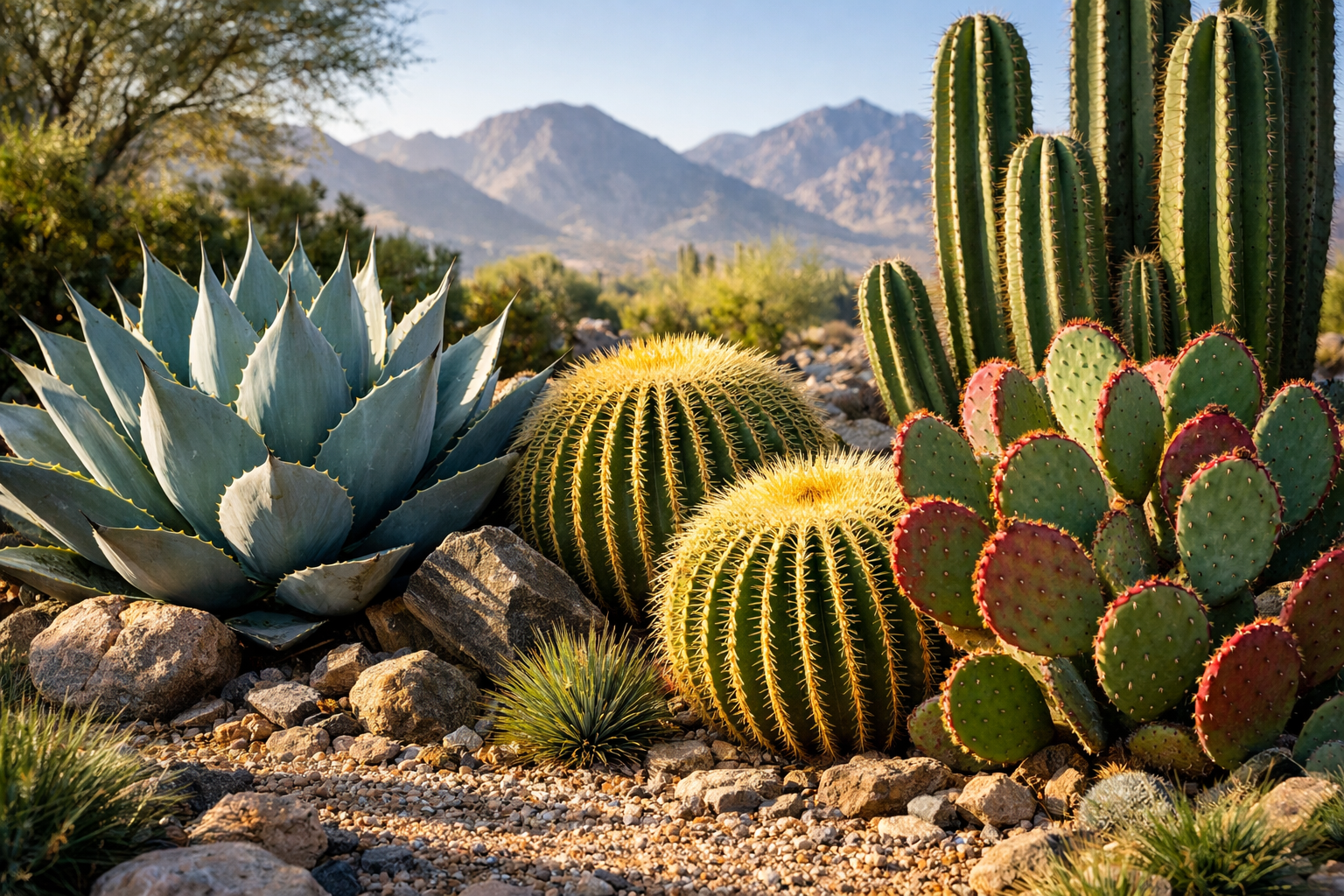
For extremely low water use, nothing beats native cacti and succulents. These drought tolerant plants Arizona specialties often survive on rainfall alone after establishment.
Barrel Cactus creates perfect spheres covered with colorful spines. Golden barrel varieties produce yellow flowers in spring. These slow-growing cacti reach 2-4 feet tall and wide over many years. Water monthly during summer heat, skip winter watering entirely. Barrel cactus works well as specimen plants or grouped in threes.
Prickly Pear offers flat paddle-shaped stems and brilliant flowers in yellow, red, or pink. The edible fruits provide food for wildlife. Most varieties grow 3-5 feet tall and spread 4-6 feet wide. Water every 3-4 weeks in summer, monthly in winter if no rain falls. Prickly pear handles cold better than most cacti.
Agave species create dramatic rosettes of thick, pointed leaves. Century plant grows largest at 6-8 feet tall and wide. Smaller varieties like parry agave stay 2-3 feet. All produce spectacular flower stalks after 10-20 years, then die after setting seed. Water monthly in summer, skip winter watering. Agave works well as focal points or grouped plantings.
Saguaro represents the iconic Arizona cactus. These giants grow extremely slowly, reaching 15-20 feet after 50+ years. Young saguaro need protection from frost and summer sun. Water every 2-3 weeks in summer for faster growth. Only plant nursery-grown specimens with proper permits.
Mexican Fence Post creates tall columnar shapes perfect for screening or accent use. These fast-growing cacti reach 10-15 feet tall but stay narrow at 4-6 inches wide. Water monthly in summer for best growth. Plant in groups for dramatic vertical elements.
Red Yucca (actually a hesperaloe) produces tall spikes of red tubular flowers spring through fall. The grass-like foliage forms clumps 3-4 feet tall and wide. Water every 2-3 weeks during growing season. Red yucca attracts hummingbirds and handles both heat and cold well.
Ground Covers and Grasses
Low-growing plants tie landscapes together while using minimal water. These drought tolerant plants Arizona ground covers eliminate the need for thirsty grass lawns.
Desert Marigold creates carpets of bright yellow flowers almost year-round. These native perennials stay 6-12 inches tall and spread 12-18 inches wide. Water every 2-3 weeks for continuous blooming. Desert marigold self-seeds readily and attracts beneficial insects.
Blue Grama Grass forms fine-textured clumps with interesting seed heads. This native bunch grass grows 8-12 inches tall and wide. It stays green with monthly watering but goes dormant without irrigation. Blue grama works well between stepping stones or as lawn replacement.
Desert Milkweed produces clusters of small white or pink flowers that attract monarch butterflies. The narrow leaves stay attractive most of the year. Plants grow 2-3 feet tall and spread slowly by underground runners. Water every 2-3 weeks during growing season.
Fairy Duster creates low mounds covered with fluffy pink or red flower clusters. The fine-textured foliage provides nice contrast to bold cacti. These native shrubs stay 1-2 feet tall and spread 2-3 feet wide. Water every 2-3 weeks for best flowering.
Watering Guidelines for Established Plants
Even drought tolerant plants Arizona natives need proper watering to thrive. The key lies in deep, infrequent irrigation rather than daily sprinkling.
Establishment Period: All new plantings need regular water for 1-2 years. Water weekly the first month, then every 2 weeks the rest of the first year. Cacti and succulents can be watered monthly after the first month.
Summer Watering: Established trees and large shrubs need deep watering every 10-14 days. Smaller shrubs and perennials do well with water every 2-3 weeks. Cacti and succulents need water only monthly or less.
Winter Watering: Reduce frequency by half during cooler months. Many desert plants can go 3-4 weeks between waterings. Skip watering entirely during rainy periods.
Watering Depth: Apply water slowly to penetrate 18-24 inches deep for trees and large shrubs. Smaller plants need water to reach 12-18 inches deep. Use drip irrigation or soaker hoses for best results.
Regional Considerations Across Arizona
Arizona's diverse climate zones affect plant selection and care requirements.
Phoenix and Scottsdale (Low Desert): Extremely hot summers require the most heat-tolerant plants. Palo verde, Texas sage, and barrel cactus perform best. Provide afternoon shade for marginally hardy plants.
Tucson (Sonoran Desert): Similar to Phoenix but with better winter rainfall. Native plants like brittlebush and fairy duster thrive with minimal supplemental water.
Flagstaff (High Desert): Cold winters limit plant choices. Focus on cold-hardy natives like Apache plume and four o'clock. Many low desert plants won't survive freezing temperatures.
Your yard deserves someone who knows what they're doing when selecting and installing drought-tolerant plants. Find the right landscaper for your yard through local pros with local knowledge of Arizona growing conditions.
FAQ
How long does it take drought-tolerant plants to establish in Arizona?
Most drought-tolerant trees and shrubs need 1-2 years of regular watering to develop deep root systems. Cacti and succulents establish faster, often within 6-12 months. Once established, these plants can handle extended dry periods.
Can I plant drought-tolerant plants any time of year in Arizona?
Fall through early spring offers the best planting window. Avoid planting during summer heat when plants struggle to establish. October through March provides ideal conditions for root development before hot weather arrives.
Do drought-tolerant plants need fertilizer in Arizona's desert soil?
Most native Arizona plants thrive in poor soil and need little to no fertilizer. Over-fertilizing can actually harm desert plants by encouraging excessive growth that requires more water. Compost worked into planting holes provides sufficient nutrition.
How much water do established drought-tolerant plants actually need?
Established trees and large shrubs typically need deep watering every 10-21 days in summer, depending on species and location. Smaller plants may need water every 2-3 weeks. Cacti and succulents often survive on monthly watering or less.
Will drought-tolerant plants attract wildlife to my yard?
Yes, many drought-tolerant plants provide food and habitat for beneficial wildlife. Desert willow and penstemon attract hummingbirds. Brittlebush and desert marigold support pollinators. Prickly pear and barrel cactus provide food for desert animals.
What's the biggest mistake homeowners make with drought-tolerant landscaping?
Overwatering kills more drought-tolerant plants than underwatering. Many homeowners continue daily sprinkler schedules that work for grass but cause root rot in desert plants. Deep, infrequent watering produces healthier, more drought-resistant plants.
Conclusion
Creating a beautiful, water-wise Arizona landscaping directory landscape starts with choosing the right drought tolerant plants Arizona conditions demand. Palo verde and desert willow provide essential shade. Texas sage and brittlebush add color with minimal water. Barrel cactus and agave create dramatic focal points that thrive on neglect.
The key to success lies in proper establishment watering followed by deep, infrequent irrigation. Most homeowners can reduce landscape water use by 60% while creating more interesting, low-maintenance yards than traditional grass lawns provide.
Start with a core palette of 5-10 proven performers like desert willow, Texas sage, red yucca, brittlebush, and penstemon. Add trees for shade and cacti for drama. Layer different plant heights and textures for visual interest year-round.
Know who you're letting into your yard when hiring installation help. Licensed, insured professionals understand proper planting depth, soil preparation, and establishment care that determines long-term success. We verify so you don't have to when finding landscaping pros in your area.
From basic plant installation to full backyard transformations, the right plants make all the difference in Arizona's challenging climate. Your drought-tolerant landscape will reward you with beauty, wildlife habitat, and dramatically lower water bills for decades to come.
Liked this guide? Follow us on Google Search
Related Directory Pages
- Browse Arizona Landscaping Pros
- Phoenix Landscaping Services
- Browse Landscaping Services in Arizona
- Also Read: Best Drought-Tolerant Plants for Nevada Landscapes
- Also Read: Best California Native Plants for Your Landscape
- Also Read: Best Native Plants for New Mexico Landscapes
- Also Read: The Complete Guide to California Landscaping in 2026
- Search Arizona Landscapers
Find a Landscaper Near You
Browse AZ landscaping professionals on LandscapeProsDirectory.
Search Landscapers