
Best Native Plants for New Mexico Landscapes
Discover 20+ drought-tolerant New Mexico native plants perfect for Albuquerque, Santa Fe & Las Cruces. Reduce water bills 40% with blue grama, Apache plume & mo
Water bills in New Mexico can hit $200 monthly during summer if your yard depends on thirsty grass and non-native shrubs. Smart homeowners across Albuquerque, Santa Fe, and Las Cruces are switching to New Mexico native plants that thrive on 10 inches of annual rainfall instead of daily sprinklers.
Your yard deserves someone who knows what they're doing when it comes to native plant installation. The right landscaper understands which New Mexico native plants work in your specific microclimate and soil conditions.
Key Takeaways
- New Mexico native plants reduce outdoor water use by 30-40% compared to traditional landscaping
- Blue grama grass, the state grass, requires 75% less water than Kentucky bluegrass
- Native plants support local wildlife including hummingbirds, butterflies, and native bees
- Most established natives survive on natural precipitation alone after year two
- Regional selection matters - mountain plants won't thrive in desert areas
Table of Contents
- Northern Mountains Native Plants
- High Desert Native Plants
- Southern Chihuahuan Desert Native Plants
- Where to Buy Native Plants in New Mexico
- Frequently Asked Questions
- Conclusion
Northern Mountains New Mexico Native Plants
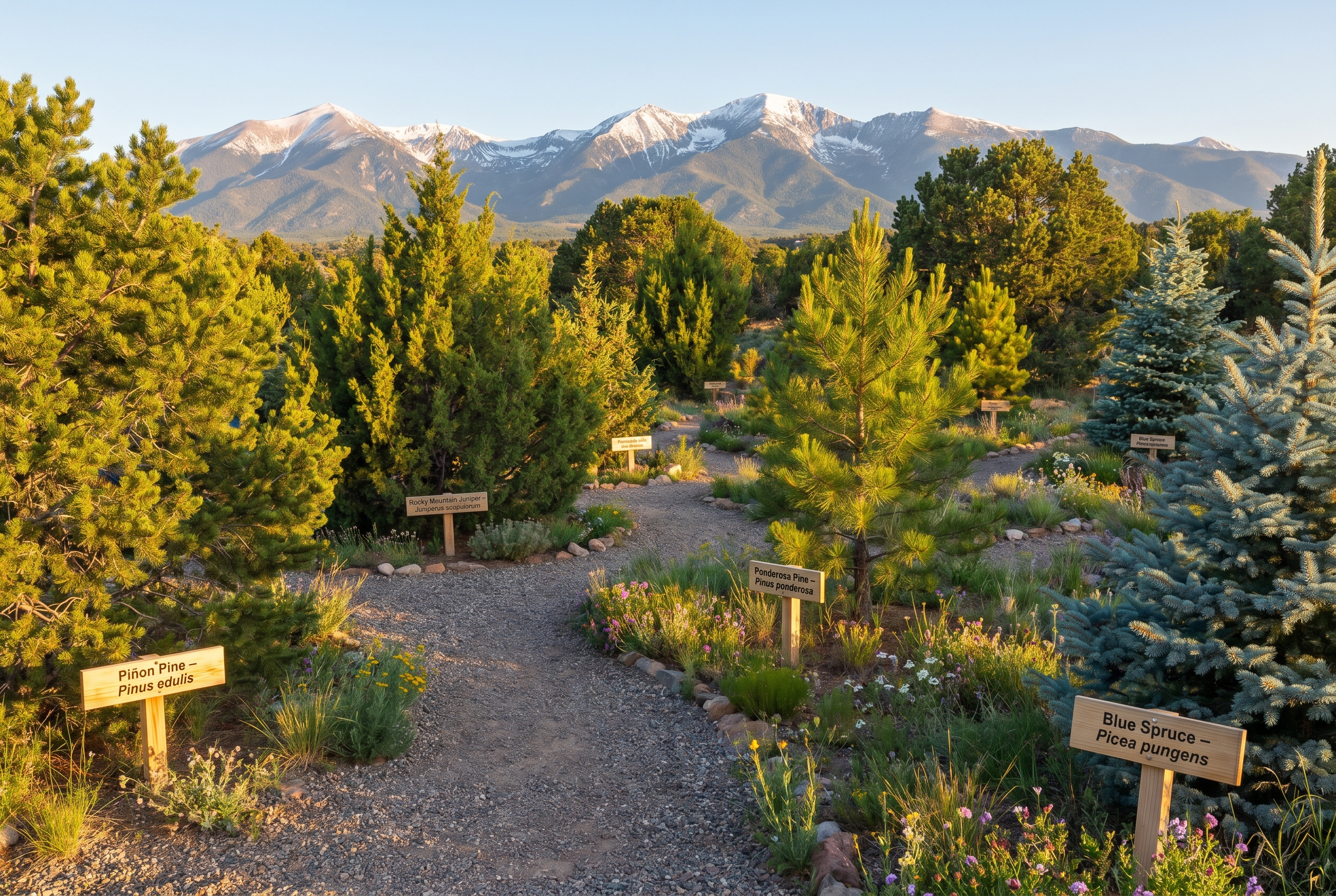
The northern mountain regions around Taos, Santa Fe, and higher elevations near Albuquerque landscaping services support different native species than the lower desert areas. These plants handle freezing temperatures and summer monsoons.
Trees for Mountain Areas
Piñon Pine (Pinus edulis) grows slowly but lives for centuries. This drought-tolerant tree produces edible pine nuts every few years. Mature trees reach 15-20 feet tall and need no supplemental water after establishment. Plant in full sun with well-draining soil.
One-Seed Juniper (Juniperus monosperma) handles poor soils and extreme drought. The twisted trunk and blue berries add year-round interest. Grows 15-25 feet tall over decades. Birds love the berries for winter food.
Ponderosa Pine (Pinus ponderosa) works in areas above 6,000 feet elevation. These tall pines need occasional deep watering during establishment but become drought-tolerant. The vanilla-scented bark makes them popular landscape trees.
Mountain Shrubs
Threeleaf Sumac (Rhus trilobata) produces brilliant red fall color and grows 3-6 feet tall. The dense growth provides bird nesting sites. Extremely drought-tolerant once established. Handles poor soils well.
New Mexico Privet (Forestiera pubescens) creates excellent wildlife habitat with small flowers that attract pollinators. Grows 6-12 feet tall and works as a privacy screen. Requires minimal water after year two.
Gooseberry Currant (Ribes inerme) produces edible berries and attracts hummingbirds with tubular flowers. Grows 3-5 feet tall in partial shade. More water-dependent than other natives but still drought-tolerant.
Mountain Perennials
Rocky Mountain Penstemon (Penstemon strictus) produces purple flower spikes that hummingbirds visit regularly. Blooms from late spring through summer. Grows 2-4 feet tall in full sun.
Wild Bergamot (Monarda fistulosa) attracts butterflies and native bees with fragrant purple flowers. The leaves smell like oregano when crushed. Spreads slowly to form colonies.
High Desert New Mexico Native Plants
The high desert around Albuquerque, Santa Fe landscaping services, and central New Mexico sits between 4,000-7,000 feet elevation. These New Mexico native plants handle hot summers, cold winters, and alkaline soils.
Essential Grasses
Blue Grama (Bouteloua gracilis) serves as New Mexico's state grass for good reason. The ornamental seed heads look like tiny flags waving in the breeze. This bunch grass needs 75% less water than traditional lawn grass. Plant plugs 12 inches apart for groundcover.
Buffalo Grass (Bouteloua dactyloides) creates a low-maintenance lawn alternative. Leave it unmowed for a prairie look or mow monthly for a neater appearance. Goes dormant in winter but stays green longer than blue grama with minimal water.
Signature Shrubs
Apache Plume (Fallugia paradoxa) produces white flowers followed by feathery seed heads that persist through winter. Grows 3-6 feet tall and wide. The silvery foliage contrasts beautifully with darker plants. Extremely drought-tolerant.
Fourwing Saltbush (Atriplex canescens) handles the worst soils and drought conditions. The papery seed wings add texture to winter landscapes. Grows 4-8 feet tall. Provides food for birds and browsing wildlife.
Chamisa (Ericameria nauseosa) explodes with bright yellow flowers in fall when most plants are finishing their show. Also called rubber rabbitbrush. Grows 2-4 feet tall. Attracts late-season butterflies and native bees.
Colorful Wildflowers
Mexican Hat (Ratibida columnifera) blooms from spring through fall with distinctive red and yellow flowers. Self-seeds readily in disturbed soil. Grows 1-3 feet tall. Goldfinches eat the seeds.
Desert Marigold (Baileya multiradiata) provides nearly year-round yellow blooms in mild winters. Grows 1-2 feet tall. Reseeds aggressively in favorable conditions. Thrives in poor, rocky soil.
Blanketflower (Gaillardia aristata) produces red and yellow daisy-like flowers from spring through frost. Grows 1-2 feet tall. Attracts butterflies and beneficial insects. Deadhead spent flowers to encourage more blooms.
Prairie Coneflower (Ratibida pinnata) grows taller than Mexican hat at 3-5 feet. The drooping yellow petals surround a prominent dark center. Blooms midsummer through fall. Excellent cut flower.
Southern Chihuahuan Desert Native Plants
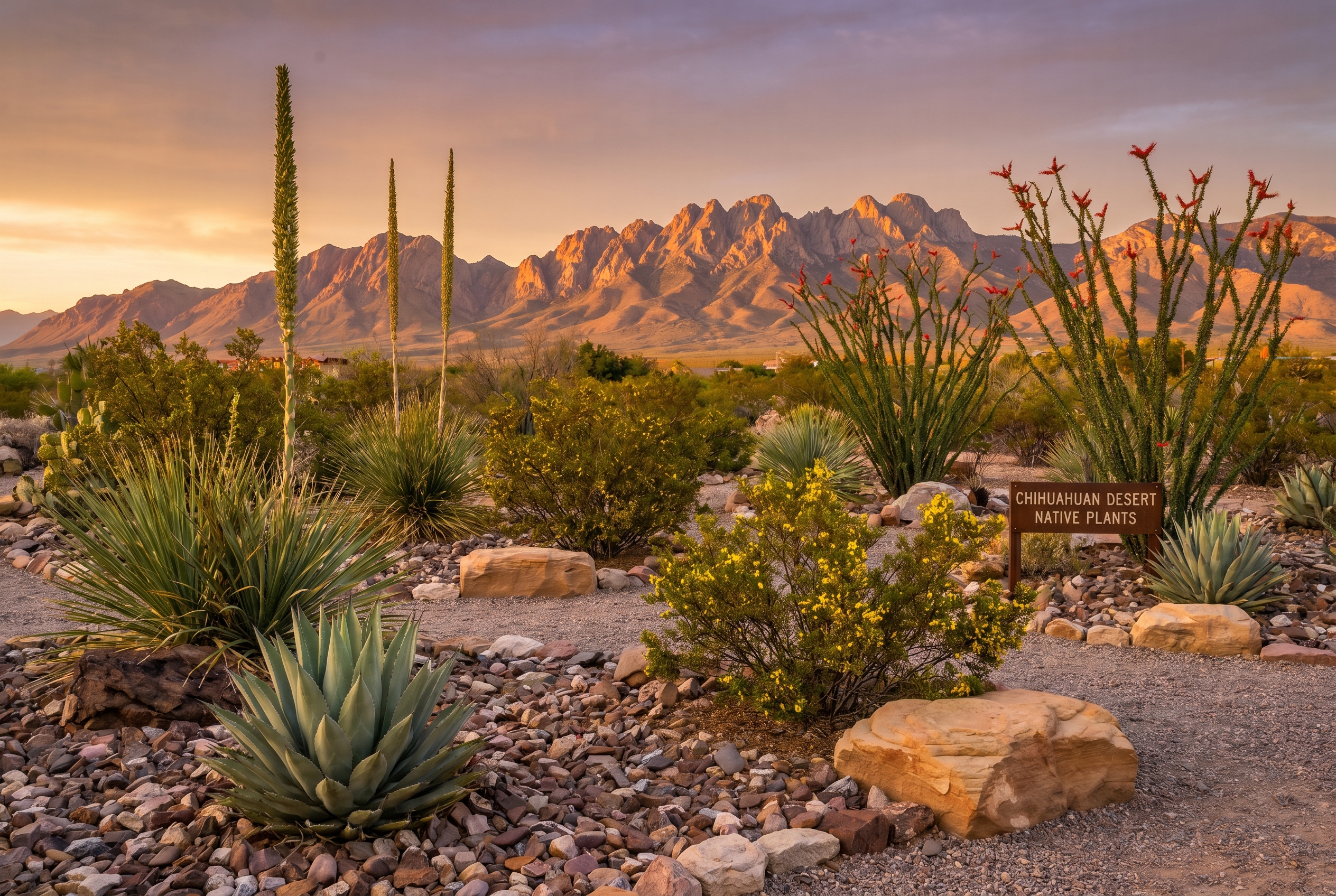
Las Cruces landscaping services and southern New Mexico below 4,000 feet elevation experience true desert conditions. These New Mexico native plants handle intense heat, minimal rainfall, and caliche hardpan soils.
Desert Trees
Desert Willow (Chilopsis linearis) produces orchid-like flowers in pink, purple, or white from spring through fall. Grows 15-25 feet tall with graceful, weeping branches. Attracts hummingbirds and butterflies. Needs occasional deep watering.
Mesquite (Prosopis glandulosa) provides filtered shade and edible pods. The deep taproot finds water other plants can't reach. Grows 20-30 feet tall. Thorny branches require careful placement away from walkways.
Iconic Desert Plants
Lechuguilla Agave (Agave lechuguilla) creates dramatic architectural form with blue-green rosettes. Extremely sharp spines require careful placement. Grows 2-4 feet tall and wide. Lives 15-20 years before flowering and dying.
Sotol (Dasylirion wheeleri) produces grass-like leaves in a spherical clump. The tall flower spike reaches 10-15 feet. More cold-hardy than most agaves. Grows slowly to 4-6 feet wide.
Ocotillo (Fouquieria splendens) creates living sculpture with tall, thorny canes topped by red flowers in spring. Appears dead much of the year but leafs out quickly after rain. Grows 8-20 feet tall.
Creosote Bush (Larrea tridentata) dominates much of the Chihuahuan Desert. The resinous leaves smell like rain when wet. Yellow flowers appear after sufficient moisture. Extremely long-lived and drought-tolerant.
Desert Perennials
Prickly Pear Cactus (Opuntia species) produces showy yellow, pink, or red flowers followed by edible fruits. Many species available with different pad sizes and flower colors. Handles extreme drought and poor soil.
Desert Marigold thrives in southern desert conditions, often blooming year-round in Las Cruces area gardens. More compact growth than in higher elevations.
Ghost Plant (Graptopetalum paraguayense) creates silvery rosettes that spread slowly. Not native but naturalized and extremely drought-tolerant. Good groundcover for small areas.
Where to Buy Native Plants in New Mexico
Find the right landscaper for your yard who sources quality native plants from reputable nurseries. Licensed professionals know which suppliers carry healthy, locally-adapted specimens.
Albuquerque Area:
- Plants of the Southwest (native plant specialists)
- Osuna Nursery (large selection of natives)
- Rehm's Nursery (established local nursery)
Santa Fe Area:
- Santa Fe Greenhouses (native plant focus)
- Agua Fria Nursery (drought-tolerant specialists)
- Plants of the Southwest Santa Fe location
Las Cruces Area:
- Enchanted Gardens (desert plant specialists)
- Westside Gardens (native and adapted plants)
- Las Cruces Farmers Market (seasonal native plant vendors)
Taos Area:
- Taos Valley Nursery (high-altitude natives)
- Local farmers markets (seasonal availability)
Online Sources:
- High Country Gardens (ships to New Mexico)
- Mountain States Wholesale Nursery (contractor sales)
- Native Seeds/SEARCH (heirloom varieties)
Growing Tips for New Mexico Native Plants
Soil Preparation: Most New Mexico native plants prefer well-draining soil. Avoid adding organic matter to clay soils, which can create drainage problems. Instead, plant in raised beds or mounds.
Watering Schedule: Water deeply but infrequently during the first two years. Most natives need weekly watering the first summer, every two weeks the second year, then only during extended dry periods.
Planting Timing: Fall planting (September-October) gives roots time to establish before summer heat. Spring planting works but requires more careful watering through the first summer.
Mulching: Use gravel or decomposed granite mulch instead of wood chips. Organic mulches hold too much moisture for most desert natives and can cause root rot.
Wildlife Benefits of New Mexico Native Plants
Native plants support local ecosystems better than non-native species. Blue grama grass provides seeds for quail and other ground birds. Apache plume flowers attract native bees that don't visit non-native plants.
Hummingbirds prefer native penstemons, desert willow, and ocotillo flowers over non-native alternatives. The nectar chemistry matches their nutritional needs better than exotic plants.
Native shrubs provide nesting sites and shelter that non-native plants often lack. Threeleaf sumac creates dense thickets perfect for small birds, while mesquite trees offer protected nesting for larger species.
Cost Considerations for Native Landscaping
Native plant installation costs $3-8 per square foot depending on plant size and site preparation needs. This compares favorably to sod installation at $1-2 per square foot plus ongoing water and maintenance costs.
Licensed landscapers who specialize in native plants charge $75-125 per hour for installation. The investment pays back through reduced water bills within 2-3 years in most New Mexico locations.
Know who you're letting into your yard by checking contractor licenses through the New Mexico Regulation and Licensing Department. We verify so you don't have to when you find landscaping pros through our directory.
Frequently Asked Questions
How much water do native plants really save?
Established New Mexico native plants use 60-90% less water than traditional landscapes. Blue grama grass needs about 6 inches of supplemental water annually compared to 24-36 inches for Kentucky bluegrass.
Will native plants attract more bugs and wildlife?
Native plants attract beneficial insects like native bees and butterflies, which actually help control pest insects. They don't attract more problematic pests than non-native plants.
How long before native plants look established?
Most native perennials and grasses fill in within 2-3 years. Shrubs reach mature size in 3-5 years. Trees take 5-10 years to provide significant shade and visual impact.
Can I mix native plants with non-natives?
Yes, but group plants with similar water needs together. Place higher-water plants near irrigation sources and natives in areas that rely on natural precipitation.
Do native plants need fertilizer?
Most New Mexico native plants prefer poor soils and don't need fertilizer. Excess nutrients can actually make them more susceptible to pests and diseases.
What's the best time to plant natives?
Fall (September-October) is ideal for most species. Spring planting works but requires more careful watering through the first summer.
Conclusion
New Mexico native plants offer the perfect solution for homeowners tired of high water bills and constant landscape maintenance. From the blue grama grass that serves as our state symbol to the dramatic ocotillo that defines our southern deserts, these plants evolved here and thrive with minimal inputs.
The key to success lies in choosing the right plants for your specific region and elevation. Northern mountain areas support different species than the Chihuahuan Desert around Las Cruces. Local pros with local knowledge understand these differences and can design landscapes that work with your specific conditions. Explore our New Mexico landscaping directory to find licensed pros.
Start small with a few native plants in problem areas where traditional landscaping struggles. Once you see how well they perform, you can gradually expand your native plant areas. Your water bill, local wildlife, and future self will thank you for making the switch to New Mexico's remarkable native flora.
Find your next landscaper here through our directory of licensed, insured professionals who specialize in native plant installation and water-wise landscaping.
Liked this guide? Follow us on Google Search
Related Directory Pages
- Browse New Mexico Landscaping Pros
- Santa Fe Landscaping Services
- Browse Landscaping Services in New Mexico
- Also Read: Best California Native Plants for Your Landscape
- Also Read: Best Drought-Tolerant Plants for Arizona Landscapes
- Also Read: Best Drought-Tolerant Plants for Nevada Landscapes
- Also Read: Best Desert Landscaping Ideas for Phoenix Homes
- Search New Mexico Landscapers
Find a Landscaper Near You
Browse NM landscaping professionals on LandscapeProsDirectory.
Search Landscapers