
Monsoon-Proof Landscaping: Surviving NM's Storm Season
Expert guide to monsoon-proof landscaping in New Mexico. Drainage solutions, native plants, and storm protection strategies that save money and protect property
New Mexico's monsoon season dumps 50% of the state's annual rainfall in just three months. That's 3-6 inches of rain falling on bone-dry soil that can't absorb it fast enough. The result? Flash floods, hail damage, and landscape destruction that costs homeowners thousands in repairs every year.
Smart monsoon landscaping New Mexico homeowners are learning to work with nature instead of against it. The key is building landscapes that channel water safely, resist wind damage, and bounce back quickly after storms pass.
Key Takeaways
- New Mexico's monsoon season runs July through September with intense rainfall and severe weather
- Proper drainage systems prevent costly flood damage and soil erosion
- Native plants and flexible landscaping materials resist wind and hail better than traditional options
- Strategic design protects both property and plants during severe weather events
- Post-storm recovery plans minimize long-term landscape damage
Table of Contents
- Understanding New Mexico's Monsoon Season
- Essential Drainage Solutions for Monsoon Landscaping New Mexico
- Wind and Hail-Resistant Plant Selection
- Post-Monsoon Cleanup and Recovery
- FAQ
Understanding New Mexico's Monsoon Season
New Mexico's monsoon season brings dramatic weather changes from July through September. Unlike gentle spring rains, monsoon storms drop heavy rainfall in short bursts. Albuquerque landscaping services averages 2-3 inches during peak monsoon months. Santa Fe sees similar amounts. Las Cruces in the south can get 4-5 inches.
The problem isn't just the amount of rain. It's how fast it falls. Monsoon storms can dump an inch of rain in 30 minutes on soil baked hard by months of drought. The ground can't absorb water that quickly.
Common monsoon damage includes:
- Flash flooding in low-lying areas
- Soil erosion on slopes and hillsides
- Hail damage to plants and hardscaping
- Wind damage to trees and large shrubs
- Foundation problems from poor drainage
Your yard deserves someone who knows what they're doing when it comes to monsoon preparation. Licensed professionals understand local soil conditions and drainage requirements that make the difference between minor cleanup and major repairs.
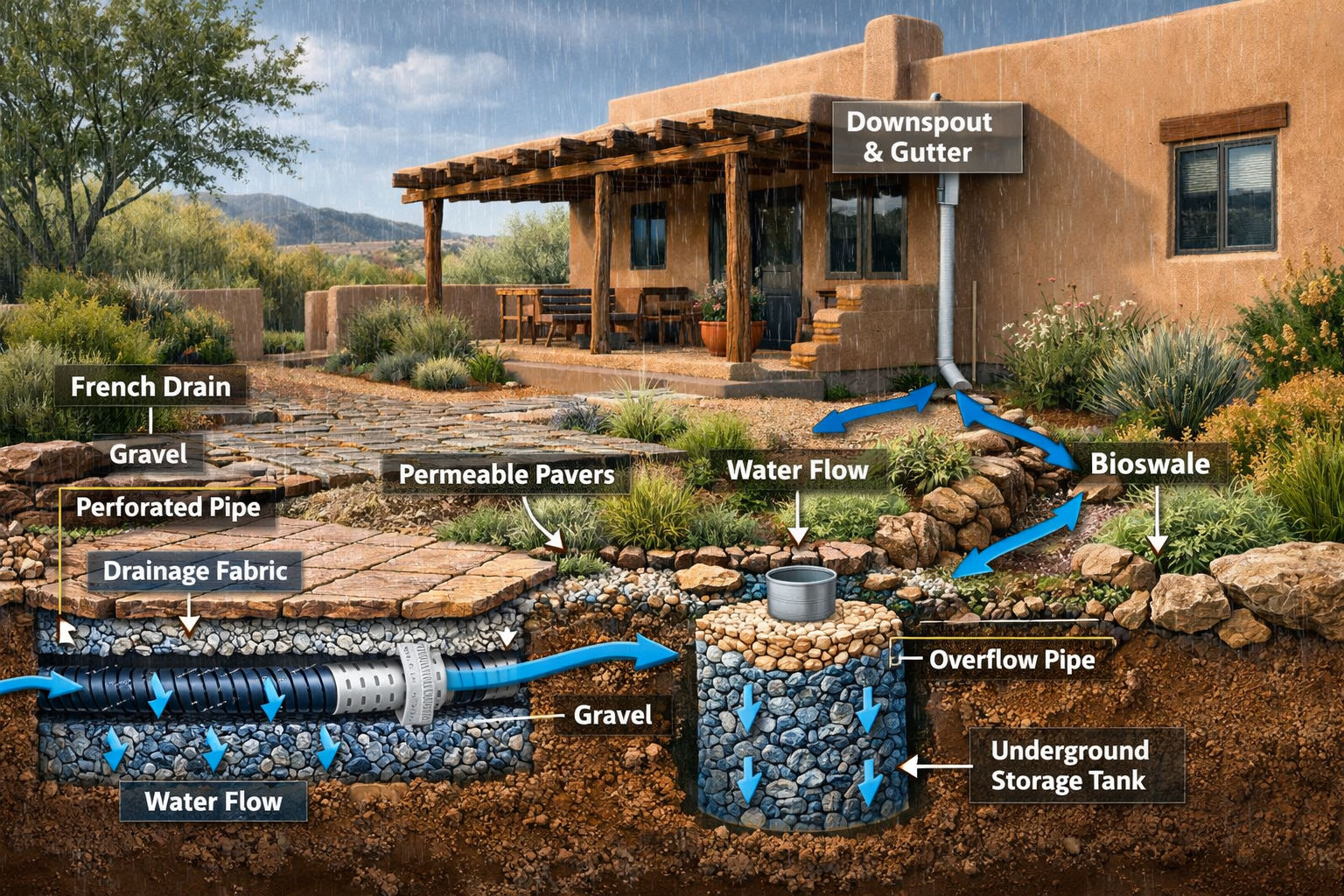
Essential Drainage Solutions for Monsoon Landscaping New Mexico
Effective drainage is the foundation of monsoon-proof landscaping. Water needs somewhere to go when it can't soak into hard-packed desert soil.
French Drains and Dry Wells
French drains are underground channels filled with gravel and perforated pipe. They collect surface water and direct it away from your home's foundation. In New Mexico's clay-heavy soils, French drains prevent water from pooling around structures.
Dry wells work with French drains to create complete drainage systems. These underground chambers store excess water temporarily, allowing it to slowly seep into surrounding soil after storms pass.
Installation costs typically run:
- French drains: $20-30 per linear foot
- Dry wells: $300-800 per unit
- Professional installation recommended for proper grading
Bioswales and Natural Drainage
Bioswales are shallow channels planted with native grasses and shrubs. They slow water flow and filter runoff naturally. In Albuquerque's foothills, bioswales prevent erosion while adding attractive landscape features.
Native bunch grasses like blue grama and buffalo grass work well in bioswales. Their deep root systems hold soil in place during heavy rains.
Permeable Hardscaping
Traditional concrete and asphalt create runoff problems during monsoons. Permeable alternatives allow water to soak through instead of running off.
Effective permeable materials:
- Decomposed granite pathways
- Flagstone with gravel joints
- Permeable pavers with sand gaps
- Gravel driveways and patios
These materials cost 10-20% more upfront but prevent expensive drainage problems later. Find the right landscaper for your yard who understands local building codes for permeable surfaces.
Wind and Hail-Resistant Plant Selection
Monsoon storms bring 60+ mph winds and golf ball-sized hail. Plants that survive these conditions share common characteristics: flexible stems, small leaves, and deep root systems.
Native Plants That Handle Extreme Weather
Trees for wind resistance:
- Desert willow: Flexible branches bend without breaking
- Palo verde: Small leaves reduce wind resistance
- Mesquite: Deep taproot anchors against strong winds
Shrubs that bounce back:
- Fourwing saltbush: Recovers quickly from hail damage
- Apache plume: Flexible stems resist wind damage
- Barberry: Dense branching protects inner growth
Grasses and groundcover:
- Blue grama: Lies flat during storms, springs back after
- Creeping mahonia: Low profile avoids wind damage
- Desert zinnia: Self-seeding replaces storm losses
Protecting Existing Plants
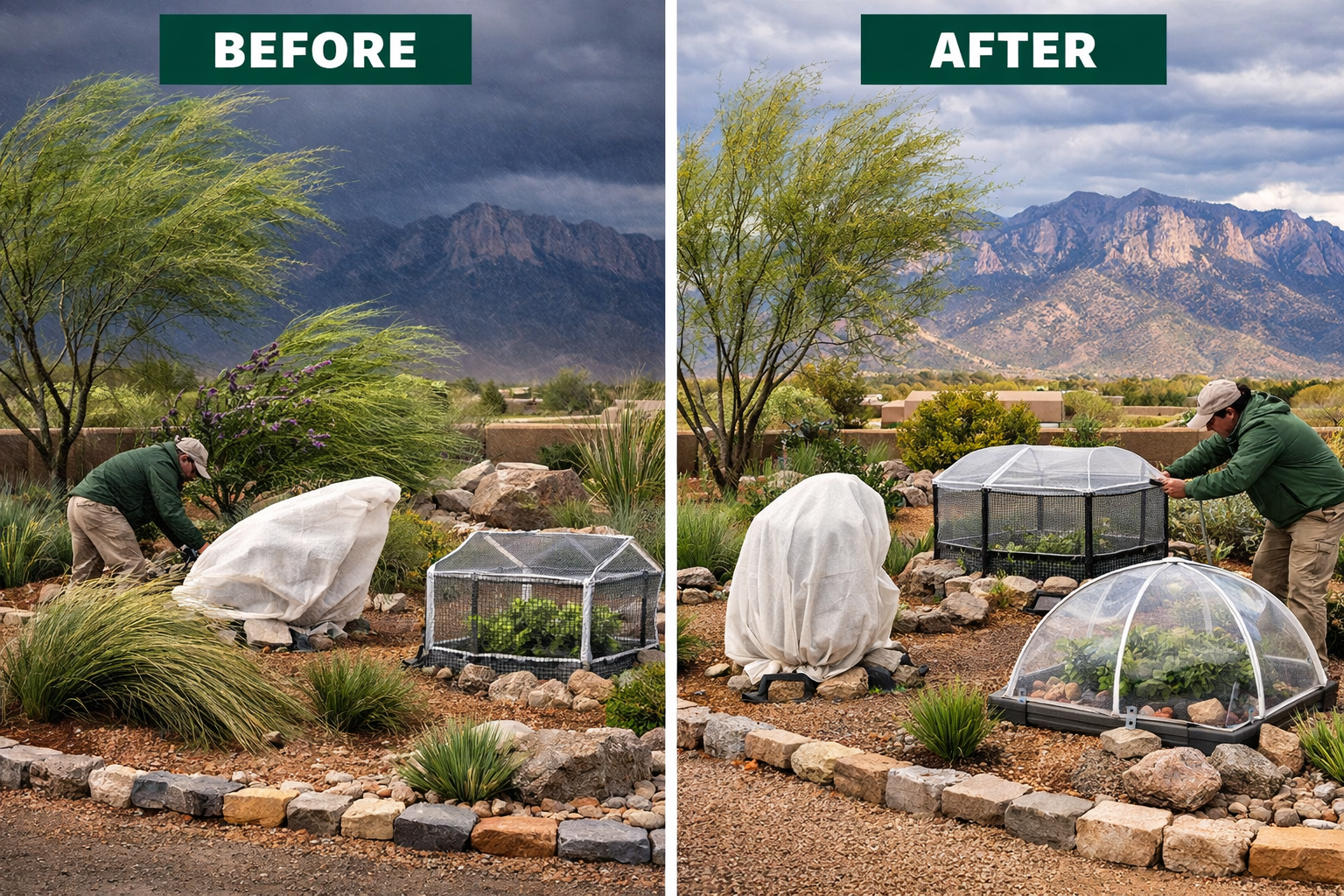
Not every plant in your landscape needs to be native. You can protect more delicate plants with smart placement and temporary coverings.
Hail protection strategies:
- Install shade cloth during hail warnings
- Use overturned buckets for small plants
- Position tender plants near walls or under eaves
- Plant in clusters for mutual protection
Wind protection methods:
- Stake young trees properly (loose ties that allow movement)
- Prune dead branches before monsoon season
- Avoid top-heavy plantings in exposed areas
- Use windbreaks of native shrubs
Lightning-Safe Landscape Design
New Mexico leads the nation in lightning strikes per square mile. Landscape design should minimize lightning risks around your home.
Lightning safety guidelines:
- Avoid tall, isolated trees near structures
- Keep metal features (arbors, fences) away from high-traffic areas
- Install proper grounding for irrigation systems
- Choose shorter plant varieties in open areas
Licensed, insured, and reviewed professionals know local lightning safety codes. They design landscapes that look great while keeping your family safe.
Post-Monsoon Cleanup and Recovery
Even well-designed landscapes need attention after severe storms. Quick action prevents minor damage from becoming major problems.
Immediate Storm Damage Assessment
Check these areas first:
- Drainage systems for clogs or damage
- Trees for broken branches or root exposure
- Hardscaping for cracks or settling
- Irrigation lines for breaks or disconnections
Document damage with photos before cleanup begins. Insurance claims require clear evidence of storm-related problems.
Soil and Plant Recovery
Monsoon rains compact soil and wash away nutrients. Fall is the perfect time to improve soil conditions before winter dormancy.
Post-monsoon soil care:
- Add compost to improve drainage and nutrition
- Aerate compacted areas with a garden fork
- Reseed damaged lawn areas with cool-season grasses
- Mulch around plants to retain moisture and prevent erosion
Plant recovery steps:
- Prune damaged branches cleanly to prevent disease
- Replace plants that didn't survive storm damage
- Divide and relocate plants in poorly draining areas
- Apply balanced fertilizer to support recovery growth
Preparing for Next Year
Use lessons learned from each monsoon season to improve your landscape's storm resistance.
Annual preparation tasks:
- Clean gutters and downspouts before July
- Inspect and repair drainage systems
- Prune trees and large shrubs in late spring
- Stock up on plant protection materials
Real reviews from real homeowners show that proactive maintenance costs far less than emergency repairs. Know who you're letting into your yard by checking licenses and insurance before hiring help.
FAQ
When is New Mexico's monsoon season?
Monsoon season typically runs from July through September, with peak activity in July and August. Some years see storms extending into early October.
What plants survive hail damage best?
Native plants with small leaves and flexible stems handle hail better than large-leafed exotics. Desert willow, apache plume, and native grasses recover quickly from hail damage.
How much does professional drainage installation cost?
French drains cost $20-30 per linear foot installed. Dry wells range from $300-800 each. Complex drainage projects can cost $2,000-5,000 for average residential properties.
Can I install monsoon landscaping myself?
Simple projects like mulching and plant selection work for DIY. Drainage systems require proper grading and may need permits. We verify so you don't have to - check contractor licenses before hiring.
How do I protect my garden from flash floods?
Raise planting beds 6-12 inches above grade. Install French drains around garden areas. Choose plants that tolerate both drought and temporary flooding.
What's the biggest monsoon landscaping mistake homeowners make?
Ignoring drainage until problems occur. Proper drainage prevents most monsoon damage but requires planning before storm season arrives.
Conclusion
Monsoon-proof landscaping protects your property investment while creating beautiful outdoor spaces that work with New Mexico landscaping directory's challenging climate. The key is understanding how water moves across your property and choosing plants that bend without breaking.
Start with drainage solutions that direct water safely away from structures. Choose native plants that have evolved to handle extreme weather. Plan protection strategies for plants you want to keep but aren't naturally storm-resistant.
From basic lawn care to full backyard transformations, the right professional makes all the difference. Local pros with local knowledge understand soil conditions, drainage requirements, and plant selections that work in your specific area.
Don't wait until the next hail storm to discover your landscape's weak points. Cost guides that actually tell you what things cost help you budget for improvements that prevent expensive damage later.
Liked this guide? Follow us on Google Search
Related Directory Pages
- Browse New Mexico Landscaping Pros
- Albuquerque Landscaping Services
- Browse Landscaping Services in New Mexico
- Also Read: Monsoon Season Landscaping Prep for Arizona Yards
- Also Read: Best Desert Landscaping Ideas for Phoenix Homes
- Also Read: Flagstaff Landscaping: Mountain vs Desert Style
- Also Read: Tucson Landscaping: Native Plants & Desert Design
- Search New Mexico Landscapers
Find a Landscaper Near You
Browse NM landscaping professionals on LandscapeProsDirectory.
Search Landscapers