
California Xeriscaping: How to Save Water and Money
Learn how California xeriscaping cuts water bills 60-80%. Get rebate info, native plant guides, and costs for drought-resistant landscaping across CA.
California homeowners spent over $2.8 billion on water bills in 2025, with landscape irrigation accounting for nearly 50% of residential water use. Meanwhile, California xeriscaping can cut outdoor water consumption by 60-80% while reducing maintenance costs and increasing property values.
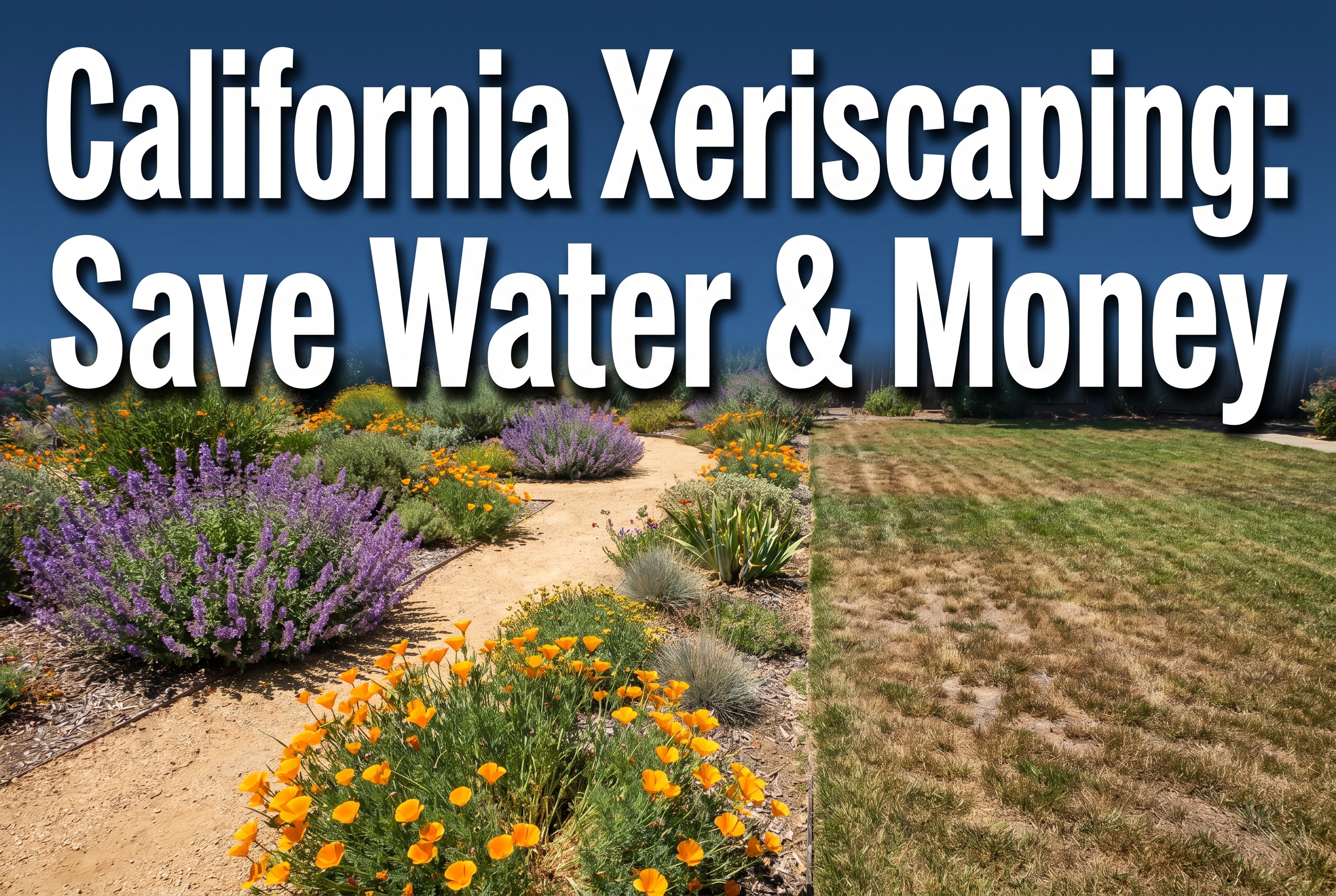
California xeriscaping transforms water-hungry lawns into beautiful, drought-resistant landscapes using native plants and efficient irrigation. This approach saves money on water bills, reduces maintenance time, and helps homeowners comply with increasingly strict water regulations across the state.
Key Takeaways
- California xeriscaping can reduce outdoor water use by 60-80% and save homeowners $1,000-3,000 annually
- Turf replacement rebates range from $1-3 per square foot depending on your water district
- MWELO compliance is required for new construction and major renovations in most California cities
- Native plants like California poppy, manzanita, and ceanothus thrive without supplemental watering after establishment
- Smart irrigation controllers are now required by law in many California municipalities
Table of Contents
- Understanding California's Water Crisis and Regulations
- California Xeriscaping Rebates and Financial Incentives
- Essential Plants for California Xeriscaping Success
- Smart Irrigation and Hardscape Requirements
- Step-by-Step California Xeriscaping Conversion Process
- Cost Analysis: Xeriscaping vs Traditional Landscaping
- FAQ
- Conclusion
Understanding California's Water Crisis and Regulations
California landscaping directory has experienced severe drought conditions for over two decades. The state's water reserves hit historic lows in 2022, prompting emergency restrictions that remain in effect across most regions in 2026.
Current Water Restrictions by Region:
Los Angeles limits outdoor watering to two days per week. San Diego restricts irrigation to specific morning hours. Sacramento prohibits watering during peak afternoon temperatures. Riverside County maintains Stage 2 drought restrictions with mandatory conservation targets.
MWELO Compliance Requirements
The Model Water Efficient Landscape Ordinance (MWELO) sets strict standards for new landscapes and renovations. Properties over 500 square feet of landscaping must meet specific water budgets calculated using local climate data.
MWELO mandates include:
- Maximum water allowance of 55% of reference evapotranspiration
- Soil moisture monitoring systems for large installations
- Separate irrigation zones for different plant water needs
- Mulch requirements to reduce evaporation
- Prohibition of spray irrigation on slopes over 25%
Cities like San Francisco, Los Angeles, and San Diego enforce MWELO through building permits. Violations result in fines ranging from $500-2,500. Your yard deserves someone who knows these regulations inside and out.
California Xeriscaping Rebates and Financial Incentives
Water districts across California offer substantial rebates for turf removal and drought-resistant landscaping. These programs help offset conversion costs while supporting long-term water conservation goals.
Major Rebate Programs by Region
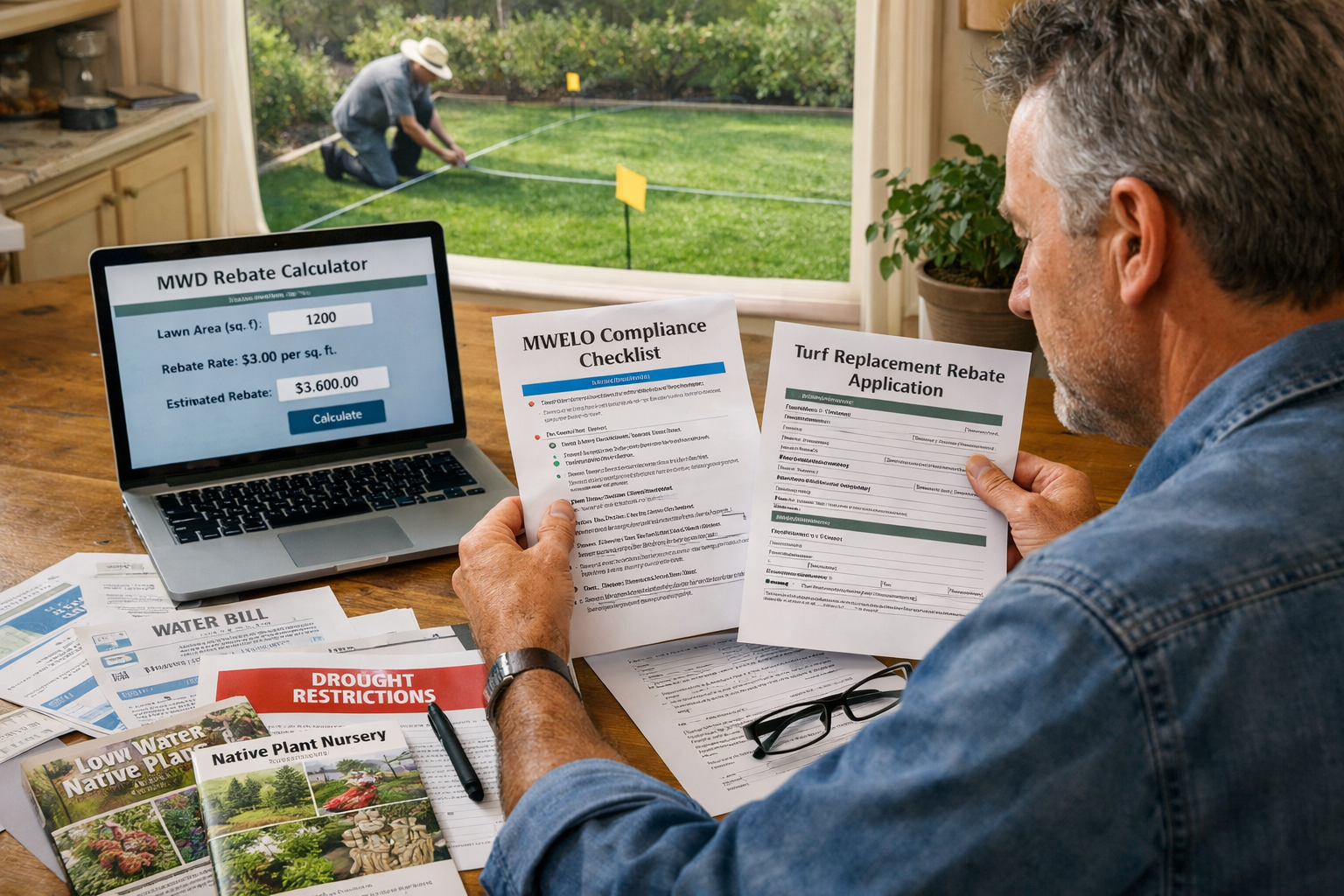
Metropolitan Water District (MWD) serves 19 million residents across Southern California. Their turf replacement program offers $2 per square foot for grass removal, up to 5,000 square feet per property. The program requires pre-approval and certified installation.
Los Angeles Department of Water and Power (LADWP) provides $3 per square foot for residential customers, with a maximum rebate of $6,000. Commercial properties qualify for up to $3.75 per square foot. LADWP requires a two-year maintenance period with periodic inspections.
San Diego County Water Authority offers tiered rebates based on water savings potential. Residential customers receive $1.50-2.50 per square foot depending on the replacement plants selected. The program prioritizes native species and requires drip irrigation installation.
Sacramento Municipal Utility District combines water and energy rebates. Customers receive $1 per square foot for turf removal plus additional incentives for shade trees that reduce cooling costs.
Application Requirements and Deadlines
Most rebate programs require pre-approval with detailed landscape plans. Applications must include irrigation system modifications, plant schedules, and contractor licensing verification. We verify so you don't have to - but make sure your landscaper understands these requirements before starting work.
Processing times range from 4-8 weeks during peak season. Submit applications between October and February for fastest approval. Many programs have annual funding limits and close when budgets are exhausted.
Essential Plants for California Xeriscaping Success
California's Mediterranean climate supports diverse native plants that require minimal water once established. These species evolved to survive dry summers and wet winters without supplemental irrigation.
Top Performing Native Plants
California Poppy (Eschscholzia californica) serves as the state flower and thrives in poor soils. These bright orange annuals self-seed readily and bloom from spring through fall. They require no summer water and attract beneficial pollinators.
Manzanita (Arctostaphylos species) provides year-round structure with evergreen foliage and attractive bark. Different varieties range from groundcovers to small trees. Manzanitas prefer well-drained soil and become completely drought-tolerant after two years.
Ceanothus (California Lilac) offers spectacular spring blooms in blue, purple, or white. These shrubs fix nitrogen in the soil and support native wildlife. Most species require no summer irrigation and adapt to various soil conditions.
California Sage (Artemisia californica) creates silvery-gray texture with aromatic foliage. This perennial shrub tolerates coastal conditions and inland heat equally well. Sage requires minimal maintenance and provides habitat for native birds.
Plant Selection by Climate Zone
Coastal areas from San Francisco to San Diego benefit from marine influence. Plants like seaside daisy, coast live oak, and toyon perform exceptionally well. These species handle salt spray and summer fog.
Inland valleys including Sacramento and Riverside experience greater temperature extremes. Heat-tolerant options include desert willow, palo verde, and brittlebush. These plants handle 100-degree summers without stress.
Foothill regions support chaparral species like mountain mahogany, redbud, and wild buckwheat. These plants adapt to rocky soils and seasonal moisture patterns.
Smart Irrigation and Hardscape Requirements
California xeriscaping relies on efficient water delivery systems and permeable surfaces that reduce runoff. State regulations increasingly mandate smart irrigation technology for new installations.
Smart Controller Requirements
Assembly Bill 1881 requires weather-based irrigation controllers for most commercial properties. Many cities extend these requirements to residential installations over 1,000 square feet.
Smart controllers adjust watering schedules based on:
- Real-time weather data
- Soil moisture sensors
- Plant water requirements
- Seasonal growth patterns
Popular controller brands include Rain Bird, Hunter, and Toro. Professional installation ensures proper programming and sensor placement. Find the right landscaper for your yard who understands these systems.
Drip Irrigation Design
Drip systems deliver water directly to plant root zones with 90% efficiency compared to 60% for spray irrigation. California water codes increasingly require drip irrigation for new landscapes.
System components include:
- Pressure-compensating emitters
- Self-flushing dripline
- Filtration and pressure regulation
- Separate zones for different plant needs
Proper design prevents clogging and ensures uniform water distribution. Professional installation typically costs $3-5 per square foot but qualifies for utility rebates.
Permeable Hardscape Options
Permeable surfaces reduce stormwater runoff while creating attractive outdoor spaces. California's Sustainable Groundwater Management Act encourages infiltration on private property.
Decomposed granite provides natural-looking pathways and patios. This material allows water penetration while remaining stable for foot traffic. Installation costs $3-6 per square foot including base preparation.
Permeable pavers offer more formal aesthetics with excellent drainage. Interlocking concrete units allow grass or gravel in the joints. Expect costs of $8-15 per square foot installed.
Gravel mulch serves dual purposes as ground cover and drainage medium. Different sizes and colors complement various plant palettes. Gravel costs $2-4 per square foot including landscape fabric.
Step-by-Step California Xeriscaping Conversion Process
Converting traditional landscapes to California xeriscaping requires careful planning and proper execution. Local pros local knowledge makes the difference between success and costly mistakes.
Phase 1: Planning and Permits
Start with a professional landscape assessment. Qualified designers understand MWELO requirements, rebate programs, and plant selection for your specific microclimate. What to ask before you hire a landscaper includes their experience with xeriscaping and knowledge of local regulations.
Obtain necessary permits for irrigation modifications and hardscape installation. Most cities require permits for new irrigation systems or significant landscape changes. Processing takes 2-4 weeks in most jurisdictions.
Apply for rebate programs before beginning work. Pre-approval is mandatory for most utility incentives. Submit detailed plans showing existing conditions, proposed changes, and water budget calculations.
Phase 2: Infrastructure Installation
Remove existing turf using mechanical methods or sheet mulching. Mechanical removal provides immediate results but requires soil amendment. Sheet mulching takes longer but improves soil organic matter.
Install new irrigation systems before planting. Drip irrigation requires careful layout to ensure adequate coverage. Professional installation prevents costly repairs and ensures rebate compliance.
Prepare planting areas with appropriate soil amendments. Most native plants prefer well-drained soil with minimal organic matter. Avoid over-amending clay soils that retain excess moisture.
Phase 3: Planting and Establishment
Plant during optimal seasons for your region. Fall planting allows root establishment before summer heat. Spring installation works in coastal areas with mild summers.
Proper planting techniques include:
- Digging holes no deeper than the root ball
- Backfilling with native soil
- Mulching to retain moisture and suppress weeds
- Initial watering to settle soil around roots
Establish watering schedules for plant establishment. Most natives require regular irrigation for the first year, then gradually reduce frequency. Deep, infrequent watering encourages drought tolerance.
Cost Analysis: Xeriscaping vs Traditional Landscaping
California xeriscaping requires higher upfront investment but delivers significant long-term savings through reduced water bills and maintenance costs.
Initial Installation Costs
Traditional lawn installation costs $2-4 per square foot for sod, irrigation, and soil preparation. A typical 2,000 square foot front yard costs $4,000-8,000 to install.
California xeriscaping ranges from $4-8 per square foot depending on plant selection and hardscape elements. The same 2,000 square foot area costs $8,000-16,000 before rebates.
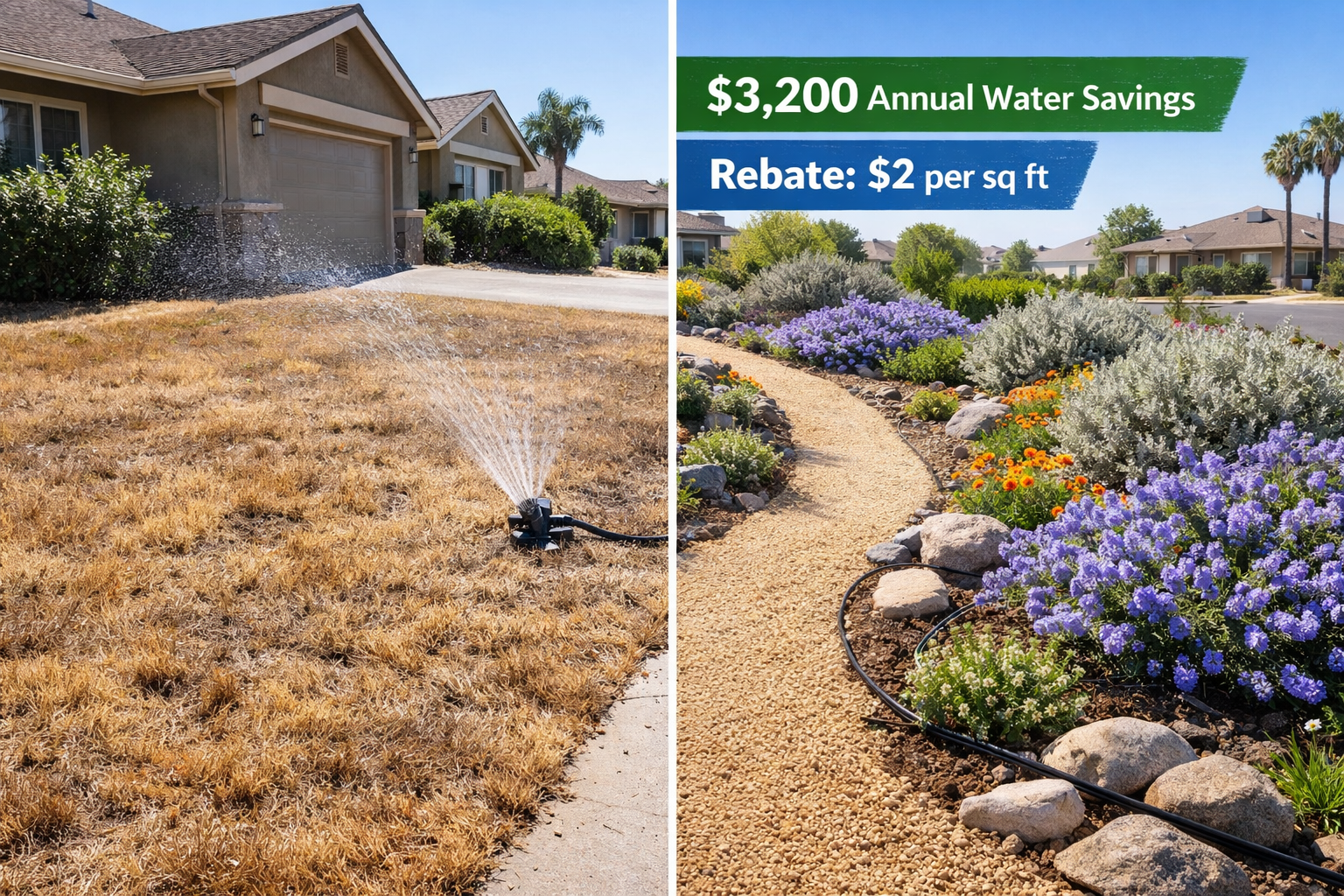
Rebate programs significantly reduce net costs. A $2 per square foot rebate saves $4,000 on a 2,000 square foot conversion. Net xeriscaping costs often equal or exceed traditional installation by only 20-30%.
Annual Operating Costs
Water expenses represent the largest ongoing cost difference. Traditional lawns consume 40-60 inches of water annually in most California climates. At current rates, this equals $1,200-2,400 per year for a typical residential landscape.
Xeriscaped gardens use 60-80% less water after establishment. Annual water costs drop to $300-600 for the same area. This saves $900-1,800 annually compared to traditional landscaping.
Maintenance costs also favor xeriscaping. Native plants require minimal fertilization, pest control, or pruning. Annual maintenance averages $500-800 compared to $1,200-2,000 for traditional landscapes.
Long-Term Financial Benefits
Property value increases of 5-15% are common with professional xeriscaping. Drought-tolerant landscapes appeal to environmentally conscious buyers and reduce ongoing ownership costs.
Payback periods typically range from 3-5 years when including water savings, reduced maintenance, and rebate programs. Properties in high-cost water districts see faster payback.
FAQ
How much water does California xeriscaping actually save?
Well-designed xeriscaping reduces outdoor water consumption by 60-80% compared to traditional lawns. A typical residential conversion saves 50,000-100,000 gallons annually, depending on climate zone and original landscape size.
Do I need permits for California xeriscaping conversion?
Most cities require permits for new irrigation systems or significant hardscape installation. Simple plant replacements typically don't need permits. Check with your local building department before starting work.
Which rebate programs offer the highest payouts?
LADWP currently offers the highest residential rebates at $3 per square foot. MWD provides $2 per square foot across Southern California. San Diego County ranges from $1.50-2.50 depending on plant selection.
How long do native plants take to establish?
Most California natives require 1-2 years to become fully drought-tolerant. Provide regular irrigation during the first growing season, then gradually reduce watering frequency. Deep, weekly watering works better than frequent shallow irrigation.
Can I install California xeriscaping myself?
Simple plant installations are DIY-friendly for experienced gardeners. However, irrigation system modifications and rebate compliance often require professional expertise. Licensed insured and reviewed contractors ensure proper installation and warranty coverage.
What maintenance does xeriscaping require?
Established xeriscapes need minimal maintenance compared to traditional lawns. Annual tasks include pruning dead growth, refreshing mulch, and checking irrigation systems. Most homeowners spend 2-4 hours monthly on maintenance.
Conclusion
California xeriscaping offers a practical solution to rising water costs and increasing drought restrictions. Homeowners can save thousands annually while creating beautiful, low-maintenance landscapes that support local ecosystems.
Success requires proper planning, appropriate plant selection, and professional installation of efficient irrigation systems. Rebate programs significantly offset initial costs, making xeriscaping financially attractive for most properties. Explore our California landscaping directory to find licensed pros.
From basic lawn care to full backyard transformations, the right landscaping professional makes all the difference. Research contractors carefully, verify licensing and insurance, and check references from recent xeriscaping projects. The directory built for homeowners not advertisers - find qualified professionals who understand California's unique requirements and regulations.
Start your xeriscaping journey by calculating potential water savings and researching available rebates in your area. Find your next landscaper here and transform your water-hungry lawn into a sustainable, beautiful landscape that saves money every month.
Liked this guide? Follow us on Google Search
Related Directory Pages
- Browse California Landscaping Pros
- San Diego Landscaping Services
- Browse Xeriscaping Services in California
- Also Read: Complete Guide to Xeriscaping in Arizona
- Also Read: Nevada Xeriscaping: Complete Guide to Desert Landscaping
- Also Read: New Mexico Xeriscaping: Water-Wise Yards That Thrive
- Also Read: Utah Localscapes: Water-Wise Yard Design That Works
- Search California Landscapers
Find a Landscaper Near You
Browse CA landscaping professionals on LandscapeProsDirectory.
Search Landscapers