
Utah Localscapes: Water-Wise Yard Design That Works
Complete guide to Utah Localscapes water-wise landscaping. Learn the 5 design principles, rebate programs, and how to find licensed contractors for your project
Utah homeowners waste over 65% of their water on lawns and landscapes, despite living in America's second-driest state. This shocking disconnect between water scarcity and yard care habits has prompted Utah to launch one of the nation's most comprehensive water-wise landscaping programs: Utah Localscapes.
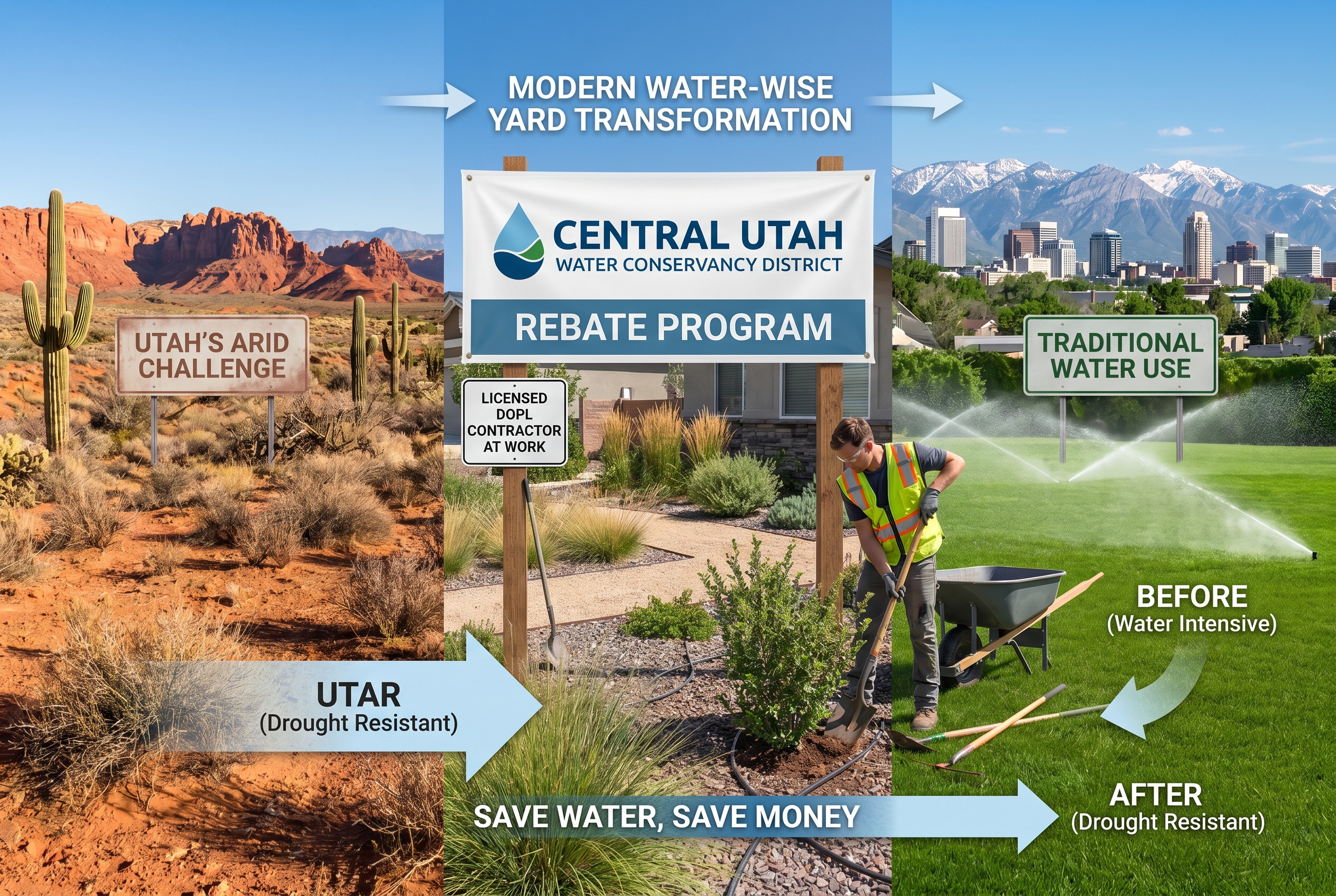
Utah Localscapes isn't just another landscaping trend. It's a state-backed program that helps homeowners create beautiful, functional yards while cutting water use by up to 60%. The program combines proven design principles with financial incentives and contractor expertise to transform water-hungry lawns into sustainable outdoor spaces.
Your yard deserves someone who knows what they're doing when it comes to water-wise design. The right landscaper understands Utah's unique climate challenges and can navigate the rebate programs that make these projects affordable.
Key Takeaways
- Utah Localscapes follows five core design principles that reduce water use while maintaining yard functionality
- Homeowners can receive substantial rebates through the Central Utah Water Conservancy District for qualifying projects
- Utah's alkaline soil and extreme temperature swings require specific plant selections and soil amendments
- Licensed DOPL contractors ensure proper installation and warranty coverage for water-wise landscaping projects
- Lawn conversion projects can cut outdoor water use by 40-60% while reducing maintenance costs
Table of Contents
- What Is Utah Localscapes?
- The Five Utah Localscapes Design Principles
- Utah's Water Paradox: Scarcity Meets Low Rates
- Central Utah Water Conservancy District Rebates
- Climate Considerations Across Utah
- Managing Utah's Alkaline Soil Challenge
- Finding Licensed Utah Localscapes Contractors
- Lawn Conversion Options That Work
- FAQ
- Conclusion
What Is Utah Localscapes?
Utah landscaping directory Localscapes is the state's official water-wise landscaping program, developed by Utah State University Extension in partnership with water districts across the state. The program provides homeowners with design guidelines, plant lists, and contractor networks to create landscapes that thrive in Utah's arid climate.
The program emerged from a simple reality: traditional landscaping methods don't work in Utah's desert environment. Homeowners were spending thousands on irrigation systems and water bills to maintain grass that wasn't meant to grow in a place that receives less than 15 inches of annual precipitation.
Core Program Goals:
- Reduce outdoor water use by 40-60%
- Create functional outdoor living spaces
- Use plants adapted to Utah's climate
- Provide year-round visual interest
- Support local ecosystems
Utah Localscapes differs from generic xeriscaping because it focuses on creating usable outdoor spaces, not just low-water gardens. The program recognizes that Utah families need yards for recreation, entertaining, and relaxation.
The Five Utah Localscapes Design Principles
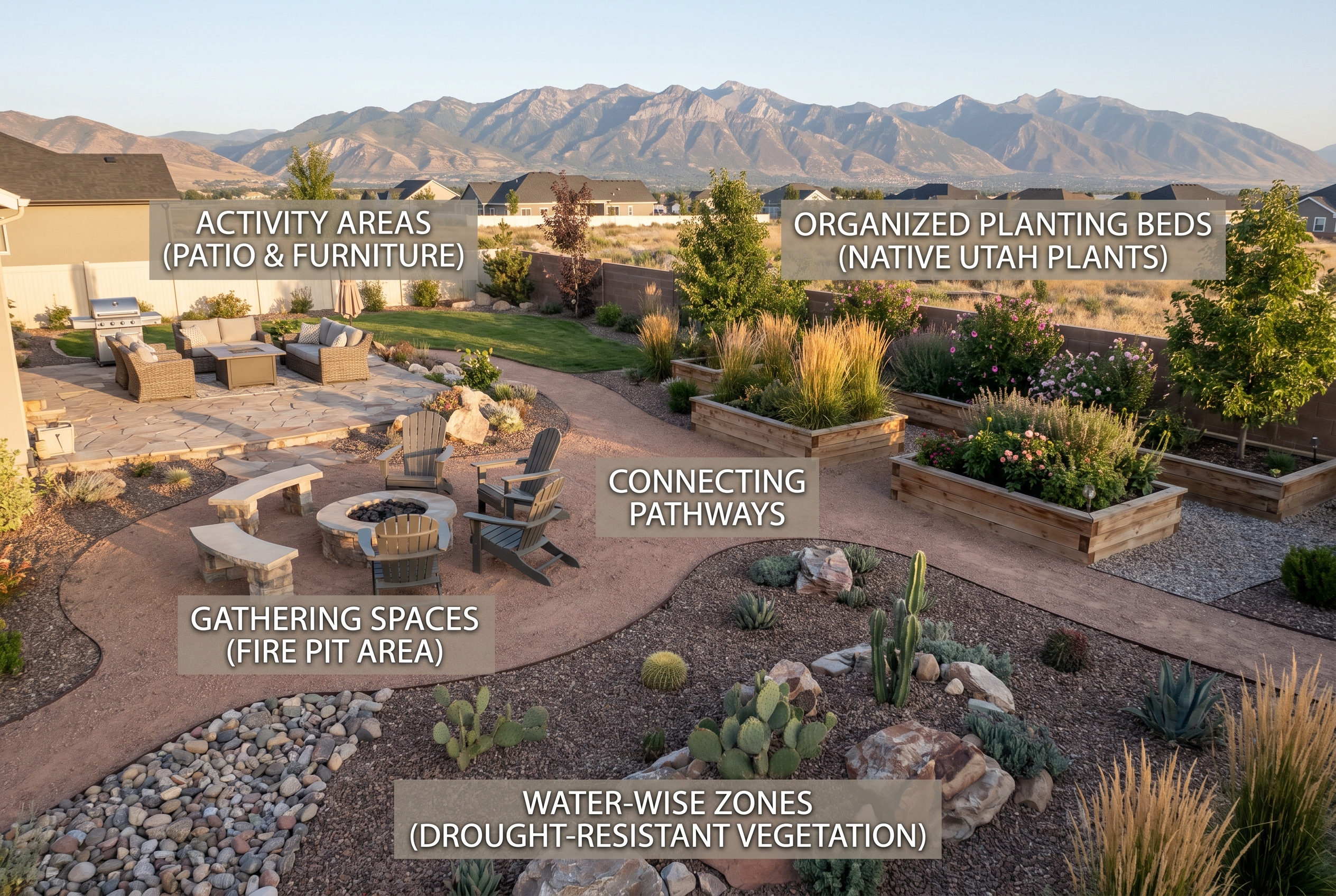
Every successful Utah Localscapes project follows five core design principles. These aren't arbitrary rules - they're based on decades of research into what works in Utah's unique environment.
1. Activity Areas
Activity areas are the workhorses of your yard. These spaces handle heavy foot traffic and regular use. Think patios, decks, sports courts, and play areas.
Best Materials for Utah:
- Flagstone (handles freeze-thaw cycles)
- Concrete pavers (local availability)
- Decomposed granite (affordable, permeable)
- Artificial turf (for play areas only)
Activity areas should cover 20-30% of your total landscape. This might seem like a lot, but remember: hardscaping requires zero water and minimal maintenance.
2. Gathering Areas
Gathering areas create focal points where people naturally congregate. Fire pits, outdoor kitchens, and seating areas fall into this category.
These spaces need some softening elements like container plants or small planting beds, but the focus stays on functionality. A well-designed gathering area extends your living space outdoors and works year-round in Utah's climate.
3. Planting Beds
Utah Localscapes planting beds use water-wise plants grouped by water needs. This is called hydrozoning - putting thirsty plants together and drought-tolerant plants together.
Recommended Plant Categories:
- Oasis Zone: Higher water use, limited to 10% of landscape
- Transition Zone: Moderate water use, 20-30% of landscape
- Xeric Zone: Low water use, 40-60% of landscape
Native and adapted plants form the backbone of Utah Localscapes planting beds. These plants evolved to handle Utah's alkaline soil, temperature swings, and limited precipitation.
4. Water-Wise Zones
Water-wise zones are large areas planted exclusively with drought-tolerant plants. These zones provide visual impact with minimal water input.
Successful water-wise zones layer plants by height and bloom time. Ornamental grasses provide structure, while flowering perennials add seasonal color. Shrubs create backdrop and winter interest.
5. Paths and Transitions
Paths connect different areas while managing foot traffic. They also create visual flow and prevent soil compaction in planting beds.
Path Materials That Work in Utah:
- Crushed granite (natural appearance)
- Stepping stones (handles snow removal)
- Mulched trails (temporary, low-cost)
- Permeable pavers (manages runoff)
Paths should feel natural, not forced. The best Utah Localscapes designs make paths seem inevitable rather than imposed.
Utah's Water Paradox: Scarcity Meets Low Rates
Utah faces a unique challenge: it's the second-driest state in the nation, but residents pay some of the lowest water rates in the country. This pricing disconnect encourages wasteful water use just when conservation matters most.
The Numbers Tell the Story:
- Utah receives 13 inches of annual precipitation (national average: 30 inches)
- Average Utah water bill: $35/month (national average: $70/month)
- Outdoor water use: 65% of residential consumption
- Population growth: 18% increase from 2010-2020
Cities across Utah are waking up to this reality. Salt Lake City has implemented tiered pricing that penalizes heavy users. Provo offers rebates for lawn removal. St. George restricts watering schedules during peak summer months.
The low water rates won't last forever. As demand increases and supply remains limited, Utah water costs will inevitably rise. Homeowners who invest in Utah Localscapes now will avoid future rate shocks while enjoying immediate maintenance savings.
Central Utah Water Conservancy District Rebates
The Central Utah Water Conservancy District offers substantial rebates for Utah Localscapes projects. These incentives can cover 30-50% of project costs, making water-wise landscaping affordable for most homeowners.
Current Rebate Programs (2026):
| Project Type | Rebate Amount | Maximum |
|---|---|---|
| Lawn Removal | $1.50/sq ft | $2,000 |
| Drip Irrigation | $0.50/sq ft | $500 |
| Rain Barrels | 50% of cost | $200 |
| Smart Controllers | $100 each | $300 |
| Mulch Installation | $0.25/sq ft | $300 |
Rebate Requirements:
- Use approved plant list
- Install by licensed contractor
- Pass final inspection
- Maintain for two years
The rebate process takes 4-6 weeks after project completion. Homeowners submit photos, receipts, and contractor certificates through the district's online portal.
Know who you're letting into your yard when choosing contractors for rebate projects. The district maintains a list of approved contractors who understand program requirements and can guarantee rebate eligibility.
Climate Considerations Across Utah
Utah's diverse geography creates distinct climate zones that affect Utah Localscapes design. What works in Park City won't necessarily succeed in St. George landscaping services.
Wasatch Front (Salt Lake City, Provo, Ogden)
The Wasatch Front enjoys a semi-arid climate with cold winters and hot summers. This zone gets the most precipitation and has the longest growing season.
Design Considerations:
- Winter temperatures drop to -10°F
- Summer highs reach 100°F
- 15-20 inches annual precipitation
- Alkaline clay soil common
- Inversion layer affects air quality
Recommended plants include native grasses like blue grama and buffalo grass, plus adapted perennials such as blanket flower and penstemon.
Southern Utah (St. George)
St. George sits in Utah's desert region with hot summers and mild winters. This climate allows for more diverse plant palettes but demands careful water management.
Design Considerations:
- Winter lows rarely below 20°F
- Summer highs exceed 110°F
- 8-10 inches annual precipitation
- Sandy, well-draining soil
- Intense UV exposure
Desert-adapted plants thrive here: agave, yucca, desert willow, and palo verde trees create stunning low-water landscapes.
Mountain Regions (Park City)
High-elevation areas face short growing seasons and extreme temperature swings. Utah Localscapes projects here focus on hardy plants and season extension techniques.
Design Considerations:
- Winter temperatures to -20°F
- Short frost-free season (90-120 days)
- Higher precipitation (20+ inches)
- Rocky, well-draining soil
- Intense UV at elevation
Mountain-adapted plants include native sedums, alpine grasses, and high-elevation shrubs like serviceberry and oakbrush.
Managing Utah's Alkaline Soil Challenge
Utah's alkaline soil presents unique challenges for Utah Localscapes projects. Most of the state has soil pH between 7.5-8.5, which limits plant choices and affects nutrient availability.
Common Soil Issues:
- High pH locks up iron and other nutrients
- Clay soil drains poorly
- Caliche layers block root penetration
- Salt buildup from irrigation
- Compaction from construction
Soil Amendment Strategies:
Organic Matter Addition: Compost improves soil structure and gradually lowers pH. Apply 2-3 inches annually for the first three years.
Sulfur Application: Elemental sulfur slowly acidifies soil. Apply 1-2 pounds per 100 square feet in fall for spring planting.
Gypsum Treatment: Gypsum improves clay soil drainage without changing pH. Particularly useful in areas with sodium buildup.
Mulching: Organic mulches moderate soil temperature and continue breaking down to improve soil structure.
Professional soil testing reveals specific amendment needs. Utah State University Extension provides comprehensive soil testing services that include pH, nutrient levels, and organic matter content.
Licensed contractors understand Utah soil challenges and can recommend appropriate amendments for your specific site conditions. This expertise prevents costly mistakes and ensures plant establishment success.
Finding Licensed Utah Localscapes Contractors
Not all landscapers understand Utah Localscapes principles or qualify for rebate programs. The state requires contractors to hold proper licenses through the Division of Occupational and Professional Licensing (DOPL).
Required Licenses:
- R400 Landscaping Contractor: For projects over $3,000
- S210 Sprinkler System Contractor: For irrigation work
- General Contractor: For hardscaping and structures
What to Ask Before You Hire a Landscaper:
- Are you licensed with DOPL?
- Do you carry liability insurance?
- Have you completed Utah Localscapes training?
- Can you guarantee rebate eligibility?
- What's your warranty policy?
Red Flags to Avoid:
- Door-to-door solicitation
- Cash-only payment requests
- No physical business address
- Pressure for immediate decisions
- Prices significantly below market
Real reviews from real homeowners provide the best contractor insights. Check multiple review platforms and ask for recent project references.
We verify so you don't have to - licensed contractors undergo background checks and maintain insurance requirements. This protects homeowners from liability and ensures quality workmanship.
Lawn Conversion Options That Work
Lawn conversion forms the heart of most Utah Localscapes projects. Traditional Kentucky bluegrass lawns use 2-3 times more water than necessary and require constant maintenance.
Conversion Methods:
Sheet Mulching
Sheet mulching kills existing grass without chemicals or removal. Contractors layer cardboard over grass, then add 4-6 inches of mulch. The process takes 6-12 months but improves soil structure.
Pros: Improves soil, no disposal costs, organic approach
Cons: Slow process, temporary appearance issues
Cost: $2-4 per square foot
Sod Removal
Physical sod removal provides immediate results and allows for precise grading. Removed sod can be composted or donated.
Pros: Immediate results, precise control, clean appearance
Cons: Higher cost, disposal needed, soil compaction risk
Cost: $3-6 per square foot
Selective Conversion
Many homeowners keep small lawn areas for children or pets while converting the rest to water-wise landscaping.
Recommended Lawn Alternatives:
- Buffalo grass: Native, drought-tolerant, lower maintenance
- Fine fescue: Cool-season, shade-tolerant, less water
- Artificial turf: Zero water, consistent appearance
- Groundcover: Creeping thyme, sedum varieties
Cost guides that actually tell you what things cost: expect lawn conversion projects to range from $8-15 per square foot, including plants, irrigation, and installation. Rebates can reduce this by 30-40%.
FAQ
How much water does Utah Localscapes really save?
Properly designed Utah Localscapes projects reduce outdoor water use by 40-60%. A typical 5,000 square foot yard conversion saves 50,000-75,000 gallons annually.
Can I install Utah Localscapes myself?
Simple projects like plant installation are DIY-friendly, but irrigation design and major grading require professional expertise. Rebate programs typically require licensed contractor installation.
What's the maintenance like compared to traditional landscaping?
Utah Localscapes requires less maintenance once established. Expect 2-3 years for full establishment, then minimal watering, pruning, and seasonal cleanup.
Do Utah Localscapes hurt property values?
Well-designed water-wise landscapes maintain or increase property values. Poor design or installation can hurt values, which is why professional design matters.
How long do Utah Localscapes plants take to establish?
Most perennials and shrubs establish in 1-2 years. Trees may take 3-5 years to reach full drought tolerance. Proper watering during establishment is crucial.
Are there HOA restrictions on Utah Localscapes?
Some HOAs restrict landscaping changes, but Utah law (HB 141) limits HOA authority over water-wise landscaping. Check your CC&Rs and consider working with your HOA on community-wide programs.
Conclusion
Utah Localscapes represents the future of responsible landscaping in the Mountain West. As water becomes scarcer and more expensive, homeowners who embrace water-wise design will enjoy lower bills, less maintenance, and beautiful outdoor spaces that work with Utah's climate instead of fighting it.
The program's success depends on proper design, quality installation, and appropriate plant selection. From basic lawn care to full backyard transformations, licensed professionals ensure projects meet rebate requirements and perform as expected. Explore our Utah landscaping directory to find licensed pros.
Next Steps:
- Assess your current landscape - Calculate water use and identify conversion opportunities
- Research rebate programs - Contact your local water district about available incentives
- Find qualified contractors - Verify licenses and Utah Localscapes training
- Start with high-impact areas - Focus on visible spaces or heavy water users first
- Plan for establishment - Budget for 2-3 years of careful maintenance
Local pros bring local knowledge to Utah Localscapes projects. They understand soil conditions, climate challenges, and rebate requirements that make the difference between success and expensive mistakes.
Find your next landscaper through verified directories that screen for licenses, insurance, and customer satisfaction. Your yard deserves someone who knows what they're doing when it comes to Utah's unique landscaping challenges.
Liked this guide? Follow us on Google Search
Related Directory Pages
- Browse Utah Landscaping Pros
- St. George Landscaping Services
- Browse Xeriscaping Services in Utah
- Also Read: Complete Guide to Xeriscaping in Arizona
- Also Read: California Xeriscaping: How to Save Water and Money
- Also Read: Nevada Xeriscaping: Complete Guide to Desert Landscaping
- Also Read: New Mexico Xeriscaping: Water-Wise Yards That Thrive
- Search Utah Landscapers
Find a Landscaper Near You
Browse UT landscaping professionals on LandscapeProsDirectory.
Search Landscapers