
New Mexico Xeriscaping: Water-Wise Yards That Thrive
Expert guide to New Mexico xeriscaping with native plants, climate zones, licensed contractors, costs, and rebates. Transform your yard into a water-wise oasis.
New Mexico receives just 14 inches of rainfall annually on average, making it the second-driest state in America. Yet many homeowners still struggle with brown lawns and sky-high water bills. New Mexico xeriscaping offers a smarter path forward, creating beautiful yards that work with the Land of Enchantment's natural climate instead of fighting it.
Your yard deserves someone who knows what they're doing when it comes to desert landscaping. The right approach can cut your water usage by 60% while creating outdoor spaces that actually thrive in our unique climate zones.
Key Takeaways
- New Mexico has three distinct climate zones requiring different xeriscaping approaches
- Native plants like piñon, chamisa, and Apache plume reduce water needs by up to 75%
- Licensed contractors must hold CID certification for projects over $7,500
- Water utility rebates can cover 30-50% of xeriscaping installation costs
- Proper design accounts for monsoon seasons, freeze-thaw cycles, and acequia water rights
Table of Contents
- Understanding New Mexico's Climate Zones
- Native Plants That Thrive by Region
- Working with Water Rights and Regulations
- Finding Licensed Xeriscaping Professionals
- Cost Considerations and Available Rebates
- Seasonal Maintenance Requirements
- FAQ
- Conclusion
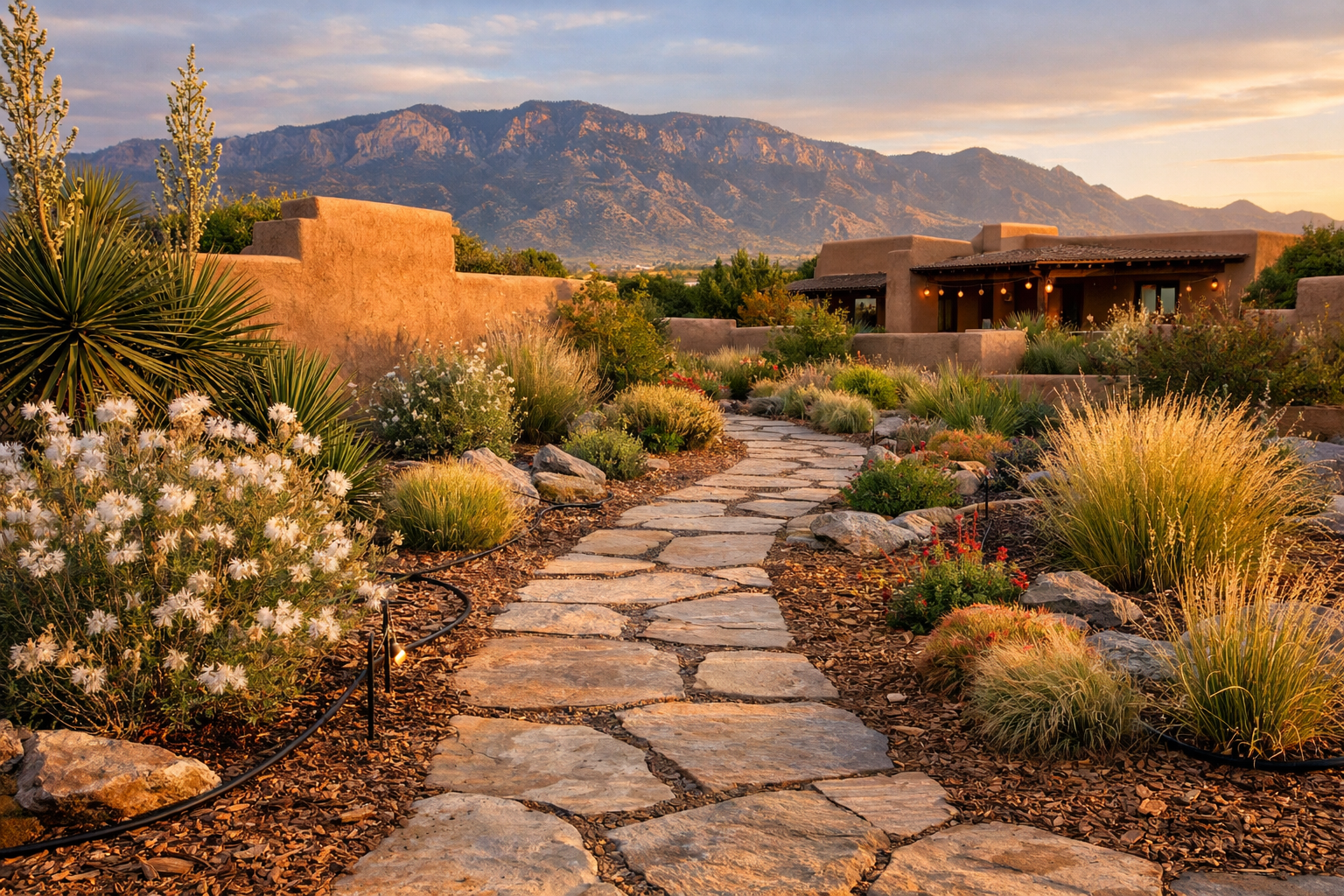
Understanding New Mexico's Climate Zones for Xeriscaping
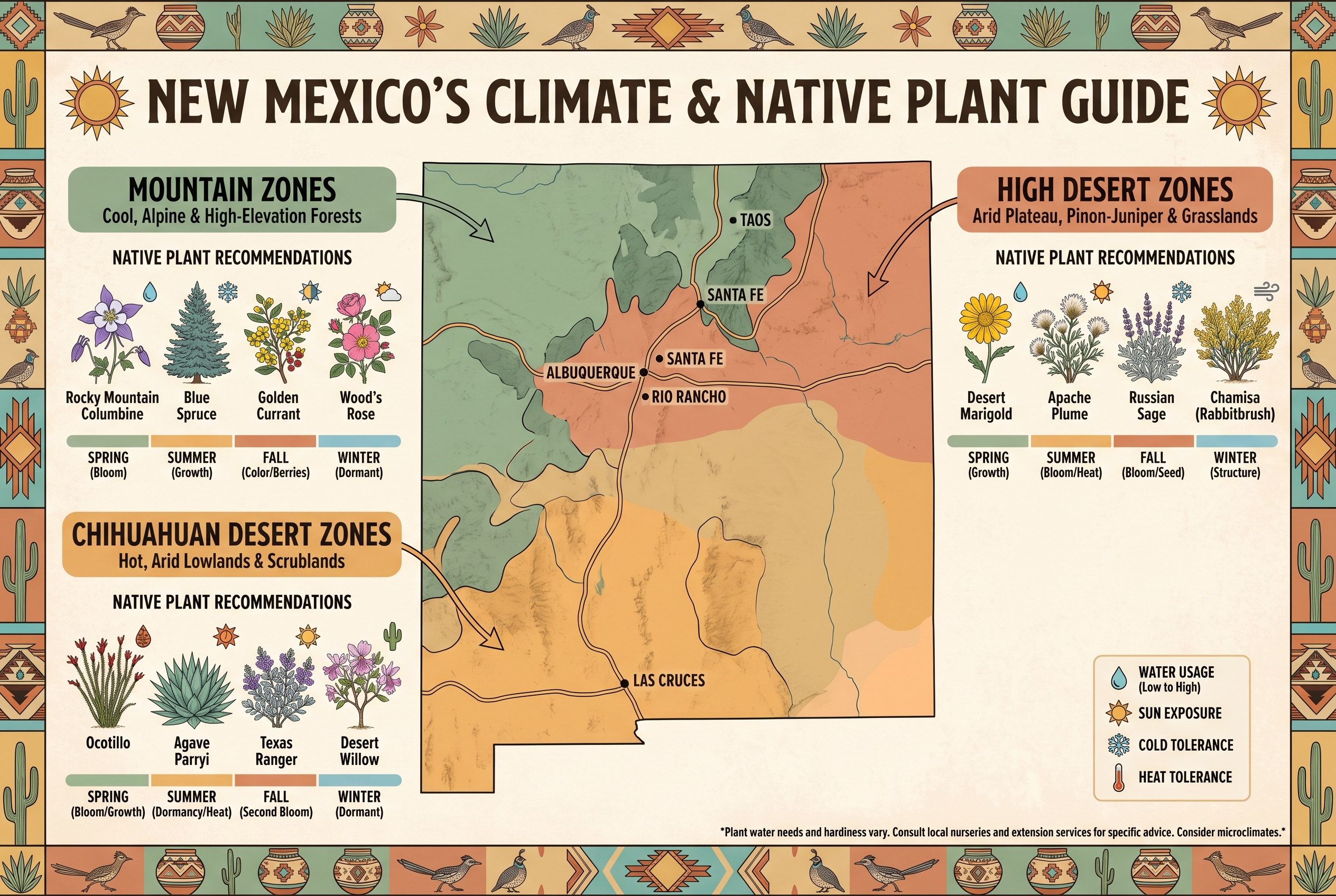
New Mexico landscaping directory xeriscaping success starts with knowing your specific climate zone. The state spans three distinct regions, each requiring different plant choices and design strategies.
High Desert Zone
The high desert covers central New Mexico, including Albuquerque and Santa Fe. This zone sits between 4,000 and 7,000 feet elevation. Temperatures swing dramatically between day and night. Summer highs reach 90°F while winter lows drop to 20°F.
Key characteristics:
- 300+ days of sunshine annually
- Low humidity year-round
- Strong winds, especially in spring
- Alkaline soil with caliche layers
Mountain Zone
Northern New Mexico, including Taos and higher elevations around Santa Fe, falls into the mountain zone. Elevations above 7,000 feet create cooler temperatures and more precipitation.
Key characteristics:
- Shorter growing seasons
- Heavy freeze-thaw cycles
- 15-20 inches annual precipitation
- Rocky, well-draining soils
Chihuahuan Desert Zone
Southern New Mexico, including Las Cruces and the Mesilla Valley, represents true desert conditions. This zone receives the least rainfall and experiences the most extreme heat.
Key characteristics:
- Less than 10 inches annual rainfall
- Summer temperatures above 100°F
- Minimal winter freezing
- Sandy, fast-draining soils
Native Plants That Thrive in New Mexico Xeriscaping
Choosing the right plants makes or breaks any xeriscaping project. Native species have evolved over thousands of years to handle New Mexico's challenging conditions.
High Desert Favorites
Piñon Pine serves as an excellent anchor tree for high desert xeriscaping. These slow-growing evergreens reach 15-20 feet and provide year-round structure. They're extremely drought-tolerant once established.
Four O'Clock produces bright pink or yellow flowers that open in late afternoon. This perennial spreads naturally and requires zero supplemental water after the first year.
Chamisa creates stunning fall displays with bright yellow flowers. This shrub grows 3-6 feet tall and attracts beneficial insects while requiring minimal care.
Mountain Zone Champions
Gambel Oak works well in cooler mountain areas. These deciduous trees provide fall color and can handle temperature extremes down to -20°F.
Rocky Mountain Juniper offers evergreen structure in harsh mountain conditions. These trees grow slowly but live for decades with no irrigation.
Apache Plume produces white flowers followed by feathery seed heads. This shrub handles both heat and cold while staying compact at 3-4 feet.
Desert Specialists
Ocotillo creates dramatic vertical elements in southern New Mexico landscapes. These unique plants produce red flower clusters after rain and require almost no water.
Desert Willow provides shade and pink flowers in extreme heat. This small tree grows quickly and attracts hummingbirds.
Yucca species offer architectural interest with sword-like leaves and tall flower spikes. Most varieties handle both drought and cold.
Working with New Mexico Water Rights and Regulations
New Mexico's complex water laws affect xeriscaping projects, especially in areas with traditional acequia systems. Understanding these regulations helps avoid costly mistakes.
Acequia Water Rights
Many communities in northern New Mexico still use acequia irrigation systems dating back centuries. These community-managed water channels have specific rules about water usage and landscape changes.
Before starting xeriscaping:
- Contact your local acequia association
- Understand your water rights and obligations
- Plan designs that work with existing water flows
- Consider how reduced water usage affects community allocations
Municipal Water Regulations
Cities like Albuquerque, Santa Fe, and Las Cruces have specific landscape ordinances. These rules often encourage xeriscaping through rebates while restricting certain plant choices.
Common requirements:
- Limits on turf grass coverage
- Mandatory drip irrigation for new landscapes
- Restrictions on non-native plants
- Required mulching for water retention
Finding Licensed New Mexico Xeriscaping Professionals
Licensed contractors ensure your xeriscaping project meets local codes and performs as expected. New Mexico requires specific licensing for landscape work.
CID Licensing Requirements
The Construction Industries Division (CID) oversees landscape contractor licensing in New Mexico. Any project over $7,500 requires a licensed contractor.
What to verify:
- Current CID landscape contractor license
- General liability insurance
- Workers' compensation coverage
- Local business registration
Real reviews from real homeowners help identify quality contractors. Look for professionals with experience in your specific climate zone and plant knowledge.
Questions to Ask Before Hiring
Experience with New Mexico conditions:
- How many xeriscaping projects have you completed?
- Can you provide references from my climate zone?
- What native plants do you recommend for my specific site?
Project approach:
- How do you handle soil preparation and drainage?
- What irrigation systems do you install?
- Do you provide plant establishment care?
Licensing and insurance:
- Can you provide current license and insurance certificates?
- Who handles permit applications if needed?
- What warranty do you offer on plants and installation?
Cost Considerations and New Mexico Xeriscaping Rebates
Understanding xeriscaping costs helps budget effectively while maximizing available rebates. Initial investment pays off through reduced water bills and maintenance.
Typical Project Costs
Basic xeriscaping (1,000 sq ft):
- Design: $500-1,500
- Plant materials: $1,500-3,000
- Installation labor: $2,000-4,000
- Irrigation system: $1,000-2,500
- Total: $5,000-11,000
Premium xeriscaping (1,000 sq ft):
- Design: $1,500-3,000
- Plant materials: $3,000-6,000
- Installation labor: $4,000-8,000
- Hardscaping elements: $2,000-5,000
- Total: $10,500-22,000
Available Rebate Programs
Many New Mexico water utilities offer substantial rebates for xeriscaping projects. These programs help offset installation costs while promoting water conservation.
Albuquerque Water Authority:
- Up to $1.50 per square foot of turf removal
- Maximum rebate of $2,500 per property
- Requires pre-approval and plant list compliance
Santa Fe Water Division:
- Tiered rebates based on project scope
- Up to 50% cost reimbursement
- Additional incentives for rain harvesting
Las Cruces Utilities:
- $0.75 per square foot for grass replacement
- Bonus payments for native plant installation
- Free design consultations available
Seasonal Maintenance for New Mexico Xeriscaping
Proper maintenance keeps xeriscaped yards thriving while minimizing water usage. New Mexico's unique seasons require specific care approaches.
Spring Preparation
Spring brings strong winds and temperature swings across New Mexico. This season focuses on plant health assessment and irrigation system startup.
Essential spring tasks:
- Inspect and repair drip irrigation lines
- Prune winter-damaged branches
- Apply organic mulch to retain moisture
- Gradually increase watering as temperatures rise
Monsoon Season Management
Summer monsoons bring intense but brief rainfall to much of New Mexico. Proper drainage prevents plant damage while capturing valuable water.
Monsoon preparation:
- Clear drainage channels of debris
- Install rain barrels for water capture
- Reduce irrigation during wet periods
- Monitor plants for overwatering signs
Winter Protection
Northern New Mexico experiences harsh winters requiring plant protection strategies. Proper preparation prevents freeze damage and ensures spring recovery.
Winter care essentials:
- Wrap sensitive plants in burlap
- Disconnect and drain irrigation systems
- Apply extra mulch around plant bases
- Avoid pruning until spring
FAQ
How much water does New Mexico xeriscaping actually save?
Well-designed xeriscaping reduces outdoor water usage by 60-75% compared to traditional lawns. A typical Albuquerque home can save 15,000-20,000 gallons annually.
Do I need permits for xeriscaping in New Mexico?
Most xeriscaping projects don't require permits, but check local ordinances. Projects involving significant grading, retaining walls, or irrigation connections may need approval.
How long do native plants take to establish?
Most New Mexico natives establish within 1-2 growing seasons with proper care. Trees may take 3-5 years to become fully drought-tolerant.
Can I install xeriscaping myself or do I need a contractor?
Simple plant installations work as DIY projects. Complex designs, irrigation systems, or projects over $7,500 benefit from licensed professional installation.
What's the best time to start a xeriscaping project in New Mexico?
Fall planting (September-October) gives plants time to establish before summer heat. Spring installation works but requires more intensive watering through the first summer.
Will xeriscaping increase my property value?
Quality xeriscaping typically adds 5-15% to property values in New Mexico markets. Water-wise landscapes appeal strongly to environmentally conscious buyers.
Conclusion
New Mexico landscaping directory xeriscaping transforms challenging desert conditions into beautiful, sustainable landscapes. Success requires understanding your specific climate zone, choosing appropriate native plants, and working with qualified professionals who know local conditions.
Start by identifying your climate zone and researching available utility rebates. Find licensed contractors with proven New Mexico experience and solid references from real homeowners. Plan projects for fall installation when possible, and budget for quality materials that will thrive long-term.
Your yard deserves landscaping that works with New Mexico's natural beauty instead of fighting it. The right xeriscaping approach creates outdoor spaces that conserve water, reduce maintenance, and increase property value while celebrating our state's unique high desert character.
Ready to transform your yard? Find licensed xeriscaping professionals in your area through verified contractor directories that prioritize homeowner protection and quality results.
Liked this guide? Follow us on Google Search
Related Directory Pages
- Browse New Mexico Landscaping Pros
- Albuquerque Landscaping Services
- Browse Xeriscaping Services in New Mexico
- Also Read: Complete Guide to Xeriscaping in Arizona
- Also Read: California Xeriscaping: How to Save Water and Money
- Also Read: Nevada Xeriscaping: Complete Guide to Desert Landscaping
- Also Read: Utah Localscapes: Water-Wise Yard Design That Works
- Search New Mexico Landscapers
Find a Landscaper Near You
Browse NM landscaping professionals on LandscapeProsDirectory.
Search Landscapers